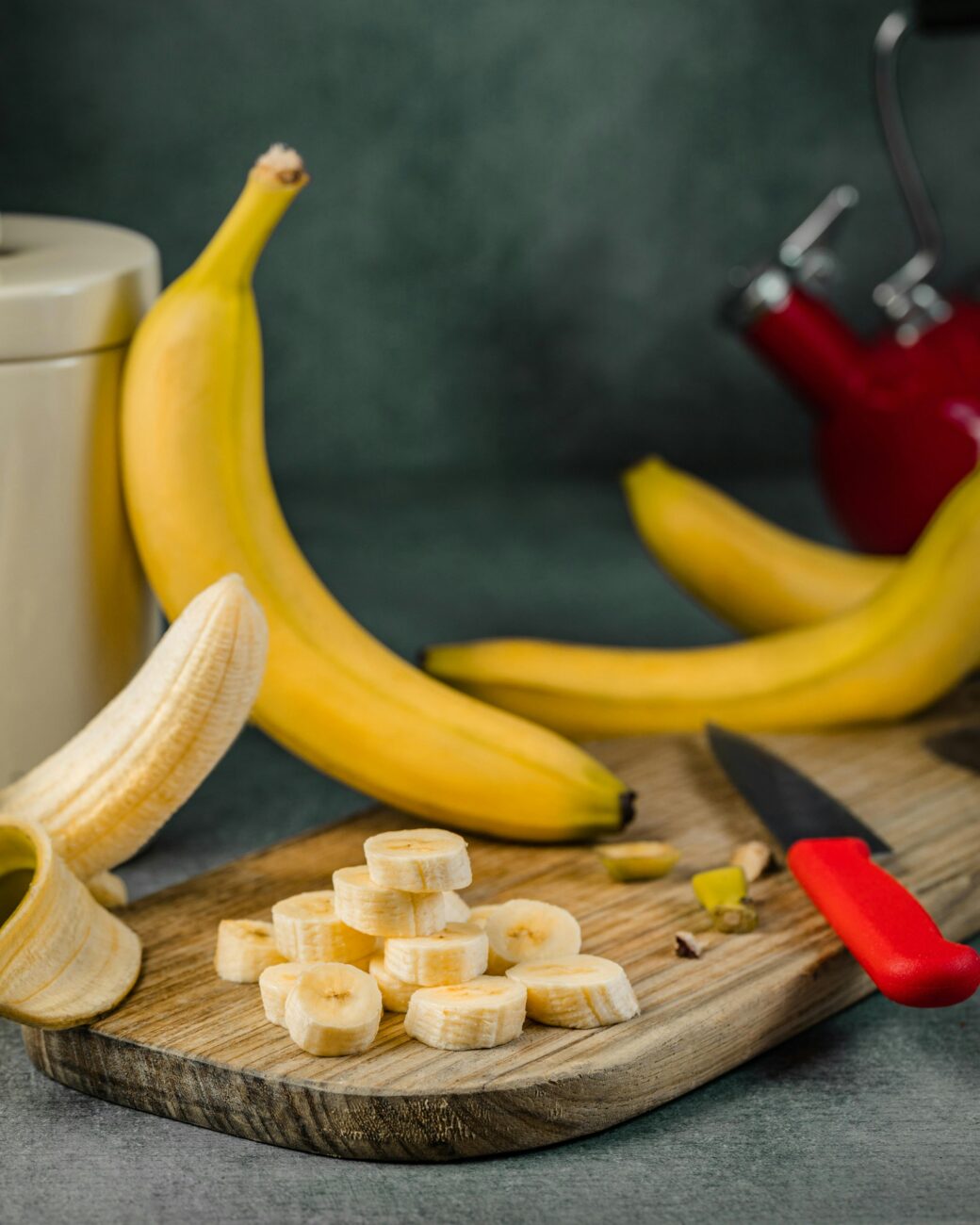
Yes, your hens can eat bananas, and the peel too if you chop it very small. Bananas are a safe treat for chickens, and the peel isn’t toxic.
The catch is how much you give. A whole banana is way more than one of your hens should get in a day. Split it among a small flock, though, and one banana goes a surprisingly long way.
A Safe Treat, and the Peel Isn’t Toxic

Some foods can be toxic to chickens: avocado skins and pits, raw beans, chocolate, the green parts of potatoes, and the leaves of tomato and potato plants, to name a few. Bananas aren’t one of them.
The peel isn’t toxic either. It can be tough and hard for a hen to digest, though, so if you feed it, it takes a little prep before it goes out to the run (more on that below).
Most hens will go after a banana with real enthusiasm. Hens usually make enough vitamin C on their own, and a complete layer feed is made to meet a laying hen’s nutrient needs. A banana’s vitamin C is a small extra on top of all that. It’s a treat, and that’s fine.
One Medium Banana Is a Day’s Treats for 8 to 12 Hens

Every treat your hen gets in a day, added together, should stay under 10 percent of her diet. The rest comes from her layer feed.
A laying hen eats 100 to 150 grams of feed a day, roughly a quarter pound. Ten percent of that is 10 to 15 grams (about a third to half an ounce). That’s her whole treat share for the day, banana or anything else.
A medium banana, 7 to 7 7/8 inches long, gives you about 118 grams of banana. So one medium banana is the full day’s treats for 8 to 12 hens. Split eight ways, each hen gets just under 15 grams. Split twelve ways, each gets a bit under 10.
Mashed banana is the easiest to measure: a level tablespoon weighs about 14 grams, so one spoonful is a hen’s whole share.
Got a smaller flock? With four hens, half a medium banana is the most you should hand out in a day. With two, make it a quarter. And that’s on a day banana is the only treat. If you toss out corn or mealworms too, the banana share shrinks.
Why So Little: The Sugar, and the Protein She Misses

A banana is about 12 percent sugar by weight and only about 1 percent protein. A layer feed should be 16 percent protein or more.
That’s the problem with a hen filling up on banana. Every bite she eats in place of her feed takes protein out of her day, and a hen that fills up on treats won’t eat enough of her feed to keep laying well. Sweet food can even put her off her regular feed.
So keep the bananas you hand out to once or twice a week, not every day.
Too much banana at once can also mean soft or runny droppings and bloating. If one of your hens gets into a lot of it and then has diarrhea, seems sluggish or goes off her food, call an avian vet.
Ripe, Green or Spotty: Which Bananas to Hand Out

Fresh, soft bananas are best. Green, under-ripe ones are fine too, and they carry less sugar than ripe ones. A banana that’s gone very overripe can upset a hen’s stomach, so hand it out before it turns to mush.
Anything with mold on it, feed or fruit, goes in the trash or the compost, never the run. Moldy feed can make chickens sick.
Skip the banana chips and any dried banana with added sugar. Your hens don’t need the extra sugar.
Feeding the Peel: Rinse It and Chop It Small

If the peel is going to your hens too, wash the banana first, the way you’d wash it for your own table: under plain running water, rubbing it gently with your hands, with no soap or produce wash.
Then chop the peel into very small pieces. Big strips are hard for a hen to deal with. If you’d rather skip the peel altogether, that’s fine.
Chopped peel counts toward the same 10 to 15 grams a hen as the fruit does. Give it in place of some of the fruit, not on top of it.
Serving It: Small Pieces, Then Clean Up

Slice the fruit small, or mash it with a fork. Soft banana is messy to peck at, and a big mushy lump can be a choking risk, so smaller is better.
Scatter the pieces on the ground for the hens to forage, or put them in a dish to keep things tidy.
Give no more than your flock can finish in about 20 minutes, then pick up whatever’s left. Scraps that sit around and rot can cause botulism.
Looking for something else for the treat list? Here’s how many strawberries and blueberries your hens can have, and how much watermelon makes a day’s treats. And to check any other scrap before it goes in the run, try our Can Chickens Eat It? food checker.
Sources
- Lindsay Boyers, Chewy: Can Chickens Eat Bananas? (updated May 5, 2025).
- Maurice Pitesky and Nancy Reimers, University of California Cooperative Extension: Feeding Your Flock.
- Howard Enos, Colorado State University Extension: Raising Poultry the Organic Way – Disease Control and Feeding (December 2019, reviewed August 2025).
- Wilmer Pacheco, Joseph Gulizia and Kevin Downs, Alabama Cooperative Extension System, ANR-2913: Feeding the Laying Hen, in its Backyard and Small Poultry Flock Management Series (August 2022).
- Jacquie Jacob, University of Kentucky, Poultry Extension: Feeding Chickens for Egg Production in Small and Backyard Flocks.
- Kalyn Waters, UF/IFAS Extension Holmes County: The 5 Most Common Chicken Feeding Mistakes Beginners Make (June 2, 2026).
- USDA Agricultural Research Service, FoodData Central: Bananas, raw (SR Legacy 173944).
- U.S. Food and Drug Administration: 7 Tips for Cleaning Fruits, Vegetables (June 15, 2021).
Sources checked November 12, 2026.
Related read: How to Raise Chickens for Eggs — Instant PDF download. Secure checkout by Stripe