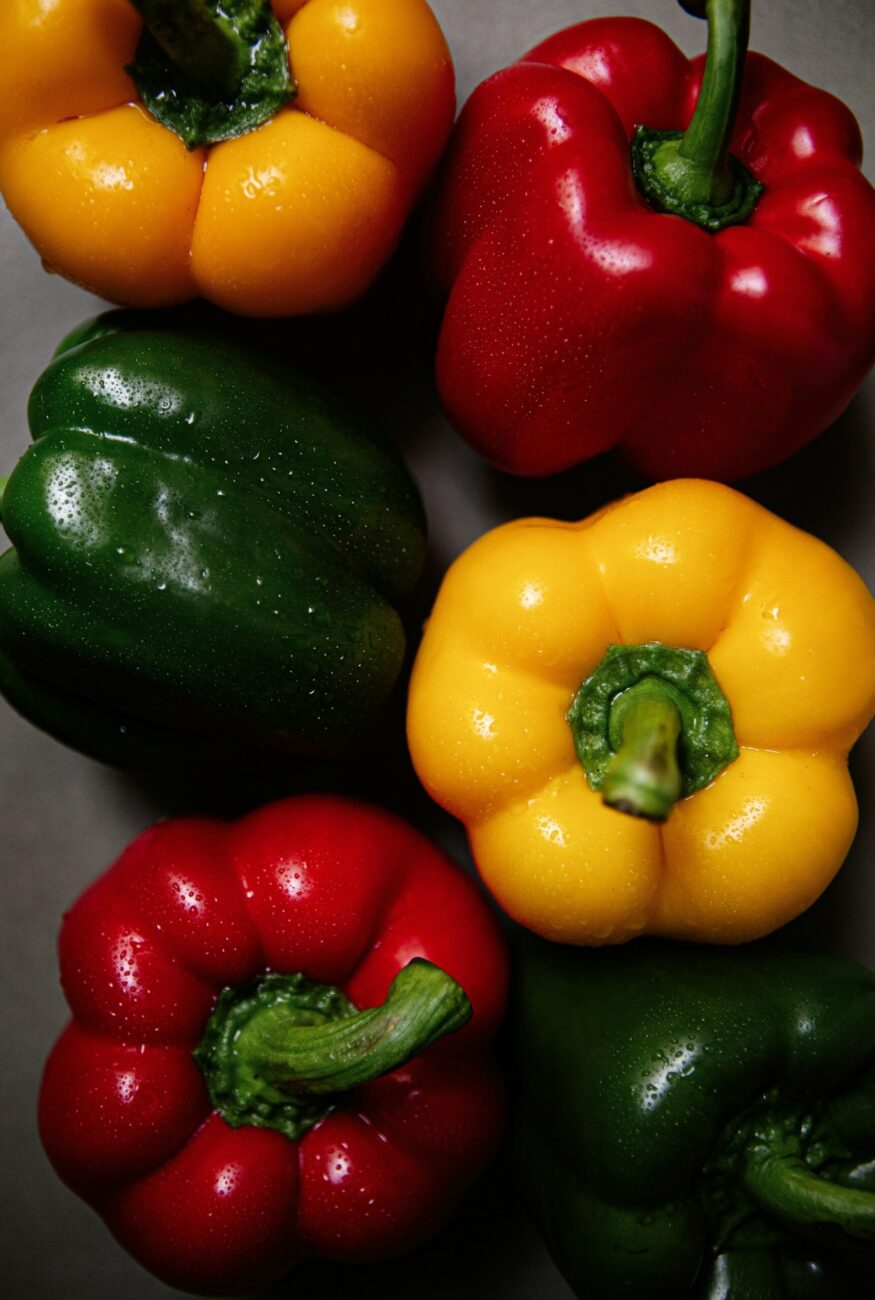
Yes, you can give your chickens bell peppers, and the seeds can go right in with them. A bell pepper has no capsaicin, the stuff that makes a pepper hot, so there’s nothing in the seeds to burn anybody. The core and the white ribs can go in too, raw or plain-cooked. What you do keep out of the run is the pepper plant’s leaves and stems, a pepper that’s gone moldy, and leftovers that are salty or greasy or cooked with onions. The short version:
- Seeds and core are fine. A bell pepper is the zero on the Scoville heat scale.
- Any color works. A green bell pepper is just an unripe one. Red ones carry far more vitamin A.
- The plant is out. Pepper leaves stay away from chickens, same as tomato and potato leaves.
- Check what it was cooked in. The salt and the fat are the trouble, not the pepper.
- It’s a treat. All treats together stay at or under a tenth of what a hen eats in a day.
Can Chickens Eat Bell Pepper Seeds?

They sure can. The worry with pepper seeds is heat, and a bell pepper doesn’t have any.
Heat in a pepper comes from capsaicin and its close relatives. Those are made in little glands on the placenta, the pale, spongy part the seeds hang from. So when a hot pepper lights you up, most of that bite is coming from its white lining. The seeds you’d scoop out sit right up against it, and that’s how some of the heat can rub off on them.
In a bell pepper there’s nothing in that lining for the seeds to pick up. It rates a flat zero on the Scoville scale, because it has no capsaicin at all. Nothing to burn your hens, and honestly nothing to burn you either.
So scoop the seeds out or leave them. Leaving them in is less work for you, and there’s nothing in them that needs taking out.
What About Hot Peppers?

Here’s a fun one. A chile doesn’t burn a chicken the way it burns you. Birds pretty much don’t register the pain capsaicin causes. The receptor capsaicin sets off in mammals has a chicken version, and that one normally doesn’t react to it. Capsaicin protects a chile plant from mammals that would eat it, and birds, which don’t feel the burn, end up spreading the seeds around.
That covers the burn and nothing else. A hot pepper is still a treat, under the same limit as a bell pepper. The real catch is what hot peppers usually show up in: salsa, poppers, a jar of pickled jalapeños, the last of the chili. Those usually bring salt along, and often cheese or grease, and that’s where your birds get into trouble. A plain chile off the plant is one thing. The end of a plate of nachos is another.
Green, Red or Yellow: Does the Color Matter?

Not for safety. A green bell pepper is mostly a pepper picked early. Bell peppers usually come off the plant big and still dark green, which is the immature stage. Leave one on to ripen and it gets a little sweeter and usually carries more vitamins.
Here’s how they compare per 100 grams of raw pepper:
- Red: 127.7 mg of vitamin C, 157 µg of vitamin A (RAE) and 1,624 µg of beta-carotene.
- Green: 80.4 mg of vitamin C, 18 µg of vitamin A and 208 µg of beta-carotene.
- Yellow: 183.5 mg of vitamin C and 10 µg of vitamin A, so the most vitamin C of the three and the least vitamin A.
Vitamin C is the one you can mostly skip worrying about. A chicken’s body makes its own, so there’s no set requirement for it in her feed (though a supplement has been shown to help birds under stress). And the vitamin A in a red pepper is real, but a layer ration from the feed store typically has a vitamin premix in it that already supplies vitamin A.
So a pepper isn’t filling some gap in your birds’ diet. It’s a crunchy, watery treat, about 92% water for red and 94% for green. Toss some in and your flock gets a change of pace and something to peck at. That’s reason enough.
Pepper Leaves and Stems Are a Different Story

The fruit is food. The plant isn’t. Your pepper plants are nightshades, same family as your tomatoes and potatoes, and nightshade leaves can be toxic to chickens. So the pepper’s fine, but the leaves and stems it grew on stay away from your flock.
In practice that comes down to a couple of habits:
- When the garden comes out in fall, the pepper plants go to the compost or the trash, not over the fence into the run.
- If your hens range near the vegetable beds, fence the peppers off along with the tomatoes.
For any other food, try the Can Chickens Eat It? food checker. It marks tomato, potato, pepper and eggplant plants as avoid, and the other foods to keep out of the run are in what not to feed chickens.
Fajita Night Leftovers Are a Different Question

A raw pepper end and a pan of leftover fajita vegetables aren’t the same treat. Most vegetables are fine for chickens raw or cooked, and the pepper’s fine either way. What it was cooked with is the problem.
- Salt. The trace of salt in most kitchen scraps is okay. Anything high in salt isn’t, and if the pan got seasoned, figure salt went in with it.
- Onions. They’re on the avoid list, and they show up in a lot of pepper dishes. We go through why onions are a no in our onions and tomatoes guide.
- Fat. Fatty food is one to skip. Fat scraps promote fatty liver in hens, and that can end in sudden death from a ruptured liver. A pepper dish swimming in cheese or grease goes in the trash, not the run.
- Stuffed peppers. The pepper shell is fine. The filling usually isn’t.
The easy fix is to pull a few plain strips for the flock before anything hits the pan. Then you never have to guess what’s on them.
And look before you toss. Scraps for chickens should still be good food, not rotten and not moldy. A pepper gone soft and fuzzy in the crisper is compost.
How Much Bell Pepper Can a Chicken Have?

Less than you’d guess, because a pepper is a treat and treats have a ceiling. Keep treats to no more than 10% of what a chicken eats in a day. A laying hen eats about 100 to 150 grams of feed a day, roughly a quarter pound. A tenth of that is 10 to 15 grams, and that’s all her treats for the day put together.
A medium bell pepper weighs about 119 grams. So one medium pepper is a whole day’s treat share for eight to twelve hens, if nothing else goes to them that day. With a smaller flock, give them a piece and keep the rest in the fridge for another day. There’s more on that math in keeping all treats to a tenth.
The ceiling is about the feed, not the pepper. Think of treats as ice cream for kids. Offer too much scratch or treats or scraps and the birds fill up on them, don’t eat enough of their complete feed, and laying is likely to suffer. A pepper beats ice cream, sure. It still takes up room in a hen that her feed should have.
Don’t put out more than they’ll clean up, either. Give what the flock will finish in 5 to 10 minutes so leftovers don’t pull in nuisance animals. Half a pepper sitting in the run overnight is an open invitation.
How to Serve Bell Peppers to Chickens

Raw is fine, and raw is the least work for you. Here’s pretty much the whole routine:
- Cut it up or halve it. Strips or chunks or a half with the seeds still in.
- Stem off. That one piece is plant, not fruit, so I’d leave it out.
- Plain only. If it’s cooked, it’s cooked in water and nothing else.
- Firm and clean. No mold, no slime, nothing you’d throw out for being off.
- A small pile. Enough to be gone in 5 to 10 minutes.
Hold off with chicks. I’d wait until they’re 3 to 4 months old before kitchen scraps start, because chicks have very specific nutrition needs early on and too many treats can throw that off. When young birds do get scraps, put out plenty of clean water and grit sized for them.
Past that, a bell pepper is about as easy as kitchen scraps get. Seeds and core and all, keep it plain, keep it small, and keep the plant out of the run.
Sources
- New Mexico State University Cooperative Extension Service: The Chile Cultivars of New Mexico State University, 1913–2022 (Circular 706).
- NIST: How Do You Measure the ‘Heat’ of a Pepper?
- North Dakota State University Extension, Prairie Fare: Hot Peppers Spice Up Menus.
- Jordt SE, Julius D. Molecular basis for species-specific sensitivity to “hot” chili peppers. Cell, 2002.
- Iowa State University Extension, Yard and Garden: When should I harvest my bell peppers?
- USDA FoodData Central: Peppers, sweet, red, raw.
- USDA FoodData Central: Peppers, sweet, green, raw.
- USDA FoodData Central: Peppers, sweet, yellow, raw.
- University of Maryland Extension: Vitamins and Minerals.
- Jacquie Jacob, University of Kentucky, for eXtension Small and Backyard Poultry: Basic Poultry Nutrition.
- Maurice Pitesky and Nancy Reimers, UC Davis and UC Cooperative Extension: Feeding your Flock.
- Murray McMurray Hatchery: Safe Table Scraps for Chickens.
- Colorado State University Extension: Raising Poultry the Organic Way, Disease Control and Feeding.
- Merck Veterinary Manual: Management of Backyard Poultry.
- Wilmer Pacheco, Joseph Gulizia and Kevin Downs, Alabama Cooperative Extension System: Feeding the Laying Hen (ANR-2913).
Sources checked November 16, 2026. We aren’t vets. If a bird looks sick after eating something, call a vet who sees poultry.
Related read: How to Raise Chickens for Eggs — Instant PDF download. Secure checkout by Stripe