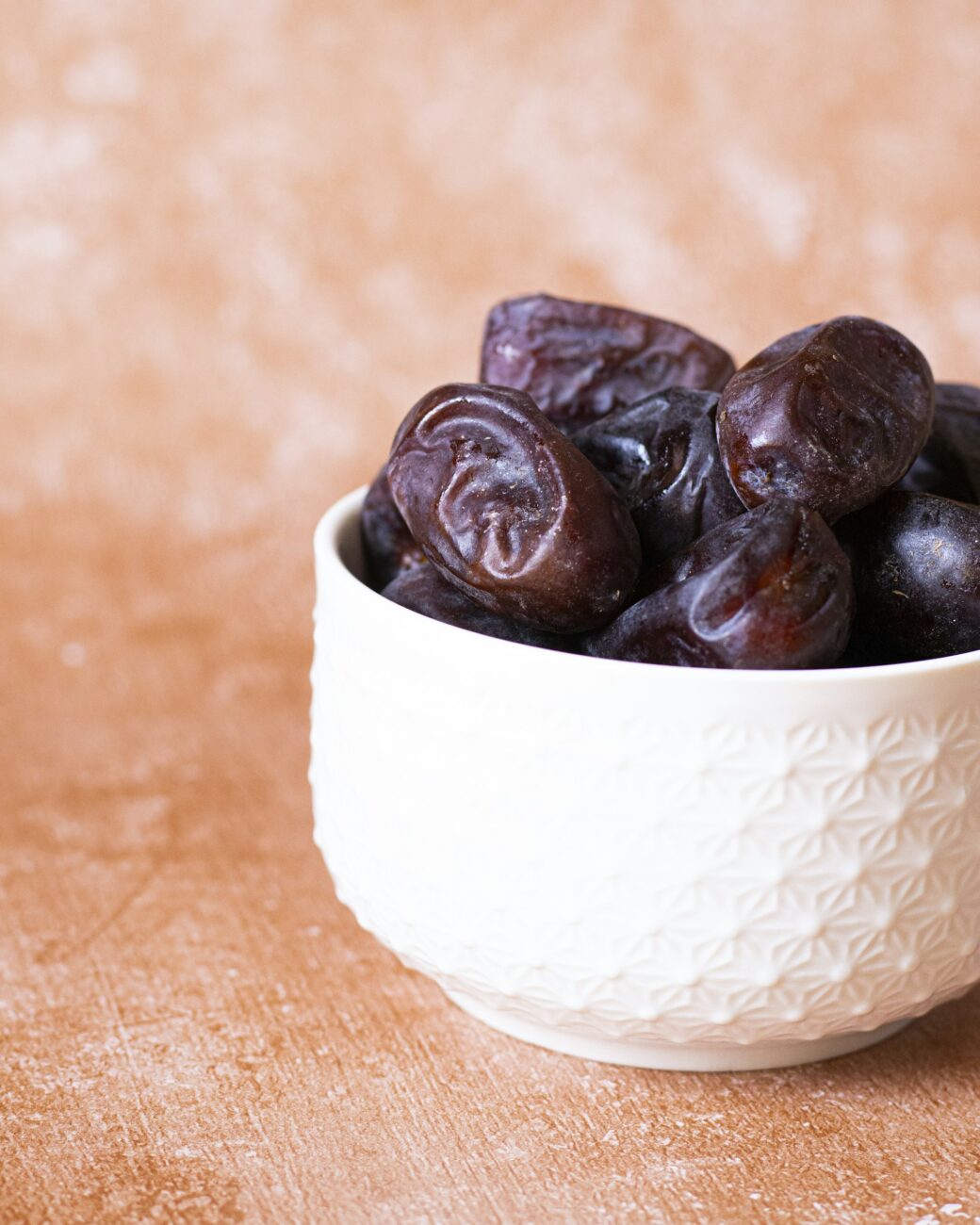
No, don’t toss date seeds in the run. A date seed is a hard, fibrous pit (the thing you spit out) with little in it for your hens. The flesh is the part you can share with the flock, in small bits, so the real job happens at your kitchen counter: pit every date before any of it goes near the coop.
- Skip the seed. It has to be processed before it’s fed to livestock, so it doesn’t belong in the run.
- There’s little in it for a hen. It’s mostly fiber, low in protein, and the meal made from it is rated very low in nutritional value.
- Ground seed is a feed ingredient, not a treat. Trials mixed it into rations as a share of the whole diet, and at 18% the hens laid slightly lighter eggs with paler yolks.
- Check the pitted ones too. A bag of pitted dates can still hold a pit or a piece of one.
- Slit it, check it, cut it small. Then share a bit of flesh and put the seeds in the trash.
What a Date Seed Actually Is

The seed is the pit inside the fruit, the one you pull out. It’s hard coated, usually oblong, with a groove down one side. One weighs anywhere from half a gram to 4 grams and makes up 6 to 20% of the date’s weight, depending on the variety, how ripe the fruit was and its grade.
Packers pit dates for sale, and plants make date paste. Either way the seeds are what’s left over once the fruit is pitted. People have traditionally fed them to animals. And they can also be a source of oil or a coffee substitute.
That hard coat makes the seed difficult to digest, which is why whatever value it has comes after somebody has dealt with it.
Why a Hen Gets So Little From It

Seeds this tough are mostly fiber, somewhere between 58 and 90% of their dry matter by the fuller fiber measure, and a lot of it’s lignified, the tough, woody kind. And protein is only 5 to 11% and oil 4 to 14%.
Date seed meal is rated very low in nutritional value, with an energy value as low as 2.9 megajoules per kilogram. To use it in poultry feed, a feed maker has to count that low energy in the recipe and add fat to make up the difference.
Your hen has no teeth, so her gizzard does the chewing. It’s made of two sets of strong muscles with a thick lining to protect them, and it grinds whatever she swallows. Hens that range typically pick up small stones (grit), which older birds use to help with that grinding, and a bird that eats whole grains, or lives on pasture without finding enough pebbles, typically needs some added.
That’s a whole lot of machinery for a seed that gives back almost nothing, so if you want to hand your flock a date snack, the flesh is the part with something in it.
When Ground Seeds Go Into a Ration

When date seed goes into poultry feed, it goes in as a share of the whole diet.
For broilers, the suggested ceiling is about 5% of the diet for young birds and 10% for grower-finishers, maybe more for slow-growing birds. Trials split at 10%: some kept growth steady there (one even called 27% acceptable), others saw performance fall. Young birds also seem to handle the seeds worse than older ones.
Layers are less studied, but a ration with 10% seed beat one with none, though it still fell short of a commercial feed, and at up to 20% egg production and feed efficiency held steady while egg quality dropped.
In one test, a third of 144 hens, all 50 weeks old, ate a ration with 18% ground date seeds mixed all the way through it for 10 weeks. Their feed intake, feed conversion, egg numbers, egg mass and shell thickness came out about the same as the hens without the seeds. The seed hens gained less weight, though, laid slightly lighter eggs and had yolks that scored paler in color.
And even in a ration, whoever mixes it has to work out the protein and energy balance carefully, because the seeds are low in both. You aren’t mixing a ration at the kitchen counter, so there’s no reason to send a seed out to the run.
A Pitted Date Can Still Hide a Pit

But even if you never plan to feed a seed, a stray seed can sneak in. A small number of pits or pit pieces per batch is tolerated in dates sold as pitted, and in diced or sliced ones too.
So the word “pitted” on a bag still leaves room for a stray pit or a piece of one. If you’re handing the flock a diced bag, any such piece goes out with it.
I’d slit each date lengthwise with a paring knife and open it flat. Look through the middle (it takes a few seconds), then run a thumbnail along the flesh. Anything hard just goes in the trash.
Our guide to diced dates rolled in rice flour covers the bags where the pieces are already cut, and why you want a quick look at those too.
How to Share a Date Without the Seed

I’d start with plain dates, already pitted (or pit them yourself). Skip anything salty or moldy. Then work through them.
- Slit each date, open it and take out the seed or anything hard.
- Cut the flesh into small bits (the smaller, the better).
- Scatter only what you think they’ll finish in 5 to 10 minutes over the run after the flock has eaten its feed, not instead of it.
- Pick up what’s left.
Treats of every kind should add up to no more than about 10% of what a hen eats in a day, so count the date bits with any other scraps you hand out, and cut a date up for the whole flock rather than handing one to a hen.
Our dried dates guide has the share by the gram. And the seeds go in the trash, along with any date that’s gone moldy.
Not sure about some other kitchen scrap? Our Can Chickens Eat It? food checker looks a food up by name and gives a verdict where an official source speaks, and our list of what you shouldn’t feed chickens covers the ones to keep out of the run.
Sources
- Feedipedia: Date palm seeds.
- Salajegheh, Yousef Elahi and Salarmoini: Evaluating the nutritional value of date pits and demonstrating their application in laying hen diets, Journal of Animal Physiology and Animal Nutrition, 2018.
- eXtension Poultry: Avian Digestive System.
- The Poultry Site: Impaction and Foreign Bodies of Gizzard.
- FDA: CPG Sec. 550.300, Dates and Date Material.
- Colorado State University Extension: Raising Poultry the Organic Way, Disease Control and Feeding.
Sources checked November 18, 2026. We aren’t vets. If a hen seems unwell, call a vet who sees poultry.
Related read: How to Raise Chickens for Eggs — Instant PDF download. Secure checkout by Stripe