Updated September 26, 2026. This page used to say “yes, chickens can eat honey graham crackers in moderation.” I’ve rewritten it after checking the numbers. The honest answer is closer to no than yes, and the reason isn’t the honey.
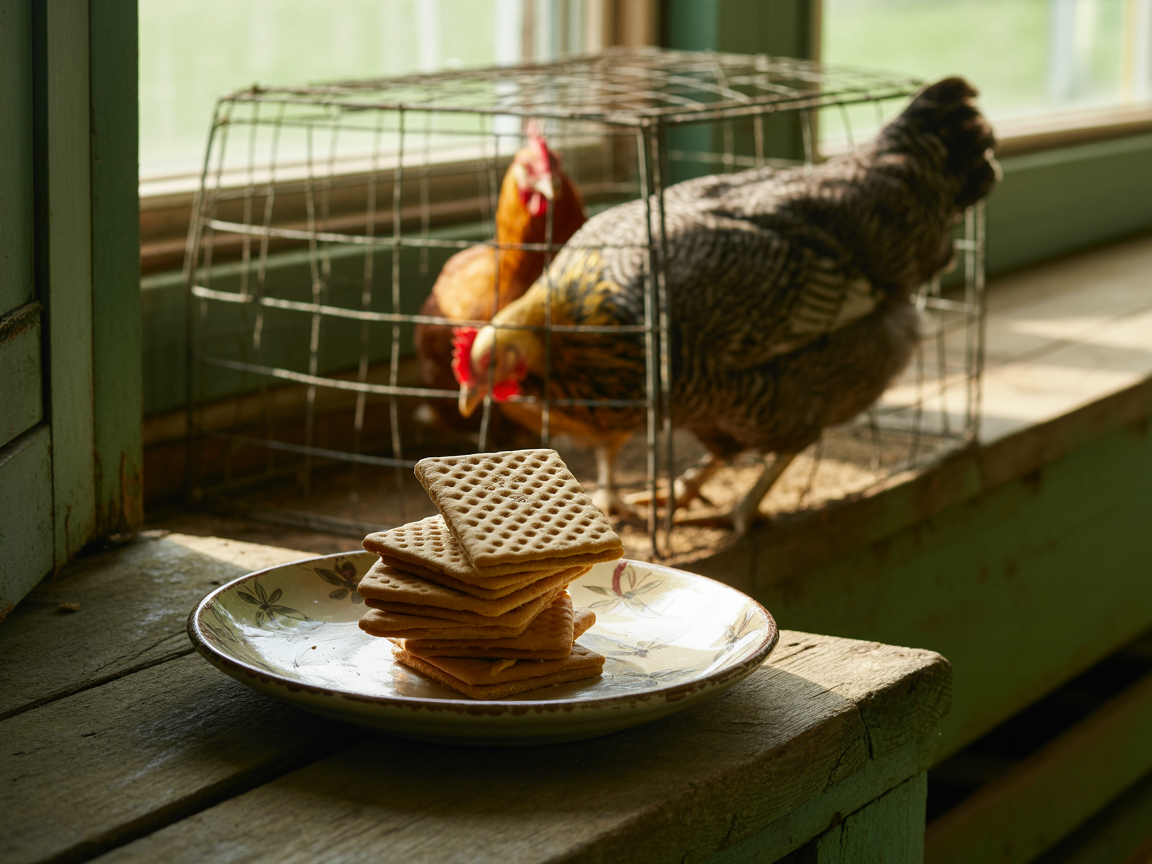
The short answer: better not. A corner of one, shared, is the most I’d hand over, and I don’t go looking to give them. A graham cracker is about as salty as cheddar cheese and a good deal sweeter than bread. Colorado State University Extension says scraps for a flock shouldn’t be salty. Graham crackers aren’t poison, and no source puts them on an avoid list by name. But nothing about them is a treat worth giving. For any other scrap, the free Can Chickens Eat It? checker gives the verdict and who says so.
Why I changed the answer
I used to lump graham crackers in with bread, and bread is a scrap Colorado State names as fine. It sounded reasonable. Then I looked up what’s in them.
USDA’s FoodData Central has these per 100 grams:
- Graham crackers (Nabisco Grahams): 659 mg sodium, 10 grams of fat.
- Sharp cheddar: 644 mg sodium.
- Plain white bread: 490 mg sodium, 3.3 grams of fat.
- Saltine crackers: 941 mg sodium.
So a graham cracker isn’t a saltine, and I won’t pretend it is. But it’s saltier than bread, level with cheddar, and it has three times the fat of bread. On this site, cheese is a “better not, a crumble at most,” so graham crackers get the same answer. Anything else would be me going easy on the snack I happen to like.
What the salt adds up to
I did the arithmetic from published figures. The University of Maine Extension says chicken feed carries sodium at about 0.15%. Alabama Extension puts a laying hen at 100 to 150 grams of feed a day. So her feed gives her around 150 to 225 mg of sodium. Colorado State caps treats at 10% of her daily intake, which is 10 to 15 grams.
Fill that whole treat allowance with graham cracker and she takes in about 44% more sodium than her day’s feed was built to give her. That’s my sum, not a published number. It isn’t poisoning, not in a hen with water in front of her. But it’s a lot of extra salt for something that gives her nothing her feed doesn’t.
The water part matters. The Merck Veterinary Manual’s page on salt poisoning says chickens handle salt while they’re drinking, and names frozen water sources among the ways water gets cut off. On a January morning before I’ve thawed the waterer, nothing salty goes in the run.
Honey, sugar and the rest of the box
The honey isn’t the problem. The sugar is just empty. UC Davis says to treat scraps like a treat and not like the main course, because the main course is balanced and the scraps aren’t. A cracker is flour, sugar, oil and salt. It fills a hen up without giving her the protein and calcium that go into eggs.
And the stuff that usually comes with graham crackers is worse:
- Chocolate-coated grahams and s’mores: no. UC Davis lists chocolate among foods that can be toxic to chickens. See my chocolate page.
- Marshmallows: pure sugar, and nothing for a hen. No.
- Graham cracker pie crust: that’s the cracker plus butter and more sugar. No.
- Stale crackers from the back of the cupboard: check them for mold before anything. Colorado State says no moldy scraps.
If the kids want to feed the hens
That’s usually how graham crackers end up in the run. A kid with a snack and a flock that’ll come running for anything.
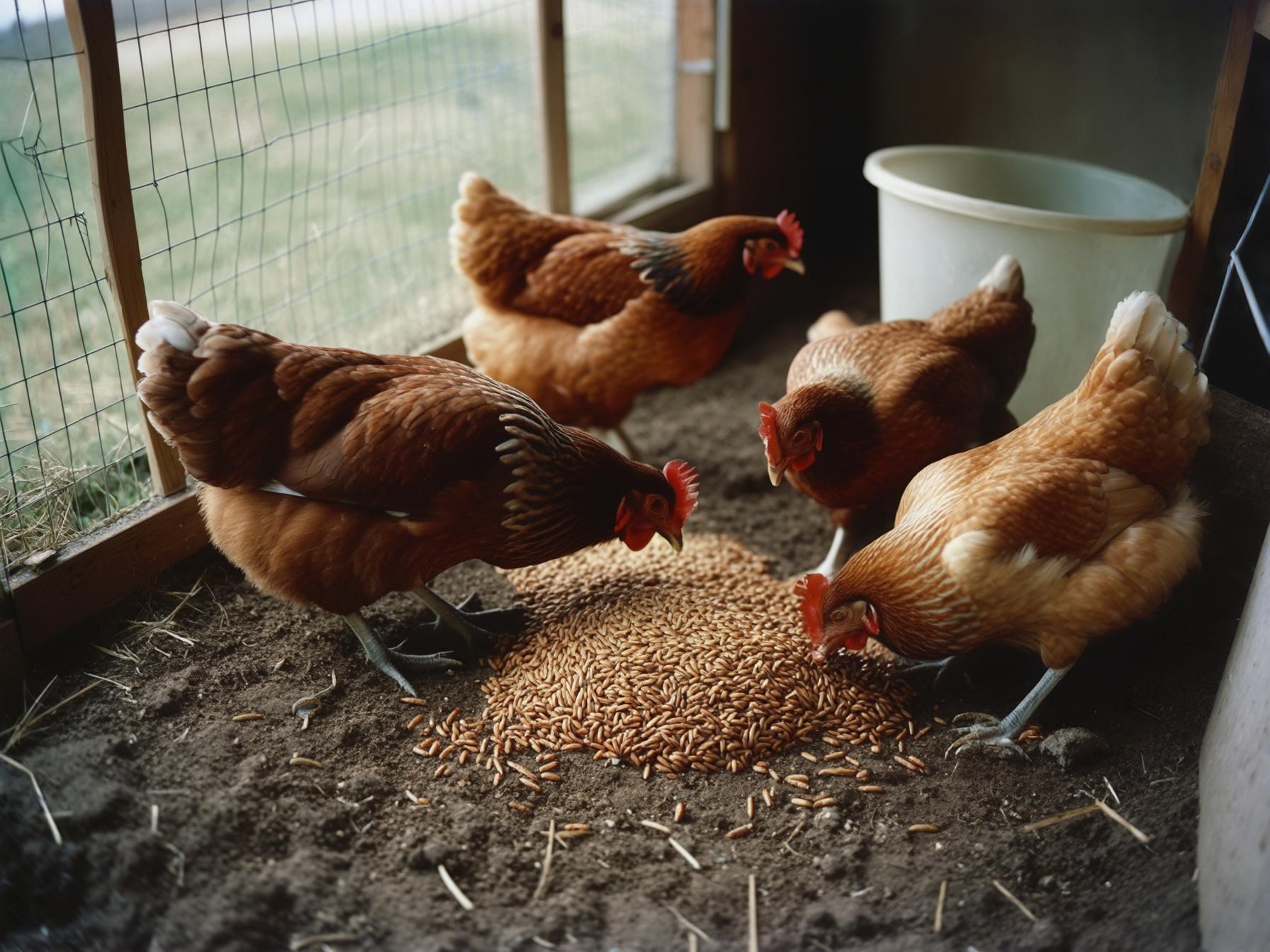
So I keep a small tub of scratch grains or dried mealworms by the back door, and that’s what gets handed out. It’s what the hens want anyway. Or a handful of chopped greens, a few berries, some plain cooked rice. Colorado State names leafy greens, vegetable peelings and bread products as good scraps. The checker works out how much your whole flock can have in a day, and it’s less than a kid will guess.
Sources
- Colorado State University Extension: Raising Poultry the Organic Way: Disease Control and Feeding (Howard Enos, December 2019, reviewed August 2025): scraps not salty or moldy; bread products; the 10% cap.
- UC Cooperative Extension / UC Davis School of Veterinary Medicine: Feeding your Flock (Dr. Maurice Pitesky and Dr. Nancy Reimers): scraps are a treat, not the main course; chocolate can be toxic.
- University of Maine Cooperative Extension: Salt is an Important Nutrient for Poultry: sodium in feed at about 0.15%.
- Alabama Cooperative Extension System: Feeding the Laying Hen (Pacheco, Gulizia & Downs, August 2022): 100 to 150 grams of feed a day.
- Merck Veterinary Manual: Salt Toxicosis in Animals: water restriction and frozen water sources.
- USDA FoodData Central (SR Legacy): Nabisco Grahams (175083), sharp cheddar (170899), white bread (174924), saltines (172746). The percentage is my arithmetic from these figures.
Sources checked September 26, 2026. I keep chickens; I’m not a veterinarian.
Related read: How to Raise Chickens for Eggs — Instant PDF download. Secure checkout by Stripe