
I’ve kept a flock for eight years, twelve hens and one rooster with a bad attitude. The first thing most new egg keepers want to know is whether to wash their eggs. Short answer, no, not if you can help it. The longer answer depends on when you collect, how clean your nest boxes keep them and where they sit afterward, so here’s the whole routine.
Egg safety is no place for my opinion. Every rule below comes from people who study this for a living: USDA’s Food Safety and Inspection Service (FSIS), the CDC, and the extension folks at Penn State, UC, NC State and the Virginia Department of Agriculture (VDACS). Where something is just my opinion, I’ll say so.
Collect in the Morning, Then Again Before Supper

Hens are morning layers. NC State Extension puts it plainly: “Typically, eggs are laid in the morning hours.” So a trip to the nest boxes mid-morning catches most of the day’s eggs, and a second one before supper gets the late ones.
Twice a day isn’t me being fussy. NC State says collect twice a day if you can, and VDACS says at least twice daily. Their reason is simple. The longer an egg sits in the nest, the dirtier it gets, the likelier it is to get broken, and the lower its quality. The CDC just says to collect often.
Any egg with a crack goes in the trash, not the carton. FSIS says never use cracked eggs, because bacteria get in through the crack. And wash your hands with soap when you’re done. That one’s from the CDC, and it counts even on the trip where you only grabbed two eggs.
Wondering how many eggs to expect? The free egg production calculator works out a week and a year for your flock, by breed and age.
A Hen Laying in the Straw Is a Hen Hiding Eggs
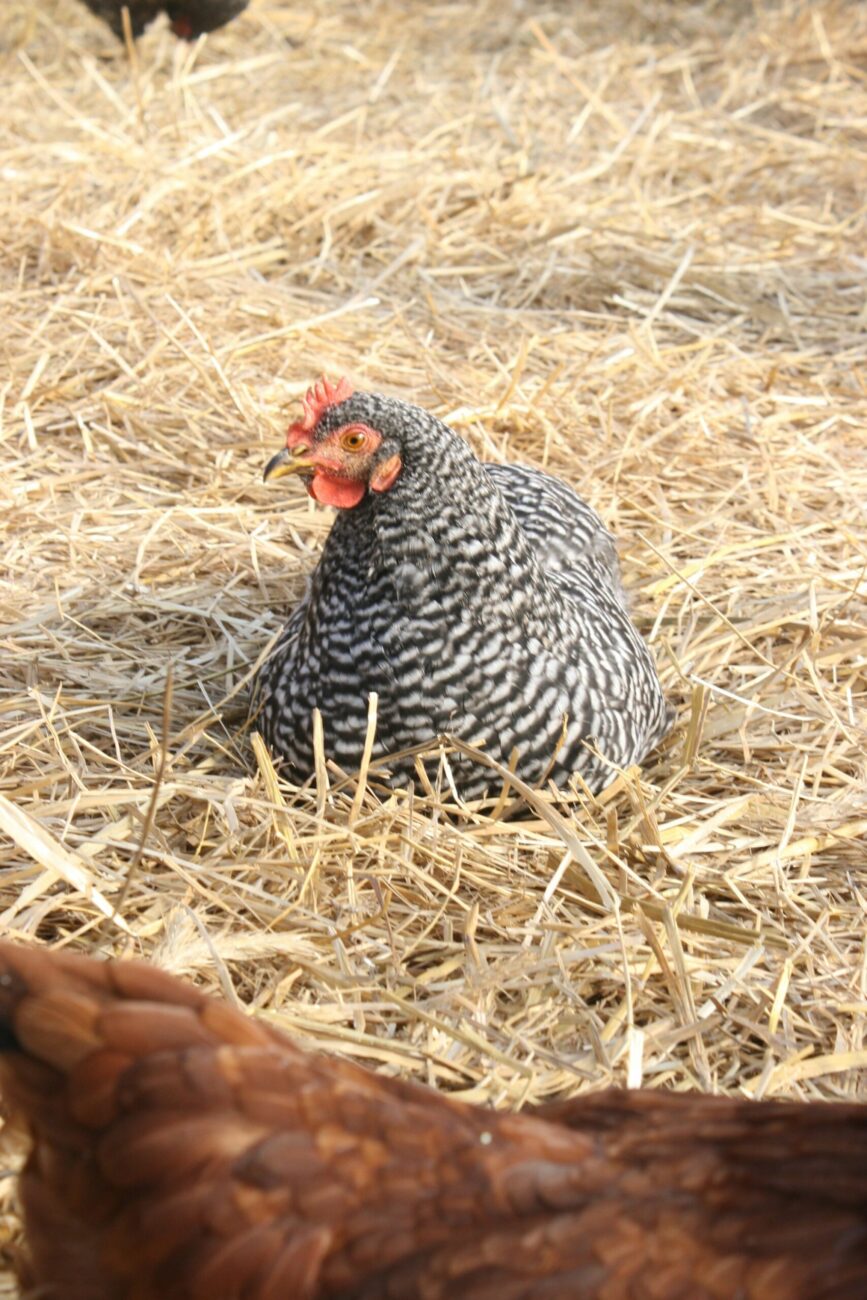
See how low that barred hen is sitting in the loose straw? A hen lays wherever she feels tucked away. If that’s a corner of the run instead of a nest box, you’ve got a problem, and VDACS names it: when hens hide eggs, you won’t know how old they are.
The float test won’t save you here either. It only tells you about the air cell (not the day the egg was laid). My vote? A stray pile of eggs you find in the straw goes in the trash. You don’t know when they were laid, so you don’t know how long they’ve sat out.
The fix is a nest box she’d rather use. UC Cooperative Extension’s egg handling guide, written by Maurice Pitesky, DVM, gives the basics:
- boxes about a foot square
- higher than the ground but lower than the roosts
- no more than five hens to a box
- about 2 inches of clean, dry bedding in each one
For my twelve that works out to three boxes at the least. VDACS says to clean the boxes out and add fresh litter at least every two weeks. Honestly, clean bedding does more for clean eggs than anything you’ll ever do at the sink.
Dry-Brush Them and Leave the Bloom Alone
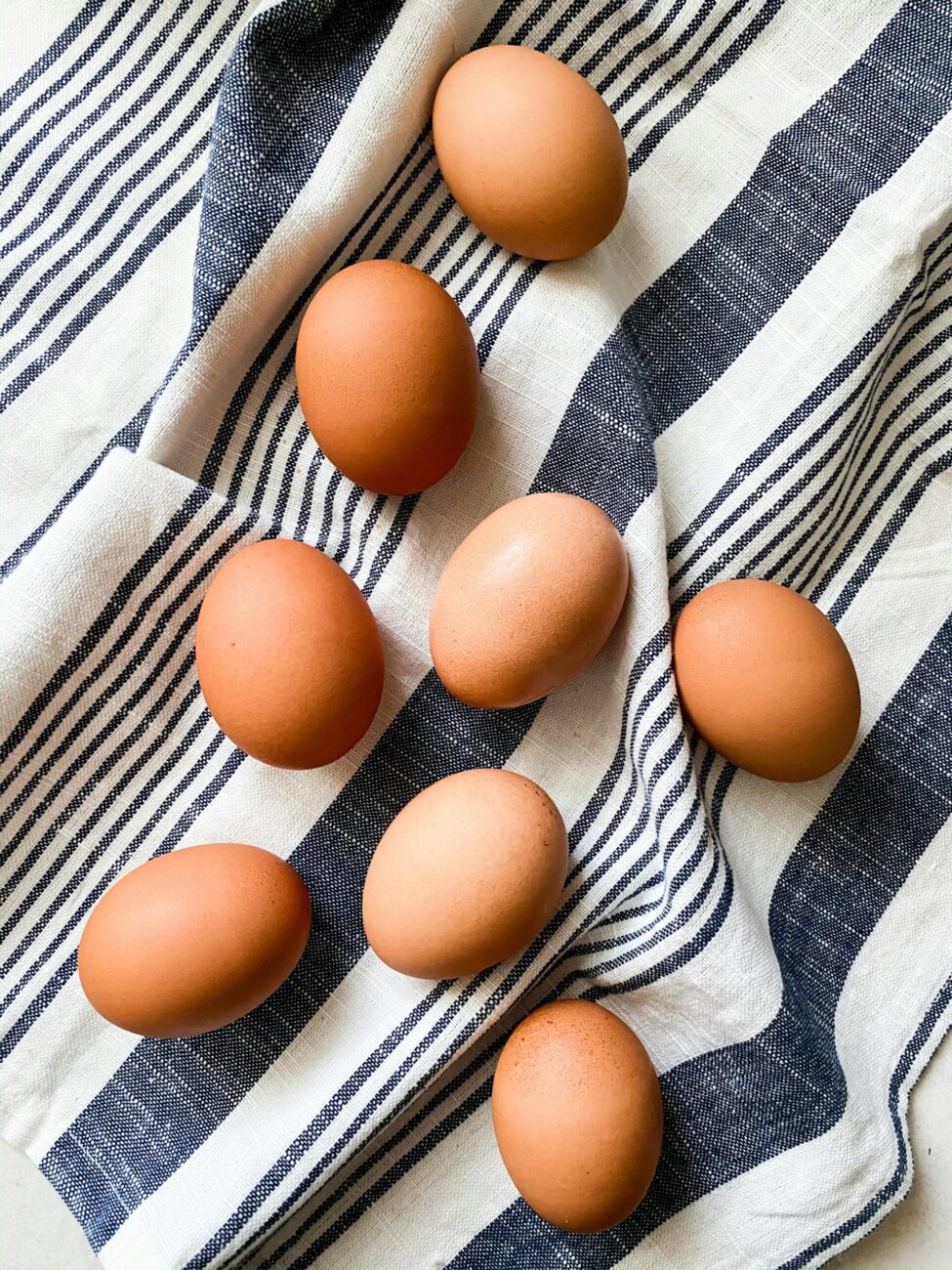
Those eggs on the striped cloth are about as clean as a backyard egg gets, and that’s how you want yours going into the fridge. Every egg comes out of the hen with a thin coat on the shell called the cuticle, or the bloom. Penn State Extension says it seals the shell’s pores, and that brushing, washing or rough handling takes it off. UC’s guide adds that it’s waxy, it fights microbes, and it slows the loss of quality.
So for a lightly dirty egg, go dry. The CDC says to clean off dirt carefully with fine sandpaper, a brush or a cloth, and NC State says a fairly clean egg only needs a dry cloth. Sandpaper takes some bloom with it too, per UC, so I’d only work on the dirty spot and leave the rest of the shell alone.
This is the part most people get backwards. Washing a warm egg in cold water can make it less safe. The CDC says not to wash warm, fresh eggs, because colder water can pull bacteria into the egg. FSIS says wash water can get “sucked” in through the pores. And Penn State says you’re not required to wash eggs for your own use at all.
If one’s too dirty to brush, here’s Penn State’s method:
- water at least 90°F, and at least 20°F warmer than the egg
- a food-safe detergent in the water
- one egg at a time, rubbed clean, never left to soak
- rinse it, dry it, then straight into the fridge
VDACS warns that soaking for even 1 to 3 minutes can let bacteria in. Turns out the sink full of water most of us start with is the wrong way to clean an egg. For a truly filthy one from my own birds, I’d skip all that and toss it.
Found a blood spot, a soft shell or a double yolk? The free What’s Wrong With This Egg tool tells you if it’s safe to eat and why hens lay them.
Fridge, Not Counter, and Keep Them Cold
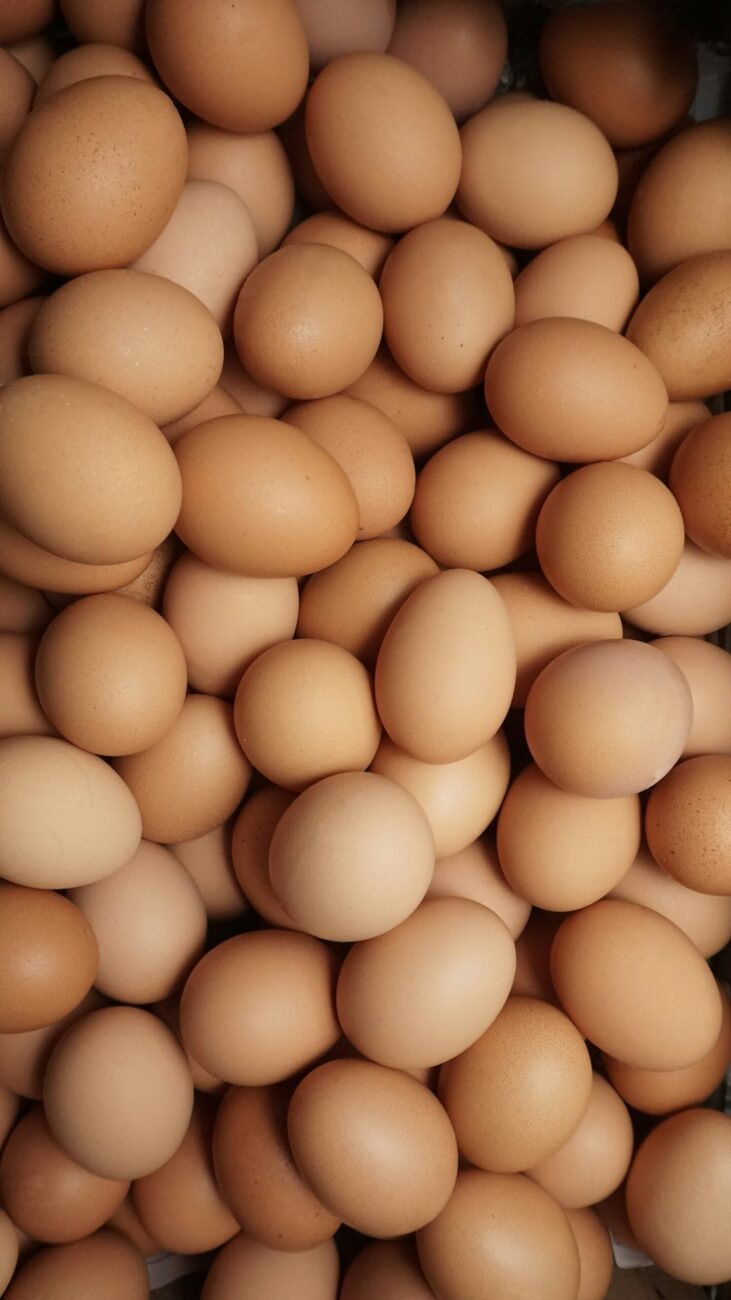
That’s a lot of eggs, and it’s the kind of pile a flock hands you once the days get long. NC State says hens need 14 to 16 hours of light to lay, which is why laying drops off in winter. When they’re coming in fast, they all go in the fridge. FSIS says refrigerate eggs as soon as possible after you gather them, and UC says refrigerate all of them right after collecting.
Once an egg’s been cold, keep it cold. FSIS explains that a cold egg left out at room temperature can sweat, and that moisture helps bacteria move into the egg. Their limit is 2 hours out of the fridge. Quality drops fast on the counter too. VDACS says an egg sitting at 75°F can drop as much as one grade in a day.
Skip the egg tray in the door. FSIS says to keep eggs at 40°F or below, in their carton, in the coldest part of the fridge, not the door. VDACS stores them large end up. Kept that way, FSIS gives raw eggs in the shell 3 to 5 weeks, and says not to freeze them in the shell.
I’d write the collection date on every carton so you’re not guessing later. If you do lose track, the float test is a decent check. An egg that floats has a big air cell, and FSIS says that means lower quality, though it may still be safe. Crack it into a separate bowl and smell it before it goes near anything else.
Got a carton you’re not sure about? The free egg float test shows what sinks, tilts, stands and floats mean, washed or unwashed, fridge or counter.
Related read: How to Raise Chickens for Eggs — Instant PDF download. Secure checkout by Stripe