As an Amazon Associate I earn from qualifying purchases. This post contains affiliate links. If you buy through them we may earn a commission at no extra cost to you.
Product prices and availability are accurate as of the date and time indicated and are subject to change. Any price and availability information displayed on Amazon at the time of purchase will apply to the purchase of this product. Certain content that appears on this site comes from Amazon. This content is provided "as is" and is subject to change or removal at any time.
Here’s how it goes wrong more often than anyone likes to admit. A grow-out batch moves outside at six weeks because that’s what the internet said. Nobody checks the corners. A raccoon peels back the chicken wire like foil on a takeout container, reaches in, and keeps reaching. It isn’t the cold that empties a coop overnight. It’s the gap nobody checked. That’s what I think about every time someone asks me when their chicks can go outside.
Age Means Nothing — Here’s What Actually Does
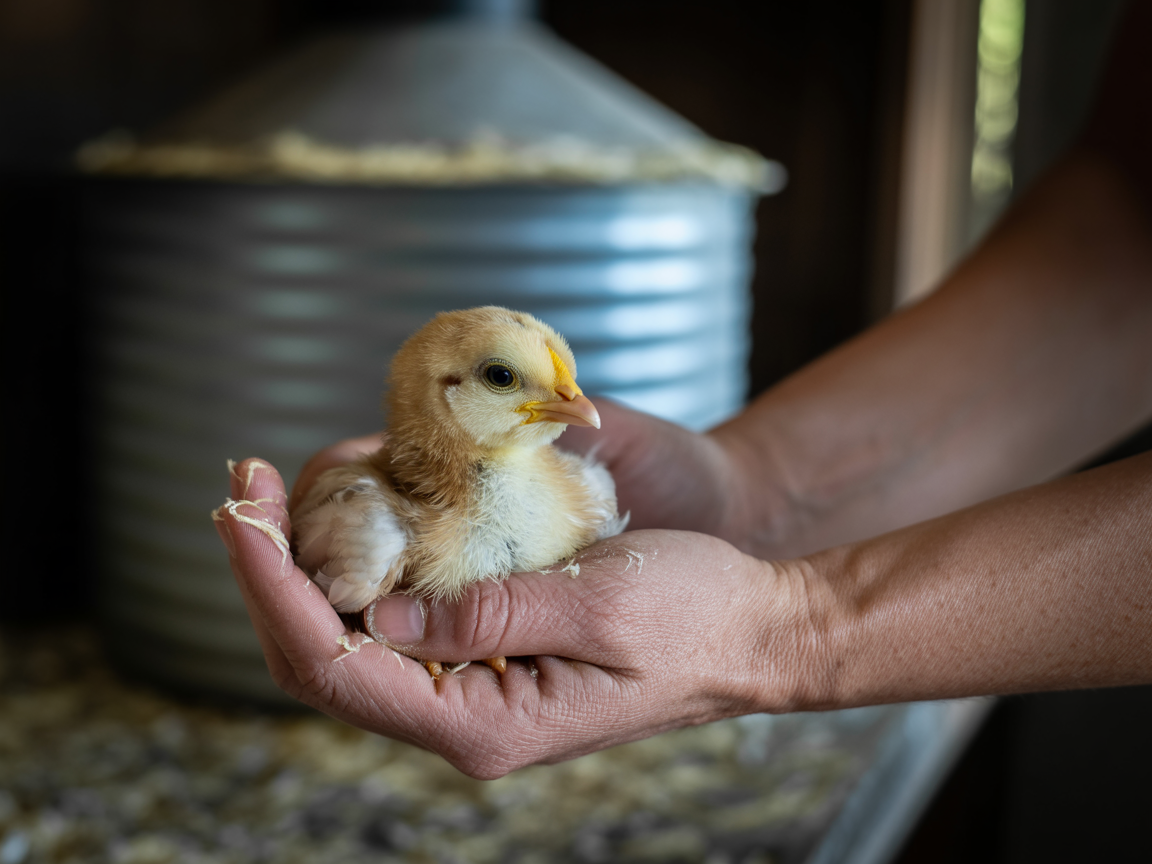
Six weeks is a number someone decided was tidy and it spread. It doesn’t account for your breed, your weather, or what your birds actually look like right now. Honestly, telling someone “six weeks” without knowing any of those things is a liability dressed up as advice.
Here’s what actually matters: feathering and your overnight low. That’s the whole equation.
Feather development varies enough between breeds that two birds hatched on the same day can be in completely different places at six weeks. A Brahma is a notoriously slow featherer. A Production Red will have you beat by two full weeks. I’ve had birds in the same brooder, from the same hatch, where one was dense and covered and the other still had visible down on its neck at seven weeks. Brooder conditions play into it too. Birds kept warmer tend to feather a little slower because they don’t need it yet.
Use the calendar as a rough orientation, not a rule. The bird in front of you is the data point that counts.
Fully Feathered Is a Specific Look, Not a Feeling
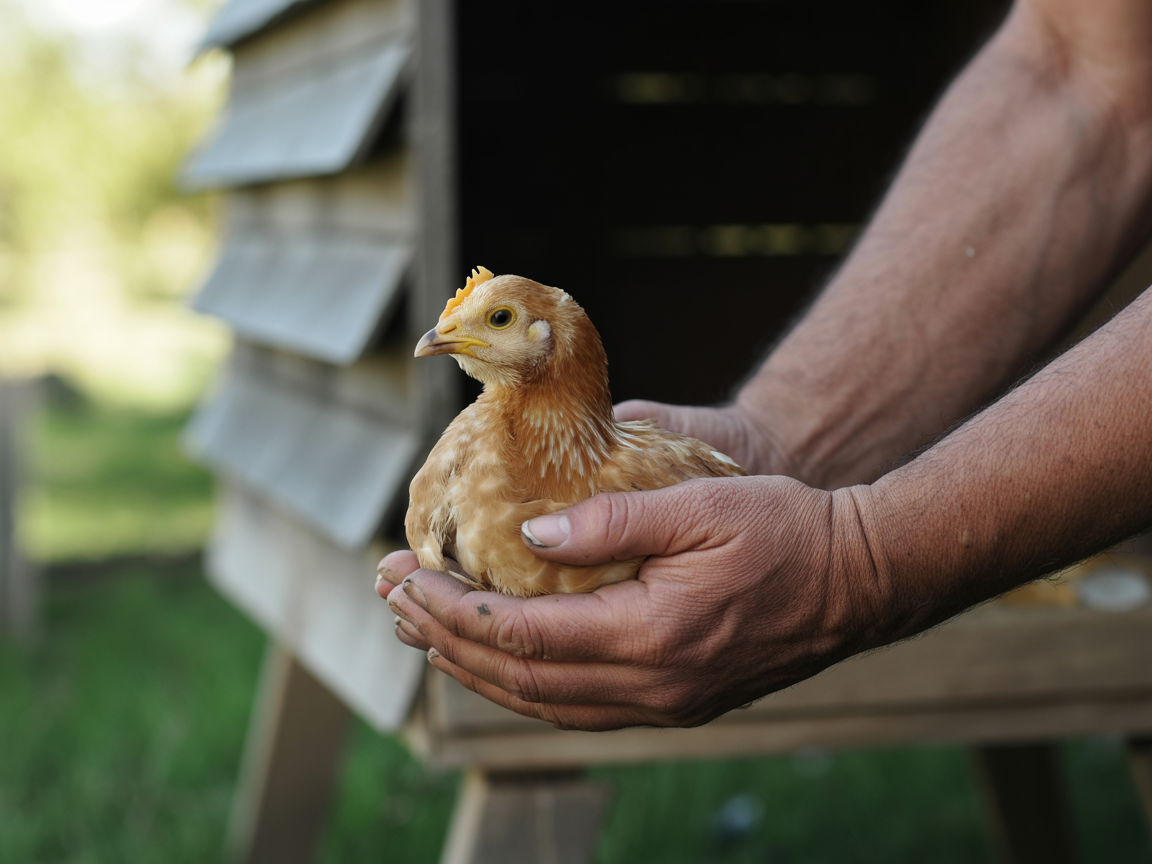
This is where people fudge it, and it costs birds. “Mostly feathered” and “fully feathered” are not the same thing. One of them handles a chilly night. The other doesn’t.
Pick up the bird. Flip it. Check the back of the neck and the vent triangle — those are the last two areas to fill in, every time. If you see yellow fuzz anywhere on the bird, it’s not ready. Not for overnight. Not even for a warm afternoon without supervision. Fluffy yellow down has zero insulating value against wind or a temperature drop.
What you’re looking for: no visible down on the neck, back, wing coverts, or around the vent. All primary and secondary flight feathers present and tight. When you part the feathers on the back, you should see skin covered by actual feather structure, not fuzz sitting on top of bare skin. Run your hand the wrong direction along the feathers and it should feel dense.
Most standard-size breeds hit that point somewhere between 5 and 8 weeks.
Bantams and Silkies usually run a week behind standard birds of the same age, and Silkies have the added problem of feather structure that doesn’t shed water or hold heat the same way. Give them more time. They’ll tell you when they look right.
Read next: My week-by-week guide to raising baby chicks
- Day 11–2 hours outsideFirst supervised outdoor session; brooder stays at normal temp
- Days 2–5Add time each dayBrooder temperature drops 5°F over the course of the week
- Day 66–8 hours outsideBirds coming in only to sleep; check overnight forecast
- Day 7Stay out permanentlyOnly if overnight low holds above 50°F for the full 7-day forecast
Supervised Trips Before Full Feathering — How to Run Them
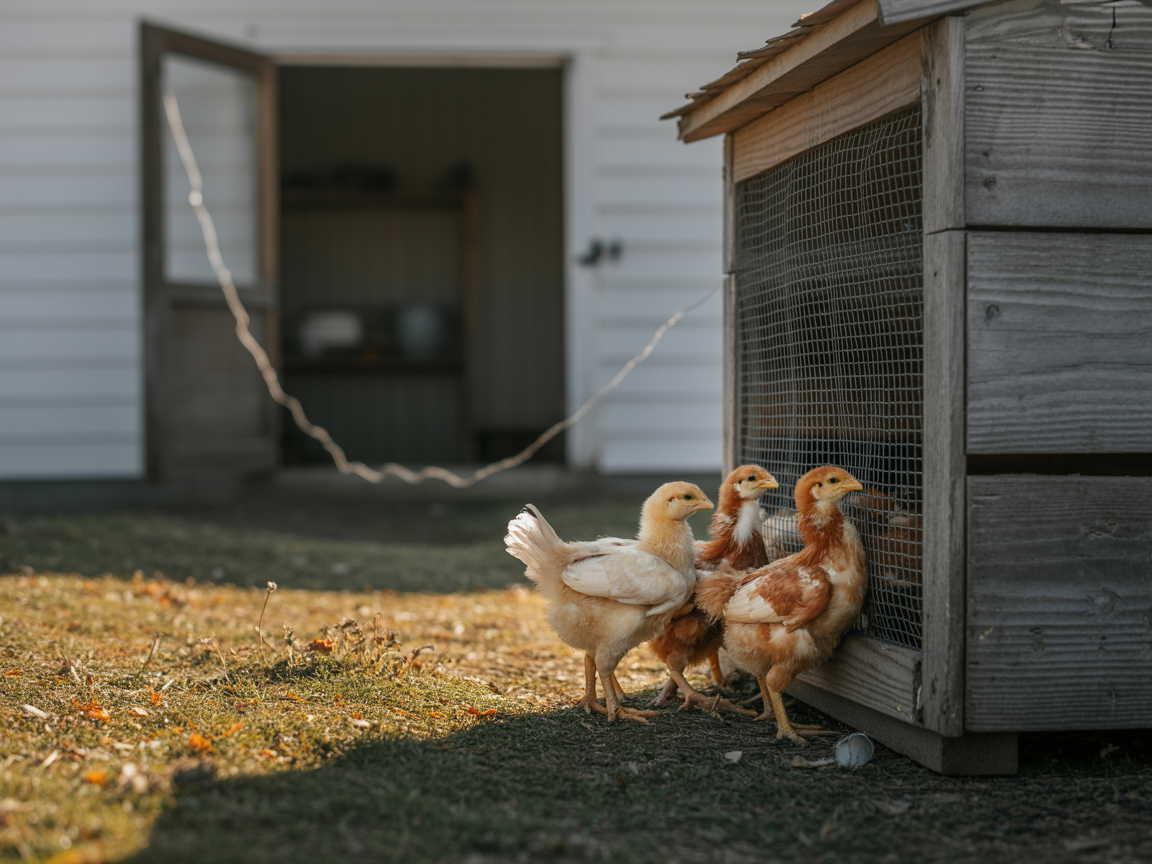
There’s real value in getting partially feathered birds outside before they’re ready to stay out permanently. I’ve moved birds out for good that had never touched grass before full feathering, and they took way longer to settle — more spooking, more piling into corners. Short supervised trips fix that.
The conditions have to be right. Air temp above 65°F. No wind. Direct sun available so they can move into it if they get cold. And you are there the entire time. Not watching from the window. Present, in the yard.
For birds under 4 weeks, keep sessions under 20 minutes. They’re not regulating well yet and they’ll chill faster than you’d expect. For birds between 4 weeks and fully feathered, you can push toward 30-40 minutes if the conditions hold.
Learn the cold signal: when chicks start piling on top of each other, that’s not social behavior. That’s them trying to share heat because they’re losing it. Bring them in the second you see it.
Don’t wait to see if they spread back out.
And don’t leave them outside unsupervised because “it’s warm enough.” Warm enough for you sitting on the porch is not warm enough for a bird with patchy feather coverage and a cloud rolling in front of the sun.
Check the Overnight Low, Not the Afternoon High
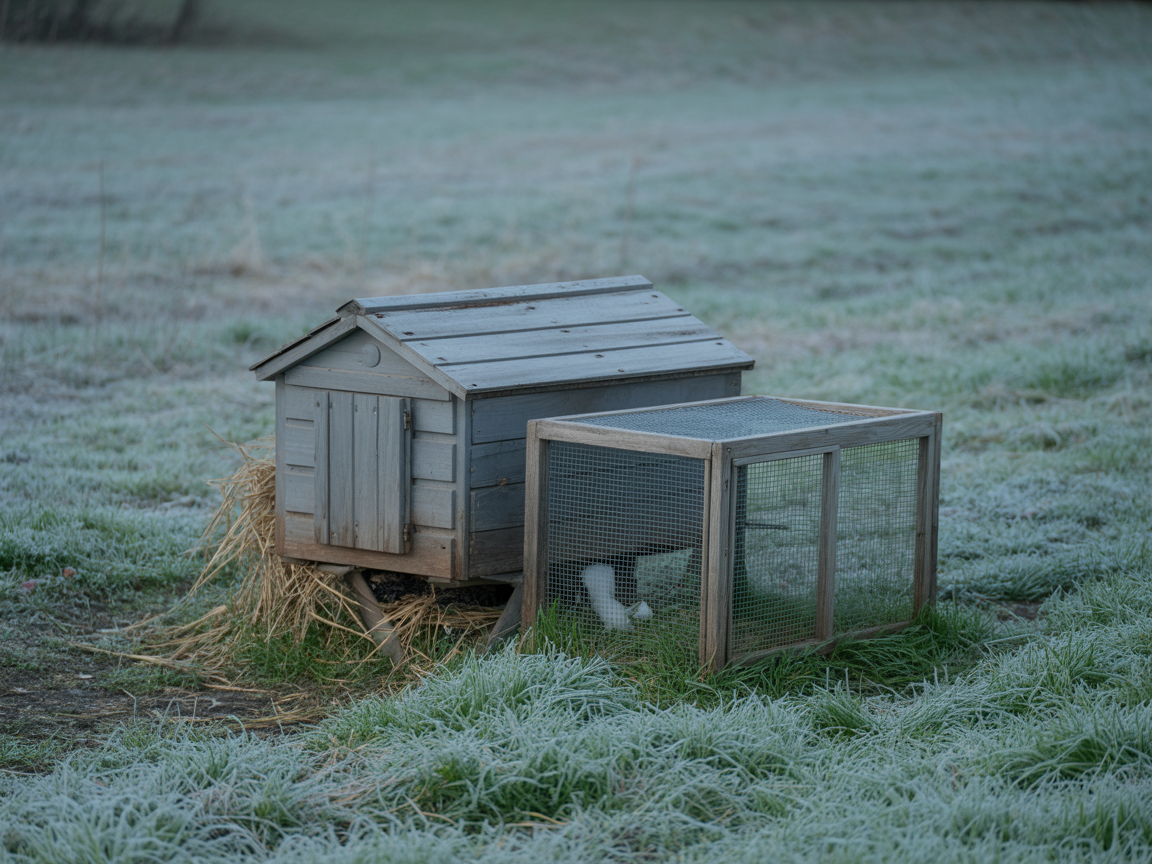
I’ve watched people decide their birds are ready based on a 74°F afternoon. Then 2 a.m. hits and it’s 46°F in the coop and they’ve got stressed birds at best and a health problem at worst. Daytime highs are irrelevant to this decision. Overnight lows are everything.
Fully feathered standard-size birds can handle overnight lows down to about 50°F without supplemental heat once they’re acclimated. That’s your floor for committing to a permanent move outside. For smaller or thinner-bodied breeds (Leghorns, Hamburgs, anything built light) treat 55°F as your floor. They don’t have the body mass to buffer a cold night the way a Plymouth Rock does.
Before you move birds out permanently, pull up a 7-day forecast for your zip code. Not just tomorrow. The whole week. If there’s a sub-50°F night anywhere in that window, wait. One cold night undoes several days of hardening off faster than most people expect. Cold isn’t a surprise threat. It’s right there in the forecast if you look at it. Look at it.
Read next: Reading brooder temperature from the chicks, not the thermometer
| Chicken Wire | Hardware Cloth | |
|---|---|---|
| Opening size | 1-inch hexagonal | 1/2-inch square |
| Construction | Twisted wire — bends and pulls apart | Welded — rigid under pressure |
| Rat entry | Head and body fit through 1-inch gap | Blocked by 1/2-inch mesh |
| Raccoon resistance | Grabbed and pulled until it gives | Holds under sustained force |
| Recommended for birds under 12 weeks | No | Yes |
Bottom line: Hardware cloth is the only spec worth using on any space housing birds under 12 weeks.
Read next: Integrating chicks into the flock without losing one
Hardening Off Is Real and It Takes a Week
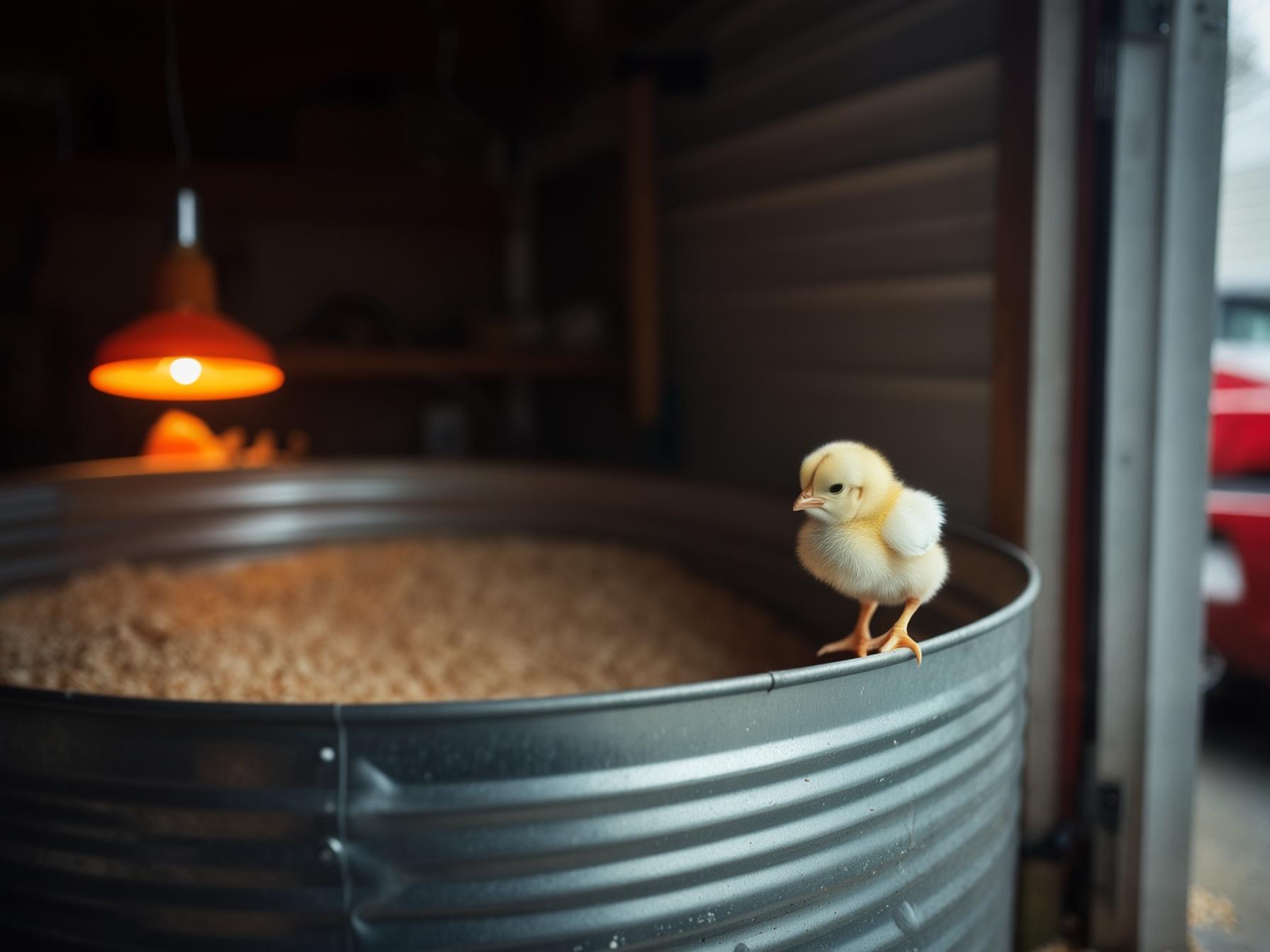
Moving chicks directly from a 75°F brooder into a 58°F coop overnight isn’t just rough on them — it’s the kind of stress that doesn’t show up immediately. You won’t find a dead bird the next morning. What you get instead is slower growth, reduced feed efficiency, and a flock that’s more susceptible to the first respiratory bug that blows through. Skipping hardening off is just a delayed tax.
The schedule I run: start with 1-2 hours outside on day one. Add time each day. By day six you’re at 6-8 hours, and the birds are coming in to sleep in a brooder that’s been dropping 5°F over the course of the week. By day seven, if the overnight forecast holds, they stay out.
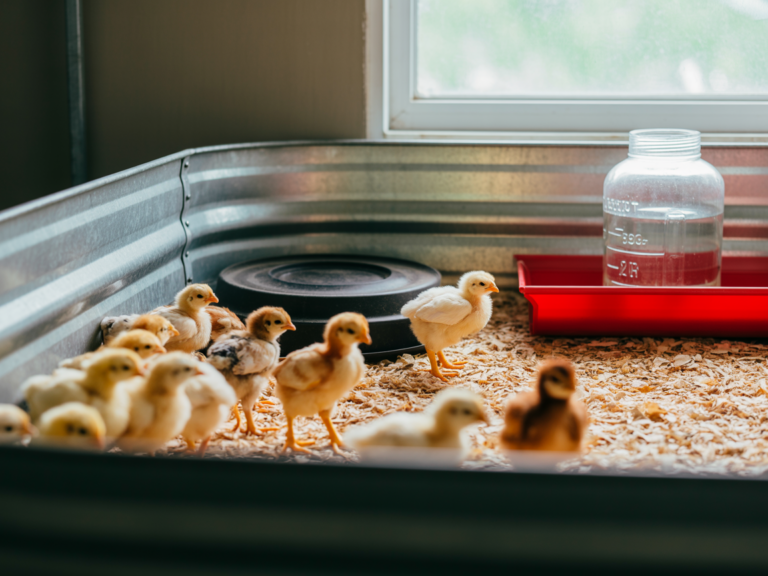
Keep water and feed accessible outside during sessions.
Chicks don’t pace themselves. They’ll run around in the sun for two hours and come in dehydrated if you don’t give them a reason to drink. A small waterer in the pen costs you nothing and matters more than it seems like it should.

$8.59 In Stock
Paid link · price checked October 6, 2026 09:15
Predators That Take Small Birds — And Why Cold Isn’t on This List
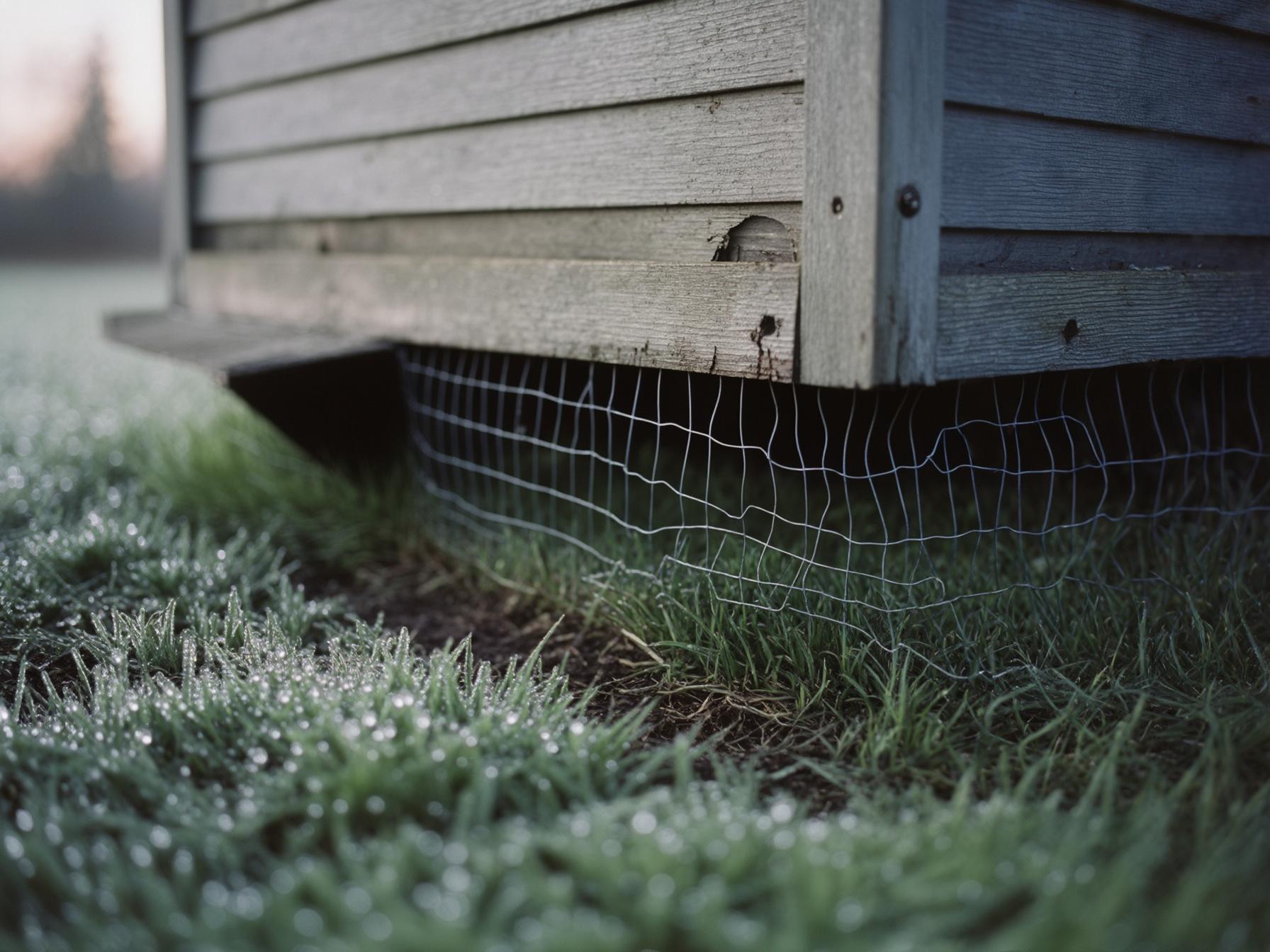
Cold is a problem you can see coming. You check the forecast, you make a call, you add a heat source or you wait. It moves slow. It gives you information. A raccoon that finds a loose panel on a Tuesday night gives you no warning and no second chance.
Here’s what’s actually out there, because turns out most people have a vague idea of “predators” without knowing what’s realistic in their own yard.
Rats. They can squeeze through a 1-inch gap and they will take chicks under 3 weeks old. They’re quieter than anything else on this list and they work fast. If you have rats anywhere near your property — grain, compost, a neighbor’s bird feeder — you have rats that will find your brooder pen.
Raccoons. Strong, persistent, and not put off by much. They can exert enough force to pull a bird through a 2-inch chicken wire opening. They’ll work a latch for 20 minutes if they smell something on the other side. I’ve watched one work a simple hook-and-eye latch. Took it about four minutes.
Hawks. A red-tailed hawk will take on a grown hen. Young birds and bantams are easy targets. Hawks don’t need a gap in your run. They need an opening at the top.
Cats. I know, people don’t like to hear it. But in suburban yards especially, cats account for a disproportionate share of daytime chick losses. The neighbor’s cat that’s “never bothered anything” changes its behavior around small, ground-level prey that moves in clusters and doesn’t flee fast. Don’t assume.
Read next: Predator-proofing ideas for the coop
Hardware Cloth Is Not Optional — What Chicken Wire Actually Does
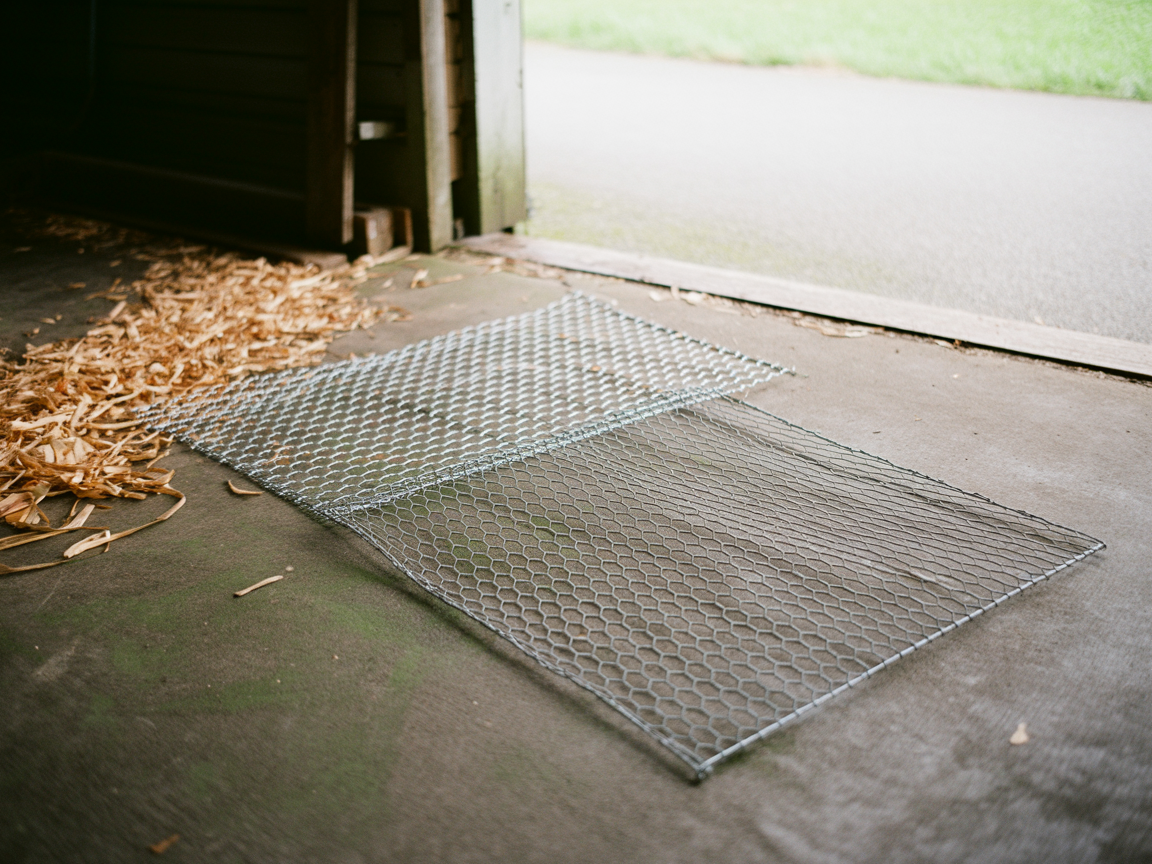
Chicken wire keeps chickens from walking into your garden. That is what it does. It is not predator protection. The hexagonal openings are typically 1 inch across, large enough for a rat’s head and body to pass through. The wire is twisted, not welded, so it bends and pulls apart under sustained pressure. A raccoon doesn’t chew through it. It grabs and pulls until the wire gives.
Hardware cloth is welded, rigid, and comes in half-inch openings. That’s the spec you want: 1/2-inch hardware cloth on any space housing birds under 12 weeks. Not chicken wire with a frame. Not plastic deer netting because it was on sale. Hardware cloth.

$99.99 In Stock
Paid link · price checked October 6, 2026 09:15
Bury an apron at least 12 inches out from the base, or turn it down 6 inches and out flat. Either way, the goal is stopping a digger that’s hitting the wall and going under. Raccoons dig. Fox dig. Don’t skip this part because it’s annoying to trench.
And the top. Every open run needs a covered top. Hawks don’t need a gap. They need an opening large enough to drop into, and an uncovered run is an invitation. Cover it.
Build Your Grow-Out Space Before the Chicks Need It
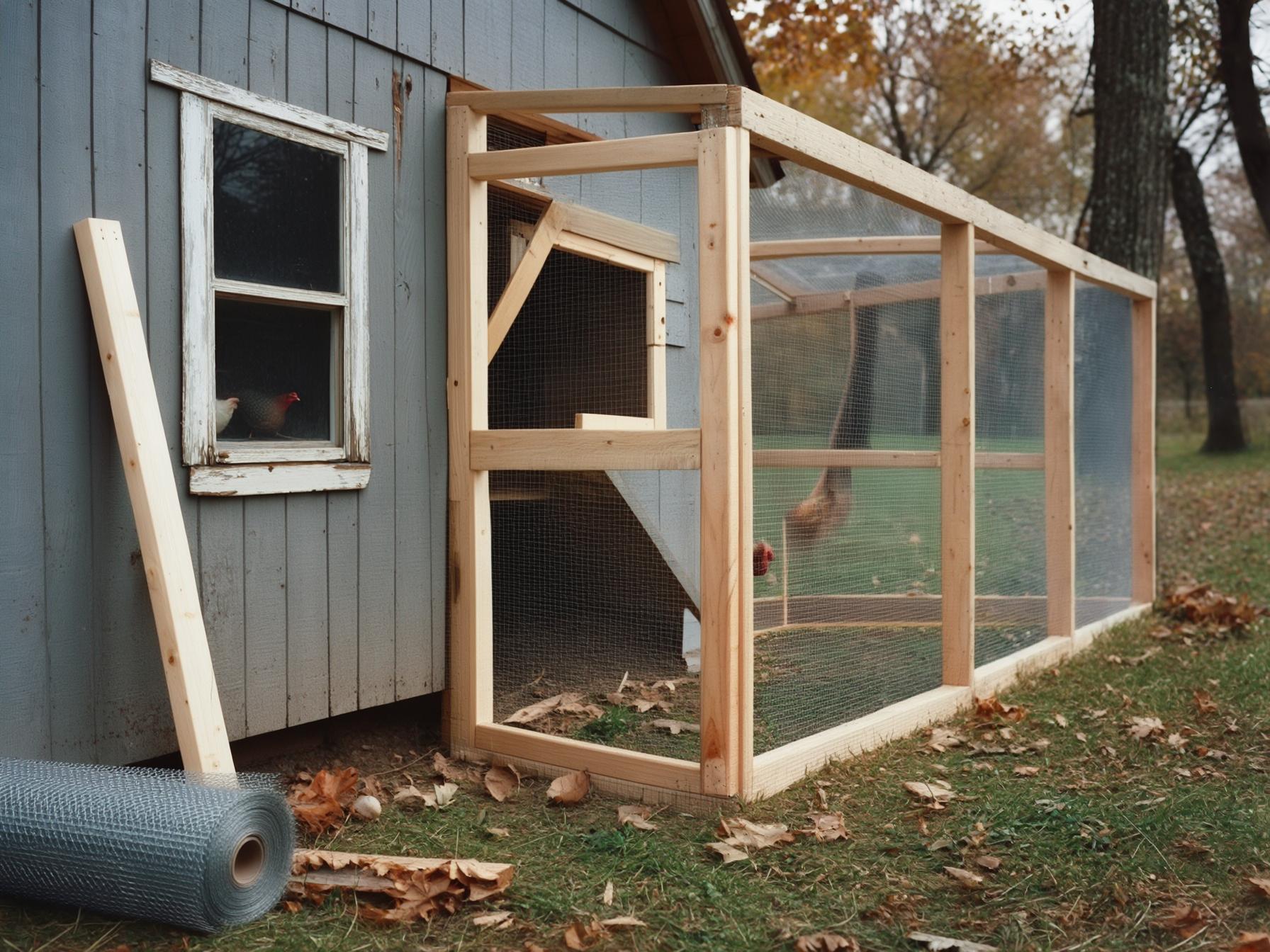
Week two of brooding — that’s when you build it. Not week five when you’re looking at birds that are too big for the brooder and you realize you have nothing ready. Rushed builds have gaps. I built one in a hurry once and found a gap at a bottom corner I could fit three fingers through. Found it before the birds went in, barely. Don’t put yourself in that position.
What the space needs: hardware cloth on all four sides and the top. No gaps larger than 1/2 inch anywhere. Run your hand along every seam and corner before birds go in. Actually run your hand along it. You’ll find things visual inspection misses.
The latch matters more than people think. A simple hook-and-eye does not stop a raccoon. Use a two-step latch, something that requires a lift and a slide, or a pull and a turn. Two deliberate motions. Raccoons are clever with their hands and patient, so make every door need two separate motions — a carabiner through the hasp is cheap insurance.
Minimum floor space of 2-3 square feet per chick inside the pen. Crowding in a grow-out space causes stress pecking, and once that starts it escalates fast.
Put the pen where you can see it from a window. Just for the first week. It’s not paranoid. It’s the easiest form of monitoring you have, and if something’s wrong you’ll catch it early instead of at morning chores.
Keep the grow-out space separate from your adult flock. Introductions are a different conversation, and young birds in with adults before they have size and confidence is a welfare problem on top of everything else.