A chicken garden is a patch of greens your hens can eat from but can’t dig up. That’s the whole idea. You put a wire lid over the plants, the leaves come up through it, and the roots stay where the birds can’t get them.
I keep twelve hens and one bad-tempered rooster, and I let my birds into a vegetable bed exactly once. A row of young lettuce was bare dirt before I finished my coffee. So now the flock gets greens on my terms, and you can set it up the same way for the price of a few boards and a bag of seed.
Here’s the frame I’d build, what to seed under it, how long to wait for the first bite, and the one waiting period that matters if you eat out of the same dirt.
Why Loose Hens Turn a Garden to Dust

A hen doesn’t graze like a cow.
She scratches with her feet to turn up seeds and bugs, then eats whatever she just uncovered, greens and grit included. In a run that’s a good habit. It keeps them busy and it keeps the bedding turned.
In a seeded bed it’s a wrecking crew. Seedlings go first because they’ve got no roots to speak of, so one good kick leaves the plant lying on top of the dirt. Bigger plants last a little longer. A flock will strip a kale plant from the bottom up, then go to work on the soil around its stem.
Turns out the answer isn’t keeping chickens away from plants. It’s keeping their feet away from the roots.
Every setup below does that one job, and if you’re looking at a bald run right now, that’s the part that’s missing.
Build the Grazing Frame Before You Buy Seed

A grazing frame is a shallow box of boards with wire across the top. Soil goes inside, seed goes in the soil, and the hens stand on the wire and eat whatever pokes through. Build it out of 2×6 boards instead of 2x4s if you can, because you want the wire 3 to 6 inches above the soil. If it’s staying in one spot, keep it no wider than 4 feet so you can reach the middle to water it.
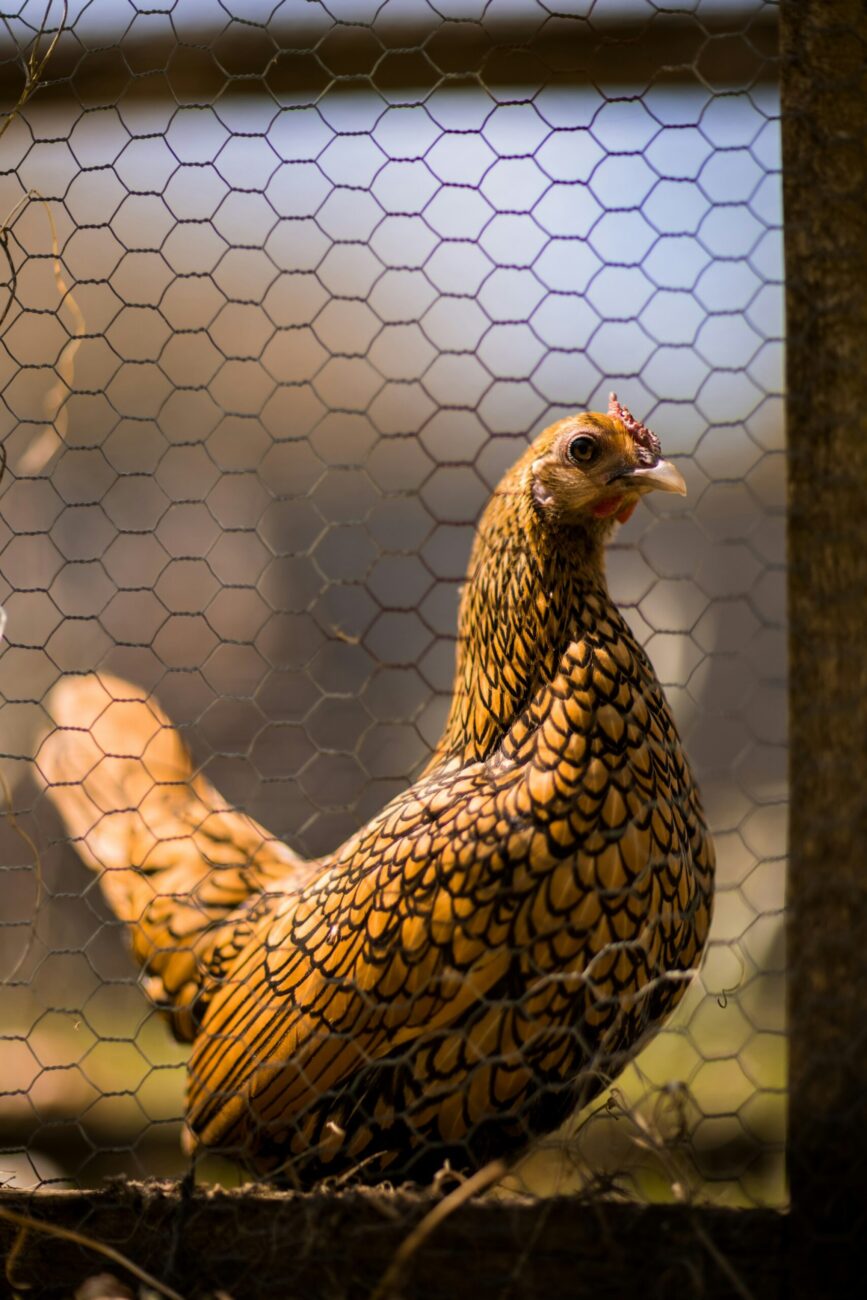
The wire is where most people go wrong. Half-inch hardware cloth stays tight and lasts, but the small holes make it hard for a hen to reach broad leaves, so it’s best over clover and grass-like greens. Chicken wire lets them get at more, but it stretches and sags under birds. I use hardware cloth because I’d rather give up some grazing than rebuild the thing in June.
Put a cross support about every 2 feet, running both ways on a bigger box. A few hens will pile onto one spot, and a sag in the middle gives them a way to get a beak down and pull the plant out by the roots. Fasten the wire with screws and washers rather than staples, since a staple can pop out and end up on the ground where the flock scratches. Trim or tuck the cut edges, too. They’re sharp enough to catch a foot.
What to Seed Under the Wire

Skip plain lawn grass. They’ll pick at it, but it doesn’t give them much nutrition. A poultry pasture mix is the easy buy at the feed store, and it’s usually some blend of clover, alfalfa, peas, flax, vetch and buckwheat. Clover and alfalfa have long been some of the best forage a chicken can get, so look for a mix that leads with them.
Kale is the old-timer. On many farms the greens grown just for poultry were mostly kale. I still do a version of that. A few plants grow in a fenced bed, and I pick the lower leaves and toss them over the fence.
Keep the plants young. Chickens go for shorter, younger plants over long stemmy ones when they’ve got the choice, and a frame mostly handles that for you, since the birds keep clipping whatever comes through the wire. Scatter it at the rate on the bag and rake it in lightly. Seed should sprout within about a week if you water by hand every day for the first few weeks. Keep the hens off until the greens are up through the wire, which takes a few weeks. Let them on too early and they’ll yank the sprouts right out by the roots.
Fence Off Plots and Move the Flock

If you’ve got the room, small fenced plots beat one big frame. Put up two or three, seed them, and let your birds work one at a time. When a plot’s picked down, shut that gate and open the next. Rest is what makes it work, because the plants need time to rebuild before the flock comes back.
A predator doesn’t care about your rotation plan. Anything outside the run has to be something you’d trust with a raccoon around, or else it’s a daytime setup and you’re home to watch it. I’ve lost a bird to a raccoon, and I don’t leave my birds on a plot I can’t see. Hawks and dogs count too, which is why free-range hours end up shorter than you’d like, and why a plot’s fence has to stop the same things a predator proof coop does.
A frame in the run gets around all of that. It’s already inside the wire, so there’s nothing new to guard, and it works in a run that’s been bare since its first summer. Honestly, that’s where I’d start.
Droppings and the Lettuce You Eat

Birds in a bed means raw manure on the soil, and that’s a food safety problem for you, not for them. The number to go by is 120 days between manure going on and harvest for anything that grows in or touches the soil, and 90 days for other crops. In plain terms, if the hens were working your salad bed in mid-March, that lettuce shouldn’t be picked until mid-July. For most of us that settles it. The flock goes in after the last fall harvest, cleans up what’s left, and comes out well before spring planting. Fall is when most people add manure to a vegetable garden anyway.
Anything you eat raw stays behind the fence during the growing season. Washing helps, but I wouldn’t lean on it to fix a bed the birds walked through last week.
Greens Are Still a Treat

Laying hens need their complete feed first. Free greens feel like they ought to count as dinner, but a hen needs enough protein from a balanced ration, and a bellyful of clover won’t get her there. Keep treats at no more than 10% of the day’s diet, and count the frame, the kitchen scraps and the scratch grain together.
An easy check is to give them only what they’ll clean up in about 20 minutes. A frame doesn’t come with a portion size, so keep it small for the size of your flock. One 4-foot box for twelve hens won’t let anybody overdo it, and it’ll look picked over by the end of the week anyway.
Winter’s the other half of this. Nothing grows under the wire in January, so the feed bag is doing nearly all the work. A tray of sprouted grain is a cheap way to keep them busy, and young barley grass is one of the better ones to grow.
When the Frame Goes Bald

It will, eventually.
Droppings pile up on the wire, the birds find the one soft spot, or a dry week finishes off what they didn’t. Don’t take it personally. Lift the box, rake out the dirt, reseed it and move it to a fresh corner of the run if you can.
Check the wire while you’re at it. A sagging middle means you’re short a support, and you’ll want to fix that before reseeding, since new sprouts are exactly what a hen will yank through a low spot. If the greens never got going in the first place, the usual culprits are low wire, too little water in those first few weeks, or birds let on too soon.
Plants to Keep Out of Reach

Well-fed hens tend to leave bad plants alone, but I wouldn’t bet a flock on it. Black locust and corn cockle are both poisonous to poultry, so keep them away from any plot and off any run fence. I’d give rhododendron, mountain laurel and oleander the same wide berth, because those are hard on livestock in general and a bored bird in a bare run eats things a busy one walks past.
Kale’s own family lands on that poultry list too, for its roots and seeds. So feed the leaves, and pull a plant once it bolts and starts setting seed.
Walk the fence line before you move a plot. A new fence can pin your birds right next to a shrub they’d normally have ignored, and you won’t know until somebody’s sick. If a hen ever goes off her feed after a move like that, call your vet and tell them what’s growing along the fence.
What I’d Set Up for Twelve Hens

Two frames in the run, each 4 feet square, built from 2×6 boards with hardware cloth on top and a support every 2 feet. One gets seeded with a poultry pasture mix and stays closed for a few weeks while the birds work the other. Then I swap them. One fenced bed for kale and chard sits outside the run, with no birds inside it until the fall cleanup. I pick leaves and throw them over. The vegetable garden proper stays off limits from spring through harvest because of that 120-day clock.
It’s kinda boring, which is what I want from anything that has to work around a flock. Build one frame this weekend and watch how your hens use it before you buy anything else.
Related read: How to Raise Chickens for Eggs — Instant PDF download. Secure checkout by Stripe