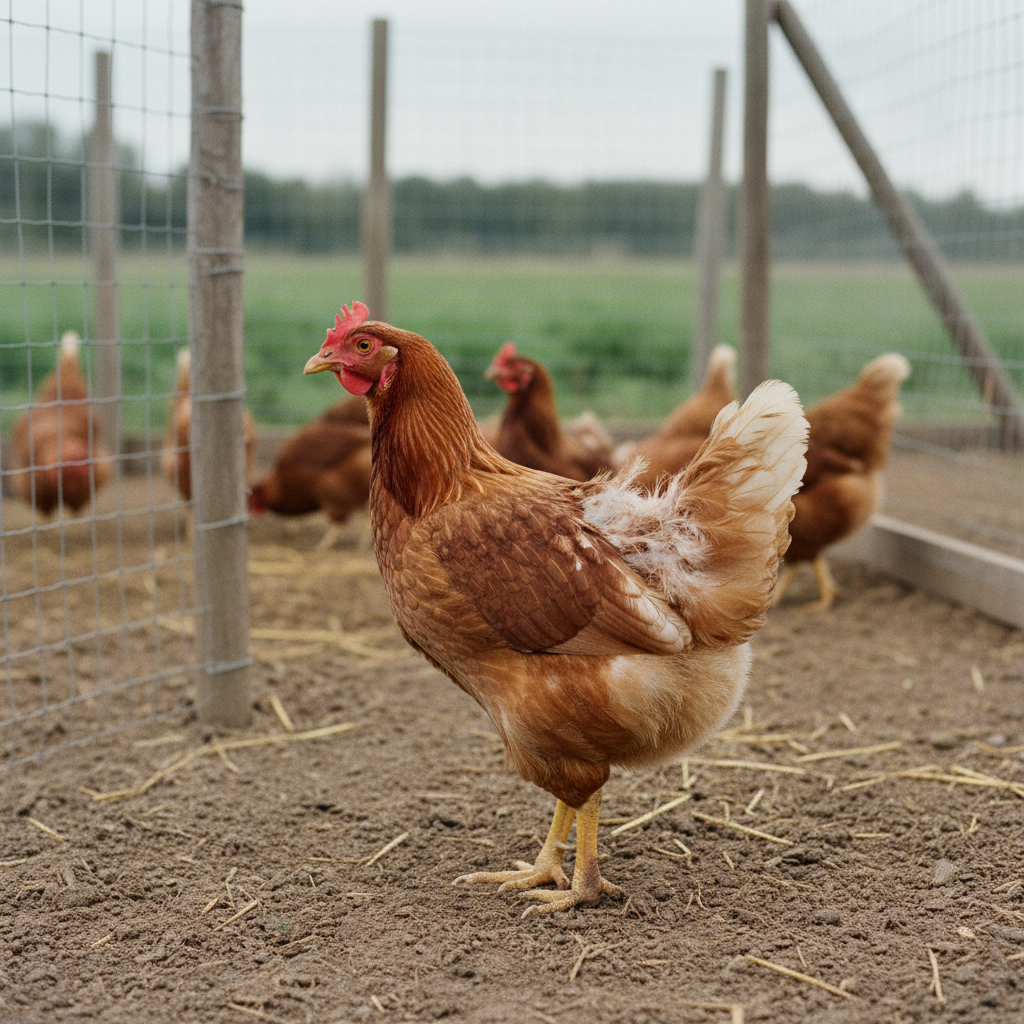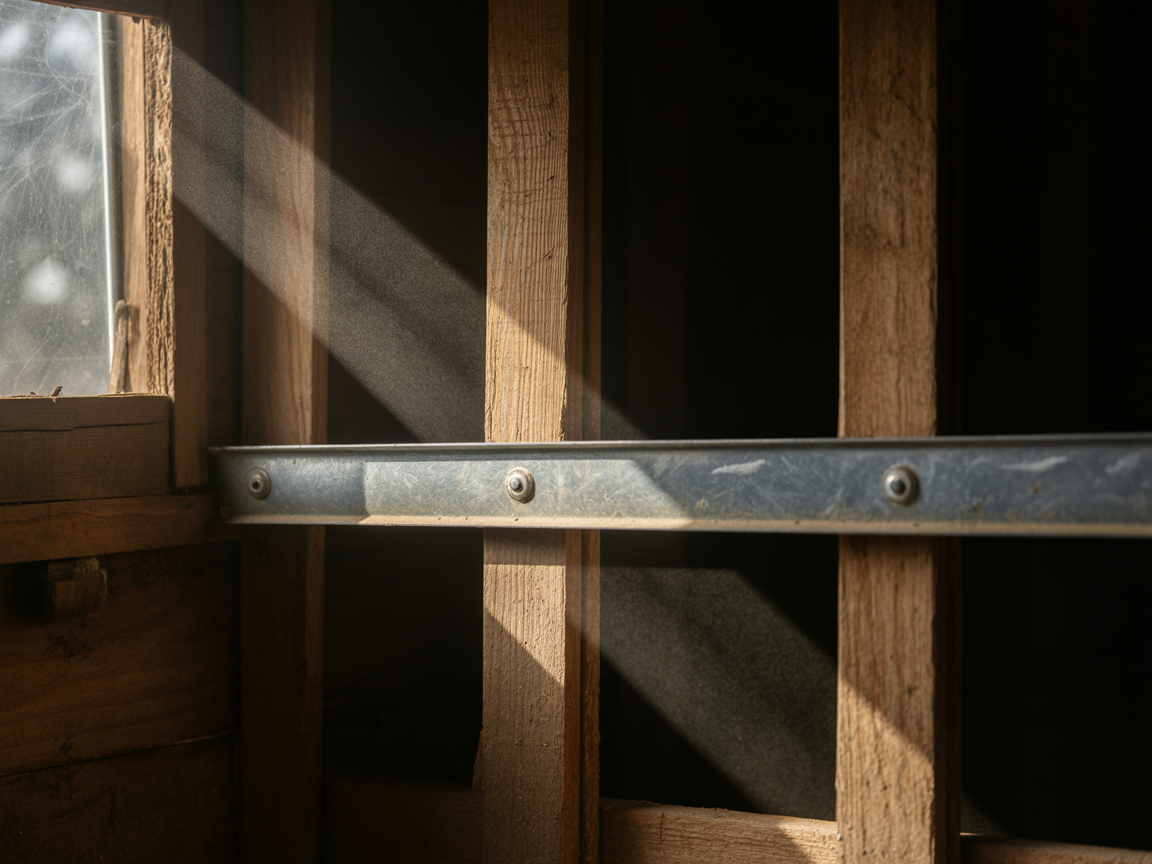
A 5-gallon bucket makes a better nest box than most of the plywood ones I’ve built. That’s not me being cheap. Plastic wipes clean in about 30 seconds and wood never really does. Mites live in the seams of a wooden box, and you’ll be scraping at them every spring. So I run 6 bucket boxes for 12 hens. The whole wall cost me about $18, and 2 of the buckets were free from a bakery. Here’s what I got wrong first.
Lay the bucket on its side, not upright

My first 3 went in upright. Open top, like a bin. It looked tidy and my birds hated it.
Hens want a cave. Something dim, with a roof on it, where nothing can look down at them while they’re laying. An open bucket gives them none of that. So they’d stand on the rim and drop an egg from 6 inches up, and I’d find it cracked in the bedding.
Turn the same bucket on its side and it’s suddenly the darkest spot in the coop. Now they queue up for it.
Side-mounted, opening facing away from the door. That’s the whole trick.
Height matters more than the box does
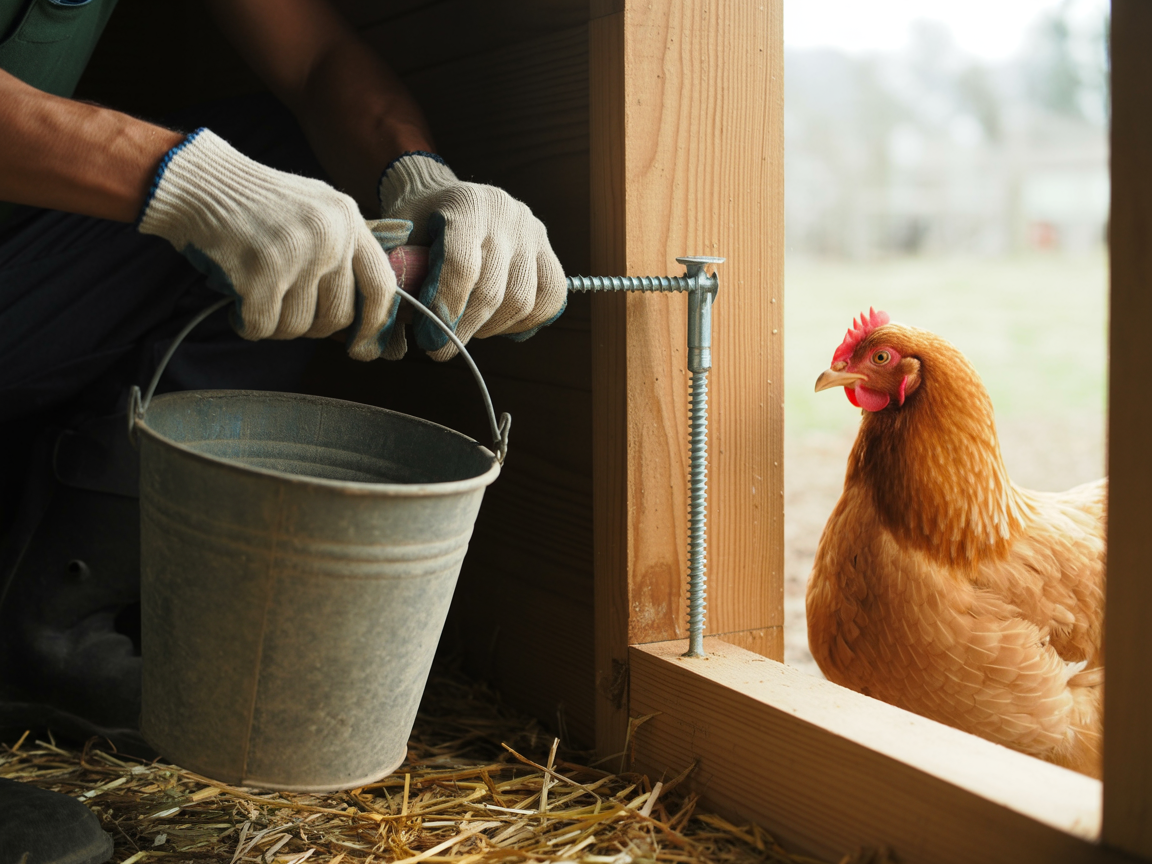
Put your boxes lower than your roost bars. Not level with them. Lower.
Chickens climb to the highest thing in the coop to sleep. If that’s your nest box, they’ll sleep in it. And a bird that sleeps in a box poops in it all night, so you’ll be washing eggs every morning.
I put up with that for about 5 months before the penny dropped.
Mine now sit 18 inches off the floor. The roosts are up near 40. Nobody sleeps in the buckets.
Cutting the opening without wrecking the bucket
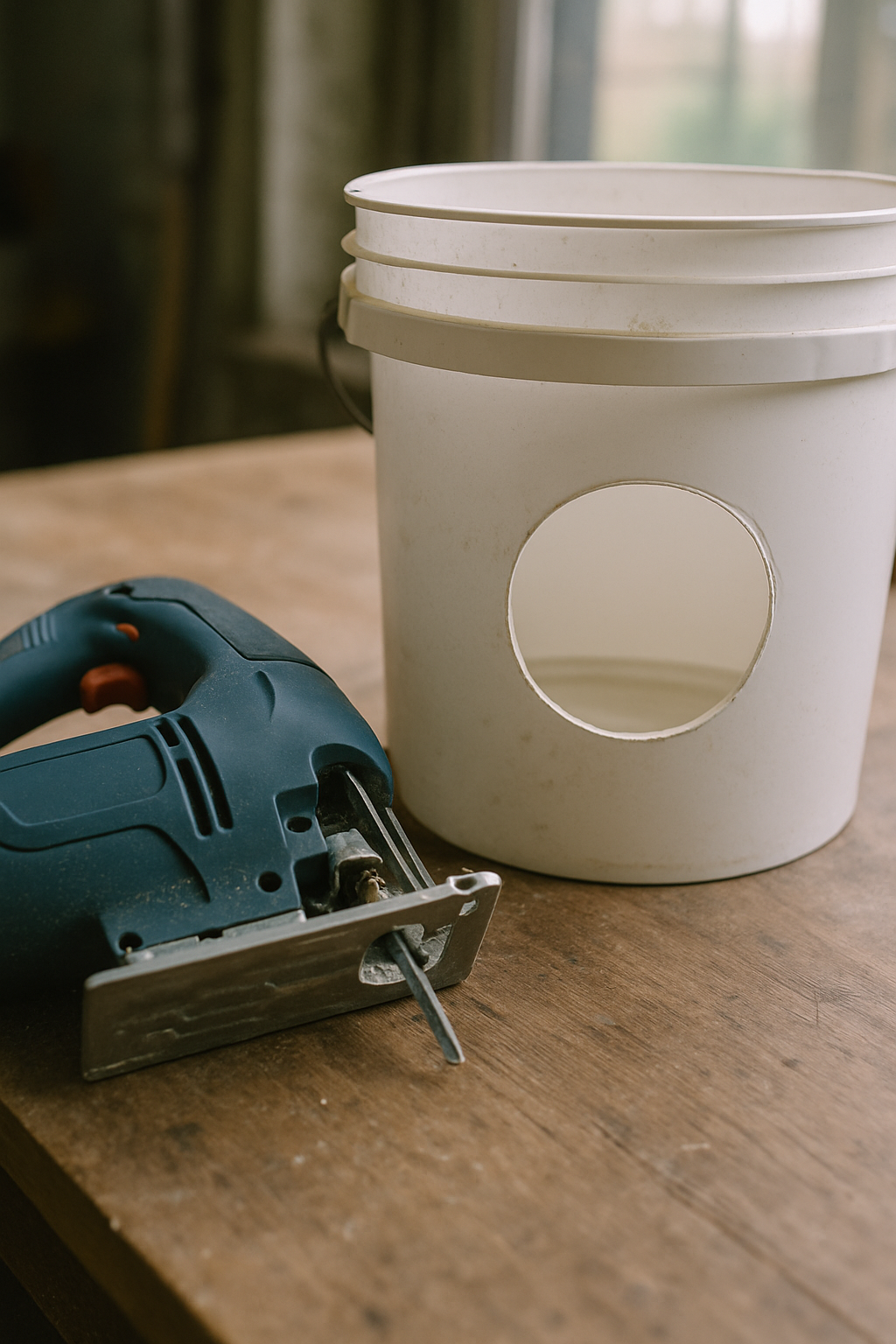
You don’t have to cut the bucket at all. Snap the lid on and cut a hole in the lid instead. That way the rim stays intact, and the rim is the strongest part of the whole thing.
If you do cut the bucket, leave a lip along the bottom. 3 or 4 inches. That lip holds the bedding in when a hen scratches. Without it you’ll be topping up shavings constantly.
Warm plastic cuts clean. Cold plastic cracks.
So I do mine in the afternoon sun with a jigsaw and a fine blade. Then I run sandpaper round the cut edge, because a sharp plastic edge and a bird’s breast are a bad combination.
Sand or shavings? I use shavings
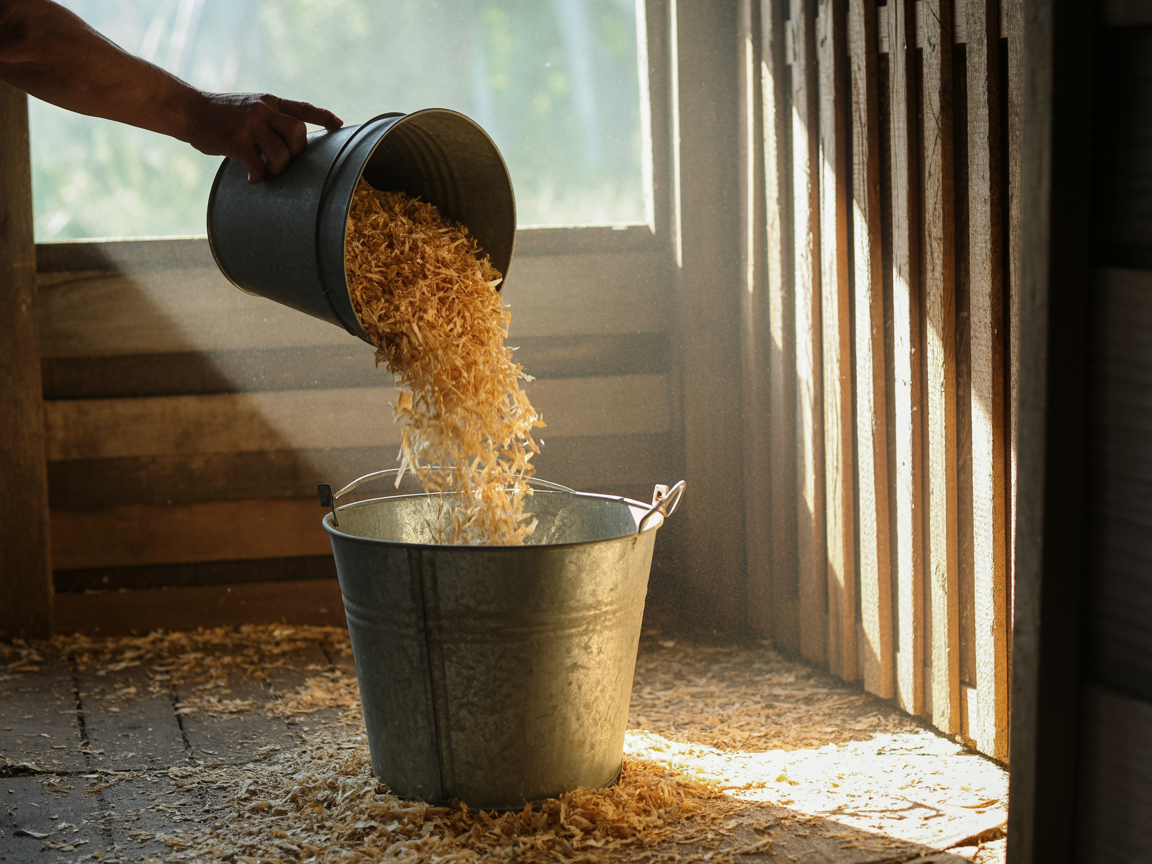
Pine shavings, about 4 inches deep, swapped out when they look flat. That’s it. A bale from the feed store runs me under $10 and covers 6 boxes for most of a season.
Sand drains well and plenty of people swear by it. But I don’t love it in a nest box. It’s heavy, and a bucket hanging off a wall bracket doesn’t need the extra weight.
Straw works too. It mats down faster.
Whatever you use, depth is the part people skip. Thin bedding is how eggs crack.
Cleaning is the whole reason to bother

Pop the bucket off the bracket, tip it out, hose it. 30 seconds.
No corners to scrape. No seams for mites to sit in. That’s the real argument for plastic over plywood, and it’s a bigger deal than it sounds.
A wooden box that’s been in service 2 years has cracks you simply cannot get into. And that’s exactly where mites set up shop.
I do mine properly every few weeks in summer, less in winter. Honestly, if you’ve ever fought a mite problem you’ll take the plastic without arguing.
Stacking them to get your floor back
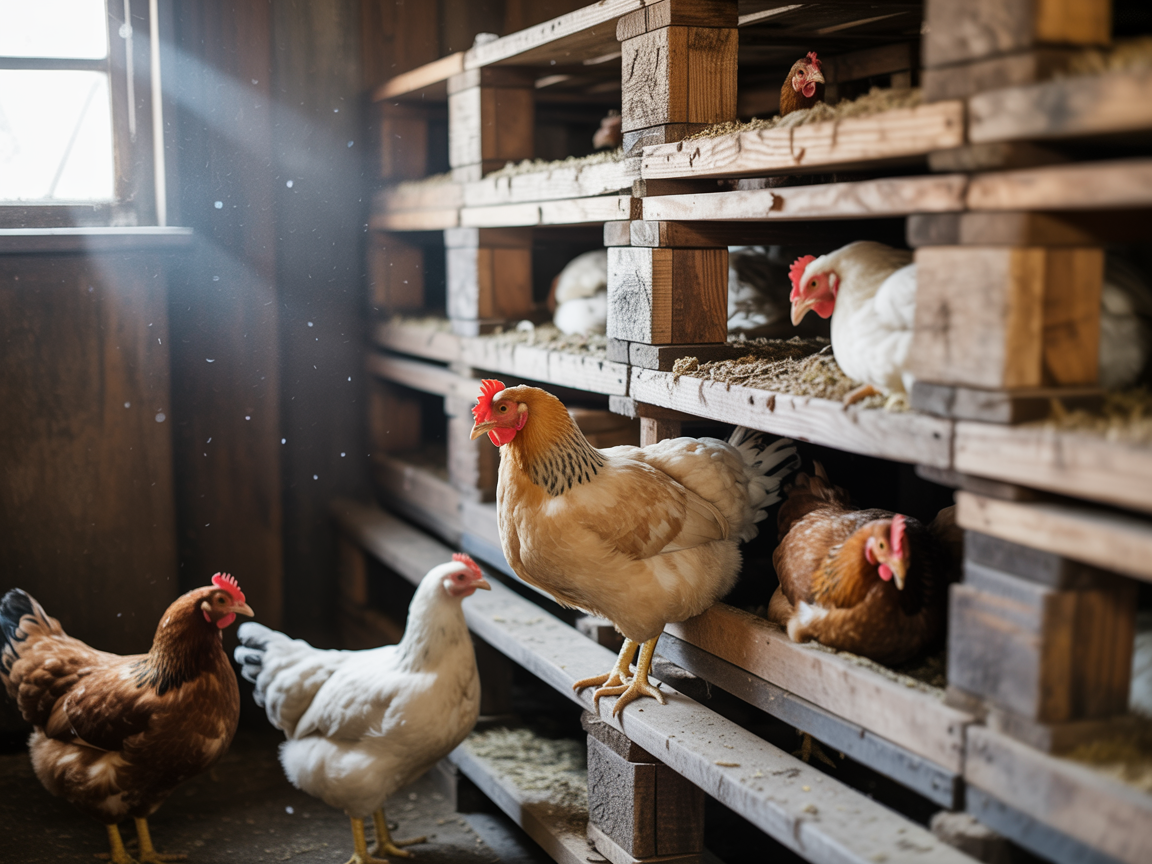
2 rows of 3, one above the other, screwed to a scrap 2×4 frame. That’s my entire nest wall. It takes up about the footprint of a kitchen chair.
Put a small ledge under each opening. Hens want to land on something before they step in. Without a perch they’ll flap at the hole and kick bedding out every time.
And you need fewer boxes than you think. Roughly 1 per 4 or 5 hens.
Mine ignore 4 of the 6 and all pile into the same 2 anyway. Turns out that’s completely normal, and a bit maddening.
What this actually costs
New food-grade buckets run $5 to $7 each at a hardware store. Free is better, and free is easy. Bakeries and delis throw out frosting buckets constantly. Ask on a weekday morning.
One caution, and this is the only bit here I’d call a safety issue. Don’t take a bucket that held a chemical. Not drywall compound, not pool supplies, nothing industrial. Food-grade only, because plastic holds onto what it carried.
Brackets, screws and a length of 2×4 put me at roughly $18 for the whole wall.
A bucket won’t stop a raccoon
I want to be straight about this one. Your nest box is not a security feature. It’s furniture.
A raccoon took 2 of my birds through a gap in the run. Not through a nest box. No amount of clever bucket work would have changed that night.
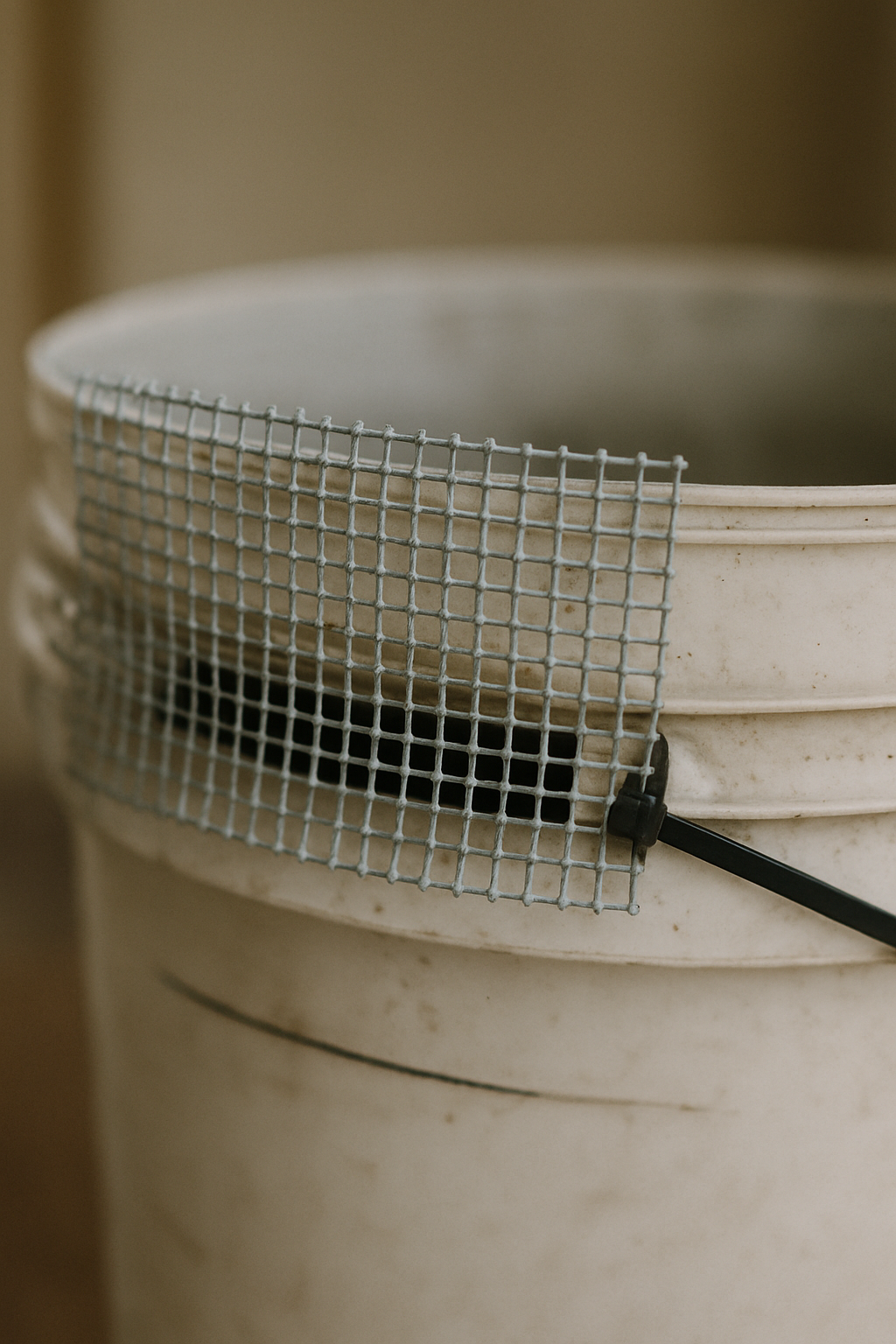
What actually matters is hardware cloth instead of chicken wire, a latch a raccoon can’t work open with its hands, and a pop door you shut at dusk. Every one of those beats anything you do to a bucket.
So fix the coop first. Then worry about where the eggs go.
Rolling the egg out the back
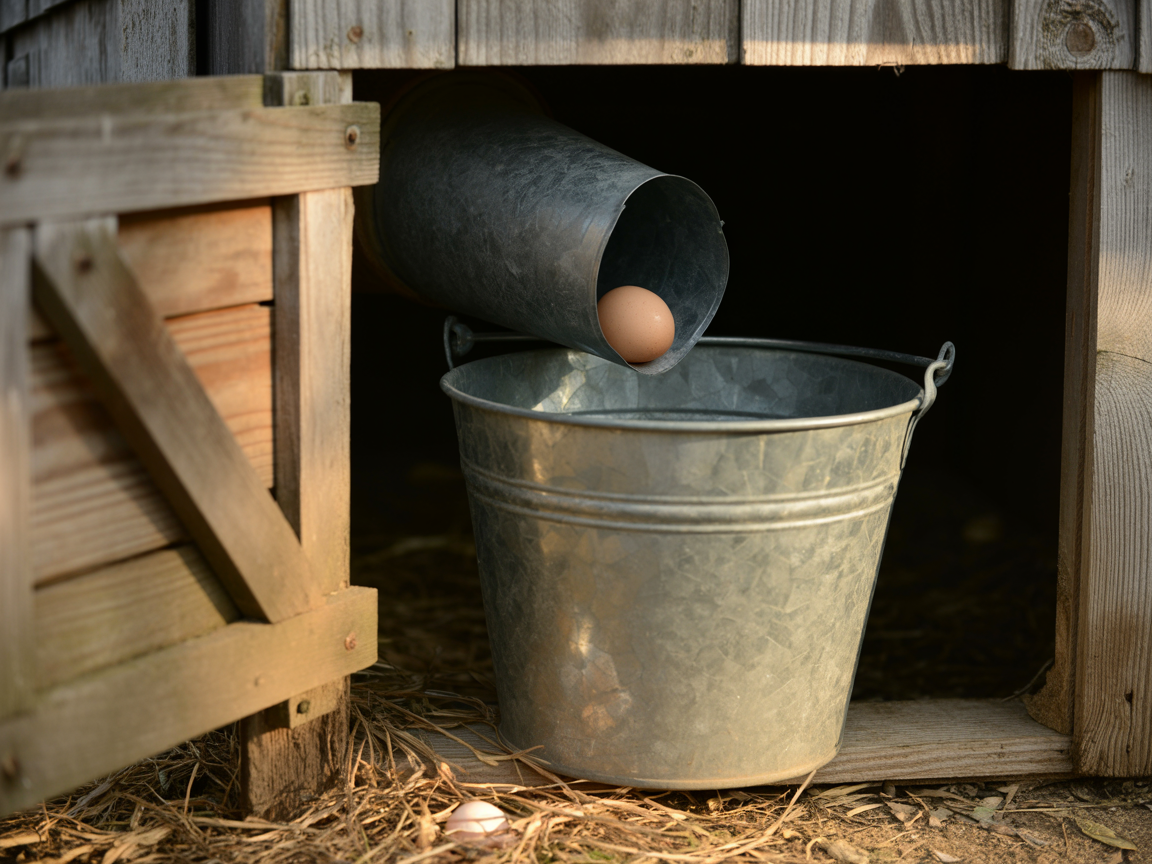
Tilt the bucket a few degrees toward the back and cut a slot. The egg rolls away from the hen instead of sitting under her. Line the slope with a scrap of nest pad so it’s a slow roll and not a drop.
This is the one modification that really does cut down on dirty eggs. The egg stops being available to be stepped on, so it stops getting stepped on.
It helps with a bird who’s started eating eggs too. But it won’t cure one on its own.
It’s fiddlier to build. If you’re making 6 boxes, build 1 of these first and see whether you like it.
Paint it if you want, just not inside

I don’t decorate my coop. You might, and that’s fine. There’s no rule that says a working coop has to look grim.
Two practical notes if you do. Keep the paint on the outside of the bucket, because the inside gets scratched up by claws and you don’t want flakes ending up in the bedding.
And go dark rather than bright. Hens pick the dimmest box available, every single time. A white bucket in a sunny corner will sit empty while 4 birds argue over the one in the shadow.
Which is the whole design philosophy, really. Dark, dry, low, easy to hose out.