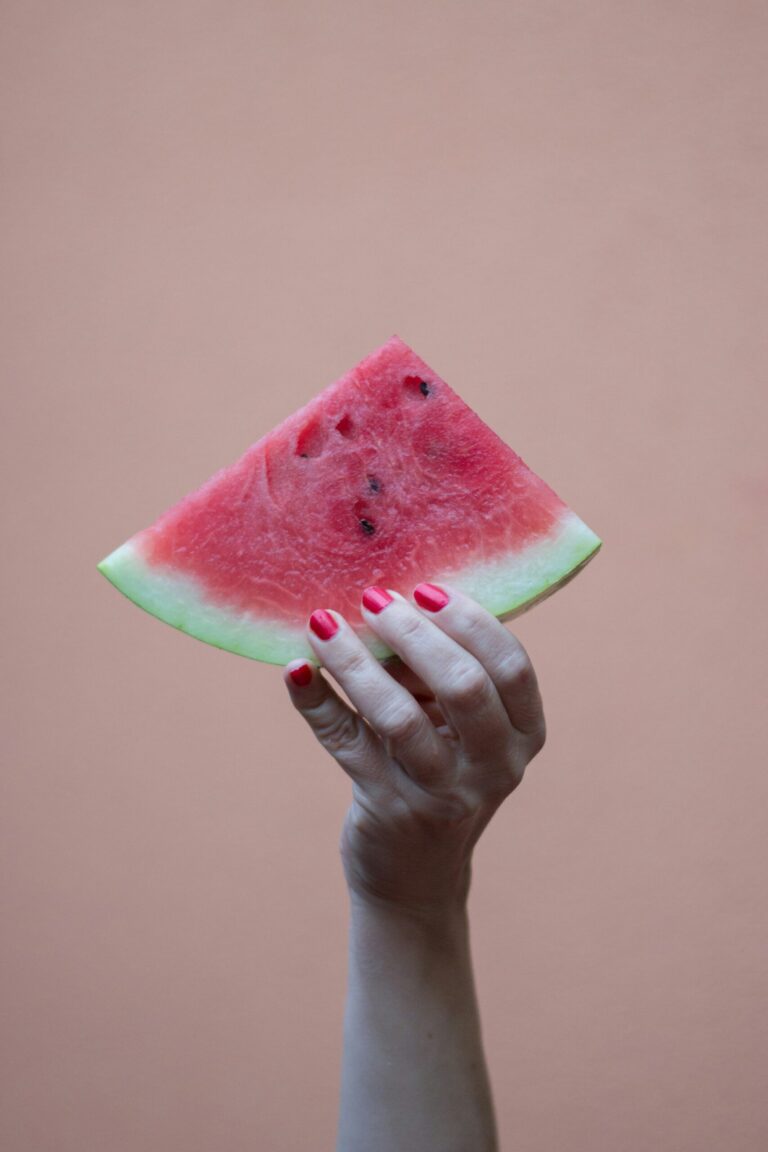
If your hens eat a bagged layer feed from the feed store, odds are they already eat soy every day. Alabama Extension says soybean meal is the “primary source of protein in most poultry diets,” a by-product of soybean processing. So my read is yes, chickens can eat plain tofu. Keep it plain and cut it small, and stop short of a tablespoon a hen.
The trouble is in the salty kinds and the fried ones (and in raw soybeans, which are a different food).
This page used to say the opposite. It called tofu “100% off limits,” and none of the sources I read for this rewrite back that up. They’re all listed at the bottom. Five university extension pages cover feed and treats, plus salt. The Merck Veterinary Manual covers salt poisoning and fat. Feedipedia and two studies cover raw and heated soy, one of them in laying hens. USDA’s FoodData Central told me what’s in each kind of tofu.
Honestly, though, none of them fed tofu itself to hens. So where the advice below is my own math or my own call, I’ll say so.
The short version.
- Plain tofu is fine, by my read. It’s made from soybeans that get cooked on the way to soy milk, and heat is what knocks down the trypsin inhibitors in raw soybeans.
- A scant tablespoon a hen a day, at most. Treats should be no more than 10% of what she eats, and by my math that’s 10 to 15 grams (a level tablespoon of firm tofu weighs about 16).
- Skip fermented tofu and tofu that’s been sitting in a salty sauce or soup. Skip fried tofu too.
- Raw soybeans? Nope.
- Pick up whatever the flock leaves.
Your Hens Already Eat Soy

Start at the feeder, because that’s where your hens get most of their soy.
Feedipedia, a feed database from three French bodies (INRAE, CIRAD, AFZ) and the FAO, calls soybean meal “the main protein co-product of soybean crushing” and says it’s widely used in compound feeds for poultry and other livestock. Put that next to Alabama’s line and it’s pretty much settled. Soy isn’t some odd human food to a laying hen. It’s the main protein in most of what you pour in her feeder.
The catch is heat. Raw soybeans carry trypsin inhibitors and lectins. Feedipedia warns that those “can impair protein digestion and animal performance,” which is a plain way of saying the bird gets less out of her feed. In Feedipedia’s words, trypsin inhibitors “reduce the activity of digestive proteases” (the enzymes a bird uses to break down protein).
The good news comes in the very next line. Those compounds are “largely inactivated by adequate thermal processing,” Feedipedia says. That’s why, once the oil is pulled out of the beans with a solvent, the leftover flakes get toasted before they’re ground into soybean meal.
Feedipedia’s page on whole soybeans puts numbers on it. Raw soybeans run 20 to 35 mg of trypsin inhibitor activity per gram. Heated ones come down to around 4 mg (between a fifth and a ninth of the raw level, by my math). And up to 30% heated soybeans have gone into poultry diets “with no evidence of depressed performance,” it says.
Tofu gets heated too. The Institute of Food Technologists says tofu making starts with soaking and grinding the soybeans, and the beans get cooked before the soy milk is filtered off from the pulp. That milk is then set into a solid with a coagulant (calcium sulfate is the most widely used one, says the IFT). No source I read compares that cooking with the heat soybean meal gets, though.
A 2024 University of Belgrade study measured tofu made by cooking the soybeans and setting the curd with rennet. It found the inhibitor activity in that tofu “very low,” and the authors called the process “very effective” at cutting trypsin inhibitors, along with urease and lectins. Now, that’s one lab and one way of making tofu. My read is that it fits what Feedipedia says about heat.
What’s in a Block of Plain Tofu

The old page also said tofu has “practically zero nutritional value” for chickens. Turns out USDA’s numbers say otherwise.
Firm tofu made with calcium sulfate has 17.3 grams of protein in 100 grams. It also has 683 mg of calcium and 190 mg of phosphorus. USDA’s regular tofu is a good bit wetter (84.6 grams of water in 100, against 69.8 for firm), and it has 8.08 grams of protein.
Now set that beside your feed bag. Alabama wants a layer diet at 16% protein or more. Kentucky’s Jacquie Jacob puts the floor at 14% and says 16% layer diets are more common. So gram for gram, firm tofu is about as rich in protein as layer feed, by my math. My read is that tofu isn’t a protein boost for a laying hen at all. It’s a swap.
And if you’ve heard that hens need meat protein, Alabama says there’s “little, if any, difference in nutrient content between vegetarian and nonvegetarian diets” when you pick a feed.
Calcium is where tofu falls short. Kentucky puts layer mash at 2.5% to 3.5% calcium, and Alabama’s table says 3% to 4%. Firm tofu at 683 mg in 100 grams is about 0.68%. That’s under a third of the feed’s calcium, gram for gram, by my math. And check which kind you bought, because USDA’s extra firm tofu made with nigari lists 282 mg.
That’s my case for keeping it small. Kentucky says laying hens “require large amounts of calcium for eggshells,” and tofu has a third of the feed’s at best. Alabama warns that birds given too many extras “will fill up on these incomplete feeds” and skimp on the complete one.
Alabama’s picture of it is ice cream. Give your birds too much “ice cream” in scratch, treats or kitchen scraps, and their egg production “is likely to suffer,” it says.
How Much Tofu a Hen Can Have

Colorado State Extension says treats should make up “no more than 10% of their daily diet,” and that’s a short leash. Alabama says a laying hen eats 100 to 150 grams of feed a day (roughly a quarter pound). Put those together and one hen gets 10 to 15 grams of treats a day, by my math.
That’s every treat together, too. It’s not tofu on top of the scratch and the kitchen scraps.
Here’s what that looks like with a real block. USDA’s half cup of firm tofu weighs 126 grams. Divide by eight and a level tablespoon comes to about 16 grams. That’s a hair over one hen’s whole allowance at the top end, so a scant tablespoon is the most I’d give. A quarter block weighs 81 grams, so it covers about five to eight hens’ treats for a day, by my math.
One more thing about blocks. USDA’s own note says words like “firm” and “extra firm” vary between makers, since there are no standards for the types of tofu. So the firm you buy may not be the firm I’m doing the math on.
Penn State’s small flock guide keeps it short. You should avoid feeding “high levels of human food or scraps,” it says. So my call is to cut the tofu small, scatter it where you can see it, and then watch the clock.
Colorado says not to feed more than the flock can clean up in 5 to 10 minutes, so you don’t draw nuisance animals. Kentucky’s limit for table scraps and scratch together is what the birds can finish in 20 minutes. I’d go with Colorado’s shorter window.
Skip Salty, Fermented or Fried Tofu

Plain tofu is barely salty. USDA lists 14 mg of sodium in 100 grams of firm tofu, about 0.014%. Maine Extension says sodium goes into chicken feed at “about 0.15%” of the feed mix. So plain tofu has under a tenth of the sodium in her feed, by my math.
Fermented tofu sits at the other end. USDA’s entry for salted and fermented tofu (fuyu) lists 2,870 mg of sodium in 100 grams. That’s about 19 times the feed’s level.
Here’s the number worth remembering. One of USDA’s fuyu blocks weighs 11 grams and carries about 316 mg of sodium. A hen’s whole day of feed at 0.15% holds 150 to 225 mg. So one small cube of fuyu hands her more sodium than her whole day of feed, by my math.
Salt isn’t the enemy in itself. Maine says salt “is required, but can be toxic at high concentrations,” and the Merck Veterinary Manual puts numbers on it. Merck says adding 0.5% salt to a chicken ration is recommended. But amounts over 2% “are usually considered dangerous,” it says. Its list of signs starts with labored breathing and lethargy and goes on to watery droppings and wet litter.
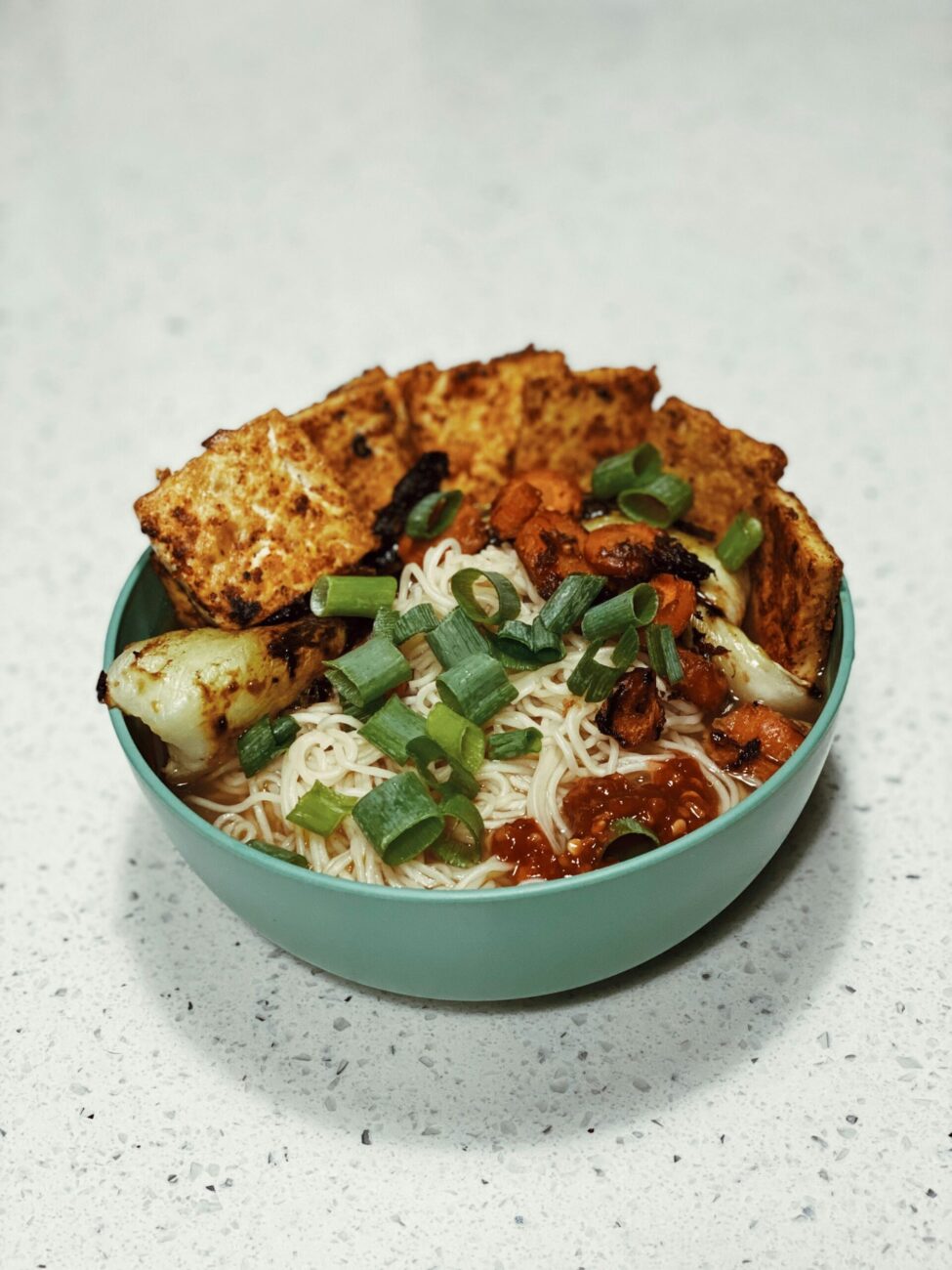
Colorado’s rule for kitchen scraps is to make sure they’re “not salty,” so you can count fuyu out. My read is that the same goes for tofu that’s been sitting in soy sauce or a marinade (or tofu fished out of a bowl of noodles like the one above).
For a seasoned pack from the store, my call is to read the sodium line on the label before any of it goes out to the run.
Fried tofu is a fat problem more than a salt one. USDA lists 20.2 grams of fat in 100 grams of fried tofu, against 8.72 grams in raw firm tofu. That’s about 2.3 times as much. Merck’s chapter on backyard poultry says to avoid fat scraps “because they promote the development of fatty liver,” and it doesn’t name fried tofu. I’d treat it as a fat scrap anyway. Same goes for tofu you fry in a pan at home.
Raw Soybeans and Old Leftovers

None of this makes raw soybeans okay. That’s where the old warning belongs.
In a six-week University of Illinois trial from 1991, 35-week-old laying hens got 48%, 72% or all of their soybean protein from raw, full-fat soybeans. Egg production, egg weight and feed efficiency all went up as the share of raw soybeans went down. The hens fed raw soybeans also had heavier pancreases (as a share of body weight) than hens on a corn and soybean meal diet.
But plain tofu isn’t raw soybeans. That’s the whole difference, and it’s why the answer on this page changed.
Colorado says to “avoid under cooked or dried beans,” and our food checker marks raw, dried or undercooked beans “Never” (it leans on Colorado and UC Davis for that). Ask it about soybeans or tofu, though, and it says “Not rated here,” since none of the official sources it uses rules on them. Our pages on black-eyed peas and dried peas and lentils both come down on cooking them first.
Then there’s the tofu that’s been in your fridge too long. Kentucky says to make sure scraps “are not allowed to rot, or botulism might result,” and Colorado says they shouldn’t be moldy. My call is that tofu past its date, or slimy, or sour, goes in the trash and not out to the run. Same goes for anything the flock leaves on the ground after Colorado’s 5 to 10 minutes. The longer list of what stays out of the coop is on our page on what not to feed chickens.
Sources
- Alabama Cooperative Extension System: Feeding the Laying Hen (ANR-2913, August 2022).
- Colorado State University Extension: Raising Poultry the Organic Way, Disease Control and Feeding.
- Jacquie Jacob, University of Kentucky: Feeding Chickens for Egg Production in Small and Backyard Flocks (poultry.extension.org).
- Phillip J. Clauer, Penn State Extension: Successfully Raising a Small Flock of Laying Chickens.
- Anne Lichtenwalner, University of Maine Cooperative Extension: Salt is an Important Nutrient for Poultry.
- Carmen Jerry, Merck Veterinary Manual: Poisonings in Poultry.
- Yuko Sato, Merck Veterinary Manual: Management of Backyard Poultry.
- Feedipedia (INRAE, CIRAD, AFZ, FAO): Soybean meal.
- Feedipedia: Soybean seeds.
- Zhang, Parsons & Hymowitz, University of Illinois: Effect of soybeans varying in trypsin inhibitor content on performance of laying hens (Poultry Science, 1991).
- Stanojević et al., University of Belgrade: Assessment of soy genotype and processing method on trypsin inhibitors, urease and lectins content of tofu (Natural Product Research, 2024).
- Institute of Food Technologists: How Tofu is Made (Newswise, February 2016).
- USDA FoodData Central: Tofu, raw, firm, prepared with calcium sulfate (SR Legacy 172475), plus its entries for regular tofu, fried tofu, fuyu, nigari extra firm tofu and raw soybeans.
Sources checked November 3, 2026. The treat grams and the tablespoon and quarter-block servings are my math from the sources’ own numbers. So are the comparisons with feed (protein, calcium, sodium), the fuyu cube against a day of feed, and the fat ratio. Treating fried tofu as a fat scrap, the label check on seasoned tofu, and throwing out tofu that has turned are my calls. None of the sources fed tofu itself to hens. We aren’t vets. If a hen looks sick, call a vet who sees poultry.
Related read: How to Raise Chickens for Eggs — Instant PDF download. Secure checkout by Stripe