Opening the gate and letting your flock roam the yard is half the reason a lot of us keep chickens. They chase bugs, pick at greens and dust-bathe in the sun. They’re also out in the open, where anything with teeth or talons can see them.
I’ve kept 12 hens and one cranky rooster for 8 years, and I’ve lost birds to a raccoon. So no, I don’t treat free ranging as a cute lifestyle choice.
Not everyone thinks you should do it at all. The Virginia Department of Agriculture (VDACS) tells small flock owners not to attract wildlife by letting birds range free, and to keep the flock away from wild birds that can carry disease. I still let mine out. I just do it on a schedule, with a plan for each thing that wants to eat them.
Let Them Out After the Morning Lay, Lock Them In at Dusk
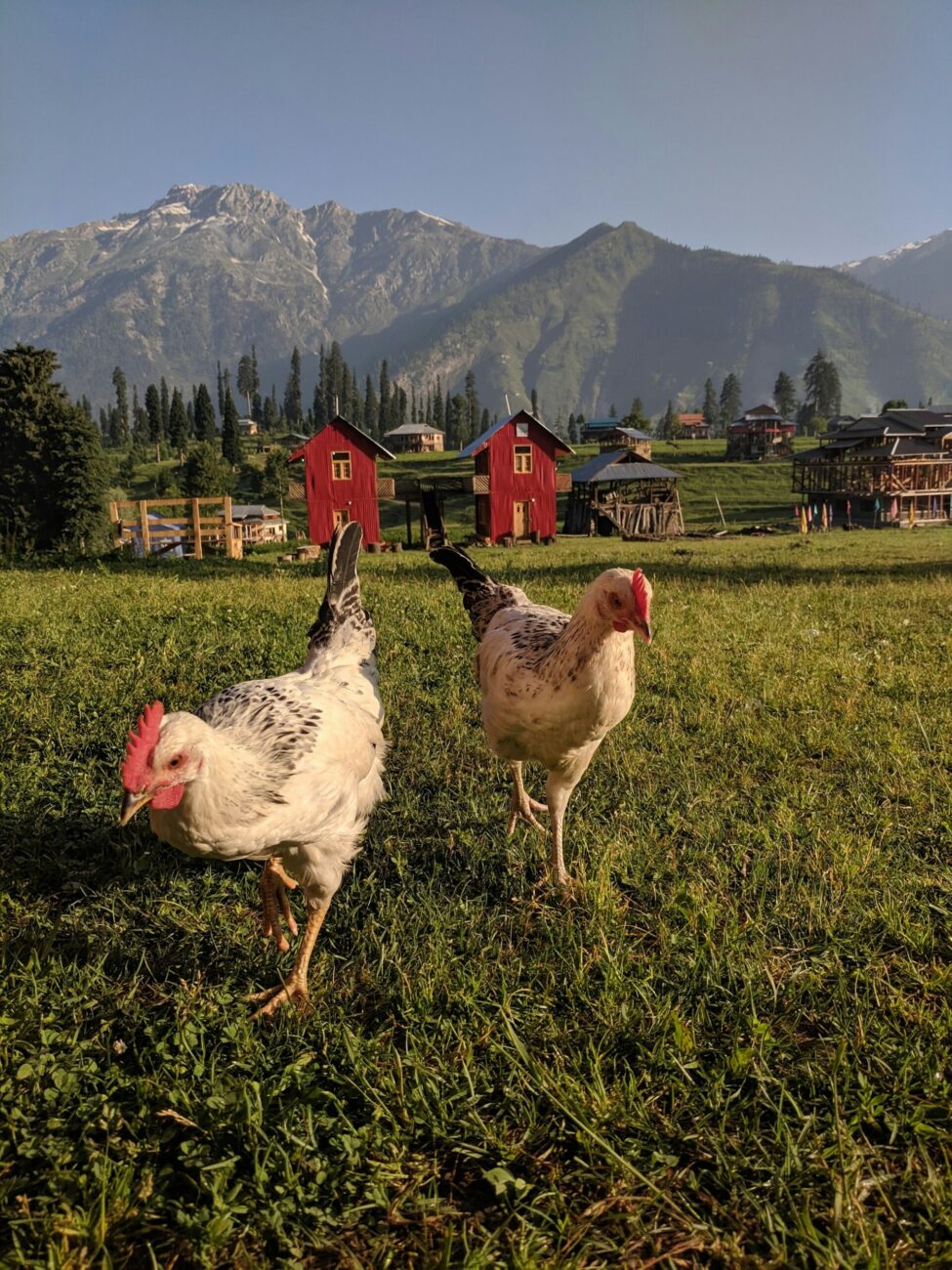
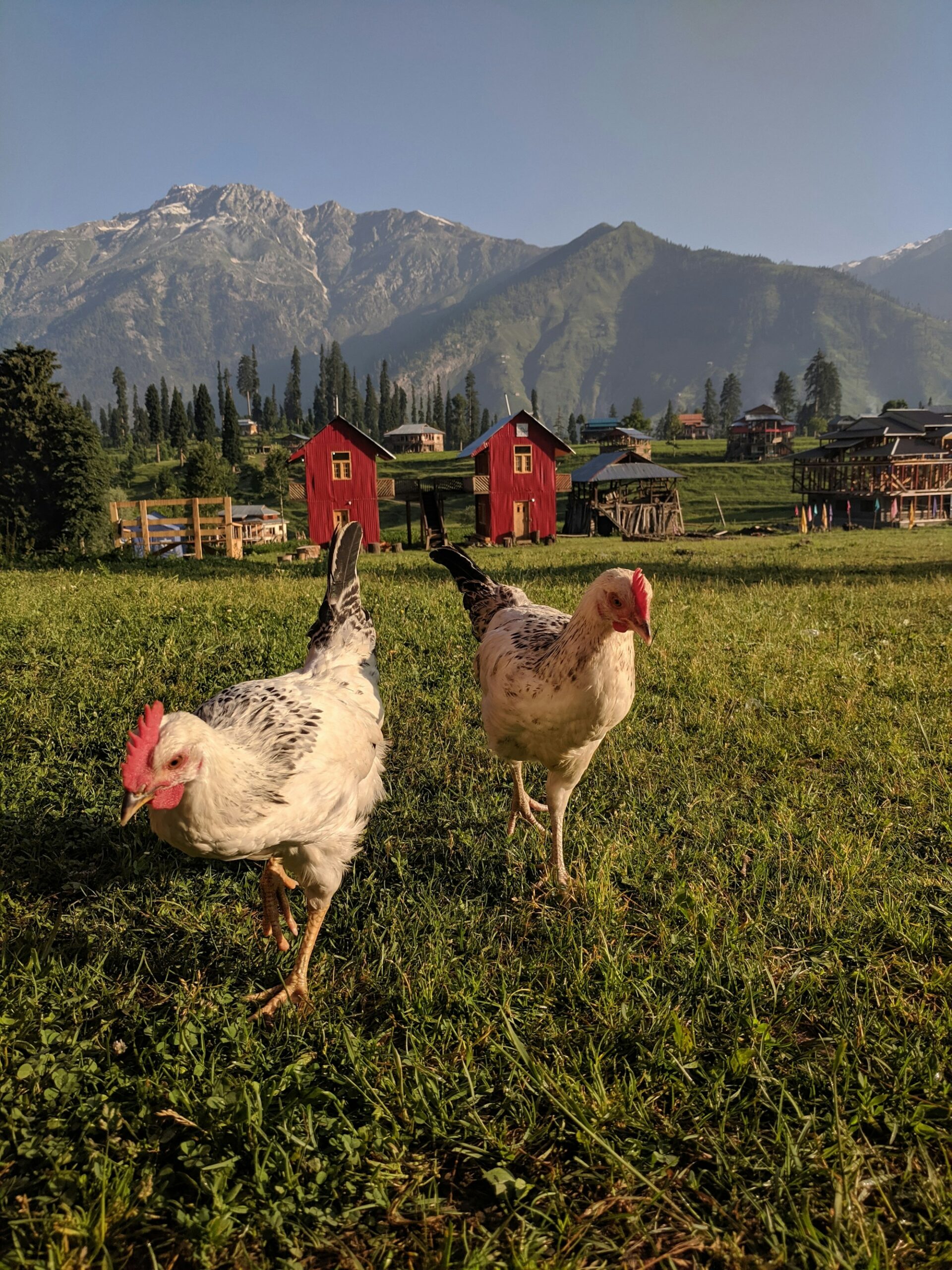
That’s free range the way it looks on a calendar. Open grass, low sun, mountains in the back. It’s also a big stretch of ground with nothing for a hen to duck under (more on that in a minute).
University of Minnesota Extension’s routine for a laying flock is to let them out each morning and bring them back in at dusk. I’d add one tweak. NC State Extension says eggs are typically laid in the morning hours, so I’d hold my birds in until most of them have laid. Turn them loose at first light and some of those eggs end up under a bush instead of in a nest box. VDACS warns that hidden eggs are eggs you can’t date.
Dusk is the hard line, and I’ll drop the jokes for this part.
The University of Maryland Extension’s predator guide (FS-1132) says raccoons and opossums hunt at night, and owls hunt in the early morning and late evening as well as after dark. Raccoons climb fences and find the smallest gap. They’ve been known to reach through wire, grab a bird and pull it up to the wire, and they can open simple latches. The guide’s advice is to lock your birds in a predator-proof coop every night. Minnesota calls an enclosed space at night essential. Every night, no exceptions.
Read next: When can chicks go outside? Feathers, night lows and predators
Hawks Hunt by Day, So Give Your Hens Cover
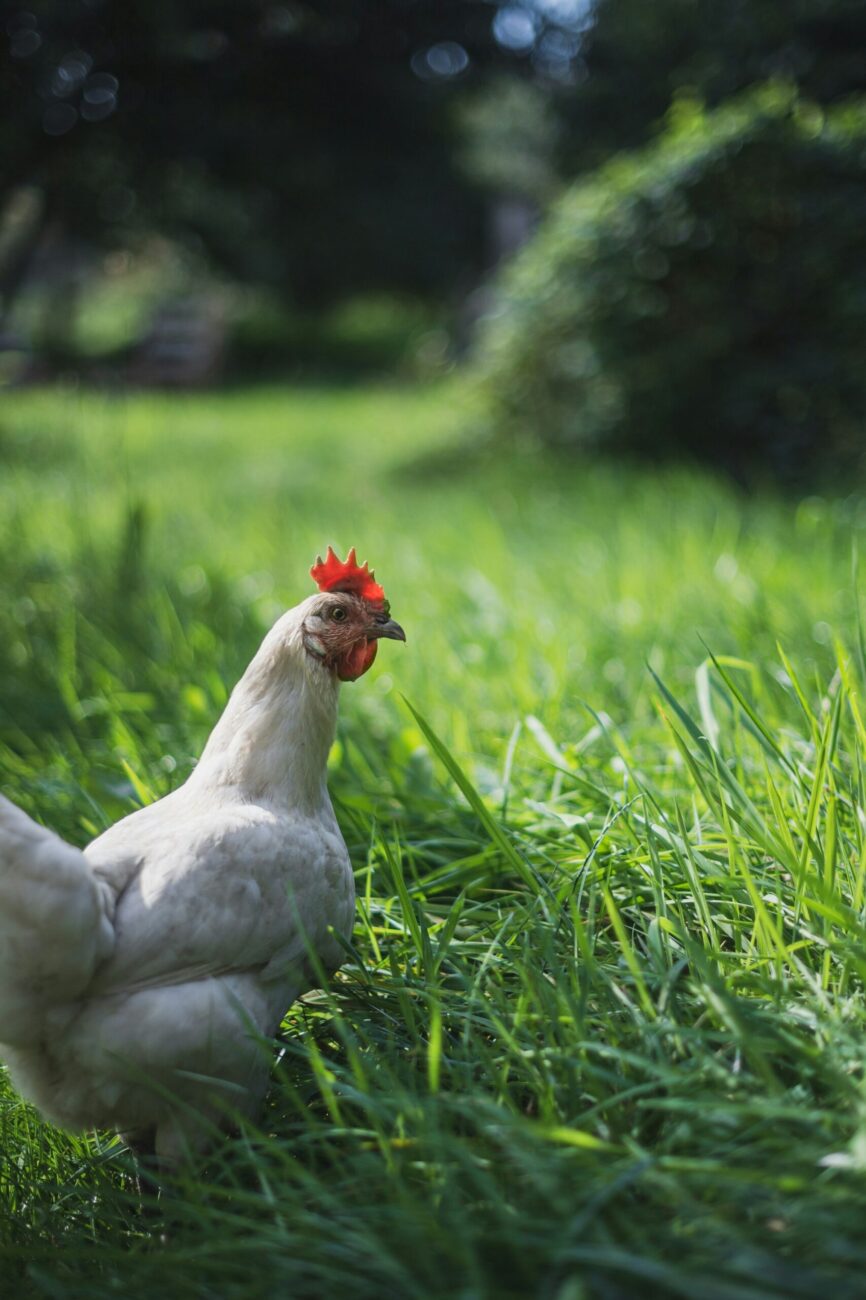
This hen’s way better off than the two out in that meadow. Look at all that tall grass, with shrubs and trees right behind her. She’s got somewhere to hide. Penn State Extension says tall, leafy plants like millet or sorghum give birds cover from hawks and owls. A few low shrubs with good leaf cover do the same job.
Hawks and eagles take birds in the daytime, per the Maryland guide, which makes them the free-range predator. And you can’t fight them. Eagles and hawks are federally protected under the Migratory Bird Treaty Act, owls too, and the guide warns that harming them can bring a hefty fine or jail. So you make your yard a lousy place to hunt instead.
Over the run, the Maryland guide suggests stringing thin wire or fishing line so it’s hard for a hawk to fly in. Penn State says weaving a 3 to 4 foot grid of wire or twine over the pen gives excellent protection from flying predators. Out in the yard, cover is pretty much all you’ve got. I’d let mine range near shrubs and garden edges, not out in the middle of the lawn. Just not right up against the woods, because Maryland says predation goes up when birds roam without protection, especially near woods.
Your Rooster Is an Alarm, Not a Bodyguard
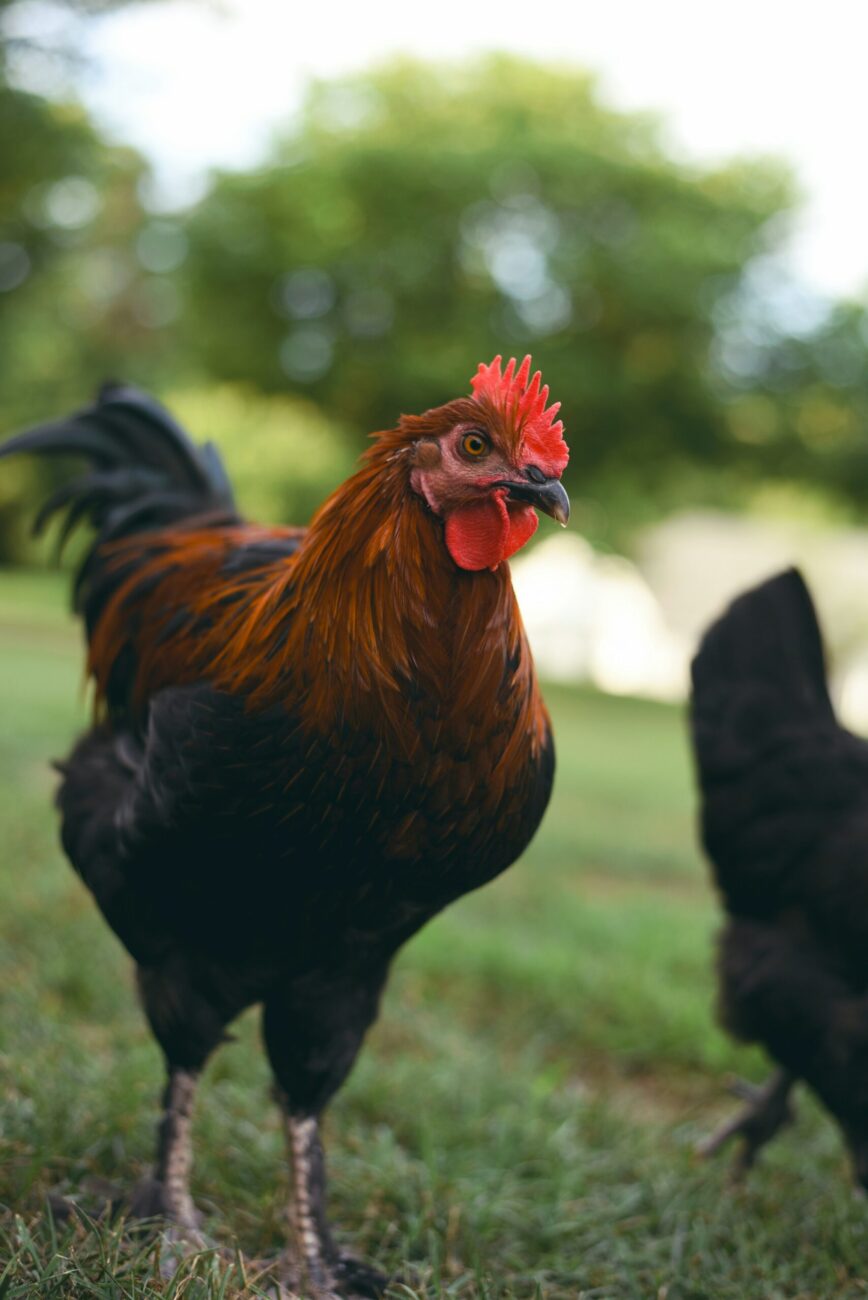
My rooster’s bad-tempered. Honestly, outside the coop that’s not the worst trait. His real job on a free-range day is noise. A 1993 study in the journal Animal Behaviour found that roosters give one alarm call for ground predators and a different one for hawks overhead. When the researchers played the hawk alarm, the hens ran for cover and crouched, looking up.
That only helps if there’s cover to run to. And it does nothing about the predator most people don’t see coming. A dog.
The Maryland guide calls dogs one of the most common poultry predators. They chase and maul, and they often leave the birds lying there, hurt or dead but not eaten. Most dogs don’t cause trouble unless they’re running in a pack, per the guide.
Foxes are the patient ones. Maryland says a fox may stake out a coop for days, and they’re worse in spring. VDACS says everything from bears to birds of prey loves domestic poultry, and warns that once a predator finds an easy meal, it comes back. If you range inside a fence, Maryland says electric poultry netting helps as long as you keep the charge up. Penn State mentions a strand of electric fence run about 4 inches off the ground, roughly a foot outside the main fence. Motion lights help a bit. And a guardian dog that isn’t trained properly can turn into a predator of your flock, which is kinda the opposite of the point.
The Yard Pays for It, So Rotate and Fence the Garden
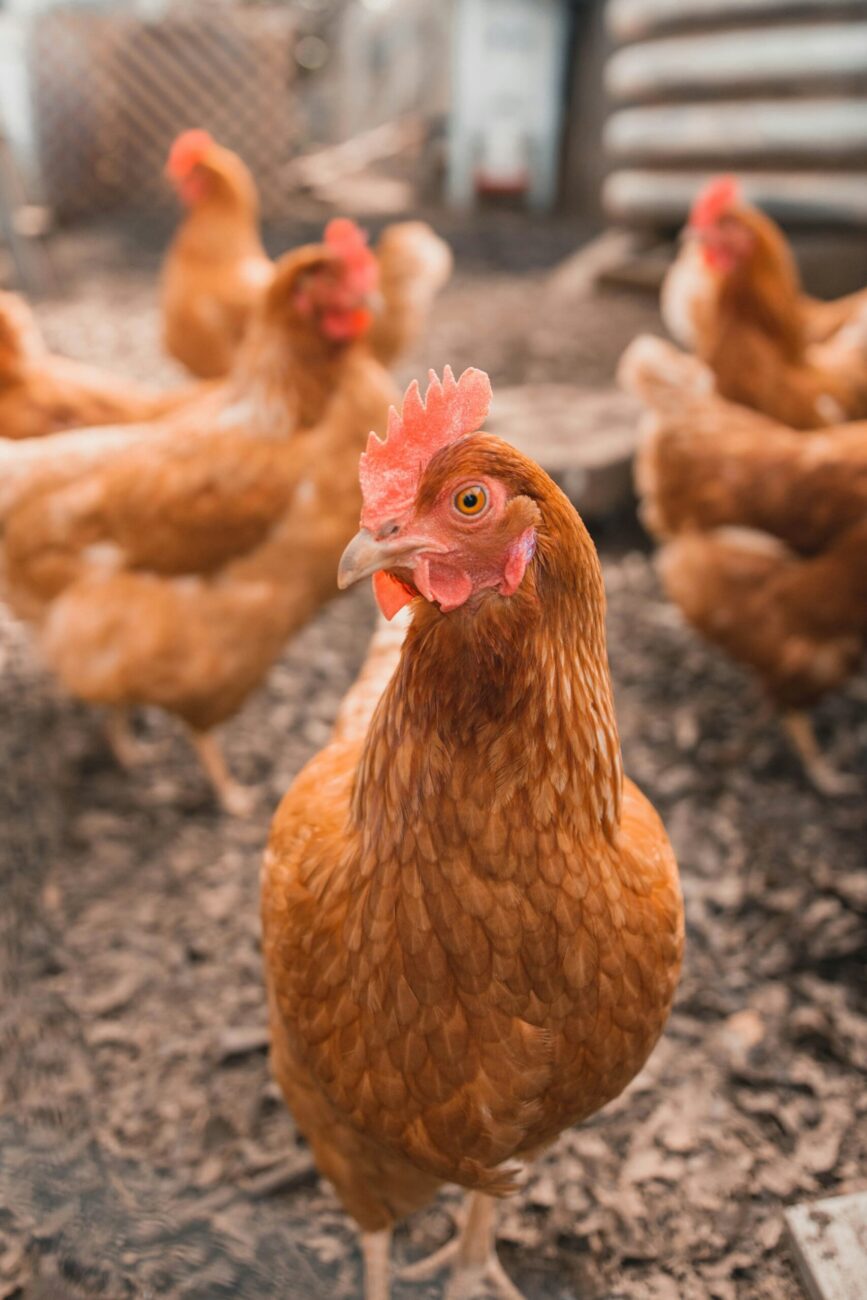
This is what ground looks like after a flock’s been on it a while. Bare, scratched dirt and not a blade of grass. Ranging gives your run a rest, but the yard turns into the same dirt if they’re always on one patch. VDACS says to rotate range areas so overgrazing doesn’t leave you with dirt and mud. A chicken tractor helps too.
Keep them out of the garden beds. Washington State University’s Skagit County Master Gardeners warn that seed beds, prize lawns and ornamentals “will soon be reduced to one wonderful chicken dustbath.” Then there’s the manure. WSU says a chicken makes about 4 oz of it a day, and it’s high in ammonia and burns plants. Fresh manure may also carry salmonella or E. coli, among other germs. WSU points to the USDA organic standard too: 120 days between raw manure and harvest for crops that touch the soil, and 90 days for everything else.
Bugs and greens are a bonus, not the whole diet. Minnesota figures a 6-pound hen eats about 3 pounds of feed a week.
Getting them back in at night is mostly habit. I’d give them their treats inside the run near dusk, so walking in is their idea and not a chase around the yard. Keep the feed in a metal can with a lid, though. VDACS says to store feed in metal containers and keep feeders off the ground. The Maryland guide adds that dropped feed and a messy yard near the coop can draw rats and wild birds, and wild birds are exactly what VDACS wants your flock kept away from.
Tossing them kitchen scraps or garden extras? The free Can Chickens Eat It checker tells you what’s safe, what’s fine in moderation and what never goes in the run.
Read next: To pen or not to pen: chicken pens vs runs