A Rhode Island White isn’t a Red that came out white. It’s a breed of its own, with its own maker, its own start date and its own mix of founding breeds. On paper the two are close: hens around 6.5 pounds, roosters around 8.5 pounds, and a couple hundred brown eggs a year or more from either one. Honestly, the color is the least of it. What matters shows up in a cold coop, in a mixed flock and on a hatchery order form. The short version:
- Two breeds. Reds came out of Rhode Island and Massachusetts in the 1880s and 1890s. Whites were started in Peace Dale, Rhode Island, in 1888, from Partridge Cochins, White Wyandottes and Rose Comb White Leghorns.
- About the same size, same egg color. Both lay large brown eggs, and hens of either breed weigh about 6.5 pounds.
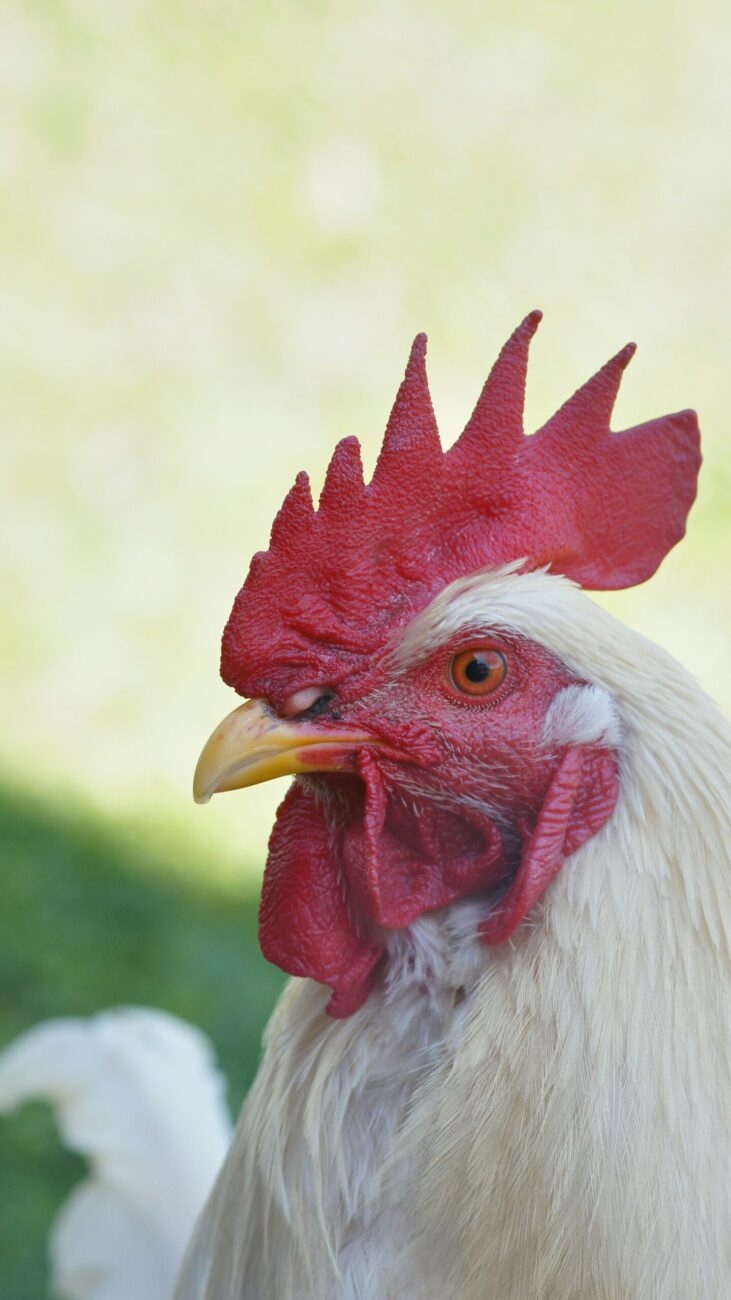
- Watch the comb. A White in the breed standard wears a rose comb. Hatchery Reds often wear a single comb, and a hatchery White can too. A large, thin single comb is more prone to frostbite than a compact rose comb.
- Some Red roosters can turn aggressive. White hens can be a bit pushy with gentler breeds.
- A White hen is half of some red sex-links. Cackle’s Cinnamon Queens and Golden Comets both hatch from White hens.
Two Breeds, Not One Bird in Two Colors

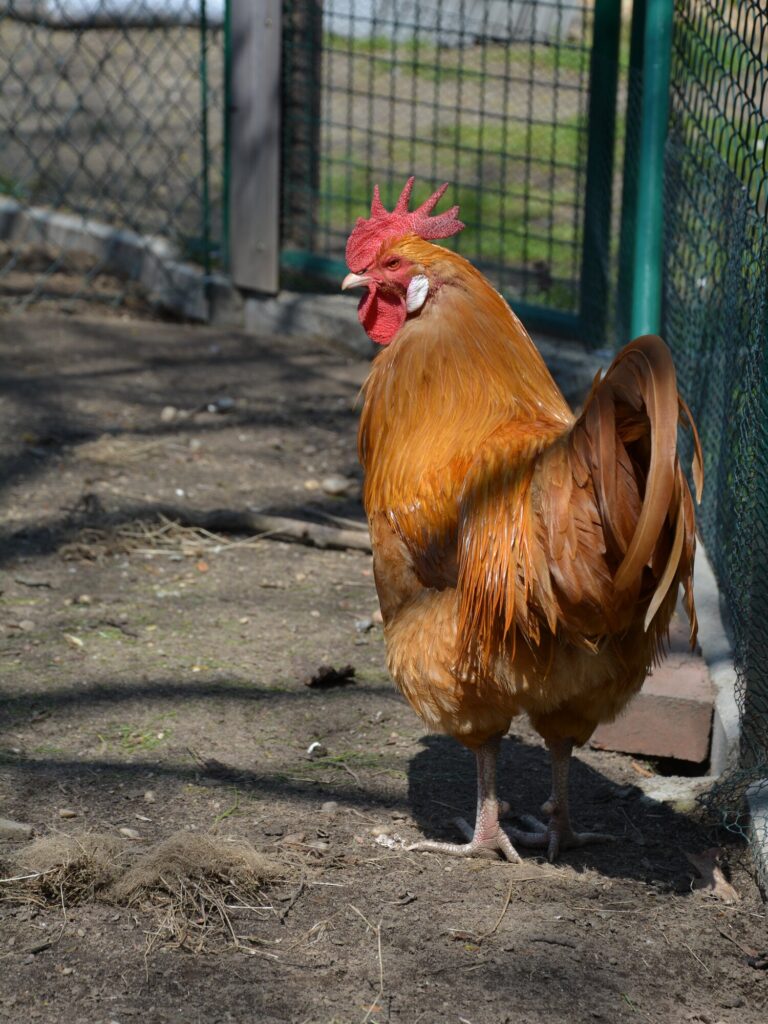
Reds are the famous ones, about the best-known chicken breed in America. They were developed in Rhode Island and Massachusetts in the 1880s and 1890s from stock that included Malay, Shanghai, Java and Brown Leghorn birds (the Malay is where that deep red came from). Single-comb Reds went into the American Poultry Association’s Standard of Perfection in 1904, and rose-comb Reds followed a short while later. Rhode Island made the breed its official state bird.
Whites came from a different cross. John Alonzo Jocoy of Peace Dale, Rhode Island, started the breed in 1888 by crossing Partridge Cochins, White Wyandottes and Rose Comb White Leghorns. He introduced it to the public 15 years later, in 1903. Breeders kept working it toward the Red’s long, brick-shaped body, which is why the two look like one bird in a different coat of paint. Rose-comb Whites made the Standard in 1922, 34 years after Jocoy started. A single-comb White never did. You can still buy one from a hatchery, though: a single-comb production type, which the APA doesn’t recognize. Just know which one you’re ordering.
Whites are also the rare ones. Their numbers began to slide in the 1960s, they never came close to the Red’s popularity, and they sit on the Livestock Conservancy’s Watch list today.
A standard White is white all over, with a yellow beak and yellow legs. A white bird with black flecks in its neck feathers or pale legs is off that standard. Cackle Hatchery’s production Whites vary in leg color. About 4 in 10 have dirty or greenish legs instead of yellow, which Cackle calls normal for that line.
Size and Eggs: Closer Than You’d Think

Put a Red hen and a White hen on a scale and you won’t settle much. Both breeds run about 6.5 pounds for a hen and 8.5 pounds for a rooster. Old-type Reds can be bigger. Since the 1940s, Reds have been bred for more efficient laying, and they got smaller, lighter in color and less broody along the way.
Egg counts are close, too:
- Rhode Island Red: about 200 to 300 eggs in her first laying year, or around 4 to 6 a week while she’s laying, and fewer after that. Reds usually start laying somewhere between 18 weeks and about six months of age.
- Rhode Island White: about 200 to 280 a year, depending on the line.
Both breeds lay brown eggs, the all-white bird included. They’re anywhere from brown to dark brown (a White’s can run as light as light brown). And they’re big eggs. Either hen lays large ones, and a White’s can be large to jumbo.
The White also has a name for winter eggs: it’s known as an excellent winter layer.
The Comb and Cold Nights

This is the difference you’ll actually feel in a cold-winter coop. The comb and wattles are the parts most likely to freeze, and possibly the toes. Frostbite is most common in roosters, because they typically have larger combs and wattles. But a hen with a big comb can get it too. Birds with small comb types, like pea and strawberry, get it much less, and a compact rose comb is less prone to it than a large, thin single comb.
A standard White wears a rose comb, which helped set the breed apart from other white dual-purpose chickens. Hatchery listings point the other way. McMurray’s Reds carry a single comb on hens and roosters alike, and Cackle sells single-comb production types of both the Red and the White. So if your winters get hard, check the comb in the listing, not just the breed name.
A single comb also sits differently on each sex. On a rooster it stands upright. On a hen, a single comb often flops over to one side, and that’s normal. More on that in why a hen’s comb falls over.
Frostbite is more likely at night, in a cold coop with poor airflow and damp bedding, so that’s what you fix:
- Put off the big coop clean-out until spring, and top the bedding up through the winter so it stays dry.
- Keep the coop ventilated so moisture and ammonia don’t build up.
- Use a water warmer in the bucket, so your flock has water instead of ice.
- Think hard before you hang a heat lamp. They’re a real fire hazard, and every year coops burn down because of them.
Flocks can do fine at sub-zero temperatures on deep litter and an in-bucket water warmer (no other heat at all). And if a bird does get frostbite, healing can take 4 to 6 weeks, so prevention is worth it. Your full winter setup is in prepping your chicken coop for winter.
Temperament and Broodiness in a Mixed Flock

Most Red hens are peaceful. The roosters are the ones to watch: some Red roosters may turn aggressive at times, so handle a Red rooster with care, especially around kids or a mixed flock. If you’re raising straight-run chicks, telling a Red rooster from a hen lets you see it coming.
White hens are friendly with people, calm enough to be called docile, but they like their space around other chickens. They can be a bit assertive with gentler breeds. So if your flock has a mild breed in it, give everyone plenty of room in the coop to move and to roost (and enough nest space to go around).
Broodiness is the other split. Whites don’t tend to go broody. And production Reds don’t go broody much either, since they’ve been bred for laying and less sitting. Old-type Reds are the exception, and they sit more often. Want a hen to hatch your next batch of chicks? Neither production bird is a sure bet.
The White Hen Behind Some Red Sex-Link Layers

Here’s where the White earns its keep today. Cackle crosses a production-type Rhode Island Red rooster with a production-type Rhode Island White hen, both from selected parent stock, to get a sex-link: chicks hatch in two colors, so you can sort them on day one. Pullet chicks come out brownish red, cockerel chicks mostly white. That cross makes its Cinnamon Queens, and its Golden Comets come from White hens under a rooster from a different line.
Grown up, the hens are reddish with some white feathering, and the roosters are mostly white. So a Cinnamon Queen or Golden Comet hen from Cackle has a White mother.
In general, sex-links work because some feather traits, like color, ride on the sex chromosomes. Silver and gold are one pair used in some commercial strains: mate gold males to silver females and the sons come out silver, the daughters gold (some brown-egg laying strains carry it). But it works for one generation only. Sex-links don’t breed true, so chicks hatched from Cinnamon Queen or Golden Comet parents can come in several colors, and you can’t count on sorting them by down. Want more? You order more. That trade gets a full page in Buff Orpington vs Golden Comet.
Which One Fits Your Yard

Pick the Red if you want the easy one to find and a proven brown-egg layer, and you’re willing to keep an eye on any rooster. It’s sold as cold hardy and heat tolerant, and it generally handles cool weather well in a dry, draft-free coop with good ventilation.
Pick the White if you want something less common, a good winter layer that’s friendly with people, and you’d like to help keep a Watch-list breed going. If cold is your main worry, look for a breeder with rose-comb Whites (the Livestock Conservancy keeps a breeders directory).
And if all you want is eggs, and you don’t mind reordering chicks every few years, the sex-link made from the two is bred for laying first. Either way, the comb on the bird you actually buy matters more in January than the color of its feathers.
Sources
- The Livestock Conservancy: Rhode Island White.
- The Livestock Conservancy: Rhode Island Red, Non Industrial Chicken.
- University of Illinois Extension: History of Breeds.
- Jacquie Jacob, University of Kentucky, for eXtension Small and Backyard Poultry: Frostbite in Chickens.
- Hobby Farms: Frostbite in Chickens, by Sharon Biggs Waller, with Darrin M. Karcher, Michigan State University.
- Hobby Farms: 6 Ways to Avoid Frostbite in Your Chickens, by Kristina Mercedes Urquhart.
- Jacquie Jacob, University of Kentucky, for eXtension Small and Backyard Poultry: Sexing Day-Old Chicks.
- Cackle Hatchery: Rhode Island Whites.
- Cackle Hatchery: Rhode Island Reds.
- Cackle Hatchery: 4 Outstanding Dual-Purpose Sex Link Hybrid Chickens.
- Cackle Hatchery: Cinnamon Queen.
- Cackle Hatchery: Golden Comet.
- Murray McMurray Hatchery: Rhode Island Red.
- Meyer Hatchery: Rhode Island Red Day Old Chicks.
Sources checked November 16, 2026. We aren’t vets. If a bird looks sick, call a vet who sees poultry.
Related read: How to Raise Chickens for Eggs — Instant PDF download. Secure checkout by Stripe