My hot take after 8 years and 12 hens? Most coop plans online have never held a chicken through a real winter. They look great in the photo. Then the first wet week, or the first raccoon, finds whatever the plan skipped.
And I’m not throwing stones from a perfect coop. I lost birds to one bad coop I built myself.
So here’s the small coop and run I’d build if you’ve got 3 to 6 hens, piece by piece. The numbers come from people who study this for a living: Oregon State University Extension, Penn State Extension, University of Minnesota Extension and the University of Maryland’s predator guide. Where something’s just my opinion, I’ll tell you.
Raise the Coop Off the Ground and Give the Ramp Some Grip
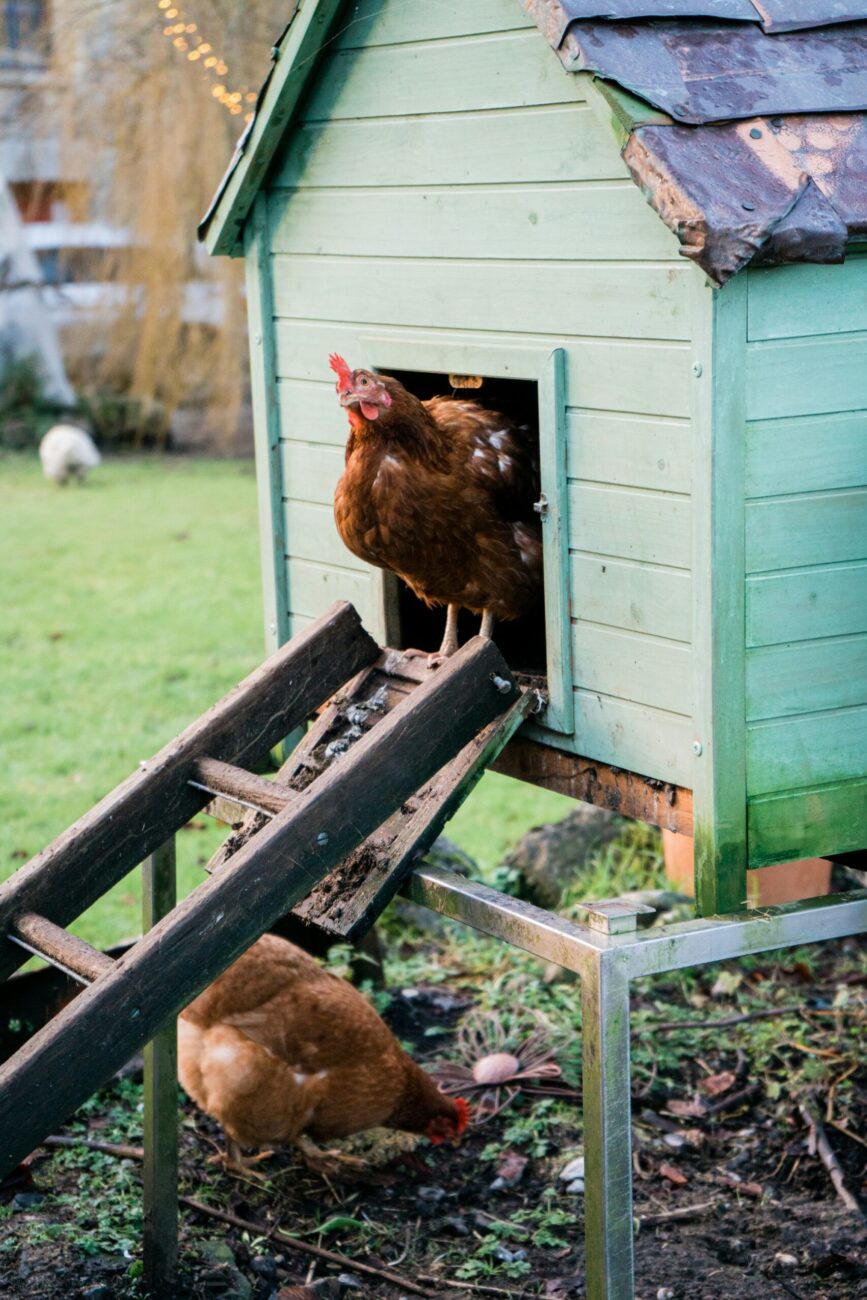
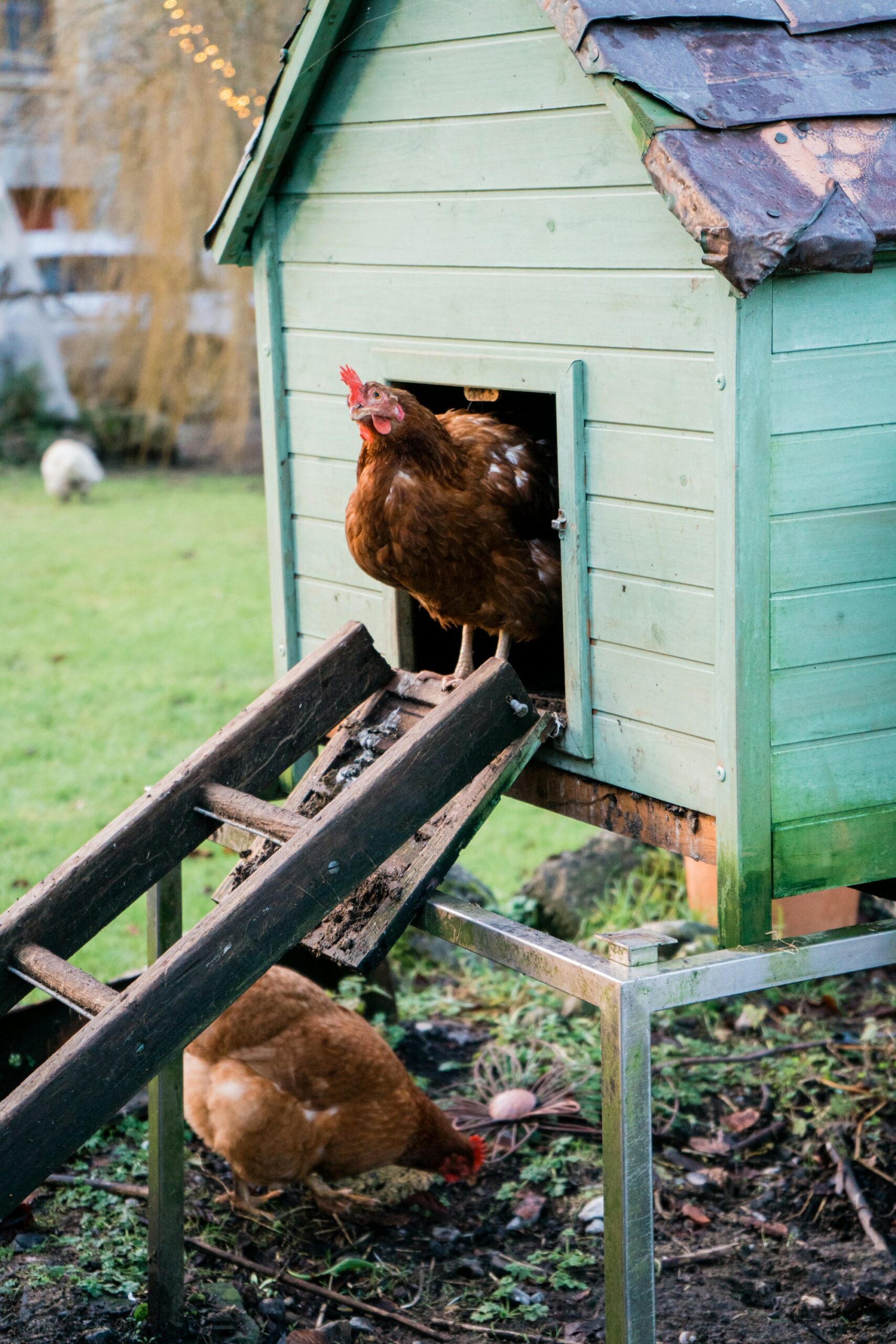
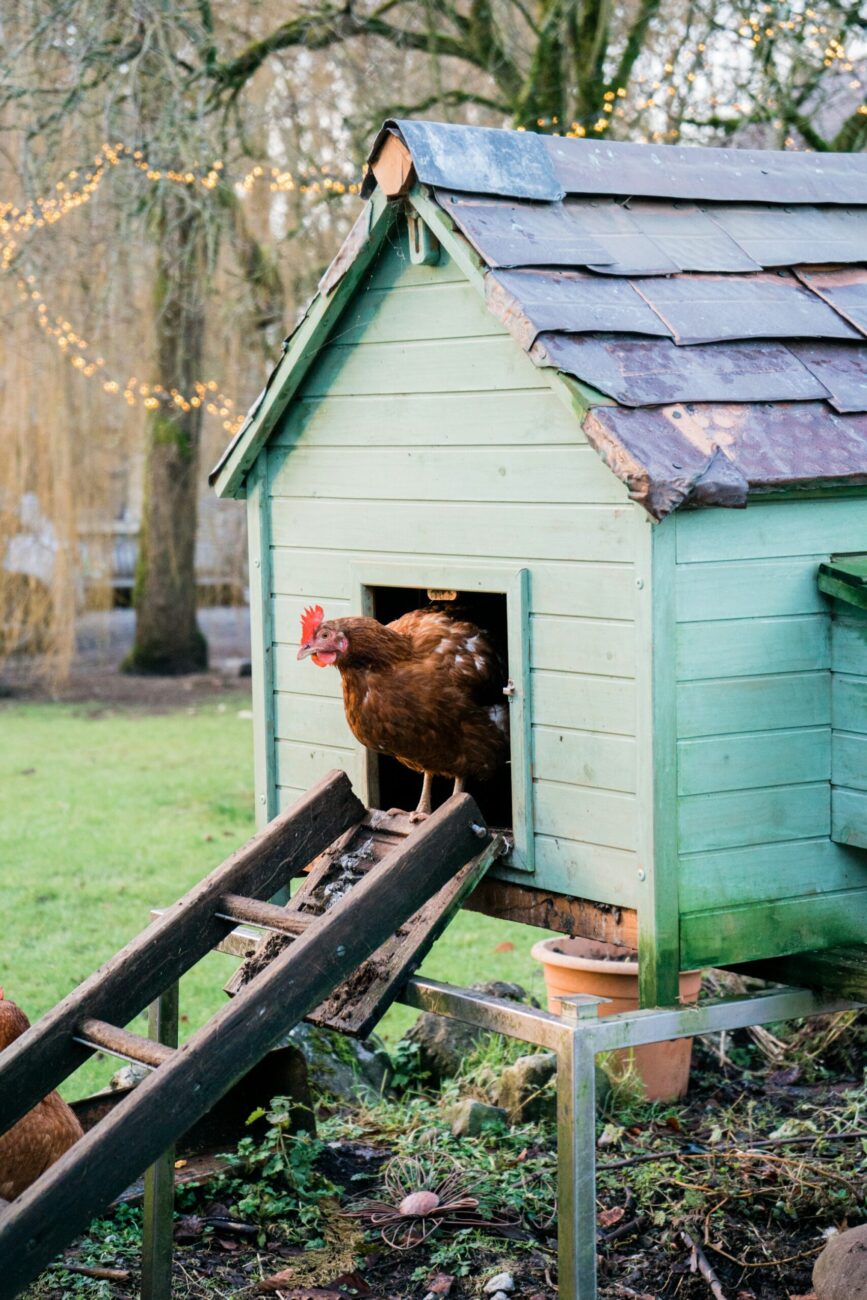
That’s the kind of coop this post is about. A little wooden house up on a stand, a pop door at the top and a ladder ramp down to the ground. There’s even a second hen pecking around underneath.
Getting your coop up off the dirt is the first thing I’d copy. Oregon State says to raise it at least 1 foot off the ground to discourage rats, snakes, raccoons and skunks. Give it a secure floor too, like a concrete slab or solid wood. You’ll also want it on high, well-drained ground, per Penn State, so your floor and run don’t stay soggy.
See the rungs across that ramp? That’s the right idea. Ramps need traction, and the Penn State guide suggests slats spaced 3 inches apart or a textured surface like a roofing shingle. That way your birds aren’t jumping down onto hard ground from a high doorway.
Now look at the edge of that roof. It’s already peeling, and that’s the first spot I’d fix. Penn State’s starting rule for any poultry house is that it’s dry and draft-free.
Plan the Inside for Winter: Dry Air, Two Nest Boxes, Enough Roost
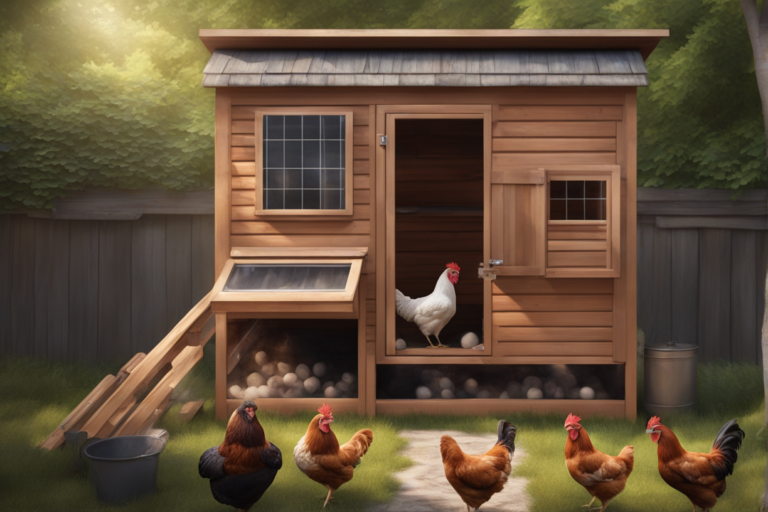
Same coop, wider shot, with the trees bare. See the box sticking out of the side with its own lid? That looks like the nest box. Smart build, honestly, because you can reach in for eggs without crawling inside.
Here’s where my hot take comes from. Poultry handle cold very well if they’re dry, Penn State says, but cool, humid conditions create a lot of health problems. So you want air moving through the coop without a draft on your birds. Oregon State says the same thing in its own words. For a small coop, windows or vents on one side usually give plenty of ventilation. Just don’t let a vent or window open right over the roost (Penn State is firm on that one).
For 3 to 6 hens, plan on at least two nest boxes. Oregon State says one box for about every four birds, each about 12 inches deep, 12 wide and 12 tall, and not sitting on the ground. The Penn State rule is two nests for the first four hens, then one more for every four after that. Keep about 2 inches of clean, dry nesting material in each. And keep your roosts well away from the nests, so birds don’t sleep in the boxes and foul them.
Roosts are easy to get right. Oregon State says to use 1 to 2 inch lumber with the top edges rounded off. Set the poles about 2 feet off the floor and 10 inches apart, with 5 to 10 inches of pole per bird. If you’ve got six hens, that’s 30 to 60 inches of roost. Never let chickens perch more than 4 feet off the floor, says Penn State, so they don’t hurt their legs getting up and down.
Floor space is where small coop plans cheat the most. You want at least 3 square feet per bird if they’ve got a run, and 8 to 10 square feet per bird if they don’t. That’s Oregon State’s number. Six hens with a run is 18 square feet, so about a 3 by 6 foot floor. Minnesota says 3 to 5 square feet per bird indoors, which is a bit more generous.
Sizing yours? The free chicken coop size calculator works out the coop floor, run, nest boxes and roost length for your flock, with the extension numbers side by side.
Put the Water Out in the Run, at Back Height
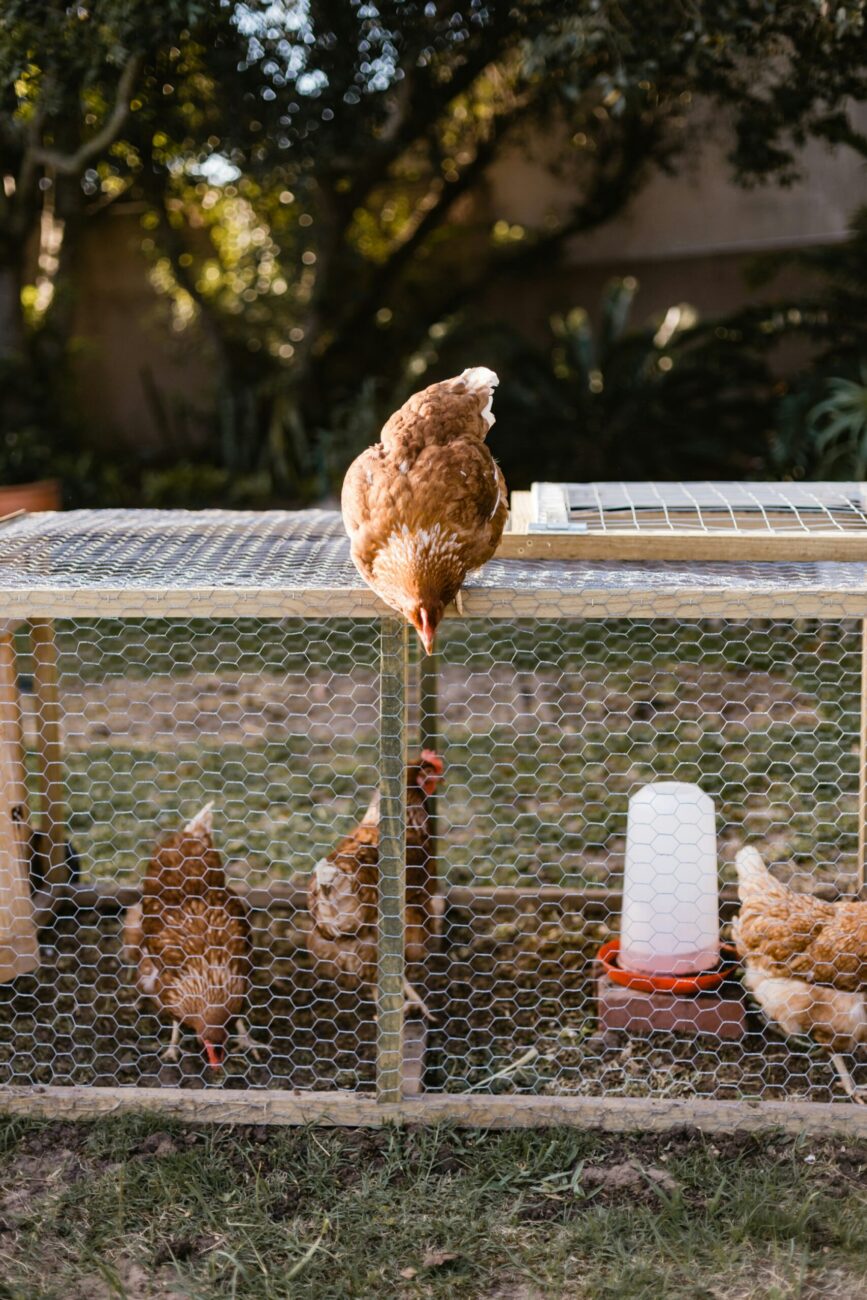
Count the hens in this one. Three inside the run, one standing right on the lid. Your run needs a top, and Oregon State says to put netting or wire over it.
The waterer’s the part I’d copy. It’s set up on a brick, and that’s what Penn State recommends. Put the top lip of your waterers and feeders at the birds’ back height. It keeps the feed and water clean and cuts waste. Penn State also says to put the waterer out in the run when you can, which keeps the humidity lower inside the coop. Same dry-coop rule as before.
Feed gets the same thought. Give each bird at least 3 inches of feeder space, says Penn State, because when it’s short, the birds at the bottom of the pecking order may never get to eat. For six hens that’s 18 inches of feeder.
Store the bags in a couple of metal cans. Feed keeps up to a month in a dry, cool spot out of the sun, per the same guide, so I’d only buy what you’ll use in a month at the feed store.
Cold night coming? The free How Cold Is Too Cold for Chickens checker takes tonight’s low and your coop, and tells you whether your birds are fine or frostbite is the real risk.
Chicken Wire Keeps Chickens In, Not Raccoons Out
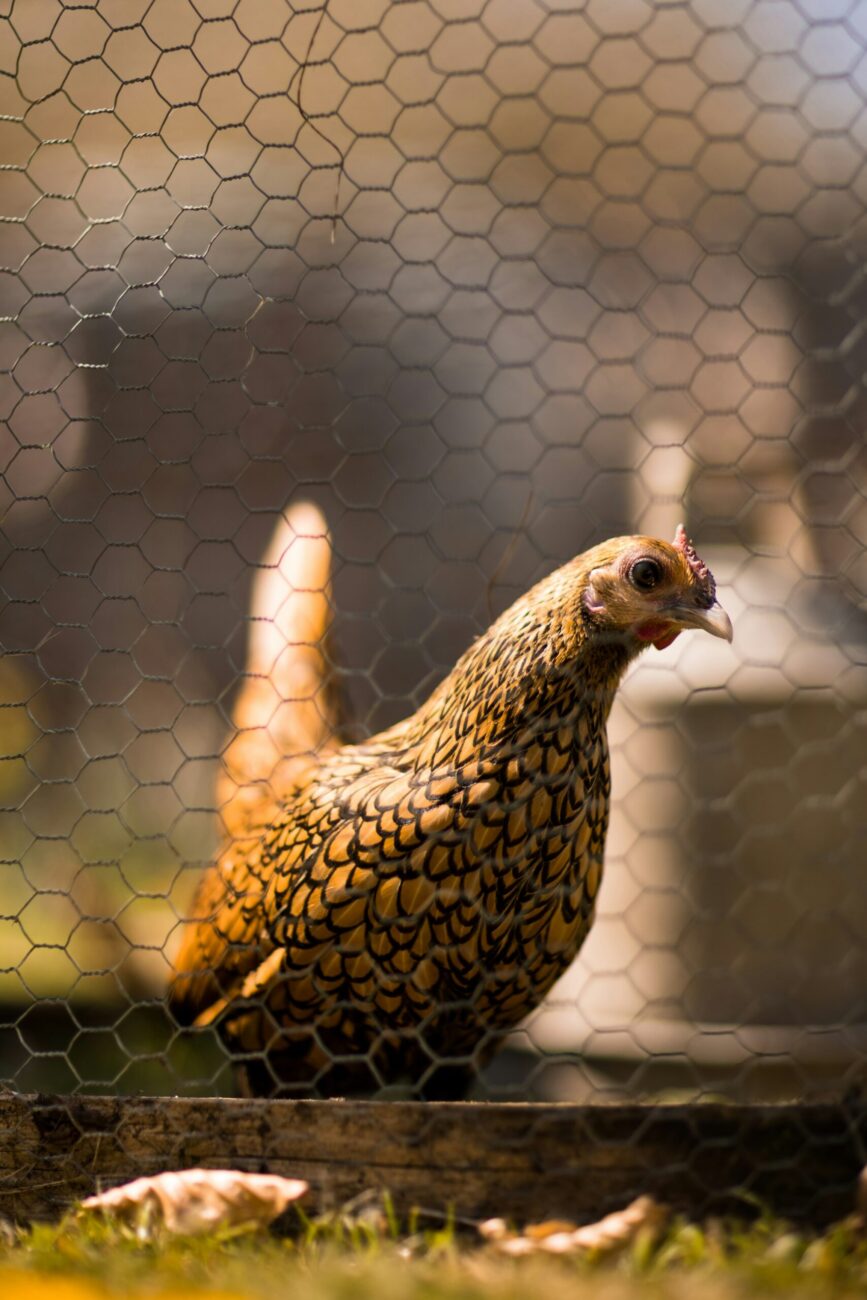
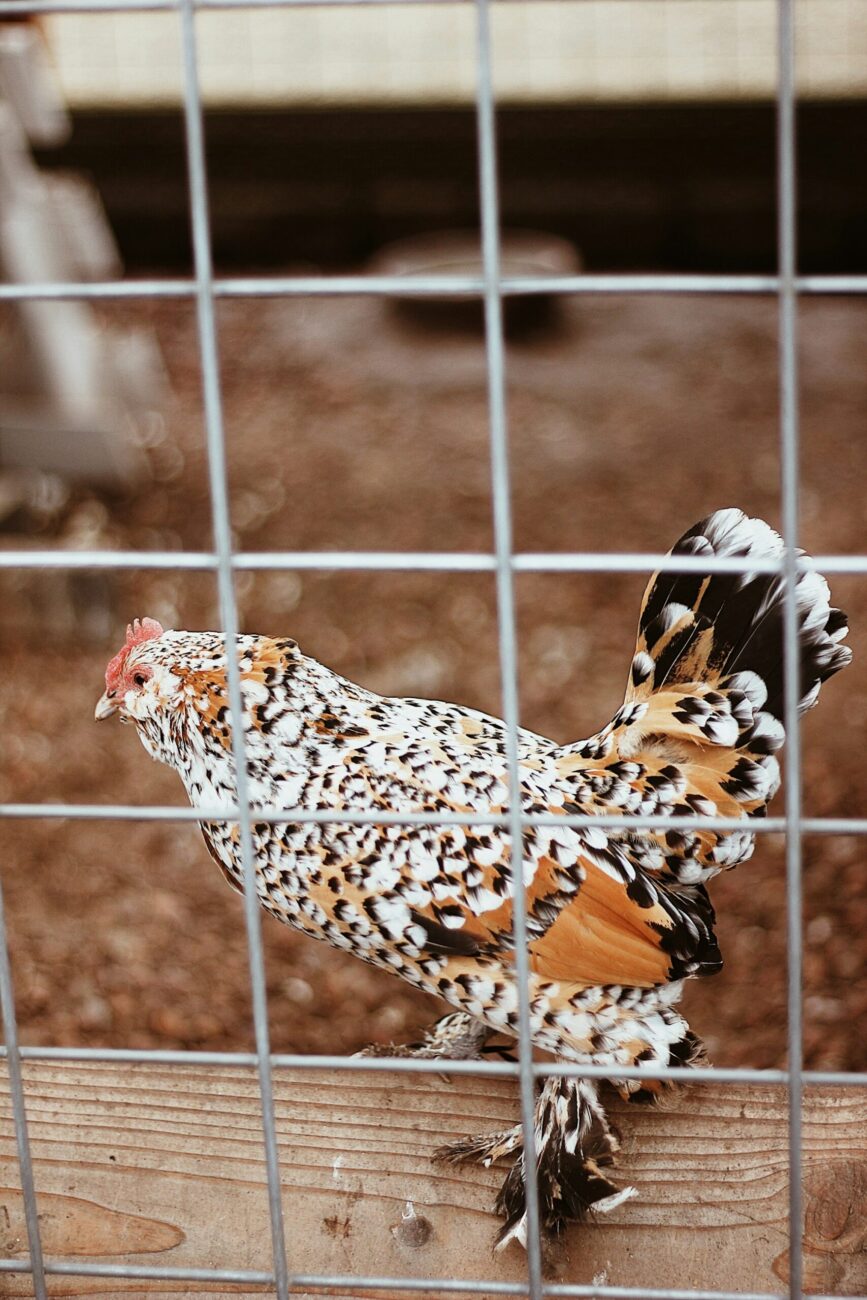
Pretty hen. And that’s the most common run wall there is, hexagon chicken wire. It’s cheap and easy to put up, and it does keep chickens in.
I’ve lost birds to a raccoon, so I’ll say this part straight. The Maryland guide (FS-1132) says raccoons have been known to reach through wire, grab birds, pull them up to the wire and eat them, even when they can’t get into the coop. They climb fences too. Give a raccoon the smallest gap in a covered run and it’ll find it.
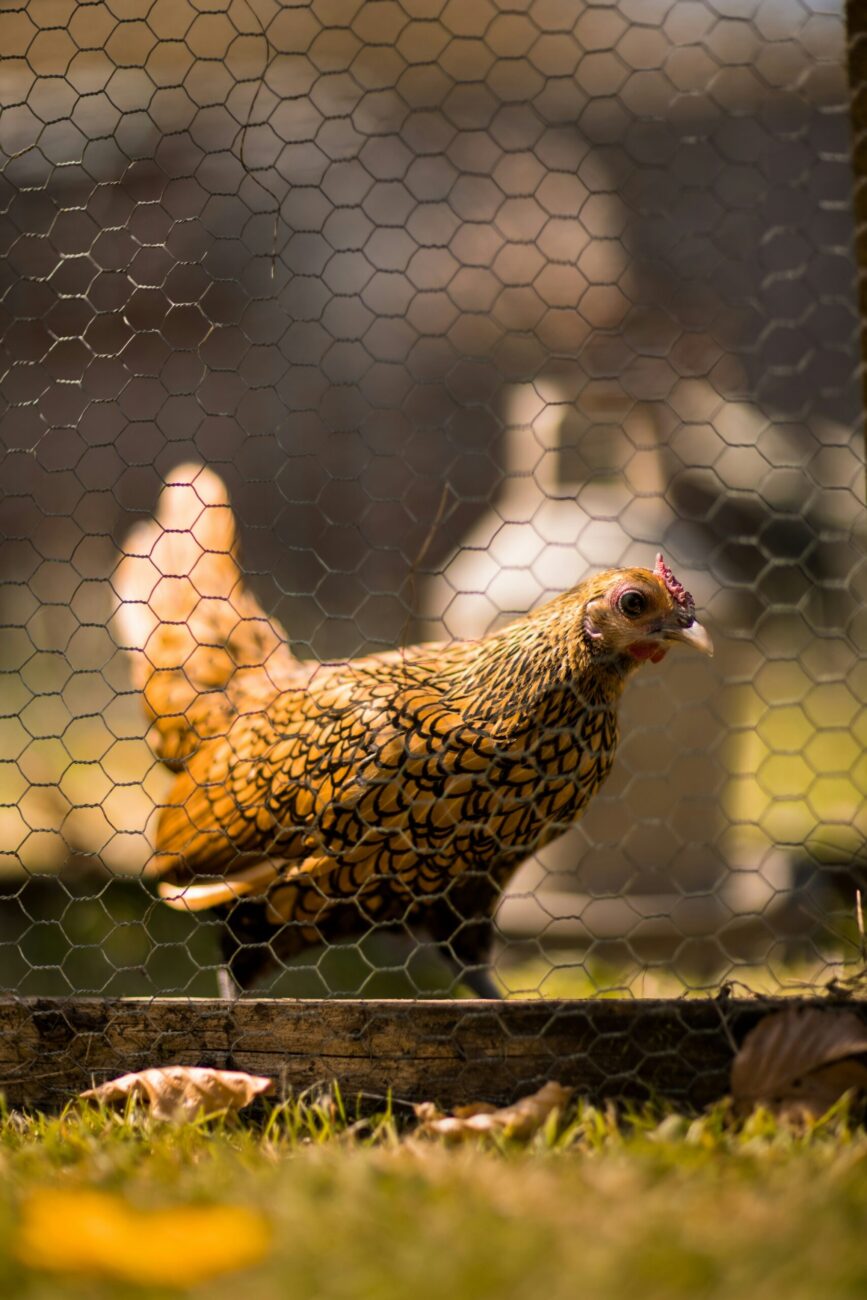
Same hen, a few steps along. Look at the bottom of that wall. The wire’s stapled to a wooden rail sitting right on the grass, with nothing going into the ground. Penn State puts it bluntly: “Animals always dig at the base of a fence.”
So bury it. Oregon State says to build your run from 1 by 2 inch mesh fencing and sink it 6 inches to 1 foot into the ground, against diggers like coyotes and foxes. Penn State says at least 12 inches deep, with the bottom toed outward about 6 inches. Maryland goes a foot deep, then turns the wire 90 degrees outward for another 8 to 10 inches. A digging predator hits that corner and can’t get any further.
And skip window screen anywhere it matters. Maryland says it doesn’t stop most predators.
Read next: Top 10.5+ predator proof chicken coop ideas
Lock It Every Night and Clean It Every Week
That’s sturdier wire than chicken wire, sure. But look at the size of those openings. Gaps that big are just what the Maryland guide means when it talks about raccoons reaching through to grab a bird. A panel like that’s fine for a daytime pen. At night I want my birds shut in the coop, behind something with no gap a paw fits through.
The guide’s advice is to lock your birds in a predator-proof coop every night. Raccoons can open simple latches, it says, so lock the doors. Don’t just latch them. Oregon State adds a motion-detector light outside the coop, and says not to grow large plants right around it, since they shelter predators.
Then there’s cleaning. A well-designed coop is easy to keep up with weekly cleanings, says Oregon State, and you should hang the doors so they open outward. That makes it a lot easier to get every corner. If you’d rather not scrape every week, Minnesota describes deep litter. You start with about 4 inches of bedding and build it up to 12 to 15 inches. After about 6 months, Minnesota says, it can kill harmful bacteria.
Either way, wear gloves when you clean the coop. That’s the CDC’s advice, along with washing your hands with soap after you handle your birds or anything in their space.
Related read: How to Raise Chickens for Eggs — Instant PDF download. Secure checkout by Stripe