As an Amazon Associate I earn from qualifying purchases. This post contains affiliate links. If you buy through them we may earn a commission at no extra cost to you.
Product prices and availability are accurate as of the date and time indicated and are subject to change. Any price and availability information displayed on Amazon at the time of purchase will apply to the purchase of this product. Certain content that appears on this site comes from Amazon. This content is provided "as is" and is subject to change or removal at any time.
Your pullet hit 20 weeks in October and gave you nothing. Every chart you pulled up had a number — 18 weeks, 20 weeks, 22 weeks — and every one of them made you feel like you’d done something wrong. You hadn’t. The calendar just got there first, and she’s waiting it out. That’s the whole story for most people asking this question.
Age Ranges Are a Starting Point, Not a Deadline
The numbers you see everywhere are real but they assume a best-case situation. A spring hatch, a long summer, plenty of daylight right when the bird’s body is ready to go. Strip that out and the number means almost nothing.
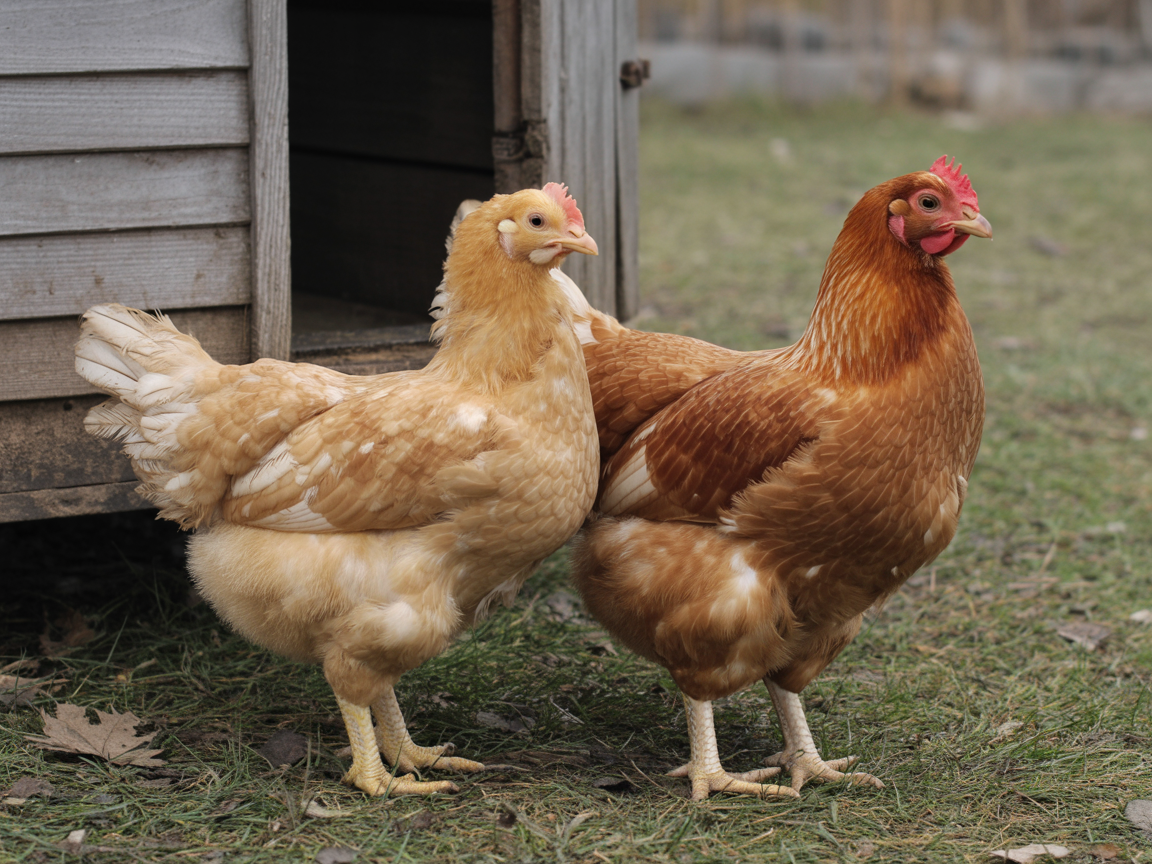
That said, breed still sets a general window. Production layers like Leghorns and ISA Browns average 18–22 weeks. Dual-purpose breeds like Barred Rocks and Buff Orpingtons tend to run 20–26 weeks. Ornamental breeds like Silkies often don’t start until 30 weeks or later, and that’s completely normal for them. These aren’t deadlines. They’re what happens when everything goes right.
Treat any chart that hands you a single week number as decoration. It’s a best-case-scenario figure built around the right daylength. If your bird hatched in late spring or summer and is now maturing into fall, that number was never going to apply to her situation. And that’s not a failure of the chart or the breed or your management. It’s just the calendar.
Daylight Is the Real Trigger — Here’s the Actual Threshold
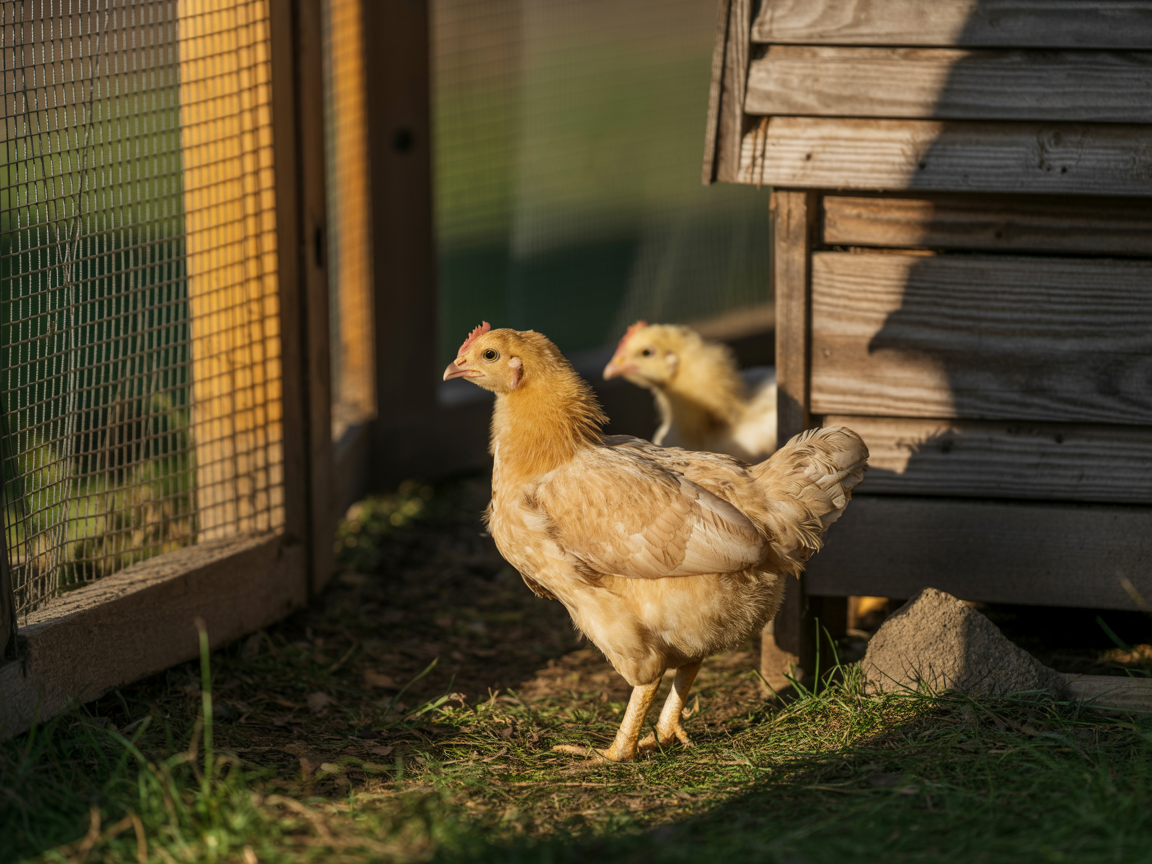
A hen’s reproductive system runs on light. Specifically, she needs roughly 14–16 hours of light per day to trigger and sustain laying. As daylength shortens toward 12 hours, laying slows and often stops. In a mature laying hen, that usually means a molt and a production drop. In a pullet who hasn’t laid yet, it can mean something more significant: her first lay gets pushed entirely to the next season.
Across most of the northern US, days fall below 14 hours in August and reach 12 at the autumn equinox. By December, if you’re sitting around 40°N latitude, you’re looking at roughly 9.5 hours of natural daylight. A pullet who hits 20 weeks in October is not getting anywhere close to what she needs. Her body is ready or nearly ready, but the light signal just isn’t there.
So she waits.
She’ll often start laying in February or March when the days come back up — right on schedule biologically, even though it looks late on paper. This is honestly the single fact that makes half of all “my pullet won’t lay” forum posts irrelevant. Most guides treat daylength as a hen problem rather than a pullet problem. But a pullet who’s never laid before can have her first egg pushed back by months because of a bad hatch date. Nobody failed. The season happened.
Read next: My week-by-week guide to raising baby chicks
- 4–2 weeks beforeComb and wattles turn deep red and enlarge noticeablyThe shift is fast and almost alarming the first time you see it
- 2–1 weeks beforeSubmissive squat reflex appearsShe drops low and holds still when you reach toward her — the single most reliable sign
- 1–2 weeks beforeActive nest-box investigation beginsShe sits in boxes and rearranges bedding; pelvic bones spread to roughly 2–3 finger-widths apart
- First egg incomingAll three signs present at onceCheck boxes every morning — an egg is coming within two weeks regardless of breed charts
Signs She’s Getting Close (Watch These, Not the Calendar)
Forget the week number. Watch the bird.
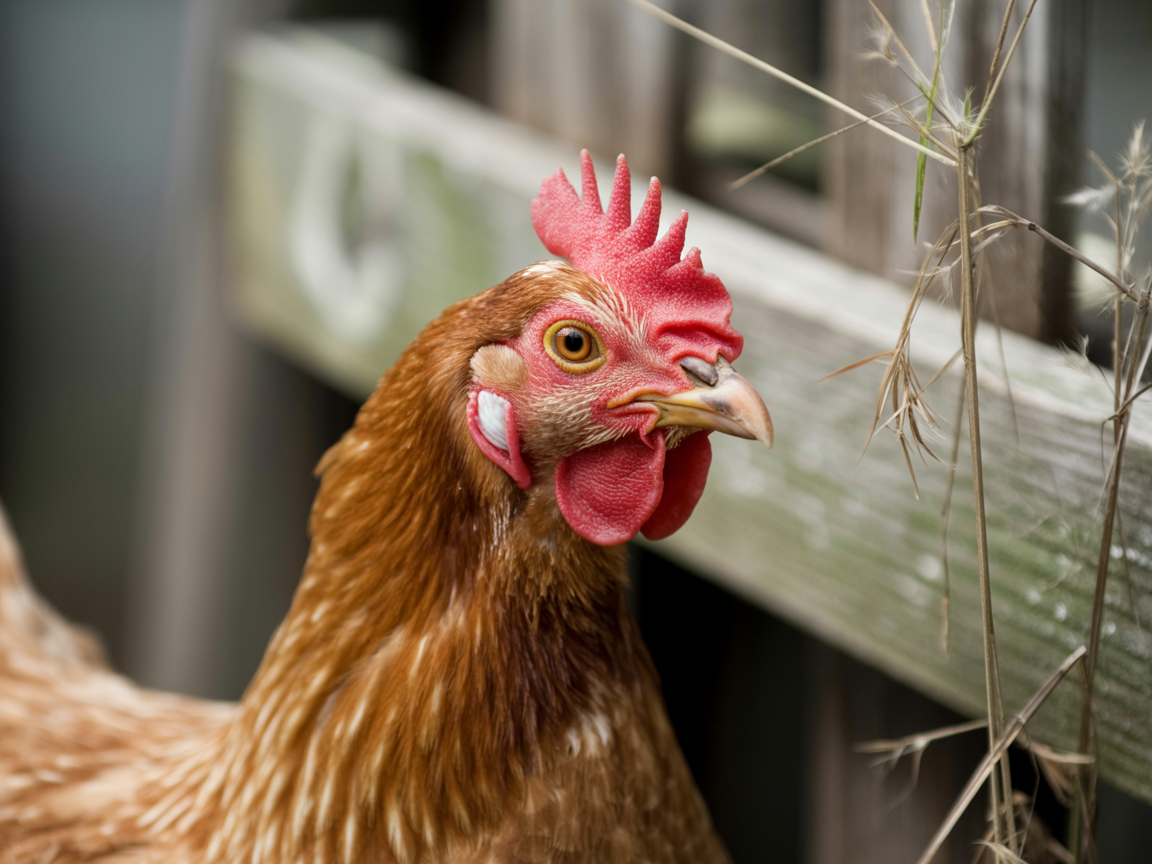
The comb and wattles will go from pale pink to a deep, almost alarming red, and they’ll enlarge noticeably. This shift typically happens 2–4 weeks before her first egg. It’s not subtle once you’ve seen it. The first time one of my pullets went through it I genuinely thought something was wrong with her face. It happens fast.
The squat is the most reliable single sign you’ve got. When you reach toward her or she sees you coming, she’ll drop low and hold still, wings slightly out. That’s the submissive squat, and it usually shows up 1–2 weeks before the first egg. If she’s squatting, she’s close. I weight this higher than anything else, including the comb color.
Third sign is nest-box investigation. She’ll start sniffing around the boxes, sitting in them, sometimes rearranging the bedding with an intensity that looks almost annoyed. Her pelvic bones will also spread. When she’s very close, you can fit roughly 2–3 finger-widths between them, checked by gently feeling below the vent.
If you’ve got all three at once — red comb, squat reflex, and active nest-box interest — start checking boxes every morning. An egg is coming within two weeks, regardless of what any chart says about her breed.
Read next: Medicated vs non-medicated chick starter: how I decide
Switching Feed and Offering Oyster Shell: When and Why
I see the same mistake constantly: someone switches their whole flock to layer feed at week 18 because a guide told them to. The guide wasn’t wrong exactly, just imprecise. Switch when the first pullet in the flock actually lays her first egg. Not before.
Here’s why it matters. Grower feed sits at 16–18% protein and around 1% calcium. Layer feed is also 16–18% protein but bumps calcium up to 3.5–4.5%. That calcium level is appropriate for a bird producing eggshell every day. A pullet who isn’t laying yet doesn’t need that calcium load, and pushing it on her before her kidneys are ready for it is real stress you’re adding for no reason.
Don’t rush the switch.
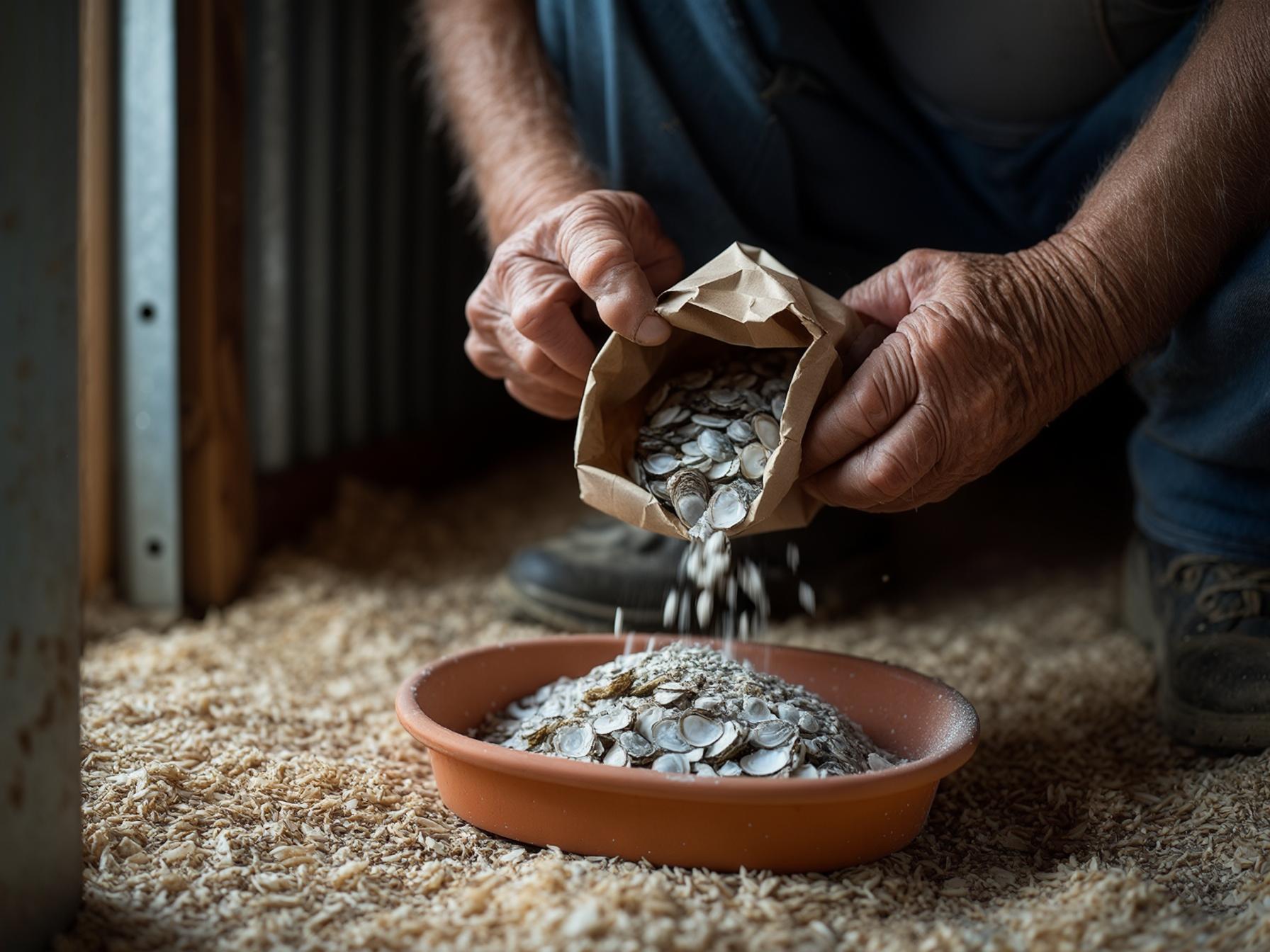
Oyster shell is a separate thing. Offer it free-choice in a small dish beside the feeder, not mixed into the feed. This is the part I feel strongly about. When you mix it in, the bird who isn’t laying yet gets calcium she doesn’t need, and you’ve taken away her ability to self-regulate. The ones who are actively laying will seek out the dish on their own. They know they need it. Let them make that call.

Paid link
Read next: Integrating chicks into the flock without losing one
Getting Her Into the Nest Box Before She Panics and Lays on the Floor
A floor egg habit forms fast and breaks slow. Don’t wait for it to start.
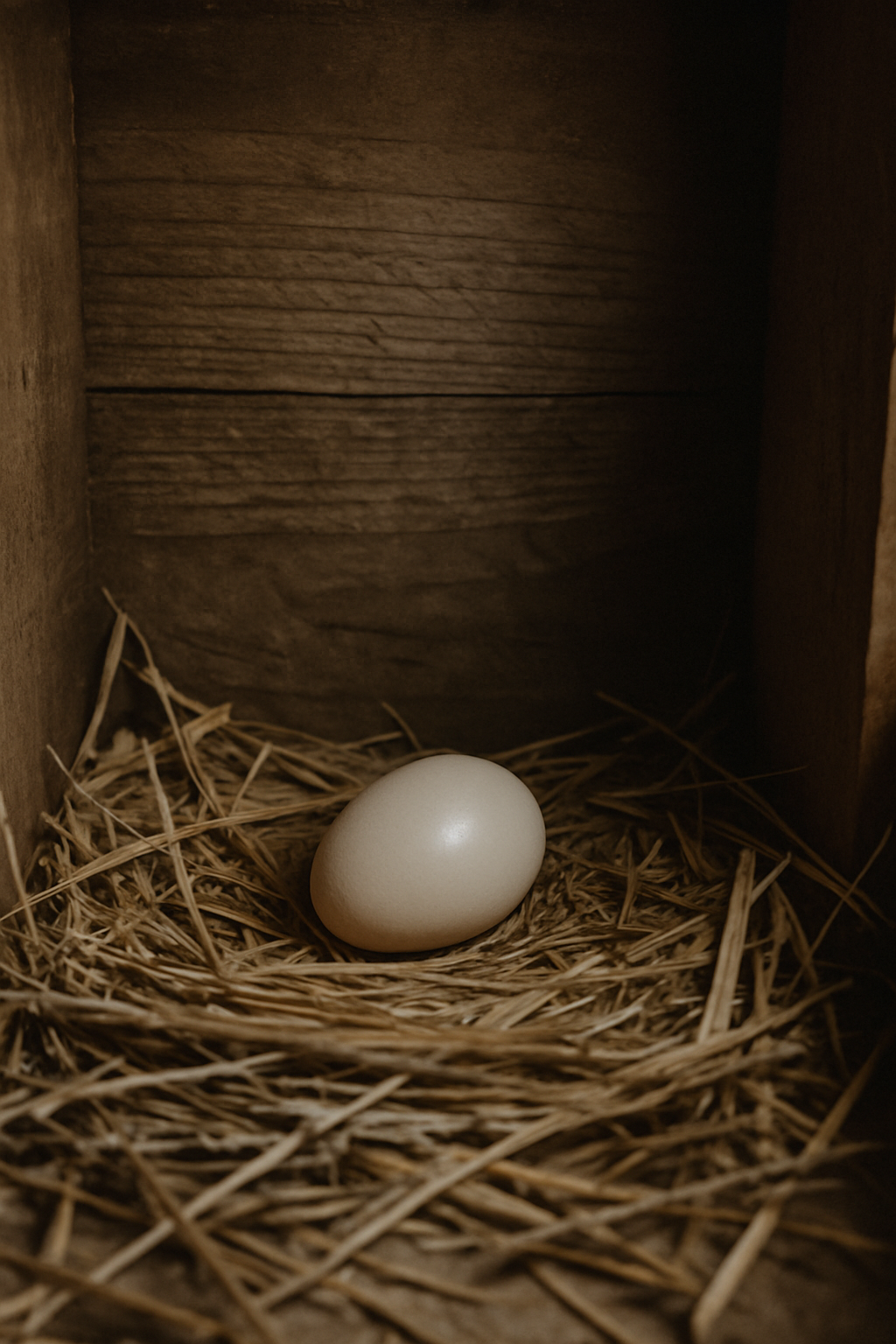
Put a golf ball or ceramic fake egg into the nest box starting around week 18 for production breeds, week 22 for dual-purpose breeds. That’s 2–4 weeks before you expect anything to happen. The idea is simple: she finds an “egg” in there, her instinct says this is where eggs go, and she files that away. A golf ball is kinda the cheapest and most effective tool in my entire coop setup. I’ve got a couple I’ve been using for six years.

$10.99 In Stock
Paid link · price checked October 7, 2026 09:20
Boxes should be at least 12×12 inches for standard breeds. Keep them darker than the rest of the coop. A slightly shadowed space triggers nesting instinct in a way a bright open box just doesn’t. And plan for one box per 4 hens minimum. Fewer than that and you get competition, queuing, stress, and floor eggs from birds who couldn’t wait.
If she’s already laid on the floor, move the egg immediately into the box and put a decoy beside it. Sometimes it works. Sometimes the habit’s already set. Better to never get there.
Read next: Laying the Foundation — my beginner’s handbook to egg-laying hens
Odd First Eggs Are Not a Red Flag
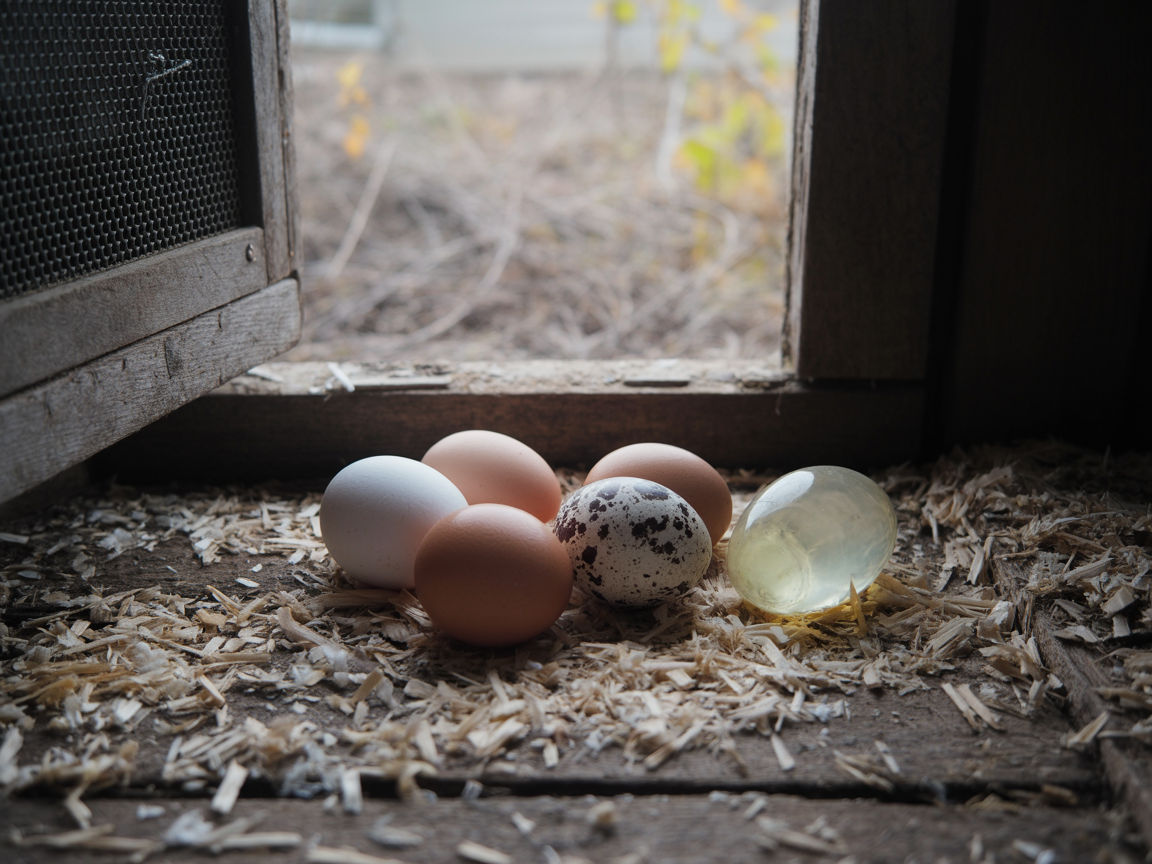
The first few weeks of a pullet’s laying life are genuinely strange. First eggs are often 30–40% smaller than what she’ll eventually produce. Tiny, almost comically small, with a proportionally giant yolk inside. Soft-shelled eggs and shell-less eggs are common in the first 2–4 weeks as her calcium regulation figures itself out. Double yolks show up more in young hens because their ovulation cycle is still irregular and occasionally two yolks release at once.
You might also see wrinkled shells, rough texture, occasionally a small blood spot on the yolk.
None of this is a crisis. The system is calibrating.
That said, if you’re still seeing shell-less eggs after week 4 of actual laying, that’s worth looking at. Check calcium availability first — meaning make sure the oyster shell dish is accessible and being used. Persistent problems after the initial calibration period are the ones worth paying attention to. But a soft-shelled egg in week one is not a disease sign or a calcium emergency. Panicking over it is the most reliable way to convince yourself something’s wrong when everything’s actually on track.
Read next: Do hens need a rooster to lay eggs?
Stress and Moving House Delay Laying More Than Anything Else You’re Doing
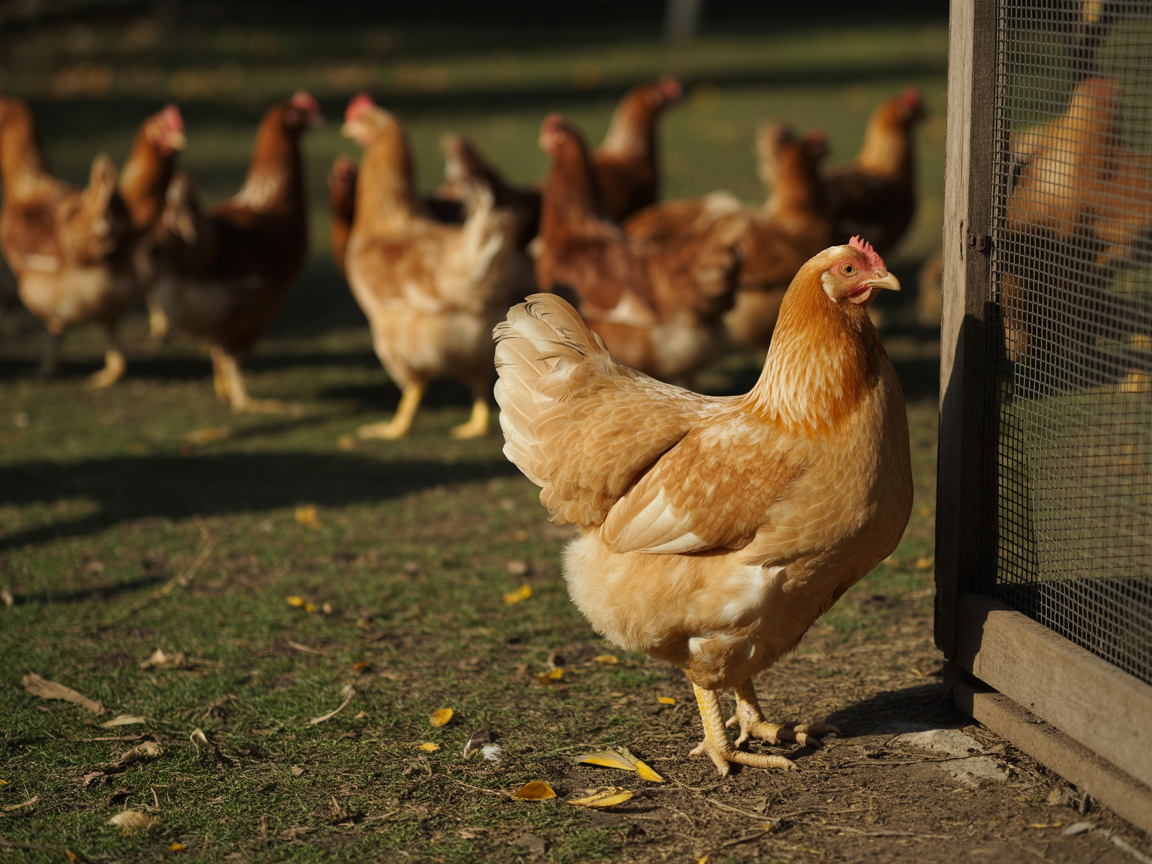
A pullet who was three days from her first egg can get knocked back 2–4 weeks by a single bad event. I’ve watched it happen. A raccoon hit the run at dusk and spooked the whole flock, and the two pullets I had who were clearly close — red combs, squatting the day before — didn’t lay for another three weeks. The older hens dropped off for about ten days. Stress is a hard stop.
The common culprits: moving to a new coop, integrating into an existing flock, a predator scare, crowding, irregular feed access, and heat. Temperatures above 90°F (32°C) suppress laying activity and can delay a pullet’s first egg meaningfully. New-flock integration stress usually peaks in that first week or two after introduction — right when everything looks the most chaotic and you’re most tempted to intervene.
If your pullet moved coops in the last month and isn’t laying, that’s your answer. She’ll start when she feels safe. Adding supplements or changing the feed at that point doesn’t address anything real. It just adds more change to a bird who’s already unsettled. Reduce the stressor. That’s the fix.
Read next: When chicks can move onto adult feed
Artificial Light: The One Intervention That Works, Used Correctly
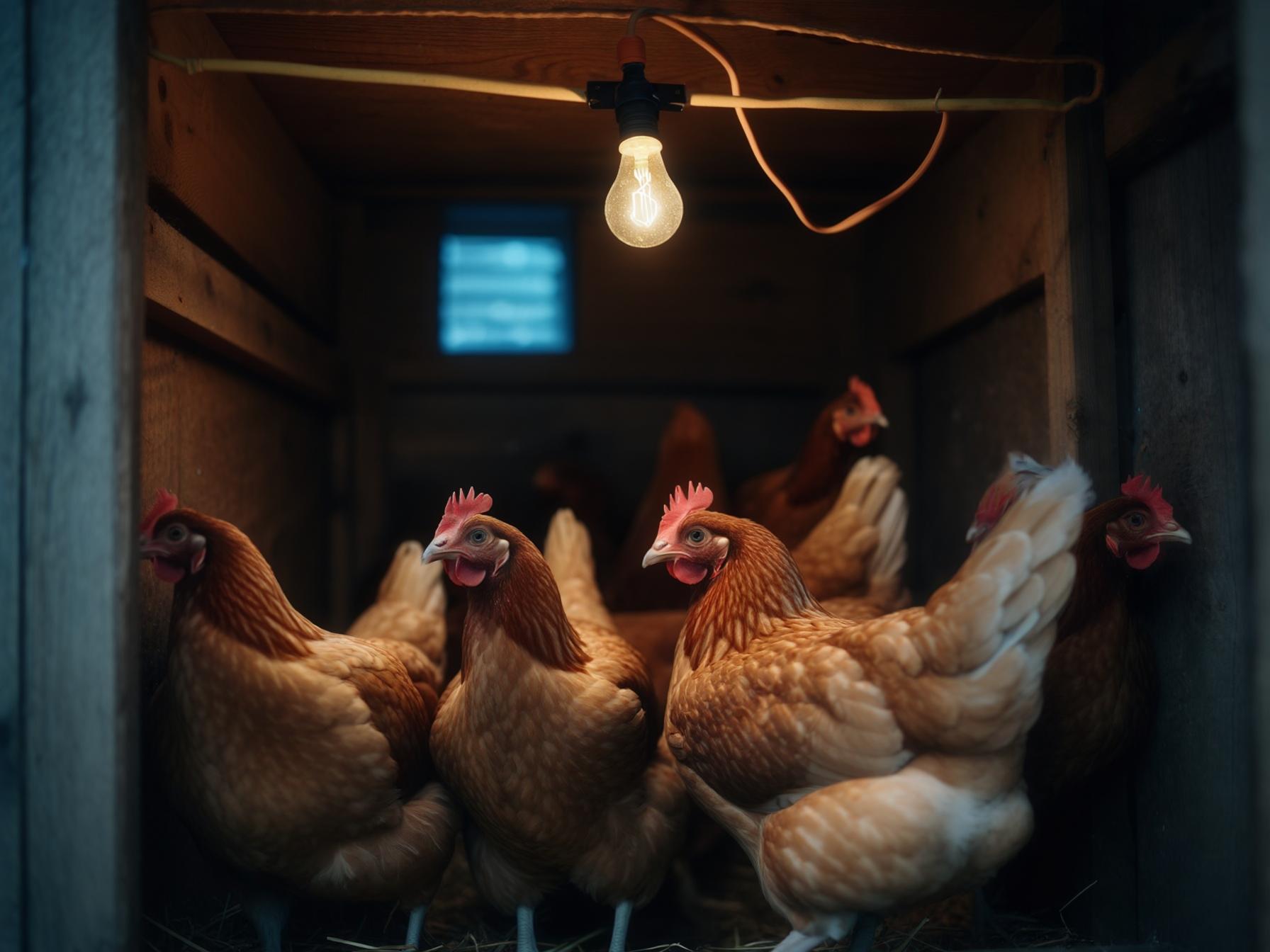
Supplemental light genuinely works. If a physically mature pullet has stalled purely because daylength dropped below the threshold, adding light to bring her total up to 14–16 hours per day will often trigger laying within a few weeks. I’m not against it.
But I think most backyard keepers reach for it too fast.
If your pullet is under 20 weeks and it’s December, the light is not the problem. She’s not ready. Adding light to a bird who’s physically immature doesn’t move things along. It can actually cause reproductive problems down the line. Don’t do it on birds younger than 18 weeks, full stop.
If you do use supplemental light, add it in the morning to simulate an earlier sunrise, not at night. An abrupt cutoff at the end of the evening is a stress event for the birds. They need a gradual transition to darkness to settle. A single 40–60 watt incandescent equivalent bulb on a timer is enough for a standard backyard coop. Keep the total light exposure at that 14–16 hour target, including whatever natural daylight you’re already getting.
For a backyard flock of twelve, I generally let the winter do what it wants and wait for February. But if you’ve got a physically mature pullet who hit the season at the wrong moment and you want eggs, the light will work. Just use it right.
Related read: How to Raise Chickens for Eggs — Instant PDF download. Secure checkout by Stripe