As an Amazon Associate I earn from qualifying purchases. This post contains affiliate links. If you buy through them we may earn a commission at no extra cost to you.
Product prices and availability are accurate as of the date and time indicated and are subject to change. Any price and availability information displayed on Amazon at the time of purchase will apply to the purchase of this product. Certain content that appears on this site comes from Amazon. This content is provided "as is" and is subject to change or removal at any time.
First 48 Hours: What You’re Actually Looking For
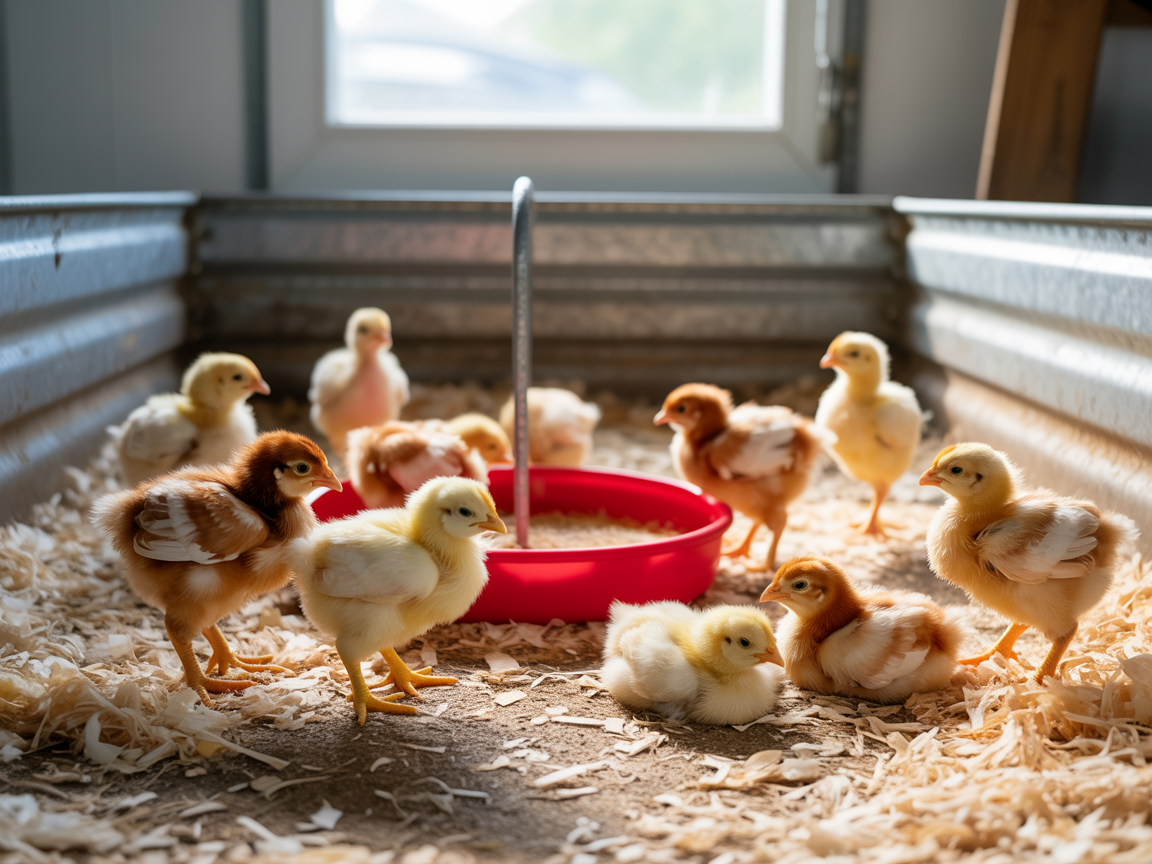
You probably already have the brooder set up, the feed in a bin, and a thermometer stuck to the wall. Most of that prep is fine, but none of it is what’s going to decide how this goes.
The first two days are a reading exercise. You’re not managing equipment. You’re watching twelve small animals tell you exactly whether the setup is right or wrong, and you have to speak the language.
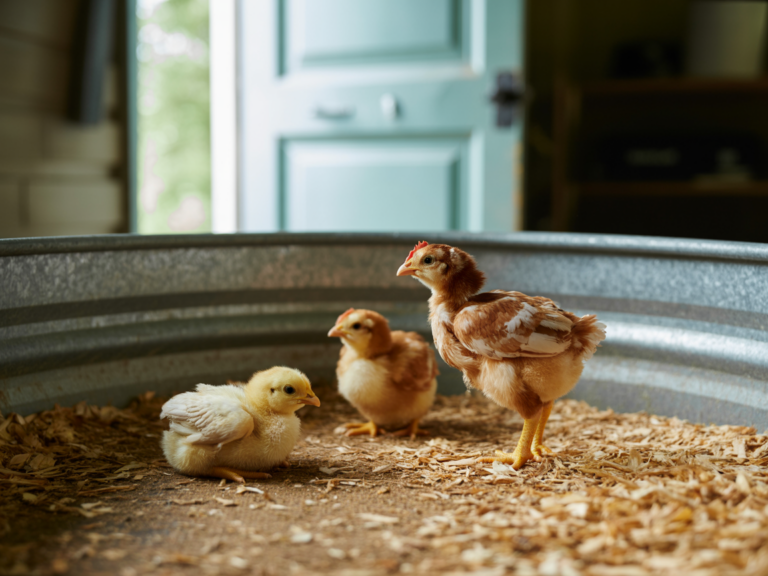
The target picture is simple: chicks spread evenly across the brooder floor, moving around, pecking at feed, occasionally flopping into what looks like a tiny dramatic death but is actually a nap. That’s a warm, comfortable chick. What you don’t want is a pile of birds huddled directly under the lamp. That’s not “normal chick behavior.” That’s a cold chick telling you it cannot get warm enough, and if you treat it as cute or typical, you’ll likely lose one before the week is out.
Here’s the mistake almost everyone makes: they hang the thermometer at lamp height, see 95°F, and consider the job done.
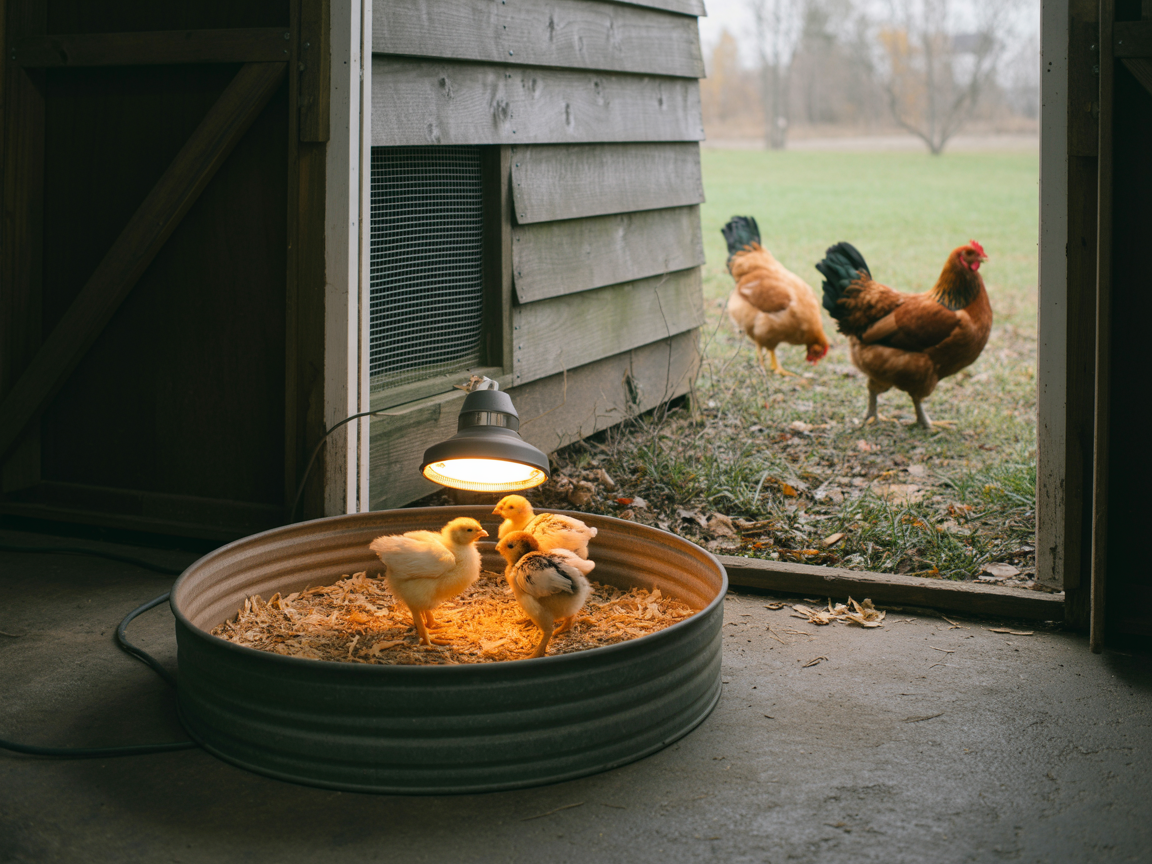
The chick lives at floor level. The reading at floor level, directly under the heat source, can be off by 10°F or more depending on your lamp height and brooder depth. Stick the thermometer at the floor. That’s where the number matters. You want 95°F at floor level, under the heat, in the first week. Not at the rim of the brooder. Not in the middle. At floor level, under the lamp.
Water access is the other thing that gets skimped. Every chick should be within 12 inches of a water source. That sounds fussy until you realize a chick that has to push past a pile of litter and six other birds to get a drink just won’t, and dehydration in the first 48 hours moves fast.
Space Is the Variable Everyone Freezes
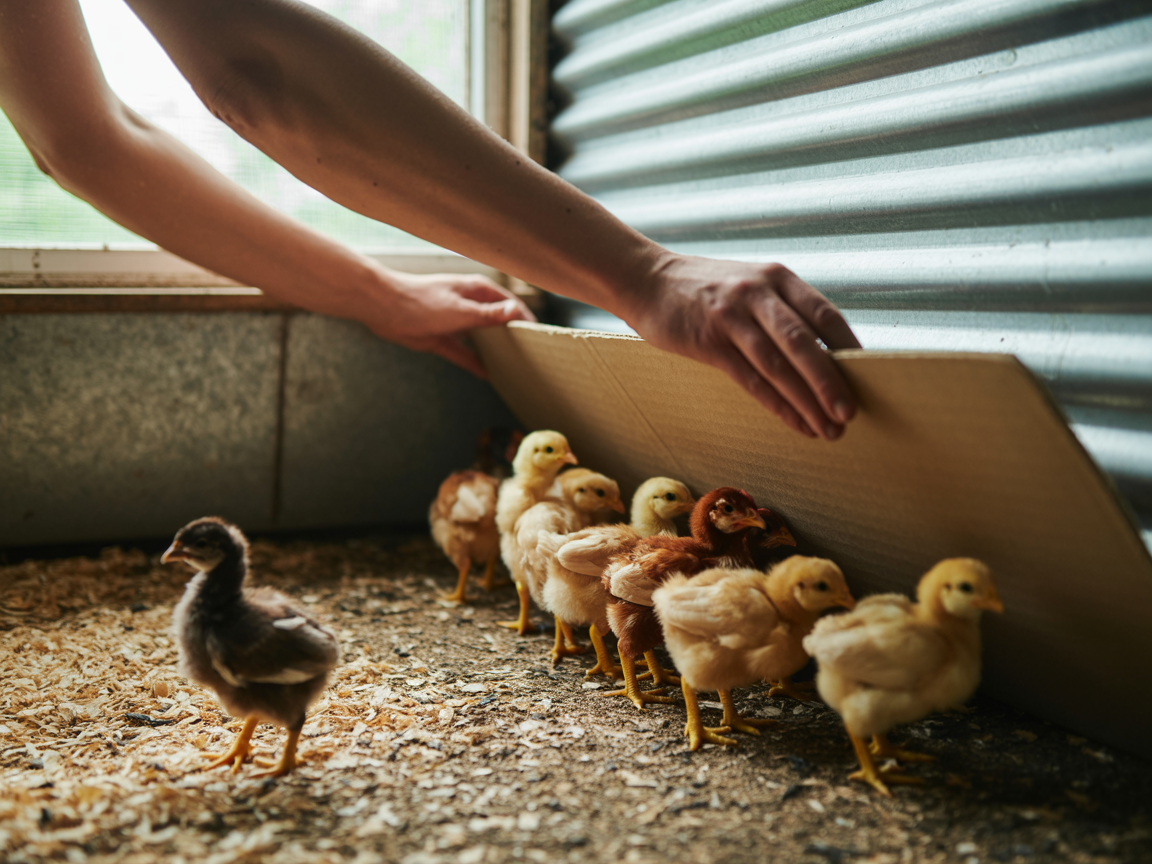
The standard advice is half a square foot per chick at hatch. That’s fine. Genuinely fine for week one. The problem is people treat it as the answer instead of the starting point, and then three weeks later they’ve got a dozen birds crammed into the same box and they’re wondering why there’s blood on a tail feather.
Here’s the actual progression: 0.5 sq ft per chick at hatch, 1 sq ft per chick by week three, 2 sq ft per chick by weeks five and six. Most backyard setups hit dangerous territory somewhere around week two and nobody admits it because the chicks “seem fine.” They seem fine until one gets a raw spot on its back from being pecked, and then you’ve got a problem that escalates fast because chickens go for red.
Cramped chicks peck each other. Their immune systems take a hit from chronic stress. They foul their water constantly because there’s nowhere to move that isn’t directly over the drinker. Pasty butt rates climb.
It’s not a coincidence. It’s cause and effect, and the cause is square footage.
The fix genuinely costs nothing if you plan for it. A second cardboard box taped to the first. A plastic storage tote. A section of the garage floor ringed with a hardware cloth fence. I used a kiddie pool my second year and it was the best brooder decision I ever made. None of this requires money. It requires acknowledging that the chick you hatch on day one is not the same size as the chick you’ll have on day thirty, and planning accordingly.

$37.98 In Stock
Paid link · price checked October 6, 2026 09:15
Turning Down the Heat: Follow the Feathers, Not the Calendar
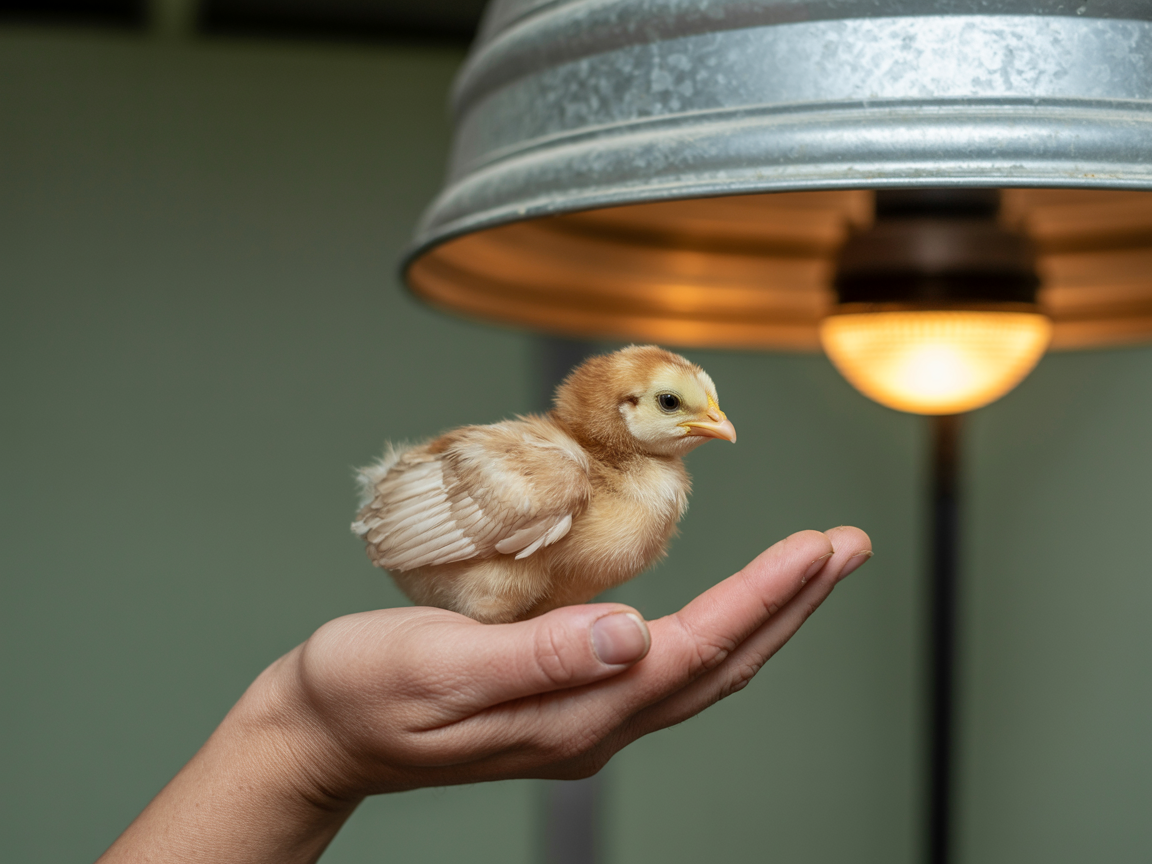
Drop heat by 5°F per week starting in week two. That’s the default. I’m not saying ignore it. I’m saying it’s a default, not a law, and your brooder isn’t a lab.
Wing feathers come in first, usually around day five to seven. You’ll see the little quills fanning out. Then back and chest feathers fill in across weeks two through four. By weeks five and six, most breeds are fully feathered. Emphasis on most. A slow-feathering breed, a drafty brooder, a cold basement where you set up the brooder in March: all of these mean you hold the heat longer, and the chick’s posture tells you plainly whether you got it right. Hunched. Still. Puffed up. That bird is cold. Don’t reduce heat on a date on your phone calendar when a chick still has bare patches on its back.
Chilled chicks at five or six weeks are genuinely vulnerable to respiratory illness. That’s not a scare tactic. That’s what happens.
Watch the feathers. Watch the posture. The calendar is a backup reference, not the authority.
Read next: My tips for feeding baby chicks
Grit and Treats: Earlier Than Most Guides Say, Later Than You Want
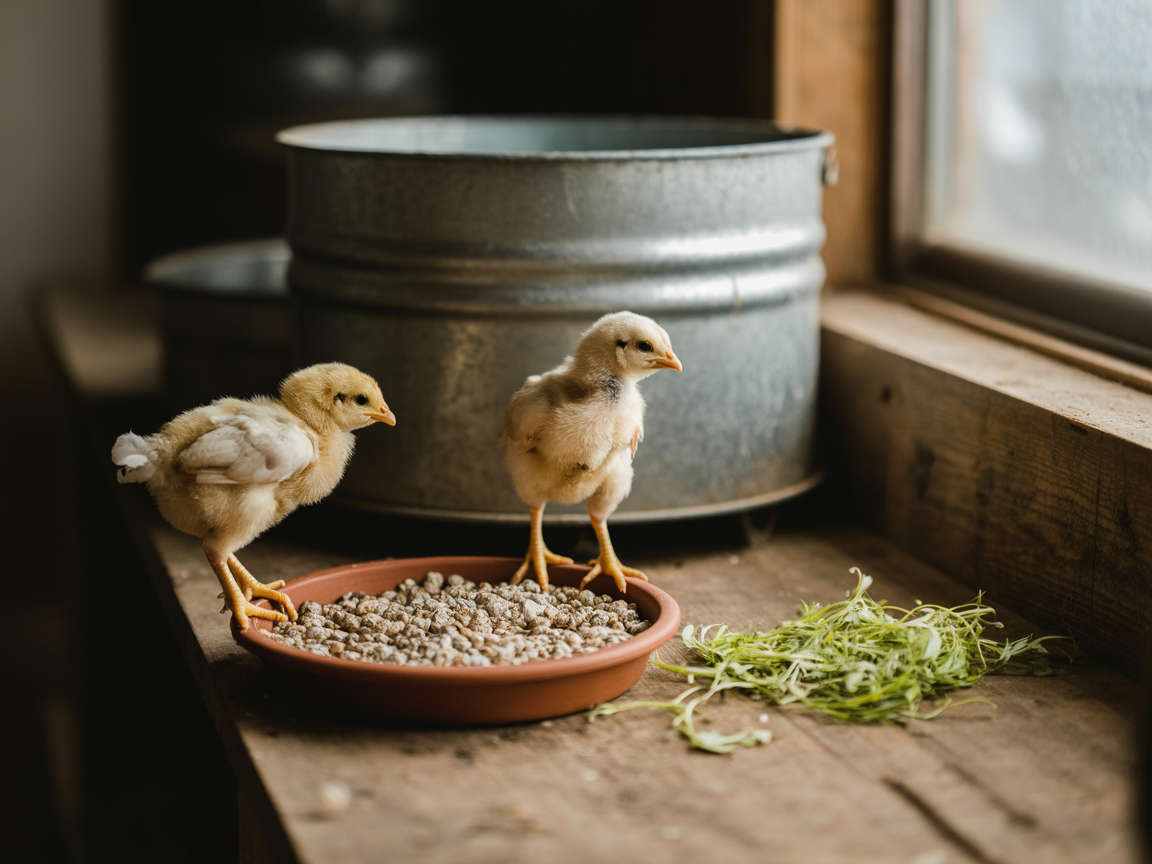
Most guides tell you to wait until week four or five before offering anything besides crumble. I think that’s overcautious, and I think it misses an early window to actually handle your birds and build some trust. But rushing it without grit is genuinely dangerous, so the sequence matters.
Chick-sized grit needs to be available the moment any food other than crumble goes in. Not “soon after.” Before. If you’re offering a treat and there’s no grit in that brooder, you’re asking a chick to try to digest fibrous food with no grinding mechanism, and that’s a crop problem waiting to happen. The assumption that commercial feed makes grit optional is wrong the second you introduce anything whole.
Safe first treats after week two: small pieces of hard-boiled egg, plain oats, chopped greens.
Small. We’re talking a tablespoon of oats split between twelve birds, not a snack bowl. Keep treats under 10% of total daily intake. And do not offer layer-formulated scratch or cracked corn before week 16. I know the bag at the feed store is right there. Leave it. Scratch before sixteen weeks is empty calories in a bird that needs protein to develop, and layer formulations have calcium levels that are calibrated for adult laying hens, not growing chicks.
The early treat window matters for handling. Birds that get picked up and offered food from your hand at three weeks are a lot easier to manage at three years. Worth the small effort.
Read next: Sexing chicks by their wing feathers
Outside Time: Rushed More Often Than It’s Stalled
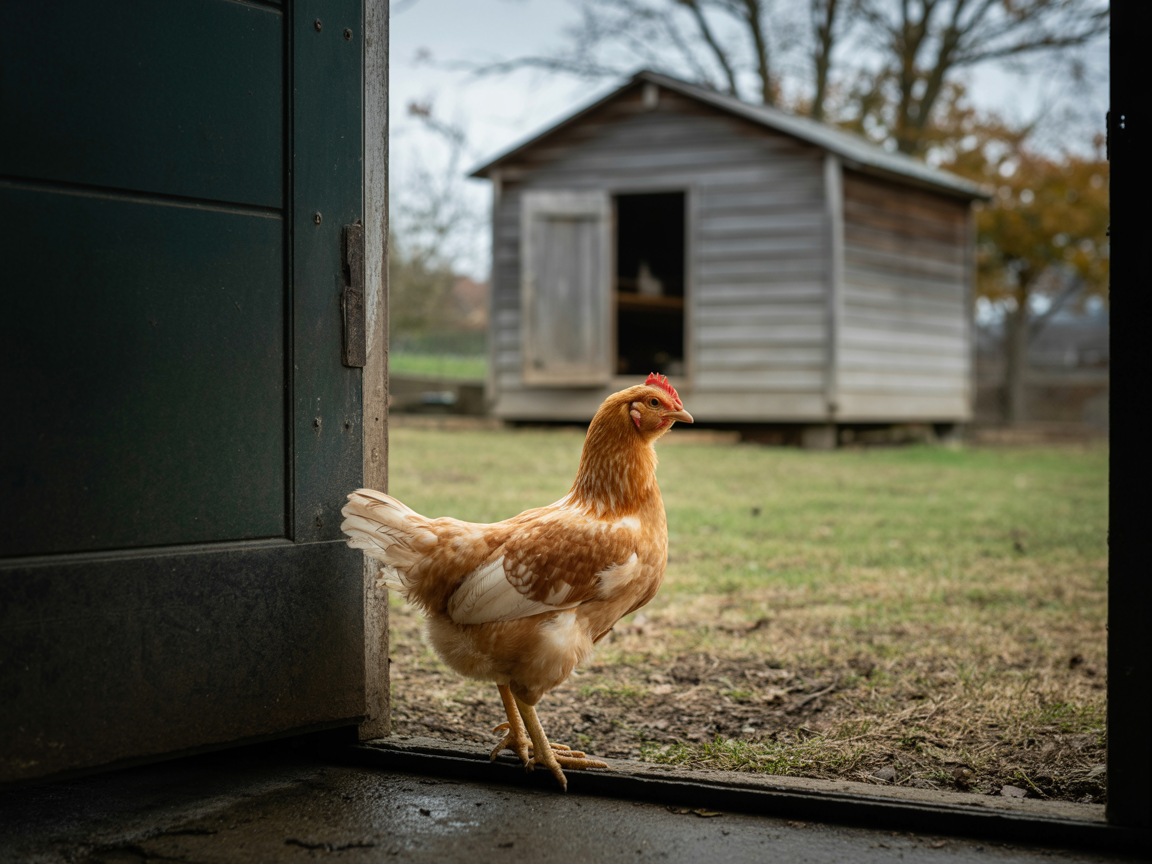
I understand the pressure. The brooder smells. The chicks are loud. The weather looks beautiful and you want them out of your garage. I’ve been there every single spring.
But overnight temperature is the checkpoint people blow past most often, and it’s the one that actually kills birds. A warm afternoon hides what the night is going to do. Supervised outdoor time in warm weather can start as early as weeks three and four in mild climates, and that’s fine. Bring them in before dark, watch them, done. Unsupervised outdoor access is a different question entirely, and it requires three things: the chicks are fully feathered, overnight lows are consistently above 50°F, and the run is genuinely predator-proof.
On that last point: hardware cloth, not chicken wire. Chicken wire keeps chickens in. It does not keep predators out. A raccoon will reach through chicken wire and pull a chick through the gap. I know this personally and I’d rather you not learn it the same way I did.

$23.74 In Stock
Paid link · price checked October 6, 2026 09:15
Below 50°F overnight is dangerous for chicks under eight weeks regardless of how well feathered they look. Feathers insulate. They don’t substitute for heat when the bird has never been exposed to cold and can’t get back to a heat source.
That’s the specific scenario that kills birds in spring: looks fully feathered, seems hardy, overnight low drops to 44°F, no heat lamp in the coop. Don’t assume ready means ready for anything.
Read next: Laying the Foundation — my beginner’s handbook to egg-laying hens
Integrating With an Existing Flock Without Starting a War
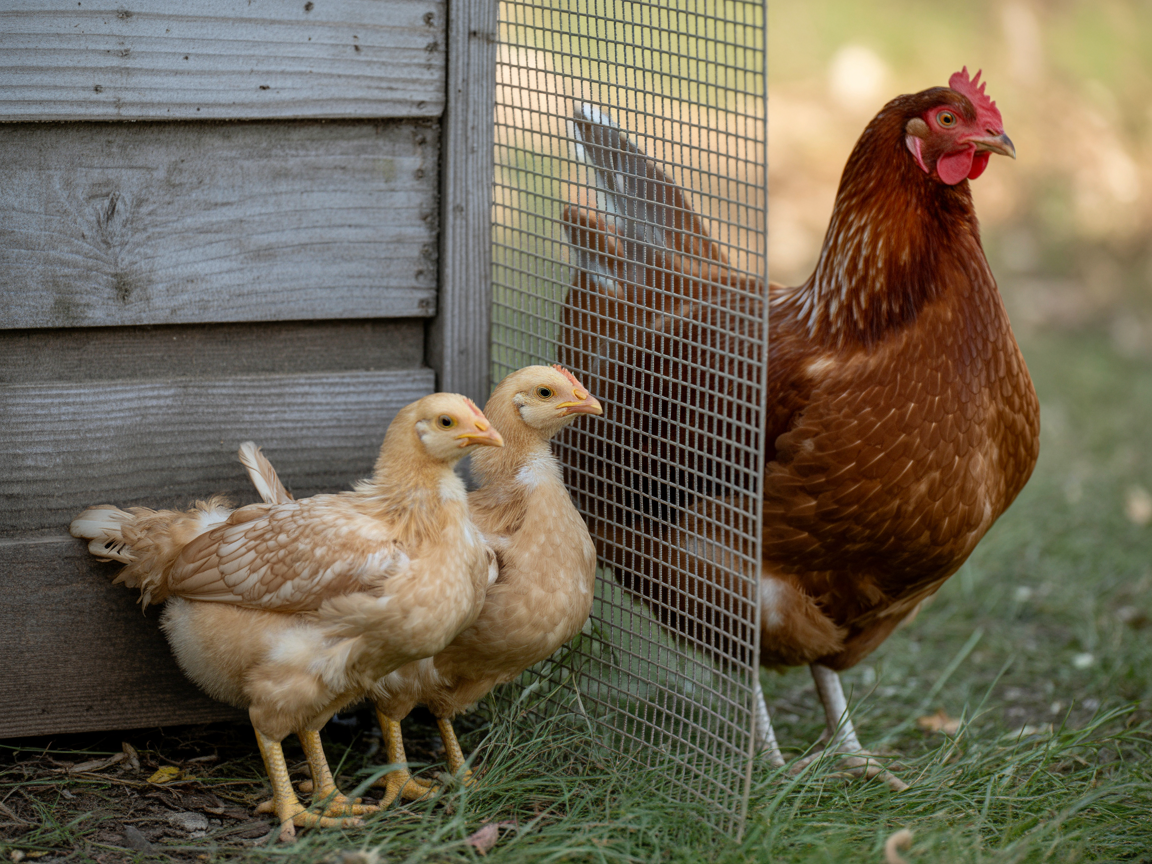
No physical contact with adult hens before eight weeks. That’s not the target, that’s the floor. Young chicks lack the size and social standing to defend themselves from an adult hen who’s decided she doesn’t like them, and the size differential before eight weeks is severe enough that it’s not a fair fight under any circumstances.
The method that actually works is side-by-side separation for at least two weeks before shared space. A wire partition, a temporary fence, adjacent runs. They can see each other, hear each other, get used to each other’s presence. You’re doing the social work in a context where nobody can draw blood.
Skip this step and you’re just hoping the introduction goes well. Hope is not a management strategy.
Pullets should be close to adult size before full integration, usually sixteen to eighteen weeks for most breeds. And one thing I’ll say plainly because the internet is full of people who believe otherwise: a rooster will not reliably protect young pullets from older hens. He might. He might also ignore it entirely or participate. Do not factor the rooster into your safety plan for integration. My rooster has a bad enough temper that I didn’t want him near the pullets anyway, but I’ve read enough accounts from people who expected intervention and didn’t get it.
Two feeders and two waterers, positioned away from each other, reduce resource-guarding injuries significantly. The dominant birds can’t station themselves at the only water source if there are two of them at opposite ends of the run.
Read next: When chicks can move onto adult feed
| Chicken Wire | Hardware Cloth | |
|---|---|---|
| Keeps chickens contained | Yes | Yes |
| Stops raccoons reaching through gaps | No | Yes |
| Qualifies as predator-proof for unsupervised outdoor access | No | Yes |
Bottom line: A raccoon will reach through chicken wire and pull a chick through the gap — hardware cloth is the only safe choice.
Feed Transition: The Switch Most People Make Too Early
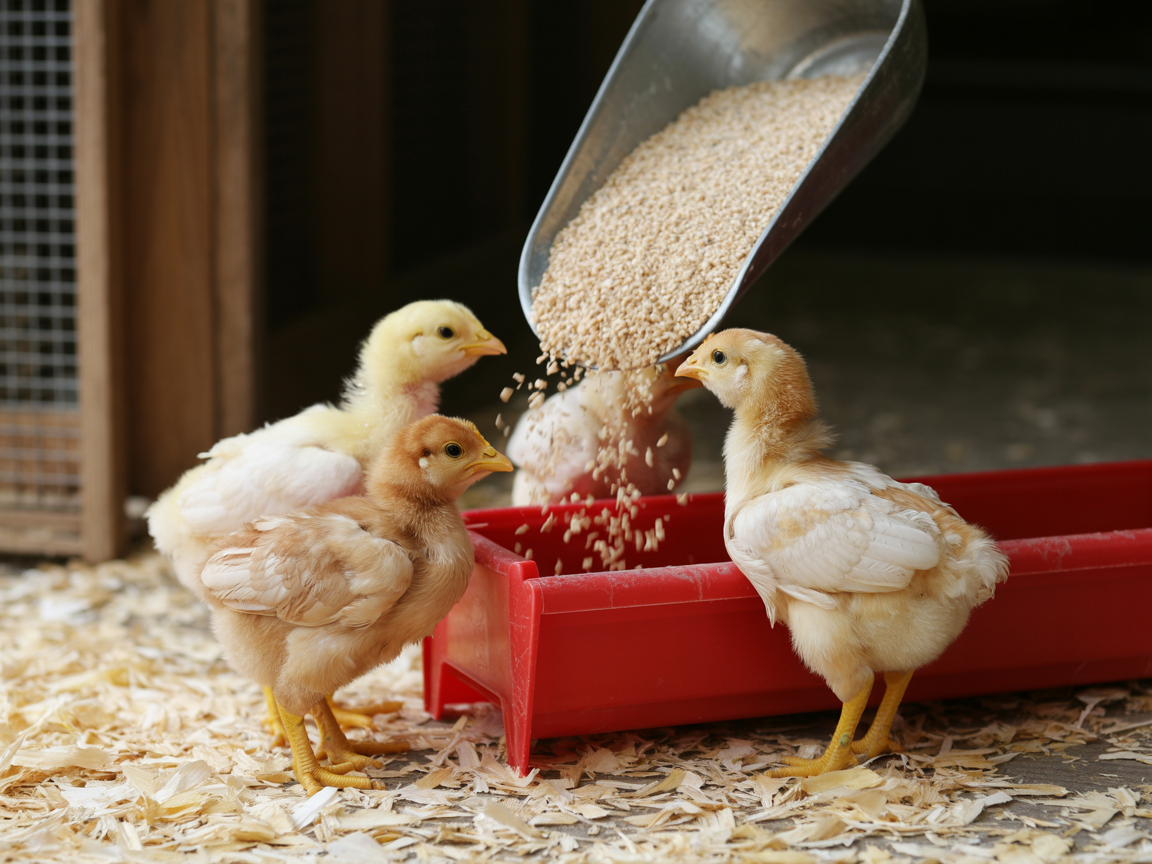
Stay on chick starter through week eight, minimum. Chick starter runs 18-20% protein and that’s what a growing bird needs. Move to grower or developer feed from weeks eight through eighteen. Layer feed does not begin before week eighteen, and the reason isn’t arbitrary.
Excess calcium before a pullet starts laying stresses developing kidneys. It’s cumulative. The damage isn’t visible week to week, which is exactly why people underestimate it.
The instinct to switch to layer the moment pullets look mature is common and understandable and wrong. Physical size is not the signal. Eighteen weeks is the floor, regardless of how big they are.
If you’ve got a mixed-age flock and can’t separate feeding, the practical answer is to keep everyone on grower and offer oyster shell free-choice on the side. Laying hens will eat what they need. Growing pullets won’t seek it out. It’s a cleaner solution than switching all birds to layer early and quietly damaging the ones who aren’t ready for it.

$19.95 In Stock
Paid link · price checked October 6, 2026 09:15
Read next: Check any food in my “Can chickens eat…?” finder
Before the First Egg: What Slows It Down and What You Can’t Speed Up
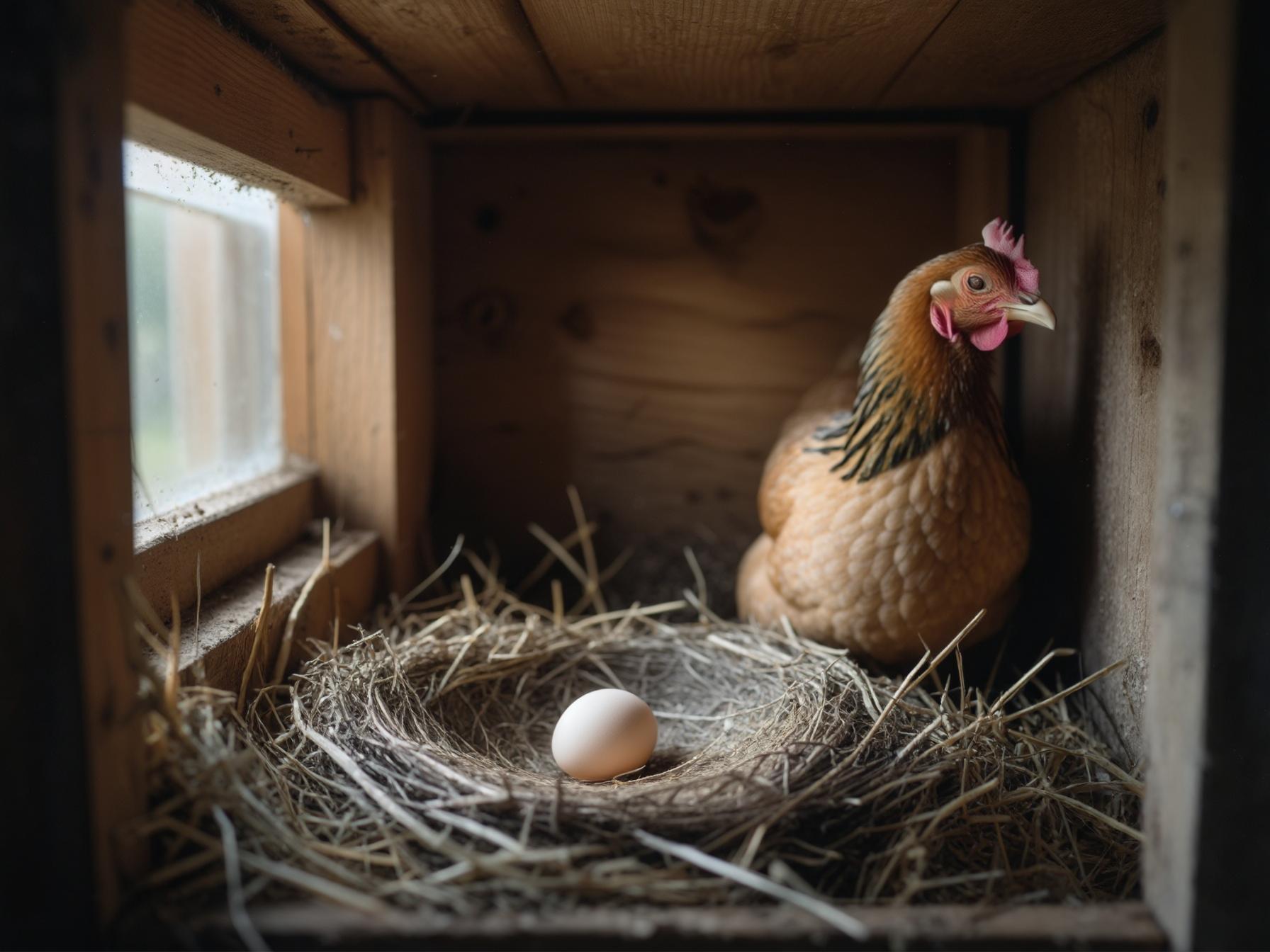
Production breeds typically lay their first egg somewhere between eighteen and twenty-four weeks. Heritage and dual-purpose breeds run longer. Twenty-four to thirty-two weeks is completely normal. If your pullet hasn’t laid at twenty weeks, she’s not broken. She’s on her own schedule, and adding stress through feed changes or extra handling to “investigate” makes that timeline longer, not shorter.
The signs that you’re close: the comb and wattles redden up two to four weeks before the first egg. The pullet starts squatting when you reach toward her, a submissive posture that usually shows up one to two weeks out. She’ll start investigating nest boxes, sitting in them, rearranging the shavings.
You’ll know.
Adding artificial light to push a pullet under twenty weeks into lay is a bad trade for a backyard flock. You get a few small eggs early, from a bird that isn’t physically ready to lay, and pullets pushed into lay before they’re mature are more prone to prolapse. Let them come into lay on their own time.
The first egg is not the finish line. It’s the beginning of a new set of questions: nest box setup, egg frequency, molt timing, winter production. But that’s a different post. Right now you’ve got chicks, and getting them to that first egg without losing birds to bad heat reads, cramped space, and rushed transitions is the whole job.
Related read: How to Raise Chickens for Eggs — Instant PDF download. Secure checkout by Stripe