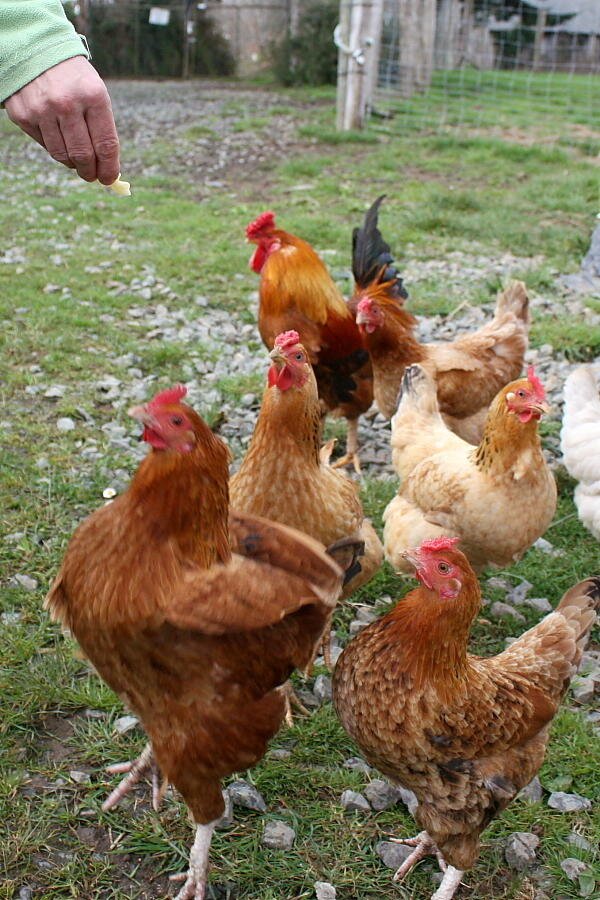
Yes, chickens can eat beet tops. Beet leaves and stalks are fine for hens, raw or cooked. But they’re a treat, and your hen’s share is about half a leaf a day at most. Keep the rest cold, or freeze it for later.
Snip a Few Leaves Straight From the Beet Row

If you grow beets, you don’t have to wait for harvest day to share the tops. You can snip leaves from the plant once the root is 1 inch across.
And you can take a fair amount. Up to a third of the foliage can come off without harming the root. Use scissors, and cut the leaves when they’re 6 to 8 inches long.
Cut them the morning you feed them. Or put them straight in the fridge.
Thinning the row gives you greens too. If you put off thinning until the plants are 3 inches tall, the ones you pull can be cooked like spinach, and they make a fine treat for your hens too, raw or cooked, same as the grown leaves.
Do the snipping yourself, though. That way you decide how much comes off, and a loose hen might not stop at a third.
Keep your flock out at planting time. Chickens eat newly sown seeds and emerging seedlings, and they can strip young plants in the blink of an eye. More mature plants may not suffer much, though your hens won’t hesitate to peck at a tempting cucumber or tomato.
Garden chemicals are the other worry. That’s anything from fertilizer to pesticide, organic or not. If you’re using them, it’s best to keep your birds at a safe distance.
Once the season’s over, that turns around. After you’ve pulled the plants that aren’t chicken-friendly, let your flock loose in the garden to clean up what’s left.
Cut a Bunch’s Tops Off the Day It Comes Home

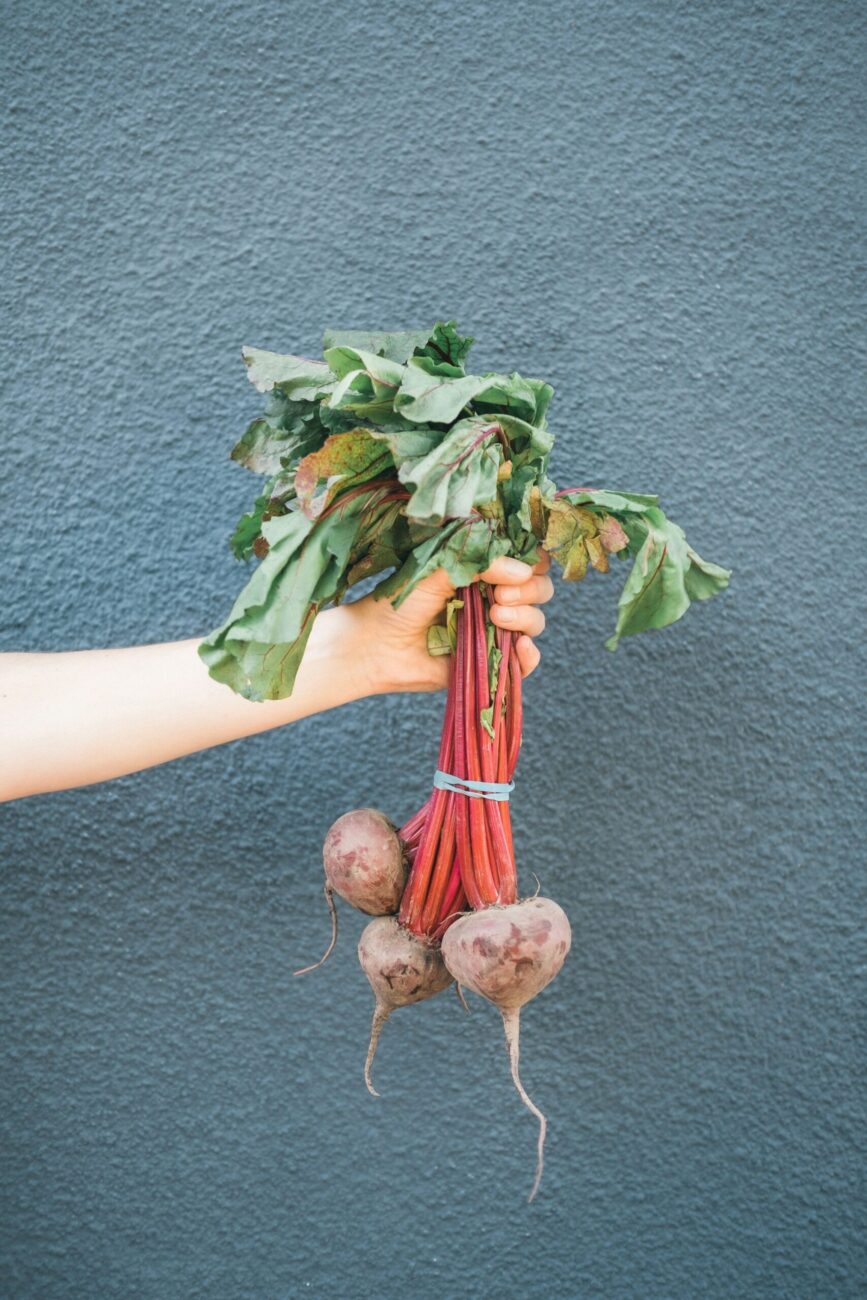
Beets from the garden or the farmers market usually come with their tops still on. Take them off when you get home, leaving an inch of stem on the beet.
The reason is the roots. In storage, the greens quickly draw moisture out of the root, the flavor drops off and the beets shrivel.
A half inch to an inch is plenty. From there on, you’ve got two foods, and the greens have to be prepared separately.
The roots keep a good while after that, about a week in perforated plastic bags in the refrigerator, and up to 3 to 4 months in a cool, humid spot at 32°F to 35°F.
Sort the greens the same day. Rinse off the dirt, pull out any slimy leaves and set aside your hens’ share. Dry them well, and wrap the greens in a paper towel to absorb moisture.
How Much of the Bunch One Hen Gets

Honestly, it’s less than it looks like on the counter. Treats should make up no more than 10% of your hen’s daily diet, and a laying hen eats between 100 and 150 grams of feed a day, about a quarter pound. That gives your hen 10 to 15 grams of treats for the whole day. Scraps and scratch count toward it too.
One raw beet leaf weighs 32 grams, and a whole cup of raw beet greens is just 38 grams. So a hen’s share is a third to half of one leaf, and only on a day she gets nothing else. A flock of six splits about two or three leaves.
Put it out in an amount they’ll clean up fast. Don’t feed more than they can finish in 5 to 10 minutes, so you don’t attract nuisance animals.
The feed is what keeps your hens laying. Complete feeds are made to be their only food, and if you overdo the treats and scraps, their egg production is likely to suffer. Keep beet tops a treat, not a daily pile.
Beet tops won’t cover your hen’s calcium, either. Beet leaves are high in oxalate, and oxalate locks up calcium. So beet greens make a poor calcium source for laying hens. Shell calcium comes from layer feed, with oyster shell or dried, crushed eggshells in a dish on the side, and your birds should have free access to grit too.
Keep the Rest Cold, and Toss the Ones That Turn

The tops your hens don’t get today go in the fridge. Not in a bucket on the porch. Keep your greens cool until eaten.
Check them before each handful goes out. Your scraps should never be salty, citrusy or moldy, and don’t let scraps rot, or botulism might result.
A slimy or moldy beet top goes in the compost, not the run.
Cold slows one more thing down. Nitrate in plants can turn into nitrite in moisture and heat after harvest. That’s mostly about cattle forage, but it’s one more reason to keep your tops cold and crisp, and feed them out a handful at a time.
Freeze the Extra for Later

A big beet harvest can leave you with a lot more tops than your flock’s share. Freeze them. Start with young, tender leaves, wash them well and cut off woody stems and fibrous ribs. Don’t use greens that show signs of decay or mold. Beet greens get 2 minutes of blanching below 5,000 feet, and 3 minutes at 5,000 feet and up.
After the blanch, cool them in ice water for the same amount of time, and drain them well.
Now freeze them in hen-sized amounts. For your flock, that’s a few leaves. If you’re packing them straight into rigid containers, leave 1/2 inch of headspace. In bags, remove as much air as possible.
A tray pack suits hens even better. Spread the chilled, well-drained greens in a single layer on shallow trays and freeze them until they’re firm, then move them into labeled bags. Tray-frozen greens separate easily, so you can take out one small handful at a time.
Most frozen vegetables keep high quality for 12 to 18 months at 0°F or below.
Blanched greens are cooked greens, and cooked beet greens are fine for hens, same as raw. Thaw a portion and serve it plain, without the salt you’d put on your own. A thawed handful in the middle of winter is still a treat, and it counts toward that 10% like any other.
Sources
- Cynthia Haynes and Aaron Steil, Iowa State University Extension and Outreach: Growing Beets in the Home Garden (last reviewed July 2024).
- Illinois Extension, Home Vegetable Gardening: Beet.
- University of Rhode Island SNAP-Ed: Beets.
- Deborah Benoit, University of Vermont Extension: Chickens in the Garden (April 17, 2024).
- Howard Enos, Colorado State University Extension: Raising Poultry the Organic Way – Disease Control and Feeding (December 2019, reviewed August 2025).
- Wilmer Pacheco, Joseph Gulizia and Kevin Downs, Alabama Cooperative Extension System, ANR-2913: Feeding the Laying Hen (August 2022).
- Jacquie Jacob (University of Kentucky) for Cooperative Extension’s poultry site: Feeding Chickens for Egg Production in Small and Backyard Flocks.
- USDA FoodData Central: Beet greens, raw (FDC ID 170375).
- Larry Thompson, Merck Veterinary Manual: Nitrate and Nitrite Poisoning in Animals (full review April 2026, last updated August 2026).
- Martha Zepp, Penn State Extension: Preserving Greens (updated November 24, 2025).
- Colorado State University Extension, Preserve Smart: Freezing Greens.
Related read: How to Raise Chickens for Eggs — Instant PDF download. Secure checkout by Stripe