
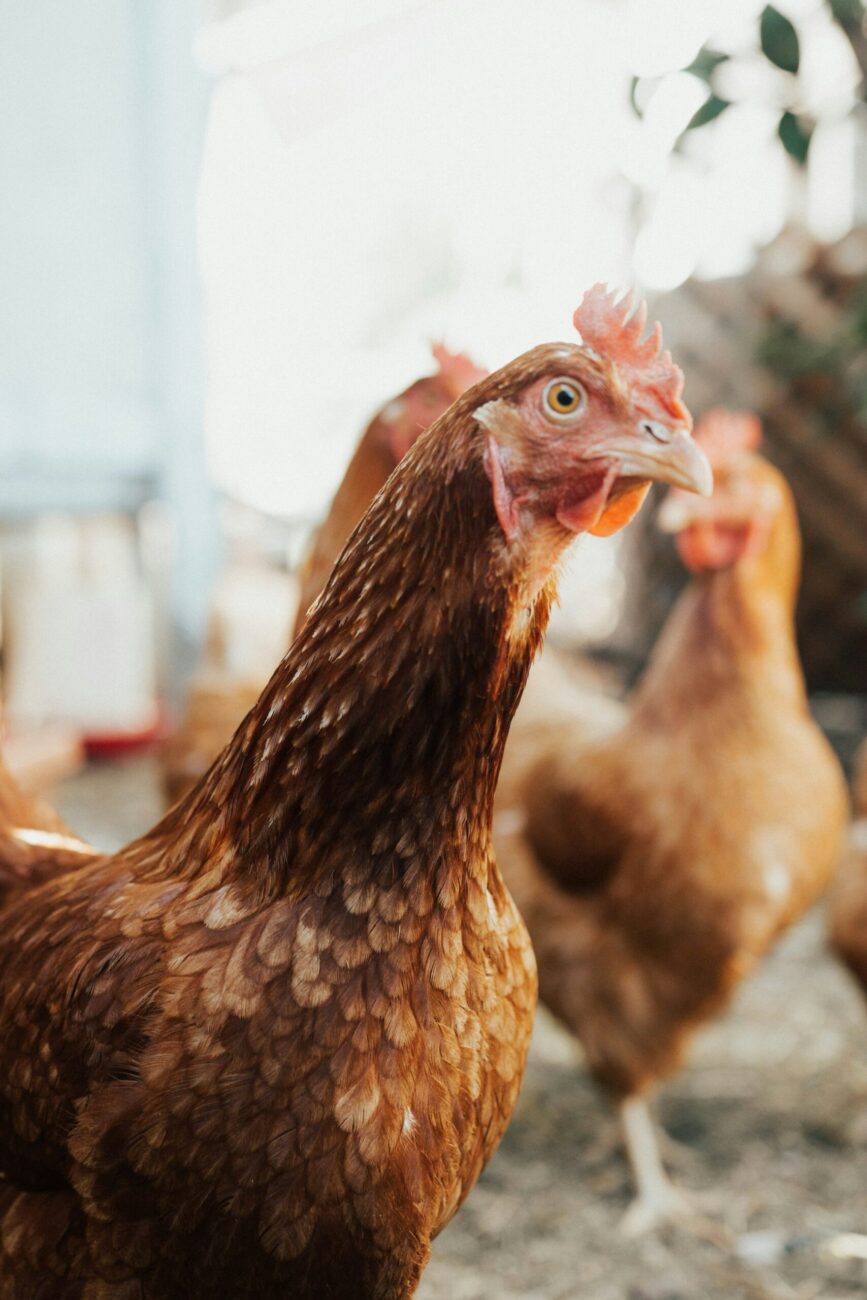
Yes, chickens can eat mushrooms.
The store-bought kind, anyway. The wild ones that pop up in your run after a fall rain are a whole different deal, and that’s the part I’d like you to read twice.
I’ve kept chickens for eight years. Right now it’s 12 hens and one loud rooster, and every October the ground under the two big oaks behind my place sprouts mushrooms overnight. My birds find them before I’ve had my coffee. So I’ve had to sort this out for my own flock, not just read about it.
The short version goes like this. Grocery store mushrooms are fine as a small treat, and I cook mine first. Wild mushrooms get pulled and thrown out, every single one, because I can’t tell a safe one from a deadly one. Odds are you can’t either. And if you think a bird ate a wild one, you call a vet now, not tomorrow.
Store-Bought Mushrooms Are Fine, and I Cook Them First
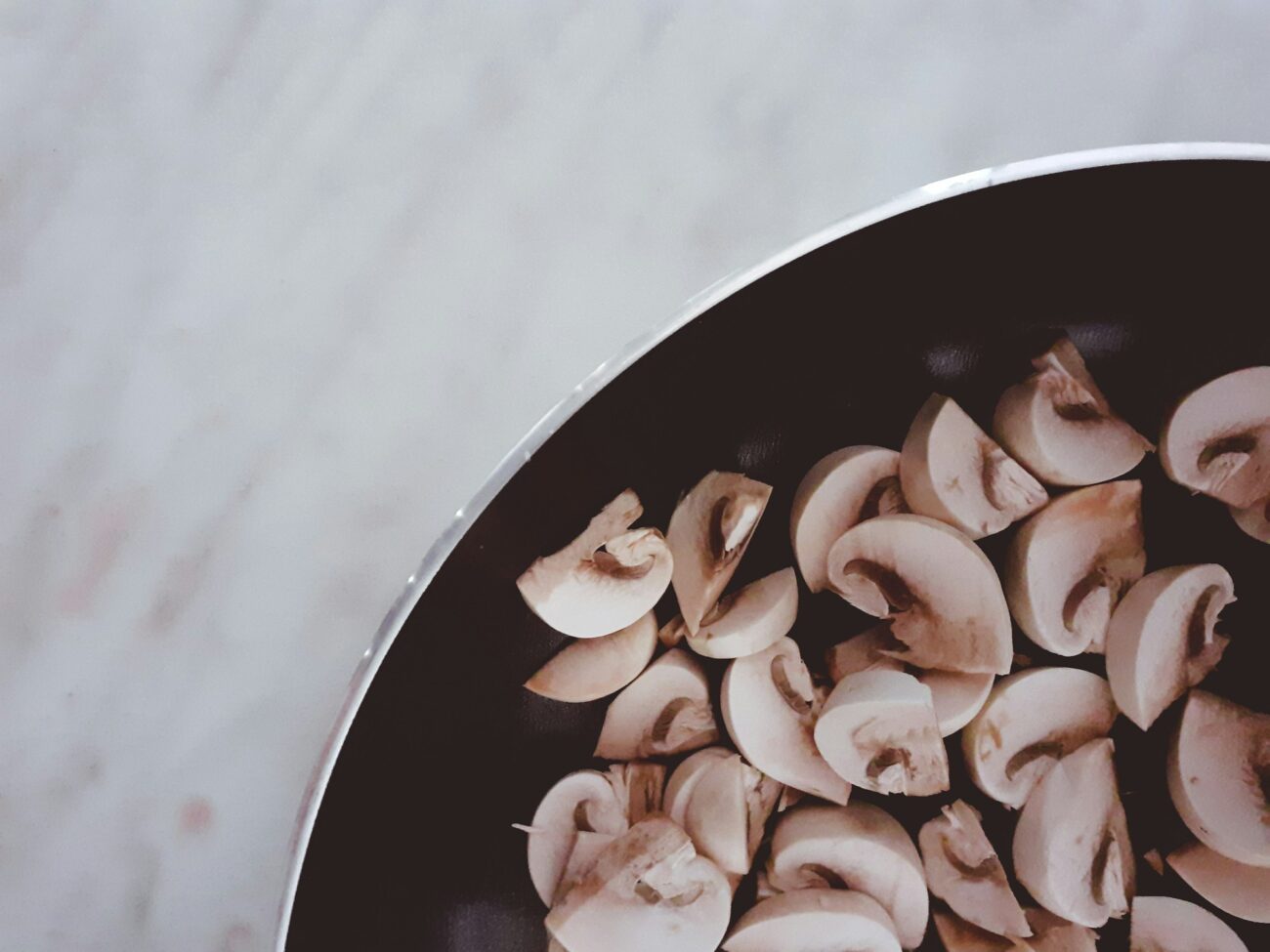
White buttons and cremini are one species, Agaricus bisporus, and so are portobellos. Cook’s Illustrated puts it simply. Cremini are a brown variety, and portobellos are cremini that were left to grow big. So whichever of the three is on sale at your store, it’s the same mushroom to your hens.
I cook them plain. No butter or salt, and none of last night’s onions in the pan either. Just sliced mushrooms in a little water or a dry pan for a few minutes, then cooled.
I cook them for one reason. These mushrooms carry a natural compound called agaritine. A team in Prague tested fresh cultivated mushrooms for the journal Food Additives and Contaminants. They found 165 to 457 mg of agaritine per kilogram, 272 on average. The most sits in the skin of the cap and in the gills. The stem has the least.
The worry comes from mice. In long studies by a researcher named Toth, Swiss mice fed the cultivated mushroom for their whole lives grew tumors. That held even for the dry baked ones. Nobody I could find has run anything like that on hens. And a mouse eating mushrooms every day of its life isn’t a hen getting a few slices on a Saturday.
So I’m not gonna tell you mushrooms are dangerous for chickens. I’m telling you cooking cuts the stuff way down, it costs me two minutes, and my birds eat them just as fast cooked as raw.
Here’s what that study measured. Just keeping the mushrooms in the fridge or freezer dropped the agaritine anywhere from 20 to 75 percent. Boiling pulled about 50 percent of it out into the water within 5 minutes, and broke down another 20 to 25 percent of it. Dry baking cut it by about 25 percent. Frying cut it by 35 to 70 percent. The microwave left about a third.
That boiling number is why I boil and then dump the water. Pouring that broth over their feed would put a lot of it right back.
How Many Mushrooms I Actually Hand Out
Purina’s rule for treats is 90/10. Your hens should eat 90 percent complete layer feed and keep treats to 10 percent of the diet. Mushrooms count toward that 10 percent, same as the watermelon rind and the kitchen scraps you’re already tossing out there.
For my 12 hens, a few sliced mushrooms split across the run is plenty. A handful, not a bowl. The layer feed is what’s balanced for laying hens, and treats aren’t, so treats stay small. I’d rather they fill up on feed and go looking for bugs.
Anything slimy or moldy goes in the trash, never the run. Molds make toxins called mycotoxins. Hy-Line, a company that breeds laying hens, says one of them, aflatoxin, causes decreased egg production. It’s the same call I made for moldy strawberries, and I’m not changing it for a forgotten carton of mushrooms.
Every Fall, Mushrooms Show Up in My Run
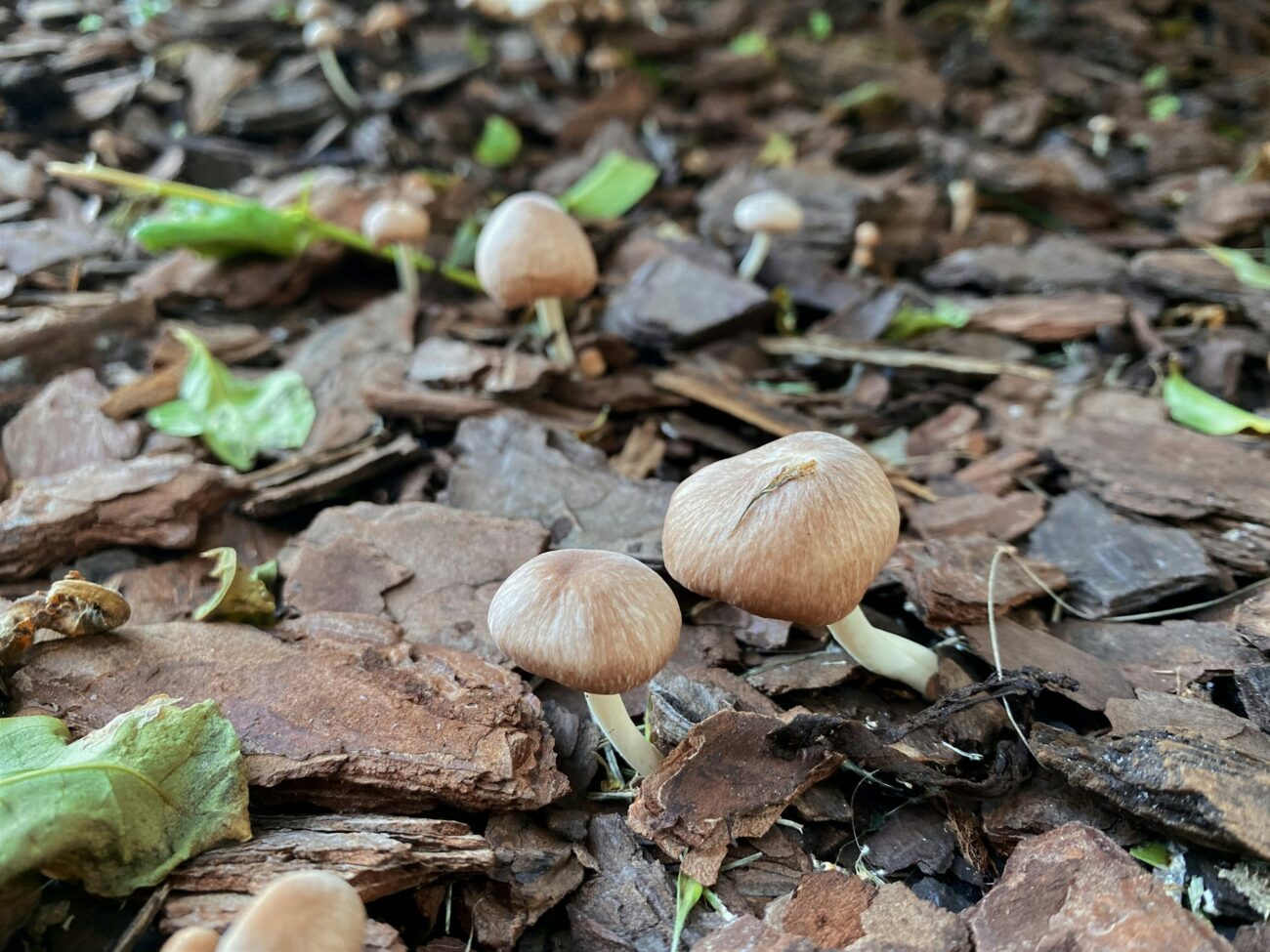
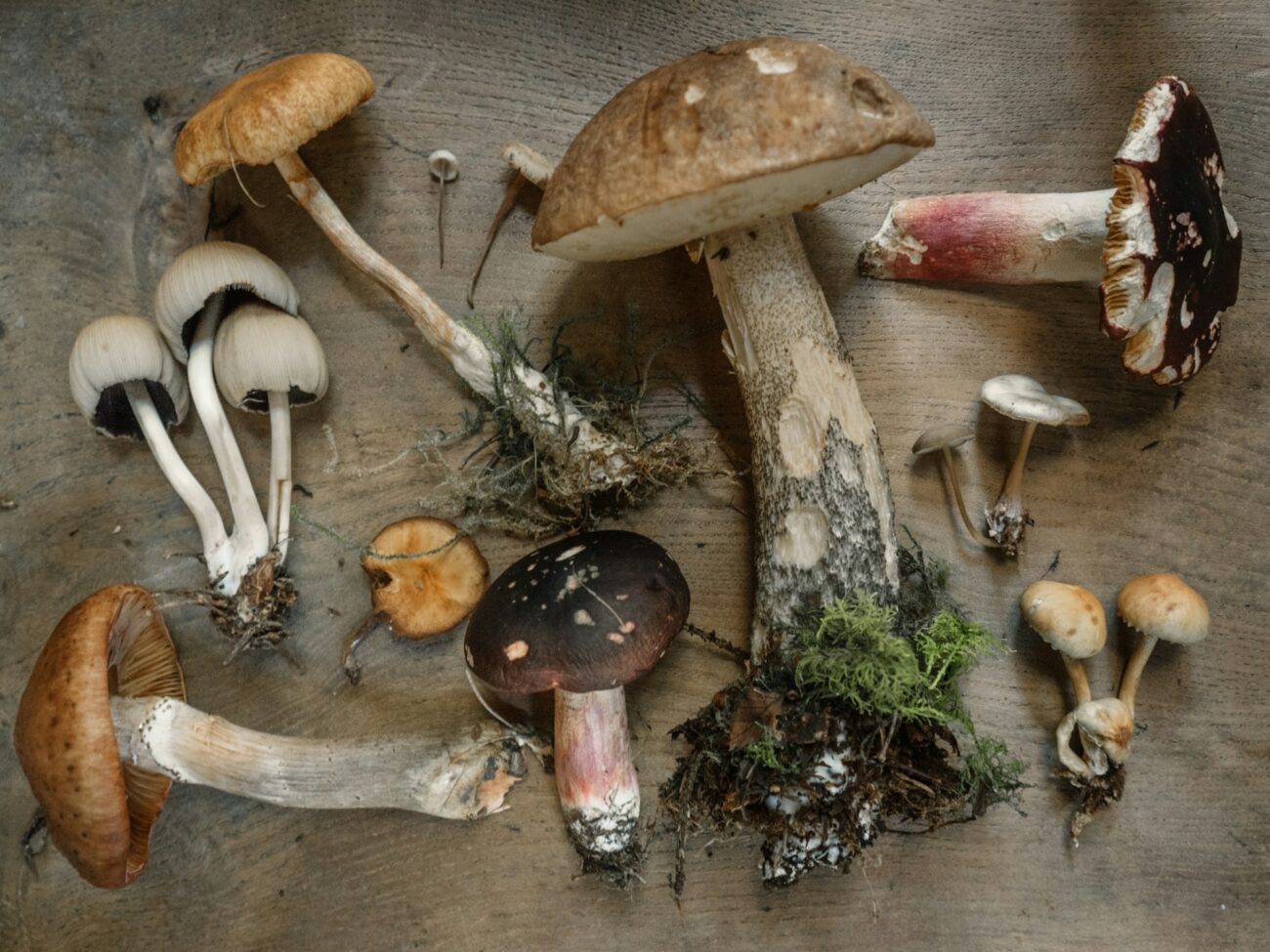
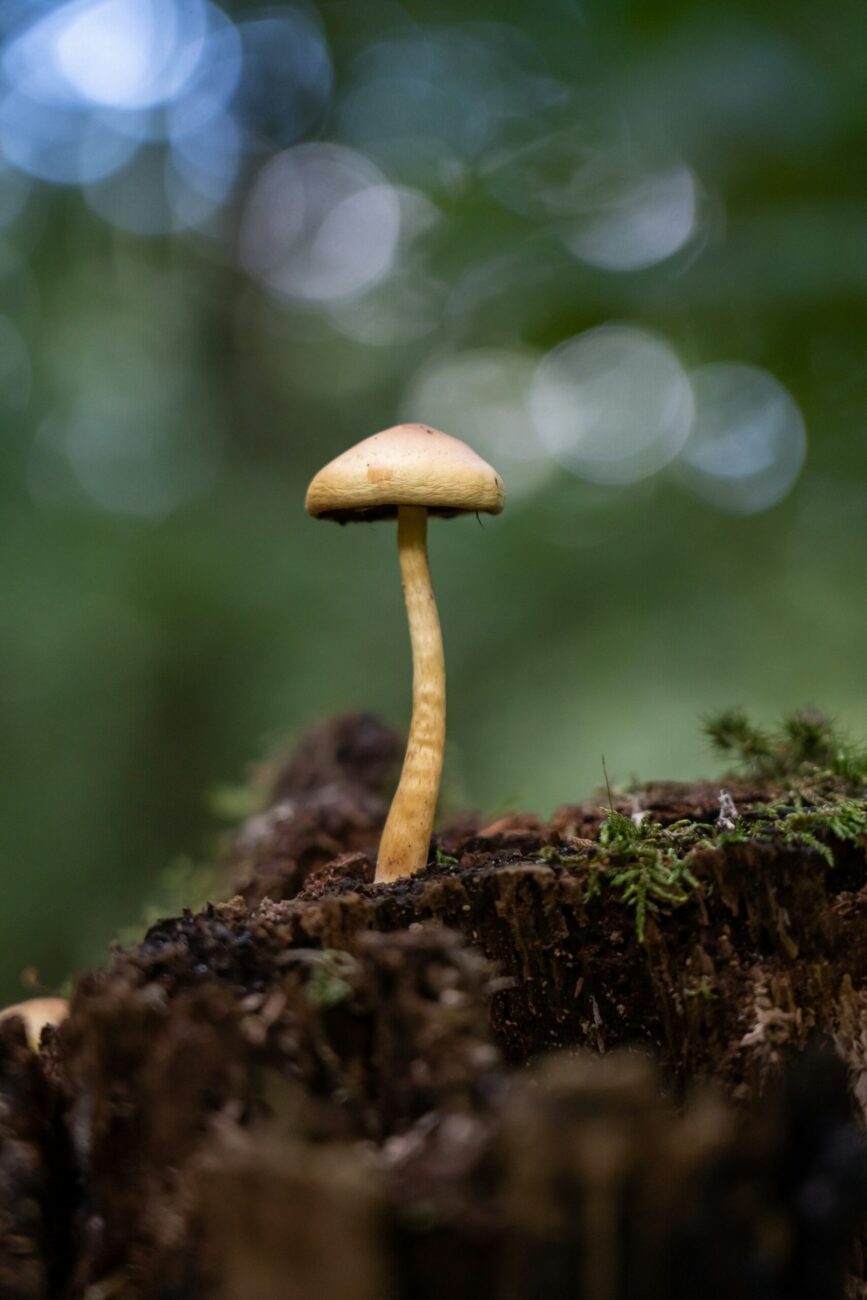
You’ll see them after the first good soak in fall. Little tan ones push up through the wood chips by the coop door. Some are gone by noon. Some come back in the same spot every year like they own it.
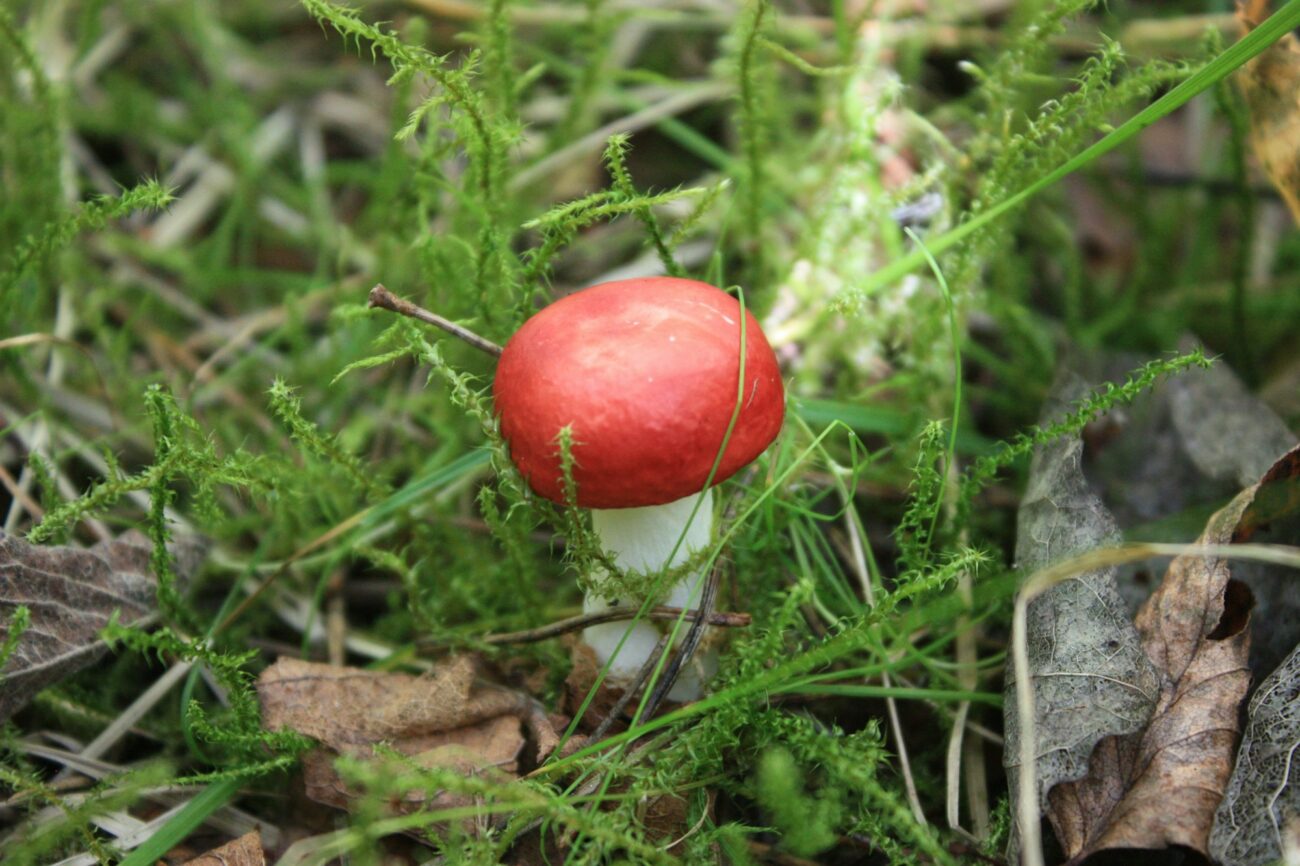
Then there are the bright ones in the grass under the oaks, red or orange caps sitting in the dead leaves. Those are the ones my hens run at first, because anything new in the run gets a peck.
My run has bark mulch on one side and old leaves on the other, and the corner of the coop where the bedding gets damp grows a few too. Rotting wood and wet litter in the shade seem to be all they need.
I’ll be straight with you. I don’t know what most of them are. I’ve got a field guide, and I’ve stared at it for a long time with a mushroom in one hand. I’m no mushroom guy, and a book didn’t turn me into one. If you free-range, the whole yard is the run, and my post on free range chickens covers the rest of what they find out there.
The Ones That Can Kill a Cow
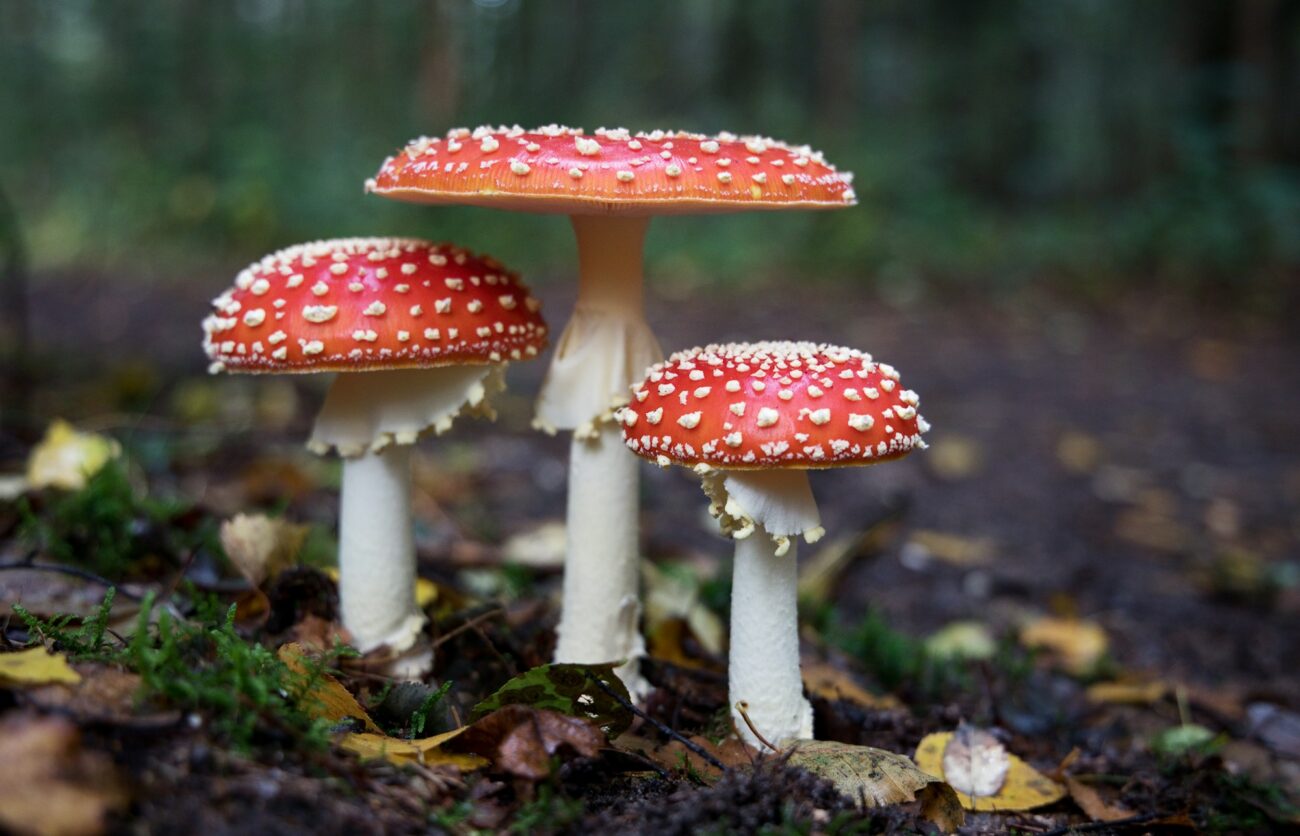
This is why I’m so stubborn about it. UC Cooperative Extension wrote a bulletin on poisonous mushrooms for California ranchers. It names the two most common deadly ones on the West Coast, the death cap (Amanita phalloides) and the destroying angel (Amanita ocreata).
Death caps grow near oaks. The bulletin lists birch and pine too, plus open pastures in the Central Valley. They come up thick in warm, wet years. The toxin is called amanitin, and it goes after the liver and kidneys. It’s not only in Amanitas, either. The bulletin says some Galerina and Lepiota mushrooms carry it too.
Then there’s the line that stuck with me. One or two death caps could kill an adult cow or horse.
A cow.
Now think about a bird that weighs less than a bag of feed.
The red one in the photo is a fly agaric, not a death cap. It’s the storybook mushroom with the white spots. CU Boulder’s magazine says it makes ibotenic acid and muscimol, “both poisonous and psychoactive,” so it’s off the menu too. The same article says the death cap kills more people than any other mushroom.
I’ve got oaks. I’ve never found a death cap under them, as far as I know. That “as far as I know” is the whole reason I pull every mushroom out of my run.
Don’t Count on a Hen to Know Better
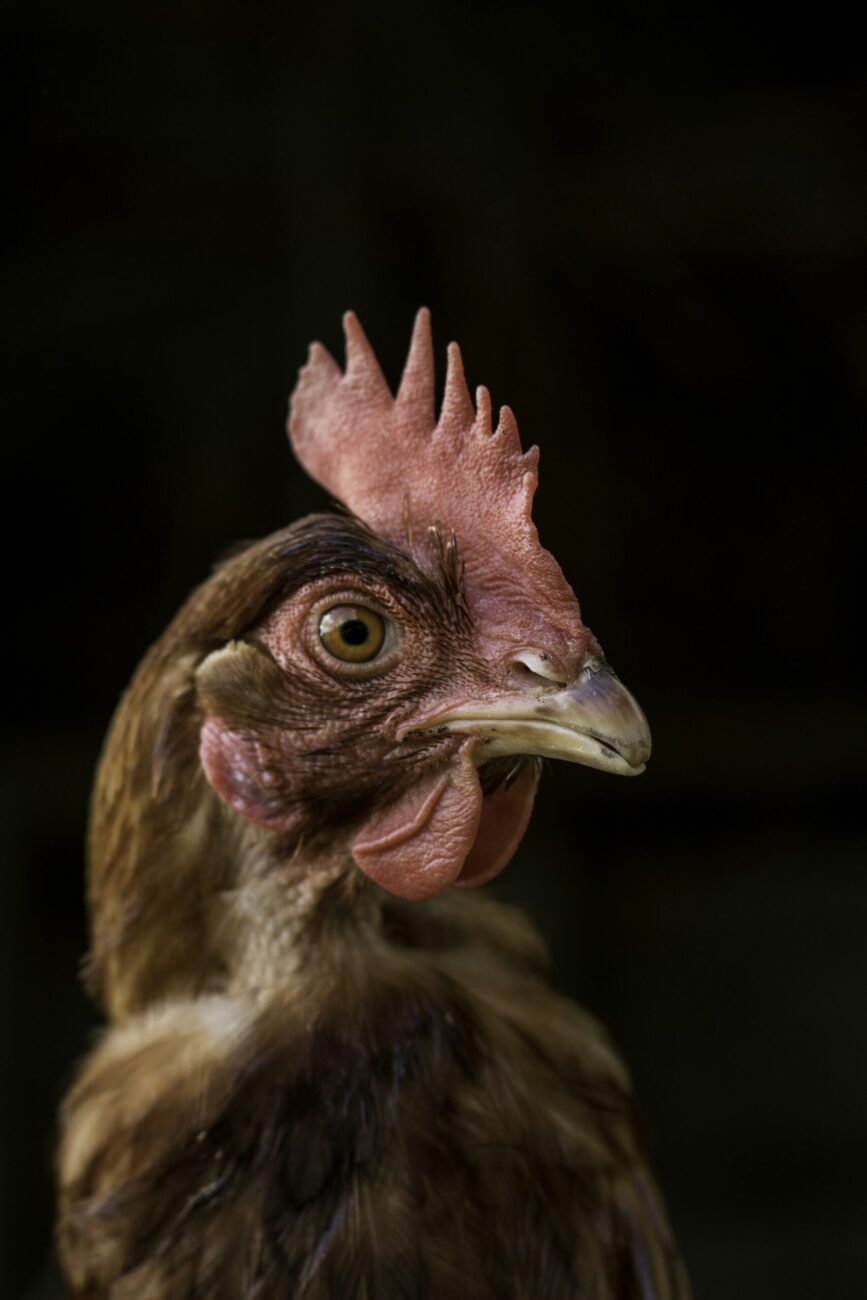
You’ll hear folks say chickens know what not to eat. Maybe some of the time. I wouldn’t bet a bird on it. Mine will peck at a bottle cap if it shines.
That UC bulletin tells about two calves, one in Sonoma County in 2008 and one in Napa County in 2009. Both were found dead without any signs of illness first. Those were grazing animals out on pasture, and their instincts didn’t save them.
A hen grabs first and thinks later, especially when the whole flock is racing for the same bit. Whoever’s fastest gets it. That’s how my birds treat anything new, a dropped grape or a mushroom.
So I don’t rely on their instincts, and honestly I don’t rely on mine either. The only mushroom ID I trust is a store label. It’s the same thinking as my page on whether chickens can eat ferns, where nobody had tested the plant on hens and one kind clearly poisons cattle.
If Your Birds Ate a Wild One
Don’t wait to see if they get sick. The calves didn’t show anything first. In people, CU Boulder writes, amanitin’s first sick spell shows up within about nine hours and then fades for one to two days. So a bird that looks fine the next morning isn’t proof of anything.
Here’s what I’d do, and it’s what I’d tell my neighbor.
- Pull every mushroom still standing in the run, so nobody else gets one.
- Dig up a whole one with its base and put it in a paper bag. If only bits are left, bag the bits.
- Call a vet who sees poultry, today. Not every vet does, so it’s worth finding one before you need one.
- Or call ASPCA Animal Poison Control at (888) 426-4435. They take any animal poison emergency, 24 hours a day, 365 days a year. A consultation fee may apply.
- Write down which birds were out, and when.
Turns out the hardest part is making the call when your hen looks totally normal.
Make it anyway.
Clearing Mushrooms Out of the Run
Every fall morning after a rain, I walk the run before I open the coop. It takes me about ten minutes. I pull every mushroom I see with gloves on and drop them in a bucket that goes in the trash. Not the compost, since my hens scratch through that pile.
Rotting stumps and soggy bark are where mine keep coming back. Over the years I’ve hauled a lot of rotten wood out of the run, a couple of old fence posts included, and I rake out the wettest leaves along the low side where the water sits after a storm. It helps some, in my run anyway. It doesn’t stop them, and I don’t expect it to, because the oaks keep dropping leaves all through October and the spores are everywhere already. It’s kinda tedious. I do it anyway, all fall, until the hard frosts start and winter shuts them down.
So that’s how I run it. A few cooked store mushrooms now and then, inside the 10 percent. Zero wild ones, and a phone call the minute I think one got eaten.
Related read: How to Raise Chickens for Eggs — Instant PDF download. Secure checkout by Stripe