A hen can have a bite of plain hamburger meat, as long as it’s cooked through and nothing’s been added to it. Chickens eat meat just fine. What I’d keep away from her is the rest of the burger. The bun is salty, and so is the cheese. Raw ground beef is a no. And if you keep hens in the UK, the answer is no for a different reason, because feeding kitchen scraps with meat in them is against the law there, even when the hens are pets.
I rewrote this page from 15 sources, and they’re all listed at the bottom. The cooking numbers come from USDA’s Food Safety and Inspection Service, and the beef and bun numbers come from USDA’s FoodData Central. The feeding rules come from the Merck Veterinary Manual and from five extension services, and I’ll name each one as it comes up. The law part comes from the UK government’s own pages, plus the US federal rule on feeding food waste. This page used to open with a story about grilling burgers in the backyard. I can’t vouch for it, so it’s gone. So are a few numbers I couldn’t back up.
The old page said to cook the beef to 165°F, which is USDA’s number for ground poultry, not ground beef. It said beef has up to 5 times the saturated fat of chicken feed, and costs up to 5 times as much per pound. It said a hen can have burger once or twice a week, and that chicks can start once they’re fully feathered at 6 weeks. I couldn’t find a source for any of those, so they’re out, along with the recipe ideas and the cookout tips.
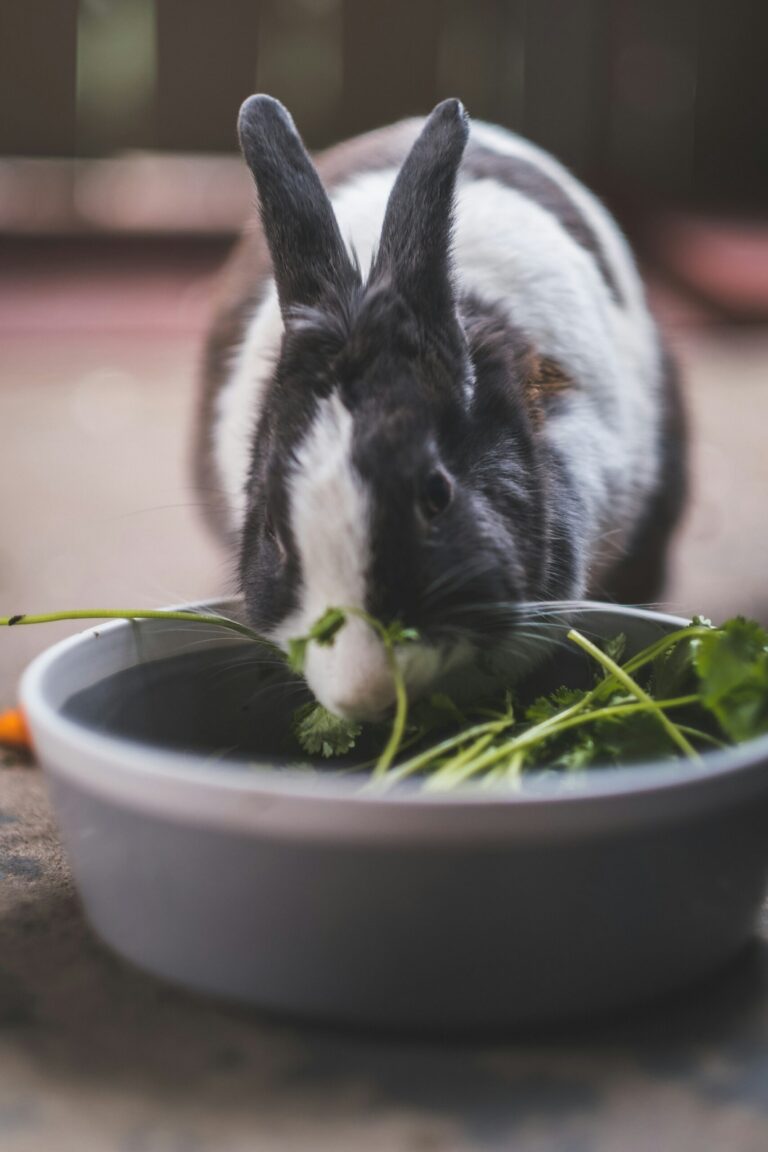
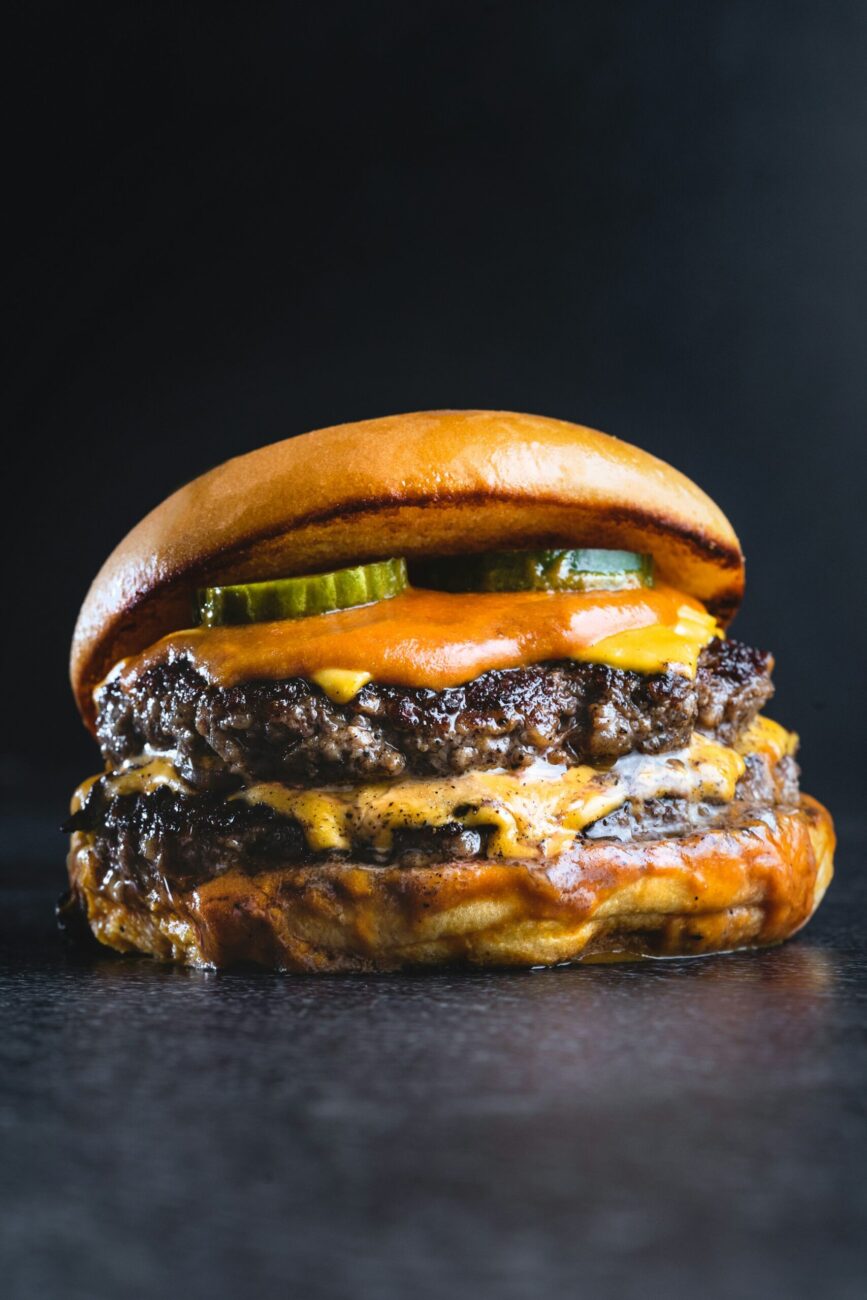
A word on the photos. None of them shows a hen eating hamburger, because I couldn’t find a real one I’d trust. Two of the burgers are food photographers’ shots, and the griddle is at a takeaway in Montevideo, Uruguay. The thermometer is from a USDA food safety camp in Maryland. The hens live on a smallholding in Mayenne, France, going by their photographer’s profile and the place marked on each photo.
The short version.
- Plain ground beef, cooked to 160°F with nothing added, is fine as a treat. A laying hen’s whole treat share is 10 to 15 grams a day, and that counts every treat together.
- Leave out the bun and the cheese. A plain bun has more than 6 times the sodium of the same weight of plain beef, going by USDA’s numbers.
- Never share it raw, and never leave it lying in the run. Pick up what they don’t finish within 5 to 10 minutes.
- In the UK it’s illegal to feed meat or kitchen scraps to chickens, pets included. If a hen ate a lot of burger or acts off, call a vet who sees poultry. We aren’t vets.
The Beef Isn’t the Problem. The Burger Is.

Chickens aren’t vegetarians, whatever the feed bag says. UC Davis puts it simply in its guide on feeding a flock: “Chickens are omnivores meaning they eat both animal protein and plant produced foods.” Colorado State Extension says “Free-range chickens will consume insects to add to their protein intake.” So a hen pecking at a crumb of beef is doing something chickens do anyway.
Alabama Extension makes the same point from the other side. Although chickens are omnivorous, the guide says, “many poultry feeds are available as vegetarian, containing no animal protein or animal fat sources.” Your hen’s feed is built to cover her needs without any meat in it. That’s why the beef is a treat and never the meal.
Here’s what plain beef brings. USDA lists a broiled 80/20 patty at 25.8 grams of protein per 100 grams, and an 85/15 patty at 25.9 grams. That’s about 26% protein. Alabama Extension wants a layer diet around 18 percent crude protein, with 16% or more in its table. So beef runs about 1.4 to 1.6 times richer in protein than her feed, by my math.
More protein isn’t automatically better, either. Alabama Extension warns that “Overconsuming protein and minerals can lead to urinary system problems.” Colorado State says not to overfeed scraps, because hens “need to get enough protein to meet daily requirements” from their feed. A bite of beef is fine, honestly. A plate of it pushes the feed out.
The real trouble starts when the beef turns into a burger.
Cook It to 160°F, Not 165°F

USDA’s Food Safety and Inspection Service explains why ground beef needs more care than a steak. Grinding “allows any bacteria present on the surface to be mixed throughout the meat.” The bacteria it names include Salmonella and E. coli O157:H7. Its advice is to cook hamburgers “to a safe minimum internal temperature of 160 degrees F.” The same page says “USDA recommends not eating or tasting raw or undercooked ground beef.”
The old version of this page said 165°F. That number is real, but it belongs to something else. USDA’s safe temperature chart lists ground meats at 160°F and ground poultry at 165°F, and leftovers at 165°F too. Its ground beef page says to reheat cooked patties to 165°F. So 165°F wouldn’t hurt anything, but you only need 160°F for beef, checked with a food thermometer.
Now, USDA’s numbers are written for people. I couldn’t find a source that tested raw ground beef on hens, so I can’t tell you what it does to them. I’d cook a hen’s bite the same way I’d cook mine, and I’d never hand her raw meat off the cutting board. That’s a cautious call on my part, not a finding.
Pull her share before any seasoning goes on. If you season burgers with salt or onion, that’s exactly what you’re keeping off her bite, and we’ll get to why in a minute.
Pick a Lean Grind and Drain the Fat

The number on the package matters more than you’d think. USDA lists a broiled 80/20 patty at 17.8 grams of fat per 100 grams. A 93/7 patty comes in at 8.94 grams, and a 95/5 patty at 6.8 grams. So the fattiest common grind carries about 2.6 times the fat of the leanest, by my math.
Fat is the part of a burger the vet books actually warn about. Merck’s chapter on backyard poultry says “Fat scraps should also be avoided, because they promote the development of fatty liver and acute death from liver rupture.” UC Davis says it more plainly: “Chickens don’t require high amounts of fat, so avoid fatty foods.”
Fatty liver isn’t a made-up worry. Merck describes fatty liver hemorrhagic syndrome as a disorder “typically causing sudden death of birds fed high-energy diets with limited exercise”. A hen shut in a small run all winter fits that picture a little too well, if you ask me.
Our Can Chickens Eat It? checker rates fat trimmings and greasy food Never, grease included. So if you share beef, crumble it, pour off what’s in the pan, and skip the crispy fatty edges. The grease scraped off a griddle goes in the trash, not the run.
The checker doesn’t rate beef itself, or hamburger. Type either one in and it says “Not rated here”, because none of the official sources it uses rules on it. It also says that if you’re not sure, don’t, because there’s always another treat. I’d go by that too. A lean, plain crumb is fine by my reckoning, but your hens lose nothing if you skip it.
Leave the Bun and Everything on It

Here’s where a burger and a bite of beef part ways. Plain beef is low in salt. USDA lists a broiled 80/20 patty at 75 mg of sodium per 100 grams. A plain hamburger roll has 494 mg per 100 grams, and one roll weighs 44 grams in USDA’s data. That one bun carries about 217 mg of sodium, by my math.
Now compare that with her feed. Maine Extension says sodium goes into chicken feed “at the rate of about 0.15% sodium in the feed mix.” Alabama Extension says “A laying hen will consume between 100 and 150 grams of feed per day or roughly 0.25 pounds.” So her whole day of feed holds about 150 to 225 mg of sodium. A single bun has about as much salt as everything she eats in a day.
The whole sandwich isn’t much better. USDA lists a McDonald’s hamburger at 494 mg of sodium per 100 grams too. Gram for gram, that’s more than 6 times the sodium of plain broiled beef.
Salt does real harm in big doses. Merck lists the signs of salt poisoning in poultry as “increased thirst, dyspnea, fluid discharge from the beak, weakness, diarrhea, and leg paralysis.” Merck also says animals tolerate a lot more salt when they have continuous access to fresh water. Keep the waterer full, always. Colorado State keeps it simple and says to make sure scraps are “not salty”.
The toppings have their own problems. Colorado State says to avoid onions, and Kentucky’s extension guide says strong-tasting scraps like onions shouldn’t go to laying hens, “because eggs might take on those flavors.” Cheese is salty and fatty, and our checker rates it Better not. Our page on cheese for chickens runs the salt and fat math in full.
Plain bread is a different story, mind you. The checker rates plain bread Fine as a treat, a little at a time and not salty. A crumb of bun won’t hurt anybody. A whole bun is a day’s salt.
How Much to Share

Here’s the math I’d use. Alabama Extension says a laying hen eats 100 to 150 grams of feed a day. Colorado State says “Treats should make up no more than 10% of their daily diet.” So her treat share is about 10 to 15 grams a day, and that’s every treat she gets, all added up.
USDA weighs one 85/15 patty, cooked from a quarter pound of raw beef, at 77 grams. That one patty would cover the full treat share of 5 to 7 hens, by my math.
So one patty is a treat for the whole flock.
UC Davis says to “treat the scraps like a treat not like the main course”. Alabama Extension compares treats to ice cream. Kids offered it at every meal “will eat it with gusto”, the guide says, and they still won’t get what they need to grow. Give a flock too much of the fun stuff and “their egg production is likely to suffer”.
Here’s how I’d do it.
- Pull out a piece of lean beef before anything goes on it, and cook it to 160°F.
- Drain the fat, let it cool, and crumble it small. Split 10 to 15 grams per hen across the flock, less if they’ve already had treats today.
- Scatter it or put it in a shallow dish, with the feeder full and fresh water out. The feed is the diet, and the beef is the extra.
- Skip it for chicks. They get starter feed, and our page on hummus for chickens walks through the same treat math with another food from the fridge.
Pick Up What They Leave

Meat is the scrap you least want sitting in a run. Colorado State says “Do not feed more than can be consumed in 5 – 10 minutes to not attract nuisance animals.” Kentucky’s guide allows up to 20 minutes for all the scraps and scratch grains together, and adds a warning: “Make sure that the scraps are not allowed to rot, or botulism might result.”
Botulism is worth knowing about if you keep chickens. Merck says the bacteria behind it live in soil and wetland mud “as well as decaying organic matter.” In an outbreak, “the main spreading factor is the carcass-maggot cycle.” The first signs Merck lists are leg weakness that turns into a flaccid paralysis. Merck’s chapter also gives the disease its old name, limberneck.
Leftovers from your own table have a clock on them too. USDA says “Never leave ground beef or any perishable food out at room temperature for more than 2 hours or 1 hour at 90 degrees F and above.” Cooked beef that went in the fridge within 2 hours keeps for about 3 or 4 days, according to USDA.
So a burger that sat on the picnic table all afternoon isn’t a hen treat. It’s trash.
For the short list of foods that should never reach a flock, see our page on what not to feed chickens.
In the UK, It’s Against the Law

If you keep hens in the UK, none of the above applies, because you can’t feed them burger at all. The Animal and Plant Health Agency warned in January 2017 against feeding “catering or kitchen waste to livestock such as pigs and poultry, even if they are being kept as pets.” The same notice says it “remains illegal to feed catering waste, kitchen scraps, meat or meat products to farmed animals.”
The reason is disease, and not the hen’s. The notice says the most likely source of the 2001 foot and mouth outbreak “was pigs being fed undercooked catering waste containing the virus”. That outbreak ended with “the destruction of more than 10 million cattle and sheep”. The UK government’s guidance on feed is blunt about it: “There is a complete ban on using any household kitchen waste” and catering waste with animal products in it.
In the US, the federal rule I found is about pigs. It’s the Swine Health Protection Act, in Title 9 of the Code of Federal Regulations, Part 166, and it counts meat waste as garbage when it’s fed to swine. It doesn’t cover chickens. I didn’t check every state’s rules, though, so if you’re not in the UK, it’s worth a look at your own state or country before you share.
If a hen got into a whole burger, or she’s acting off afterward, call a vet who sees poultry. Colorado State says flock owners “must have an identified veterinarian in their area that can diagnose and treat chickens.” It’s worth finding one before you need one.
We aren’t vets, and nothing here replaces one.
Sources
- USDA Food Safety and Inspection Service: Safe Minimum Internal Temperature Chart.
- USDA Food Safety and Inspection Service: Ground Beef and Food Safety.
- USDA FoodData Central: broiled ground beef patties, 80/20 (SR Legacy 171797), 85/15 (174032), 93/7 (174752) and 95/5 (171791), a plain hamburger roll (172796) and a McDonald’s hamburger (170717).
- Yuko Sato, Merck Veterinary Manual: Management of Backyard Poultry.
- Rocio Crespo, Merck Veterinary Manual: Fatty Liver Hemorrhagic Syndrome in Poultry.
- Martine Boulianne, Merck Veterinary Manual: Botulism in Poultry.
- Merck Veterinary Manual: Salt Toxicosis in Animals.
- Colorado State University Extension: Raising Poultry the Organic Way, Disease Control and Feeding.
- Maurice Pitesky and Nancy Reimers, UC Davis: Feeding your Flock.
- Wilmer Pacheco and colleagues, Alabama Cooperative Extension System: Feeding the Laying Hen (ANR-2913, 2022).
- Jacquie Jacob, University of Kentucky, Poultry Extension: Feeding Chickens for Egg Production.
- University of Maine Cooperative Extension: Salt is an Important Nutrient for Poultry.
- Animal and Plant Health Agency: warning on feeding kitchen scraps to livestock (11 January 2017).
- UK government guidance: Supplying and using animal by-products as farm animal feed.
- Code of Federal Regulations, Title 9, Part 166: Swine Health Protection.
Sources checked October 29, 2026. USDA’s food safety pages turned bots away that day, so I read them through the Internet Archive’s copies. The per-hen math and the fat and sodium comparisons are mine, from these sources. So are the calls on how much to share and when to see a vet. We aren’t vets. If a hen ate a whole burger, or she acts off, call a vet who sees poultry.
Related read: How to Raise Chickens for Eggs — Instant PDF download. Secure checkout by Stripe