Updated September 26, 2026. This page used to say that most mold on firm berries is harmless to chickens in moderation. That was wrong, and it’s the most dangerous thing I’ve found on this site so far. I’ve rewritten it.
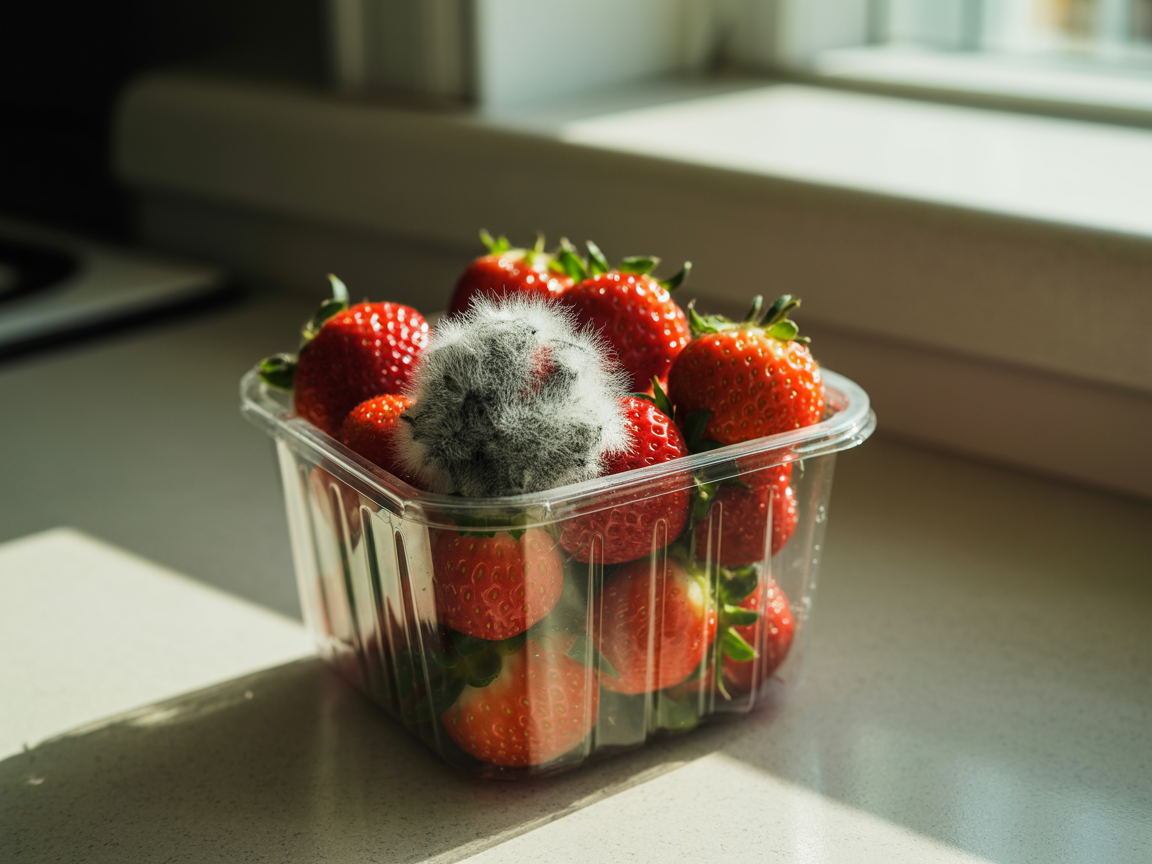
The short answer: no. A moldy strawberry goes in the trash, not the run. So does any other fruit, bread or scrap that’s grown fuzz. Colorado State University Extension says scraps for a flock must not be moldy. UC Davis says don’t feed rotten food. There’s no “in moderation” in either of them. Fresh, sound strawberries are a different story and a fine treat. For anything else you’re holding, the free Can Chickens Eat It? checker gives you the verdict and the source.
Why “a little mold is fine” is wrong
The old page reasoned the way a lot of people do: chickens eat bugs and dirt all day, their guts are tough, a bit of fuzz on a berry won’t matter. It sounds right. It isn’t what the people who study this say.
- Colorado State University Extension, on kitchen scraps for backyard poultry: “Make sure they are not salty or have citrus or are moldy.”
- UC Davis (Feeding your Flock): “we don’t want to feed our chickens’ rotten or otherwise unhealthy food.”
- The Merck Veterinary Manual has a whole section on mycotoxins in poultry, the poisons some molds make. It says birds are exposed through contaminated feed or bedding, and that once those toxins form they’re “chemically stable” and stay in the food.
That last part is why cooking it, drying it or cutting off the bad bit doesn’t rescue it.
Why you can’t just cut the moldy part off a strawberry
This one comes from the USDA’s Food Safety and Inspection Service, and it’s written for people, not chickens. But the reasoning is about the fruit, so it carries straight over.
FSIS says “soft fruits and vegetables with high moisture content can be contaminated below the surface,” and lists them among the foods to throw out when they show mold, rather than trim. A strawberry is about as soft and wet as fruit gets. What you see on top is the part that made it to the surface. The roots of it go further in.
And it’s rarely one berry. By the time one strawberry in the clamshell has fuzz, the ones touching it usually have it starting too. Check them. Toss the moldy one and anything soft or leaking next to it. The firm, clean ones are fine for the flock.
Every other moldy scrap, too
This page gets found by people asking about strawberries, but the rule isn’t about strawberries. Same answer for:
- Moldy bread. Bread is a scrap Colorado State says is fine. Moldy bread isn’t.
- Soft, rotting fruit from the bottom of the bowl: peaches, tomatoes, grapes, the lot.
- Leftovers that sat too long in the fridge and came out smelling off.
- Wet, clumped or musty feed. This is the one that actually catches keepers. A bag that got rained on, a feeder that let water in, the damp crust in the bottom of the feeder in spring. Merck’s advice for mycotoxin trouble in a flock starts with replacing contaminated feed or bedding.
I’ll say the feed part twice because it matters more than the berries. I had a treadle feeder once whose lid let rain in when the wind came from the west, and the pellets in the bottom went into a gray cake before I noticed. Everything in that feeder went in the trash, and I scrubbed and dried it before refilling. Feed that smells musty or has gone lumpy is done.
My hens already ate moldy fruit. What now?
Clean it up so they can’t eat more, check the feeder and bedding while you’re at it, and keep the water fresh. One peck at a fuzzy berry isn’t cause for panic.
But if a bird goes off her food, sits hunched and fluffed up, or just looks wrong in a way you can’t name, don’t guess what did it. I’m a guy with a backyard flock, not a vet, and nobody can tell you from a web page what’s wrong with your hen. Call an avian vet.
Fresh strawberries are fine
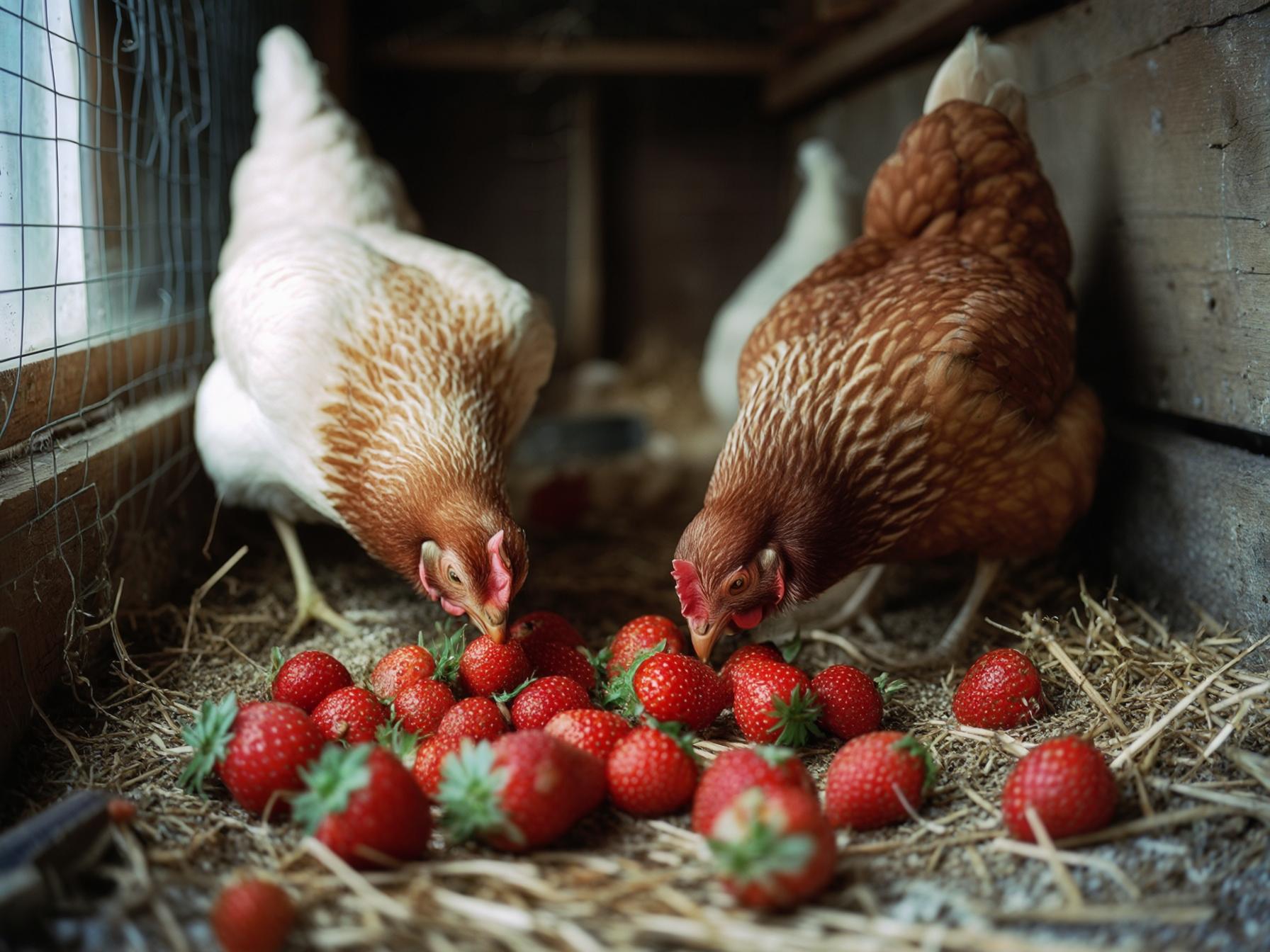
Sound, clean strawberries are one of the better summer treats — tops and all, cut up if they’re big. They’re a fruit scrap of exactly the kind Colorado State suggests, and they’re on nobody’s avoid list. They still count toward the treat limit: Colorado State caps treats at 10% of what a hen eats in a day, and at Alabama Extension’s 100 to 150 grams of feed a day that’s 10 to 15 grams each. A few berries, split between a flock, is about right. The checker does the sum for your flock size.
Sources
- Colorado State University Extension: Raising Poultry the Organic Way: Disease Control and Feeding (Howard Enos, December 2019, reviewed August 2025): scraps must not be moldy; the 10% cap.
- UC Cooperative Extension / UC Davis School of Veterinary Medicine: Feeding your Flock (Dr. Maurice Pitesky and Dr. Nancy Reimers): no rotten or unhealthy food.
- Merck Veterinary Manual: Overview of Mycotoxicoses in Poultry: exposure through contaminated feed or bedding; toxins are chemically stable; replace contaminated feed or bedding.
- USDA Food Safety and Inspection Service: Molds on Food: Are They Dangerous?: soft, high-moisture fruit can be contaminated below the surface.
- Alabama Cooperative Extension System: Feeding the Laying Hen (Pacheco, Gulizia & Downs, August 2022): 100 to 150 grams of feed a day.
Sources checked September 26, 2026. I keep chickens; I’m not a veterinarian.
Related read: How to Raise Chickens for Eggs — Instant PDF download. Secure checkout by Stripe