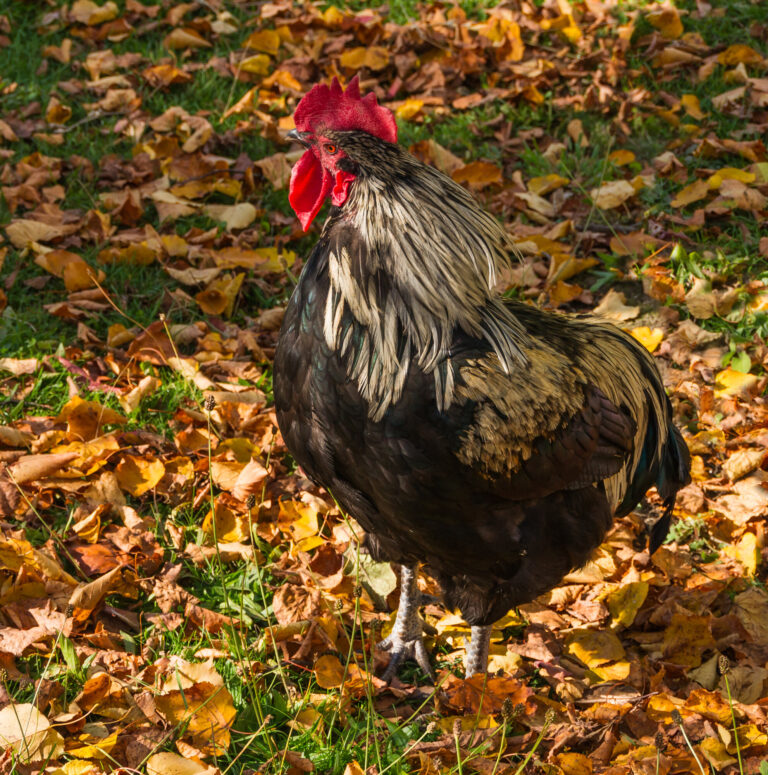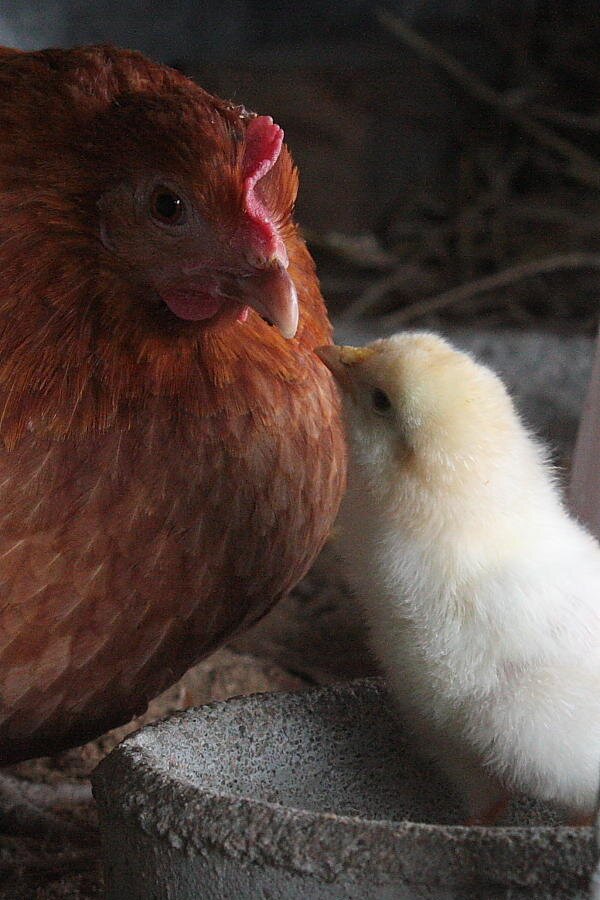
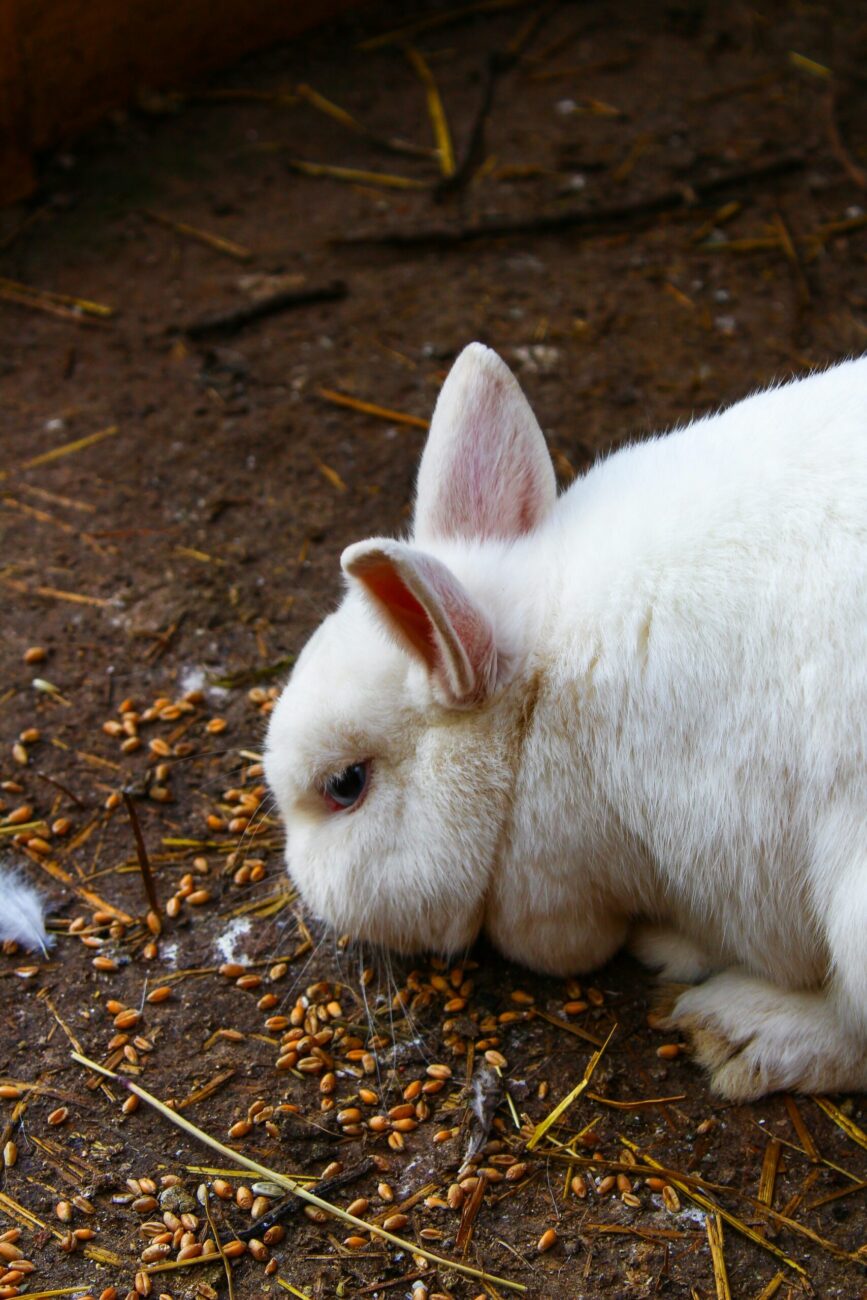
They can. A hen can peck at a rabbit, and your rabbit can get hurt. Injury is only one of the reasons to keep them apart, too. The others are about food and water, and about germs and mud. Give your rabbits and your chickens separate homes.
Why Hens and Rabbits Shouldn’t Share a Home

Rabbits and chickens shouldn’t be housed in the same area, and there are five good reasons for that:
- Feed. Poultry need grain feeds, which are high in calories and low on fiber, and that’s a completely unsuitable diet for your rabbit.
- Water. Birds foul it. A rabbit needs fresh water all the time, and in a shared pen its water ends up contaminated with droppings.
- Salmonella. It’s a major problem with poultry. Rabbits hold up to it fairly well, but it’s still an unacceptable risk.
- Mud. Hens, and ducks even more, turn grass into bare earth or mud quickly. That takes grass away from your rabbit and leaves ground that can harm it.
- Injury. A peck could hurt a rabbit.
Large parrots can be a danger to rabbits as well, and rabbits shouldn’t be housed with poultry either way.
Why a Hen Might Peck a Rabbit

Chickens peck at pretty much everything. Jungle fowl spend 61% of their time foraging, which means pecking and scratching at potential food sources, plus looking for and sampling food. Chickens are omnivores, so they eat both animal protein and plants, and a free-range hen will go after a frog, as our page on chickens and frogs covers. An adult rabbit is far bigger, at 1 to 10 kg depending on breed.
Then there’s the pecking order. Chicks start early. By 16 days of age, they’re fighting over rank. Groups of only female chicks have their order set by the 10th week, and small groups usually settle it sooner, at around 8 weeks. Birds with an order usually attack a new bird of the same species or breed that’s put in with them, and your rabbit isn’t another hen.
Still, watch for two things. First, blood. Chickens are attracted to blood, and pecking at one bird’s injury can start cannibalism in a flock. There’s more on this in our page on what a flock does with a dead bird.
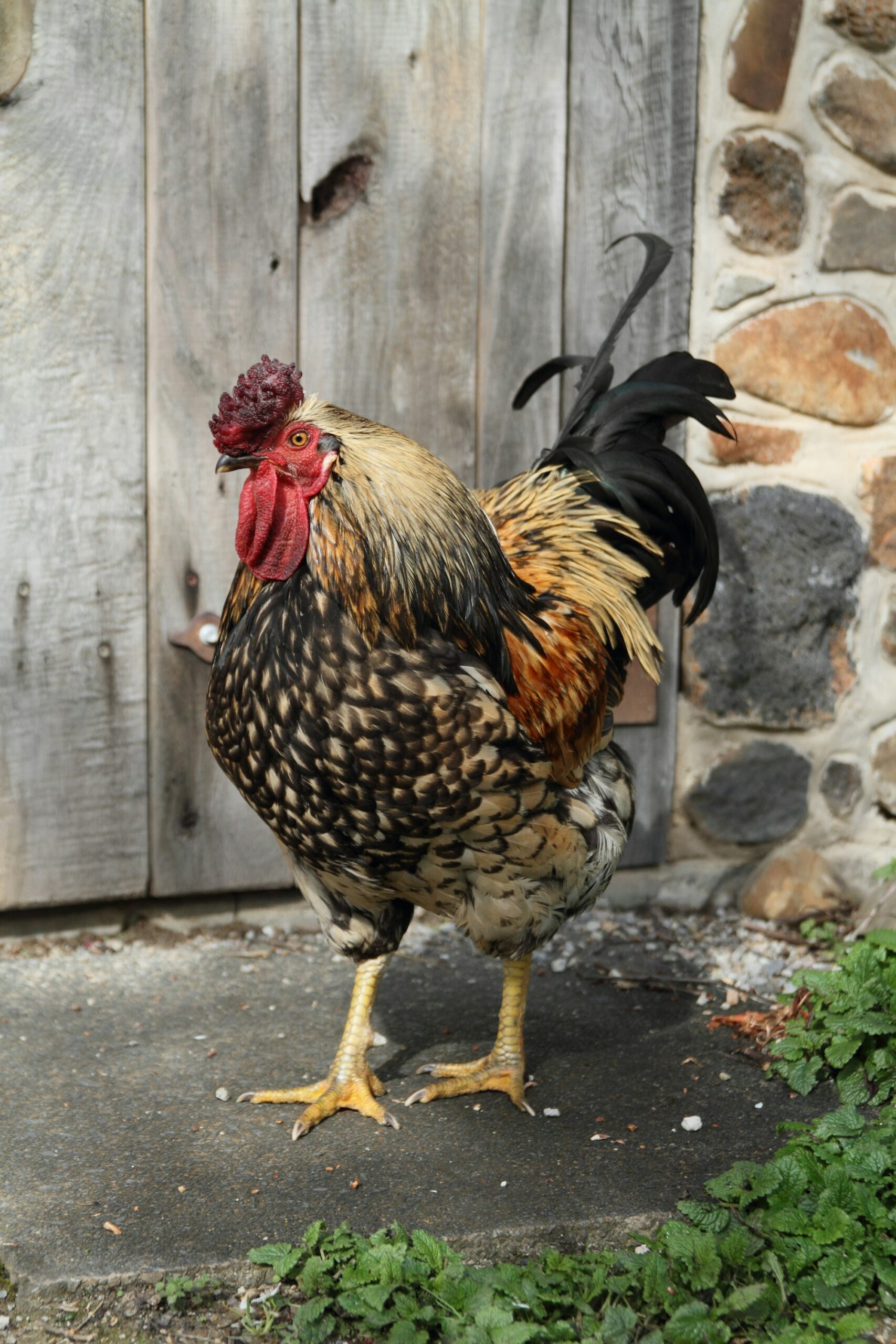
Second, a rooster. His spur is used as a weapon, and injuries to pets are likely if your rooster is aggressive. Your rabbit is a pet. Our page on why chickens attack people covers roosters and broody hens.
What a Scared Rabbit Looks Like

A rabbit is a prey animal, and that shapes most of what it does. Its predators include foxes, dogs, cats, birds of prey and stoats. Chickens aren’t on that list, but the presence of other animals is one of the things rabbits hide from, and too many animals in the same space is a cause of stress.
When a rabbit in the wild senses danger, its first response is to freeze. If the danger comes closer, it runs for a hiding place, and it may thump the ground with its back legs to warn other rabbits. It only fights if there’s no escape route. And if it’s extremely frightened, a rabbit will scream.
So what should you look for? A worried rabbit sits in a crouched position, with its head held flat to the ground and its ears flattened against its back. It may also hide. Thumping comes from an angry or very unhappy rabbit. Other signs of stress are aggressiveness, restlessness, nervousness, lack of interest in food and excessive grooming.
If your rabbit stays crouched flat, hides or thumps with hens around, it isn’t settling in. Each of your rabbits should have easy access to a secure hiding place.
Layer Feed Is the Wrong Food for a Rabbit

Food is the first reason. A rabbit is built for grass, with teeth and a gut designed for poor quality, high-fiber food. Wild rabbits spend about 70% of the time they’re awake eating. Their teeth never stop growing, either, and your vet should check the back ones about every 6 months.
Chicken feed is grain, heavy on calories and light on fiber. Fed that, your rabbit gets fat, and the feed doesn’t provide the fiber it needs to keep its teeth worn correctly or its gut moving properly.
Before you add another animal to your flock, ask whether they can be exposed safely to each other’s feed. For rabbits and layer feed, the answer is no.
It works the other way too. Your hens can have a little rabbit food as a treat, but never as their feed. There’s more in can chickens eat rabbit food.
Fouled Water and Shared Germs

Birds foul water, and a rabbit sharing their quarters can’t count on the constant supply of fresh water it needs. Then there’s the ground. Hens turn grass into bare earth or mud quickly, and that takes away your rabbit’s grazing.
Next come the germs. Salmonella is a major problem with poultry, and outbreaks linked to backyard poultry are common. Healthy poultry can still spread germs to people and other animals. Rabbits are fairly resistant to Salmonella, but the risk is still unacceptable.
Chickens and rabbits have several diseases in common. Pasteurella multocida is often endemic in rabbit colonies, where it’s tied to the breathing trouble people call snuffles, and in chickens it can set off an outbreak of fowl cholera. There’s a chicken cholera that rabbits can contract, too.
The germ can infect a wide variety of animals, but strains from most animals other than birds generally don’t produce fowl cholera. Mammals may also carry the infection, and rodents, wild birds, pets and any other animals that may be carriers must be kept out of poultry houses.
It’s not common for germs to pass directly between birds and mammals, and hens and rabbits get different kinds of coccidia, so those shouldn’t cause problems between them.
A Rabbit Needs a Rabbit, Not a Hen

Maybe you’ve thought of giving a lone rabbit some company in the run. Another species won’t do, and a hen is another species. Your rabbit needs the companionship of another rabbit for physical and mental health, and the right companion is a compatible neutered rabbit of a similar size.
Rabbits who live alone spend the majority of their time on watch for predators, and bonded pairs spend more of it grazing and playing. Your pet rabbit can be around a long while, too, with a life expectancy of 8 to 12 years in captivity. A run full of hens won’t take the place of a bond like that.
A pair of rabbits can live with some other species, as long as those animals don’t show predatory behavior, aren’t bullied by the rabbits, and both kinds of animal get what they need. With poultry, the answer’s still no.
If You Keep Rabbits and Chickens Both

You can keep both on one place.
- Separate homes. Your rabbits get a hutch and run, and your hens get a coop and run.
- Their own feed and water. Keep layer feed out of the rabbits’ reach, and give the rabbits clean water the birds can’t get at.
- No shared playtime. Keep your rabbits and your hens apart.
- Clean boots and gear. The fowl cholera germ survives long enough in the environment to be spread on crates and feed bags, and on your shoes.
- Wash your hands. That one’s for you. Poultry can appear healthy and clean, but still spread harmful germs that make people sick.
- Look your rabbits over every day. Rabbits often don’t look ill until they’re very unwell, so check the fur for wounds.
If a hen does peck your rabbit hard enough to bleed, don’t wait it out. Call a vet if your rabbit shows any signs of illness, injury, pain or a change in behavior, because rabbits can become worse very quickly.
Sources
- Rabbit Welfare Association & Fund: Keeping rabbits with birds.
- Rabbit Welfare Association & Fund: Rabbits Living With Other Pets.
- Scottish Government: Pet rabbit welfare guidance (published 6 April 2018), page 2 and pages 6 to 8.
- RSPCA: Understanding rabbit behaviour.
- Jacquie Jacob, University of Kentucky (poultry.extension.org): Interaction of Small and Backyard Chicken Flocks with Other Species.
- Jacquie Jacob, University of Kentucky (poultry.extension.org): Normal Behaviors of Chickens in Small and Backyard Poultry Flocks.
- Jacquie Jacob, University of Kentucky (poultry.extension.org): Feather Pecking and Cannibalism in Small and Backyard Poultry Flocks.
- Megan Lighty, Merck Veterinary Manual: Fowl Cholera (full review March 2024).
- Teresa Y. Morishita (ed.), Western University of Health Sciences: Medical Management of the Rooster Spur (PHR Factsheet 2019-06).
- Maurice Pitesky and Nancy Reimers, UC Davis: Feeding your Flock.
- CDC: Backyard Poultry.
Related read: How to Raise Chickens for Eggs — Instant PDF download. Secure checkout by Stripe