
Frozen water is the winter chore nobody warns you about. The fix is boring, and that’s good news. If you have safe power at the coop, use a heated base or a heated fount on a stand. If you don’t, keep two waterers and swap them twice a day. Skip the heat lamp. The water doesn’t need it, and it’s the one setup on this list that can burn a coop down.
I’ve kept a backyard flock for eight years, twelve hens and one rooster who hates me, and every winter starts the same way: me in the dark at 7 a.m., kicking a disk of ice out of a rubber pan. Below is what I do now, what the extension services actually recommend, and the one shortcut I’d talk you out of. Where a number comes from a university, I’ll tell you which one.
Water is one piece of the cold-weather job. If you’re still getting the rest of the coop ready, start with my list for prepping your chicken coop for winter, then come back here.
Why a Frozen Waterer Costs You Eggs

Here’s the part that made me take this seriously. University of Kentucky Extension says a chicken drinks about twice as much as it eats. A laying hen eats about a quarter pound of feed a day, so she drinks about half a pound of water, which works out to roughly a cup. Twelve hens, three quarts. That’s not much, until it’s a brick.
The timing is worse than the amount. Kentucky says a laying hen takes in about 25 percent of her daily water during the last two hours of daylight. That’s exactly when the temperature drops and a waterer that was fine at lunch starts to skin over. Frozen at 4 p.m. means she goes to roost short.
And you’ll see it in the nest box. Kentucky says a shortage of water for just a few hours can cut egg production in a laying flock. UNH Extension’s fact sheet goes further: one day without water, for any reason, means fewer eggs for the next few days. A whole egg is 78 percent water, per Kentucky, so none of this is a mystery.
Minnesota Extension adds the bit people miss. Without water, chickens stop eating. So a frozen waterer isn’t only a thirsty flock, it’s a flock eating less on the coldest days of the year, when Minnesota says feed intake can climb as much as 25 percent. Honestly, that’s the cost I notice first. Feed goes out, and nothing gets eaten.
The No-Power Setup: Two Waterers and a Rubber Pan

No power at the coop? You’re not stuck. You’re just walking more. The cheapest system I know is two waterers: one out with the birds, one thawing in the garage or on the porch. Morning and evening, you swap them. University of Wisconsin Extension describes exactly this, and says that if you’ve got nothing else, fresh water should go out twice a day.
The other half is a rubber pan. UNH suggests a low-walled rubber bucket you can turn over, knock the ice out of and refill. Wisconsin says the same about rubber pans, because the ice comes out without damaging the pan. Try kicking the ice out of a cheap plastic fount at 10°F and there’s a good chance you’ll be at the feed store buying a new one.
UNH is honest about the downside. Low walls mean more bedding and droppings end up in the water, so it gets dirty faster. I set mine on a couple of flat pavers just outside the coop door. It’s not fancy. It does keep the shavings out.
Wisconsin also mentions insulated water containers that keep warm water from freezing for several hours. If you work days, that’s worth knowing. Fill one with warm water before you leave and it buys you hours, not a whole day, and not much on a hard freeze. I’d still want somebody to look at it by early afternoon.
Heated Bases, Heated Founts and the Dog Dish
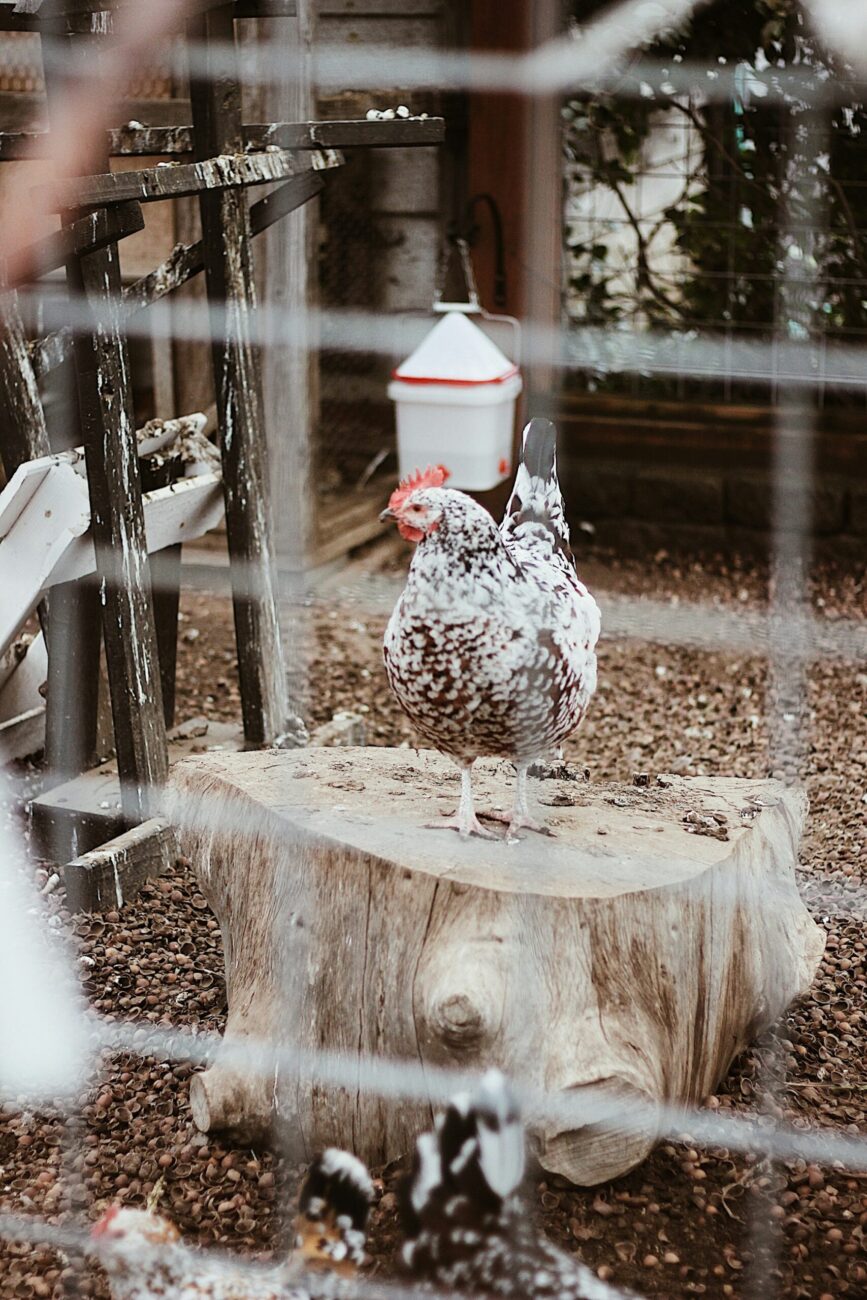
If you’ve got safe power out there, this is the easy life. Minnesota Extension lists three kinds: plastic heated founts that plug into an outlet, heated bases you set a metal fount on, and heated dog dishes.
The base with a metal fount on top is the one most feed stores stock, and it’s what I’d buy first for a flock my size. The heater sits under the fount, and you lift the fount off to fill it like any other. Before you buy, read what the base’s instructions say it’s made to go under, and match the fount to that. Plastic heated founts are simpler, one piece and one plug, but when the heater dies, the whole thing’s done.
A heated dog dish works too, and it’s often the cheapest of the three. Minnesota’s warning is to partly cover it so birds can’t step in or drown. A soaked hen in January is a hen in trouble. A board or a scrap of hardware cloth across half the dish does it.
Whatever you pick goes up on a stand. Minnesota gives two reasons. It keeps the birds from scratching manure and bedding into the water, and it keeps the heating element away from the bedding. That second one is a fire reason, not a tidiness reason.
The Cord Is the Dangerous Part

I’m dropping the jokes for this one. The heater usually isn’t the problem. The power getting to it is.
Minnesota Extension is blunt. Only use extension cords short term, and don’t use them to run power to your coop. Work with a professional electrician when you put electricity in. Keep every wire away from your birds, the water and flammable litter, to prevent damage, shocks or fires.
I know. Plenty of backyard coops run on an orange cord through a gap in the door. Mine did for a couple of winters, and I never liked how close that cord sat to the shavings. Chickens peck at anything that looks new, and a cord lying in bedding is new every time you kick it.
Someone asked Ask Extension about this exact problem. They said every product they’d researched had reviews about not working, failing quickly, or causing shock or fire. The UNH Extension expert who answered didn’t name a brand. They sent fact sheets on safe setup. Turns out that’s the real answer: the gear varies, so your wiring has to be safe on its own.
So here’s my rule. The cord stays where I can see it, never buried in bedding and never where a bird can reach it. When I do the weekly wash, I unplug the heater and look at the plug. Warm, discolored or cracked means it’s done, and I don’t argue with it.
Why I Won’t Hang a Heat Lamp Over the Water

Some extension pages still mention it. Maryland’s says you can keep water warm with a heat lamp, and warns not to splash cold water on a hot bulb, because the bulb may shatter. Wisconsin notes that heat lamps are often hung over the waterer.
I won’t do it, and UNH is on my side. In most cases it advises against adding supplemental heat to a coop at all, because the risk of a heat source starting a fire is too high with bedding around and with chickens’ habit of knocking things over. A heat lamp over the waterer is a heat lamp over bedding. Hens fly up, they bump things, and a clamp lamp only has to fall once.
UNH even says that when you add winter light for laying, you should pick a lamp that won’t make much heat, LED rather than incandescent, because heat is a fire hazard. If an ordinary bulb is too hot for the coop, a heat bulb sure is.
Your birds don’t need the lamp either. UNH says a well-built coop that’s mostly draft-free, apart from its ventilation, should be enough in most cases. The hens handle the cold fine. It’s the water that needs help, and a heater made for water does that job with a lot less heat sitting near your bedding. If drafts are your real worry, my chicken coop insulation ideas post is the better fix.
Keeping Winter Water Clean

Cold water still gets dirty. Maybe dirtier, since the birds spend more time inside and everything gets kicked around. UNH’s fact sheet says to disinfect waterers once a week with one tablespoon of chlorine bleach in a gallon of water.
The same fact sheet says birds drink more in winter when the water is around 50°F. You won’t get close to that with a rubber pan in the snow. A heated fount gets you a lot closer than ice does, which is one more reason I went electric once the wiring was right.
Keep the spare clean too. Minnesota says it’s smart to have a second waterer on hand in case one freezes or stops working. A spare that’s been sitting in the garage since October with an inch of green water in it isn’t a spare. It’s a science project.
While you’re out there, grab the eggs. Minnesota points out that eggs are mostly water and freeze, so collect them as soon as you can on cold days. I’ve written more on how long eggs can stay in the coop if you’re wondering how long is too long.
My Winter Water Routine
Here’s what my day looks like from the first hard freeze until March. It’s not clever. It’s just water, on a schedule, every day.
Mornings, I check the heated fount and make sure the base is still on, then top it off. The rubber pan in the run gets its ice knocked out and fresh water poured in. On days the power’s out, the two-waterer swap comes back, kinda like a fire drill I never practice enough.
Midday, I look again. University of Maryland Extension says to check the water several times a day in a freeze and make sure the birds can actually get to it. That last bit matters. Snow drifts in, a fount tips, and my birds stand around a pan they can’t reach.
Mid-afternoon is the one I won’t skip. That’s the last-two-hours window Kentucky talks about, when a quarter of the day’s drinking happens, so the water has to be full and liquid before the light goes. At dusk I empty the unheated pans. UNH’s fact sheet says it plainly: in cold weather, use a water heater, or empty at night and refill in the morning.
Once a week, the bleach wash, and a look at the plug. That’s the whole system. It takes me maybe ten minutes a day. My hens still lay less in December, because the days are short, but I’m not losing eggs to thirst on top of that.
Related read: How to Raise Chickens for Eggs — Instant PDF download. Secure checkout by Stripe