As an Amazon Associate I earn from qualifying purchases. This post contains affiliate links. If you buy through them we may earn a commission at no extra cost to you.
Product prices and availability are accurate as of the date and time indicated and are subject to change. Any price and availability information displayed on Amazon at the time of purchase will apply to the purchase of this product. Certain content that appears on this site comes from Amazon. This content is provided "as is" and is subject to change or removal at any time.
That Bag in Your Car Isn’t What You Think It Is
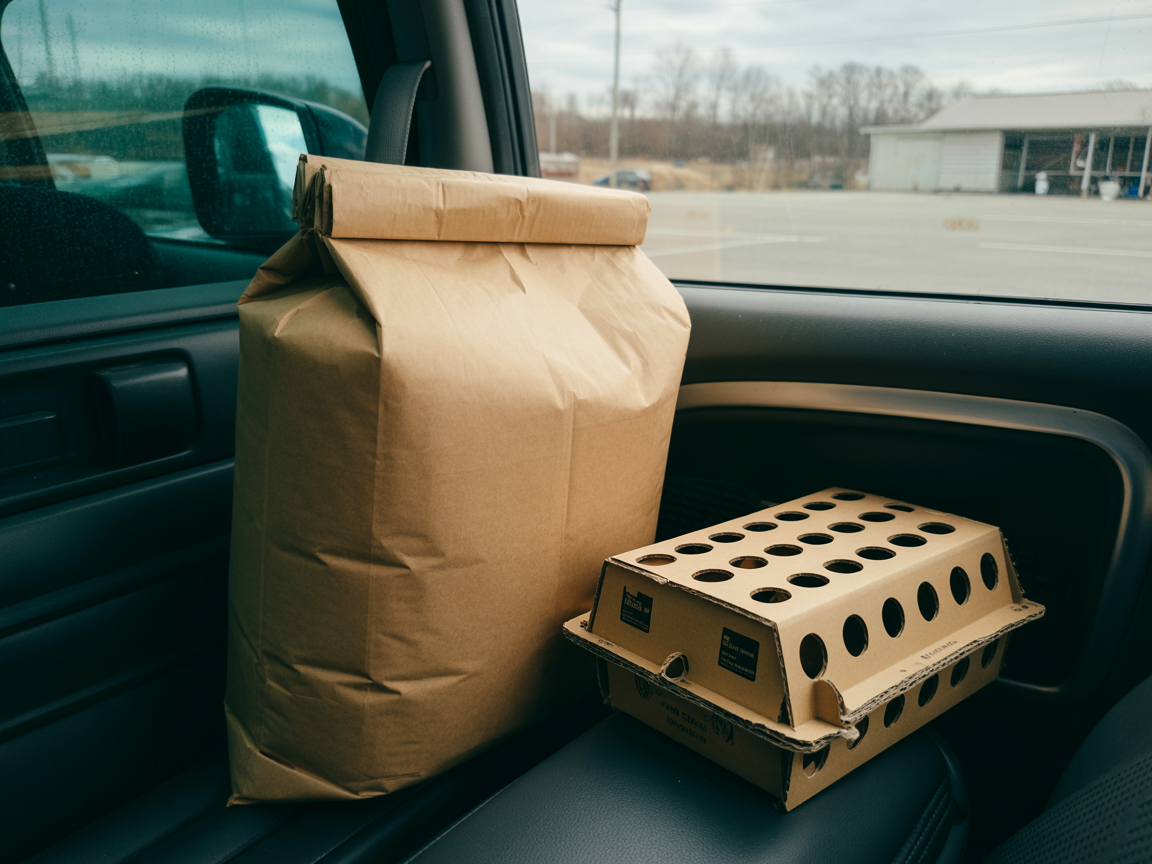
The bag of medicated starter has been sitting in your car for twenty minutes and you’re already second-guessing yourself. Probably because someone in a Facebook group got the chemistry wrong. It happens constantly with this topic, and it makes a simple decision harder than it needs to be.
There’s actually one combination in this whole medicated-vs-not question that can work against you. One. Everything else is manageable. But if you miss that one thing, you’ve spent money undermining something the hatchery already did for you. So let’s start with what’s actually in that bag, because once you understand it, most of the debate dissolves.
Amprolium Is Not an Antibiotic — That Changes Everything
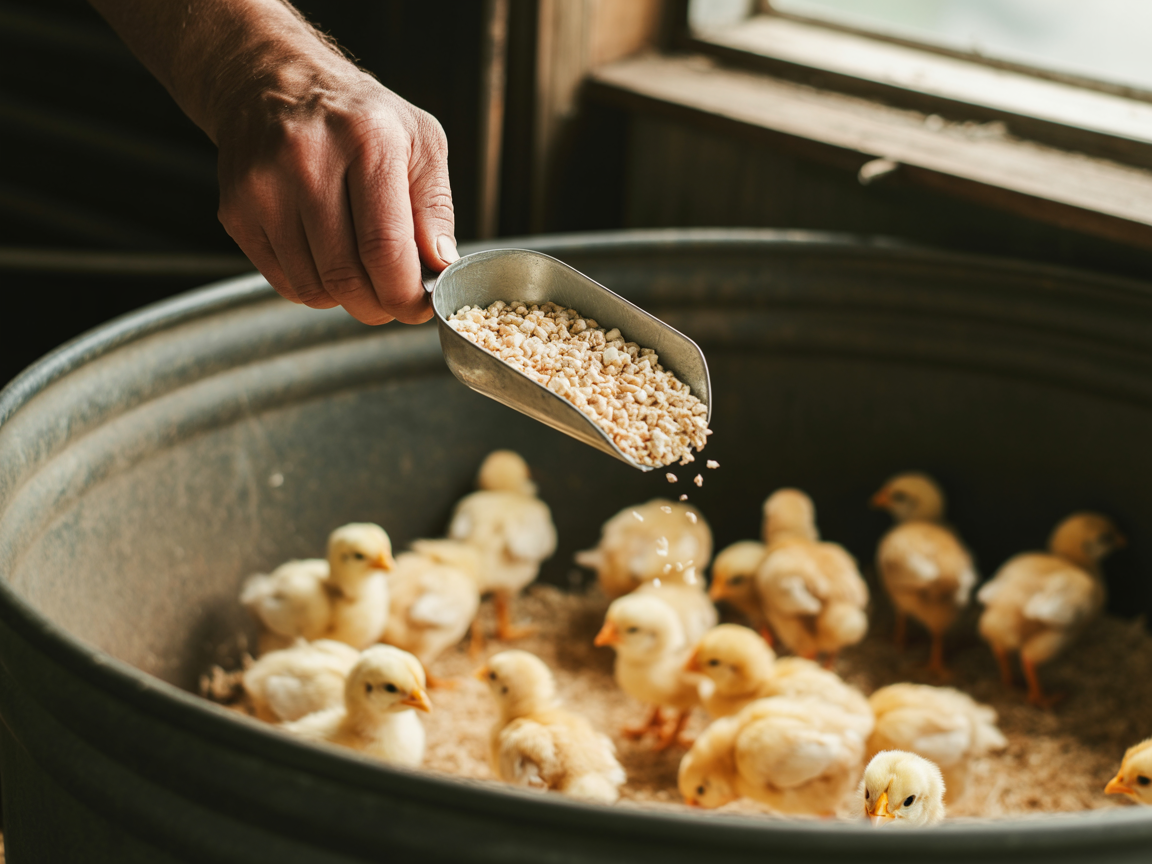
The medication in medicated chick starter is amprolium. That’s it. Just amprolium, at 0.0125% concentration. What it does is surprisingly specific: it mimics thiamine (vitamin B1) closely enough that coccidia absorb it instead of the real thing. Coccidia are Eimeria protozoa, not bacteria. Amprolium doesn’t touch bacteria. It has no effect on bacterial populations in the gut, creates zero antibiotic resistance, and there’s no withdrawal period for meat birds because it’s not in that category of drug at all.
Coccidiosis is a protozoan gut disease. Amprolium slows Eimeria reproduction by blocking the thiamine uptake the organism needs to replicate fast. It does not eliminate the protozoa. It slows them down enough that a chick’s immune system can catch up. That’s a meaningful distinction, and it matters for how you think about both the risks and the benefits.
Most of the “go natural, skip the chemicals” arguments collapse once you actually know what the chemical does. This isn’t a residue question. It’s not a resistance question. If someone told you amprolium is basically antibiotics, that’s flat wrong, and if that’s the basis for your decision, you’re solving the wrong problem.
Vaccination Status Is the Only Variable That Actually Matters
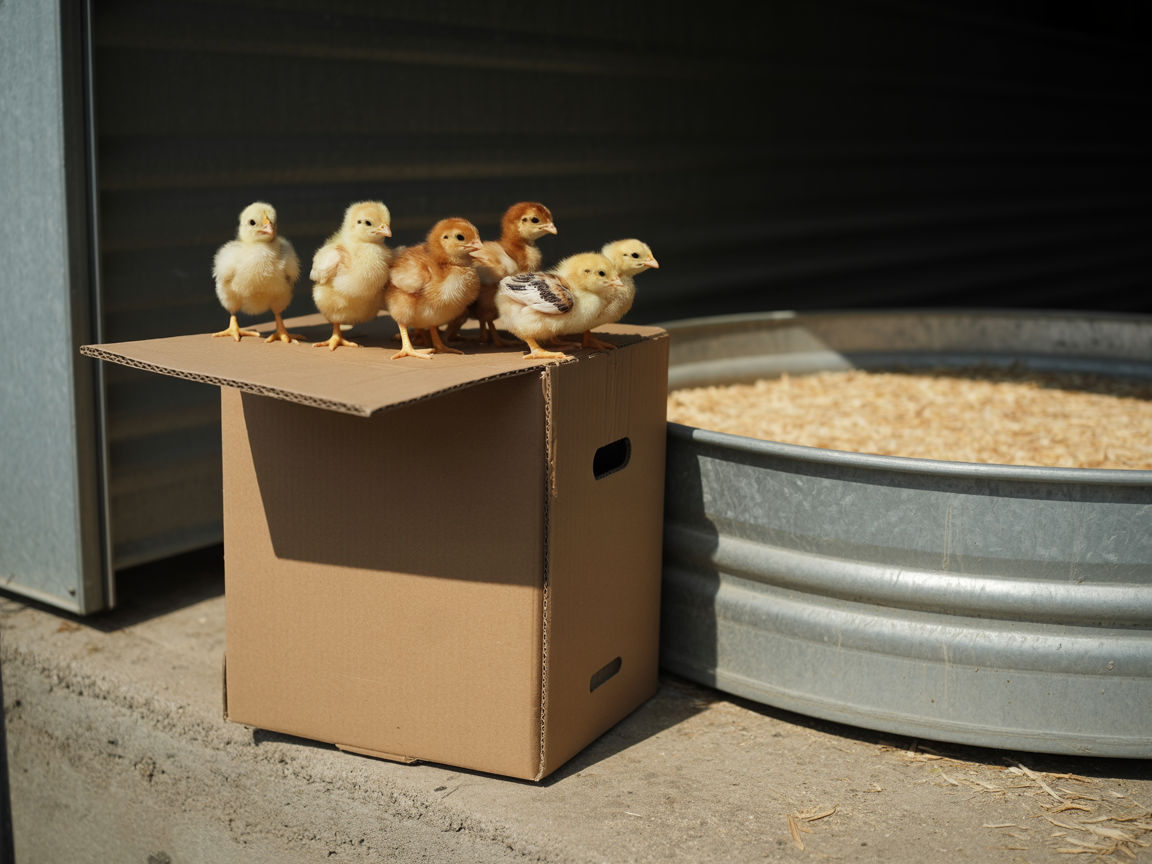
Here’s the real decision point, and almost nobody leads with it. Did your hatchery vaccinate your chicks for coccidiosis?
The cocci vaccine is a live dose of Eimeria species, given at day one. The whole mechanism depends on the chick having a mild, controlled exposure to the protozoa so the immune system learns to recognize and respond to it. That controlled exposure is the vaccine working. Amprolium’s job is to slow Eimeria reproduction. So if you put vaccinated chicks on medicated feed, you’re suppressing the exact biological process the vaccine requires. The chick doesn’t build the immunity it was dosed to build. You’ve paid for a vaccine and then quietly worked against it for eight weeks.
Most hatcheries that vaccinate for coccidiosis note it on the invoice or website under vaccinations included. Check there first. Look for “vaccinated for Marek’s and coccidiosis” on your receipt. If it lists Marek’s only, your chicks probably weren’t vaccinated for cocci. If your chicks came vaccinated, use non-medicated starter. That’s not a hedge. That’s the answer.
If your hatchery vaccinated for cocci, putting them on medicated feed isn’t cautious. It’s counterproductive, and you should feel genuinely confident skipping the medicated option. More protection is not always better. In this specific case it’s less.
Read next: My week-by-week guide to raising baby chicks
Brooder Conditions Shift the Calculus for Unvaccinated Chicks
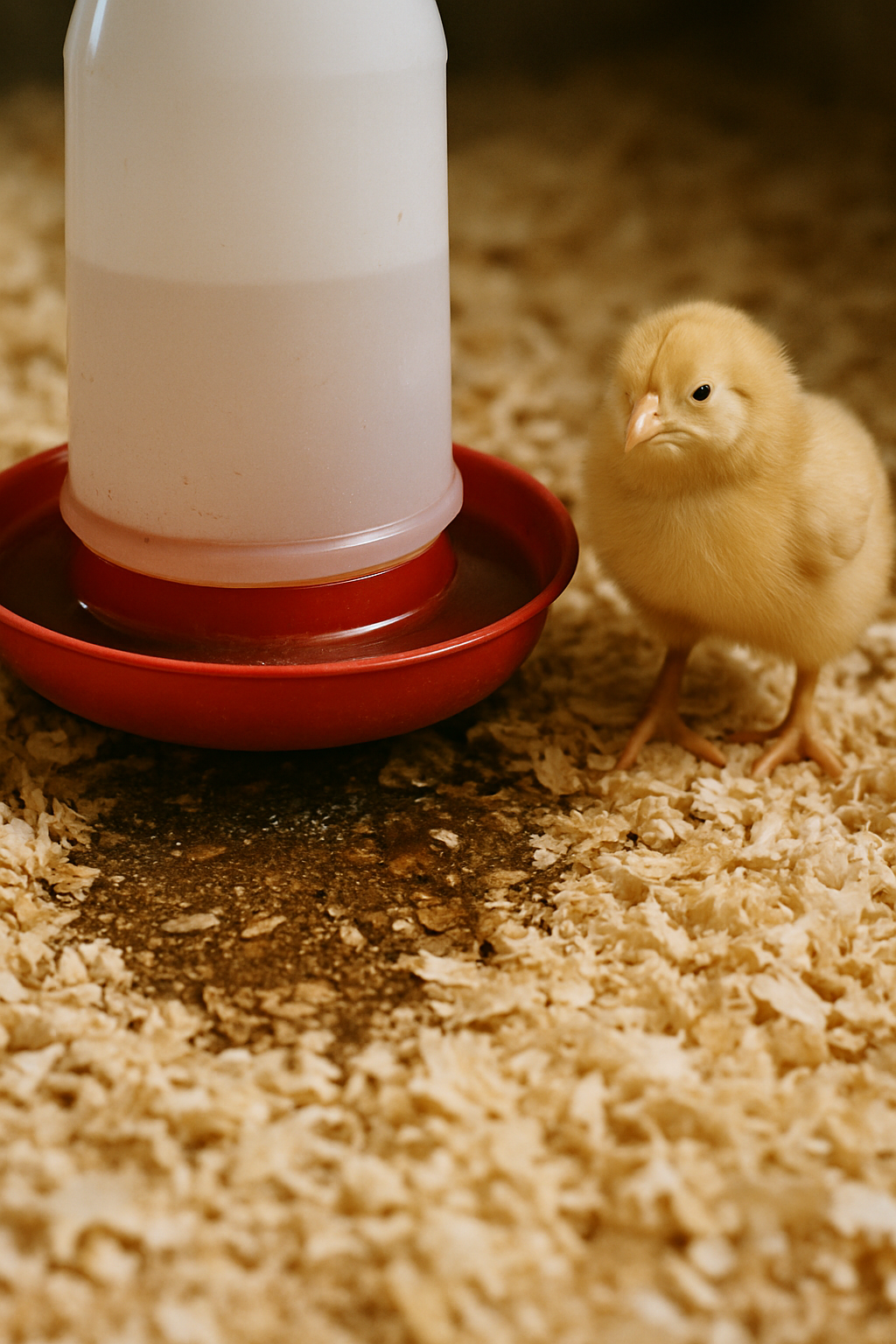
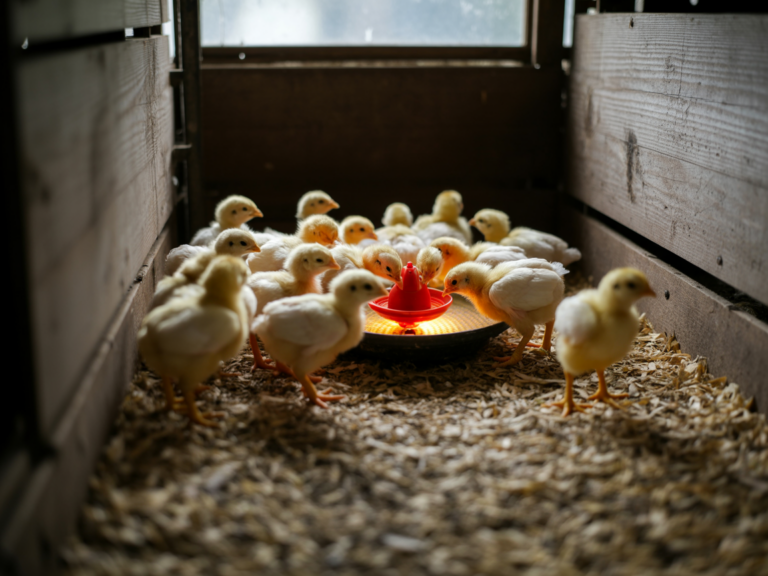
If your chicks weren’t vaccinated, the medicated question becomes a brooder hygiene question. Coccidia oocysts love warm and wet. That describes a brooder pretty well, especially under and around the waterer. Damp spots under waterers are the primary oocyst hotspot, and if you let those build up, you’re giving Eimeria exactly what it needs to get ahead of your chicks’ immune response.
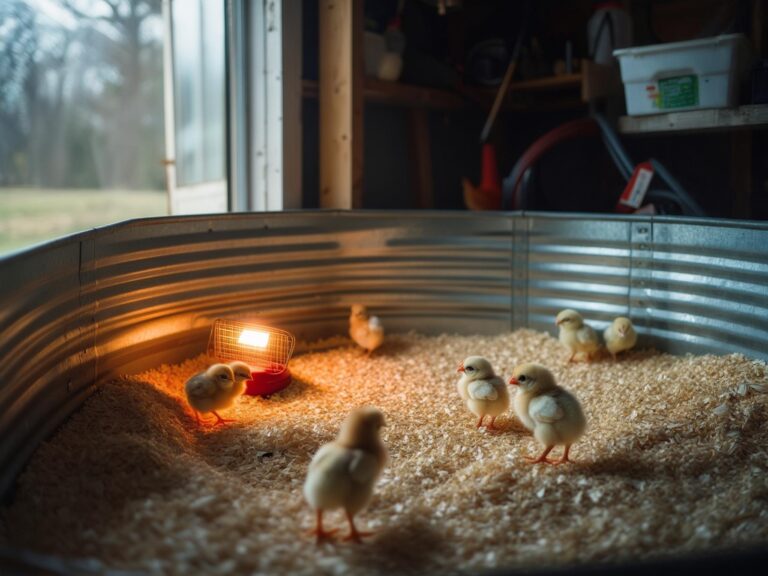
A clean, dry brooder with good airflow and fresh bedding lowers coccidial load significantly. Replace wet litter immediately. Don’t let it sit overnight. Brooder temperature starts at 95°F under the heat source at week one and drops about 5 degrees per week. Keeping the heat source positioned so chicks can move away from it helps keep the whole brooder drier. And don’t overstock: the floor space minimum is about 0.5 square feet per chick for the first two weeks, and honestly I’d push toward the generous side of that. My current brooder runs about 4 feet by 5 feet for a batch of 15 chicks, and I’ve never had a moisture problem with that much room.
Amprolium isn’t a substitute for that management. It slows Eimeria reproduction enough for a chick’s immune system to catch up, but that only works when exposure is low and gradual. If the brooder is wet and crowded and the oocyst load is already heavy, amprolium isn’t going to save you. The litter management matters more than the bag label. For unvaccinated chicks in a genuinely well-kept setup, non-medicated starter is a reasonable choice. For anything less than that, medicated is the safer bet.
Read next: Pasty butt, splayed legs and the other first-week problems
One Combination to Skip Entirely
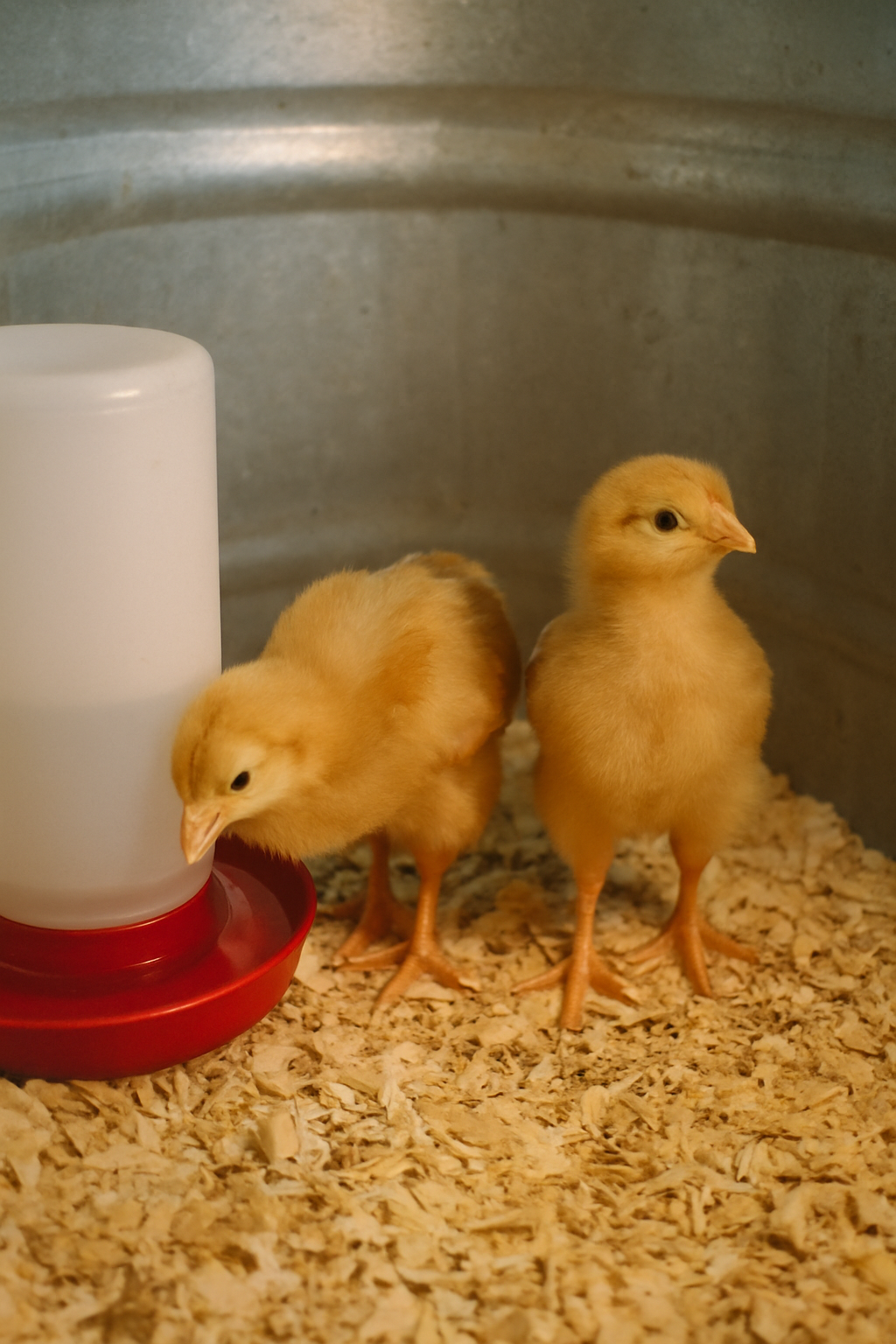
Vaccinated chicks on medicated starter. Don’t do it.
This is the one place in the whole debate where there’s a clear wrong answer. Not “slightly suboptimal.” Not “a little redundant.” It actively undermines the vaccine. The live cocci vaccine works by initiating a mild Eimeria infection. Amprolium suppresses that infection. The immunity never fully forms. You’ve done the opposite of protecting them.
Hatcheries that vaccinate for coccidiosis tell you this explicitly. It’s usually right there on the care sheet or their FAQ. If it’s not, call and ask. Takes about three minutes, costs nothing.
If your chicks came from a farm store bin with no paperwork, assume unvaccinated. Most feed store chicks aren’t vaccinated for cocci, though some are vaccinated for Marek’s.
Read next: My tips for feeding baby chicks
- Hatch to Week 8Chick Starter (medicated or non-medicated)18–20% crude protein; supports fastest phase of muscle, organ, and feather growth
- Week 8 to ~Week 18Grower Feed16–18% crude protein; lower calcium than layer feed, safe for pullets working toward sexual maturity
- First egg or ~Week 18–20Layer Feed3.5–4.5% calcium, calibrated for hens actively forming eggshells; do not introduce before point-of-lay
Read next: When pullets start laying (and why yours might be late)
Protein Numbers in Chick Starter and Why They’re Set Where They Are
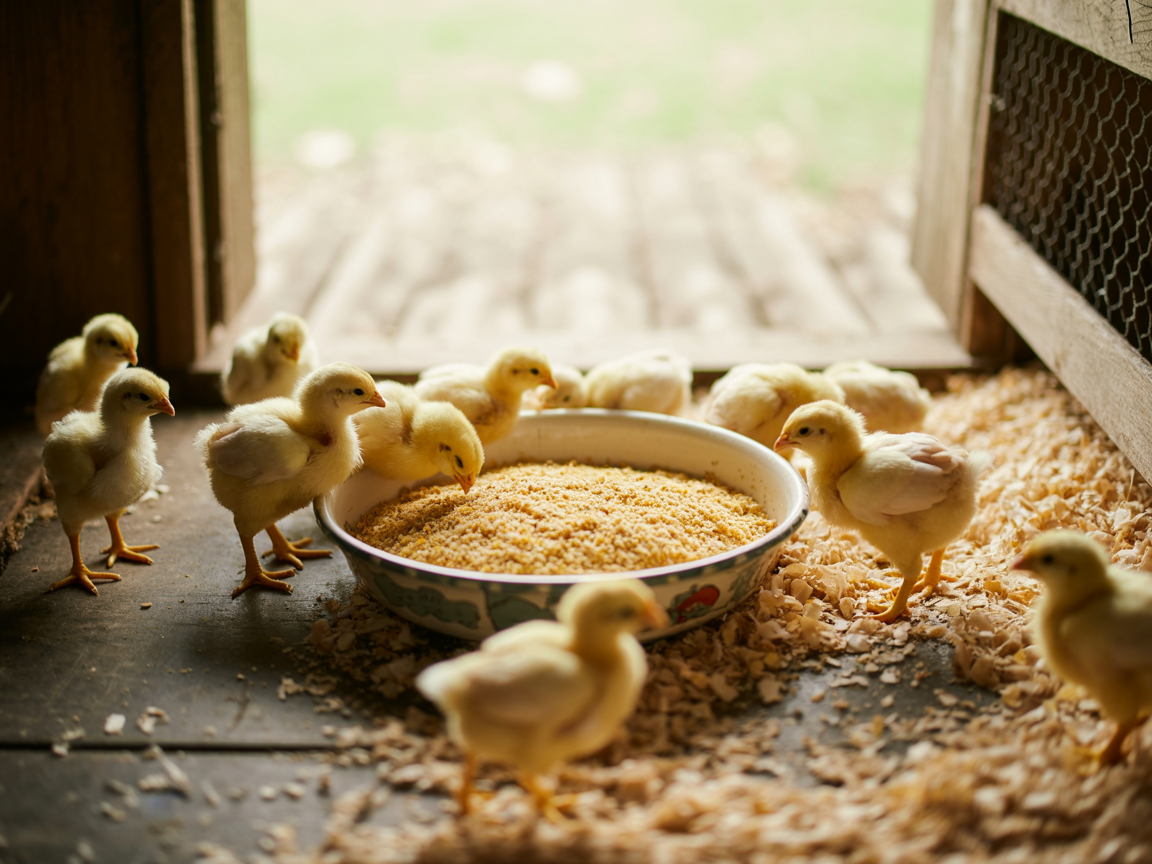
Chick starter, medicated or not, runs 18 to 20% crude protein. That’s intentional. The first eight weeks are when chicks are building muscle, organ tissue and feather structure fastest, and they need that protein density to do it. The amprolium question and the nutrition question are completely separate. Medicated and non-medicated starters have the same protein profile. The medication is an additive, not a reformulation.
People spend real energy on medicated-vs-not and then accidentally feed layer feed to eight-week-old chicks, which is a more common and more concrete problem. Layer feed runs about 3.5 to 4.5% calcium, calibrated for hens actively forming eggshells. Chick kidneys can’t safely process that calcium load before point-of-lay, and the damage accumulates quietly. There’s no obvious symptom until there’s a problem at 20 weeks. Don’t feed layer to chicks. It’s not fine in a pinch.
Read next: When chicks can move onto adult feed
Treats Before Eight Weeks: Keep Them Tiny and Add Grit
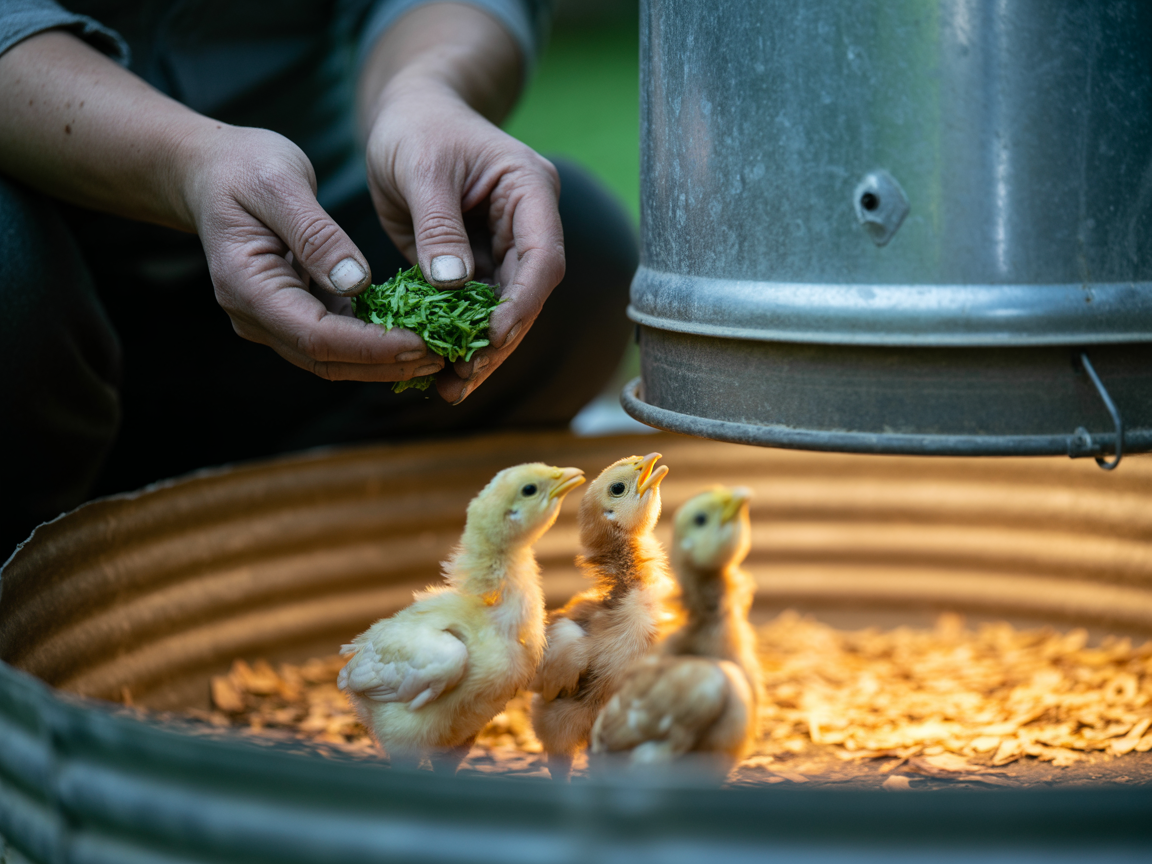
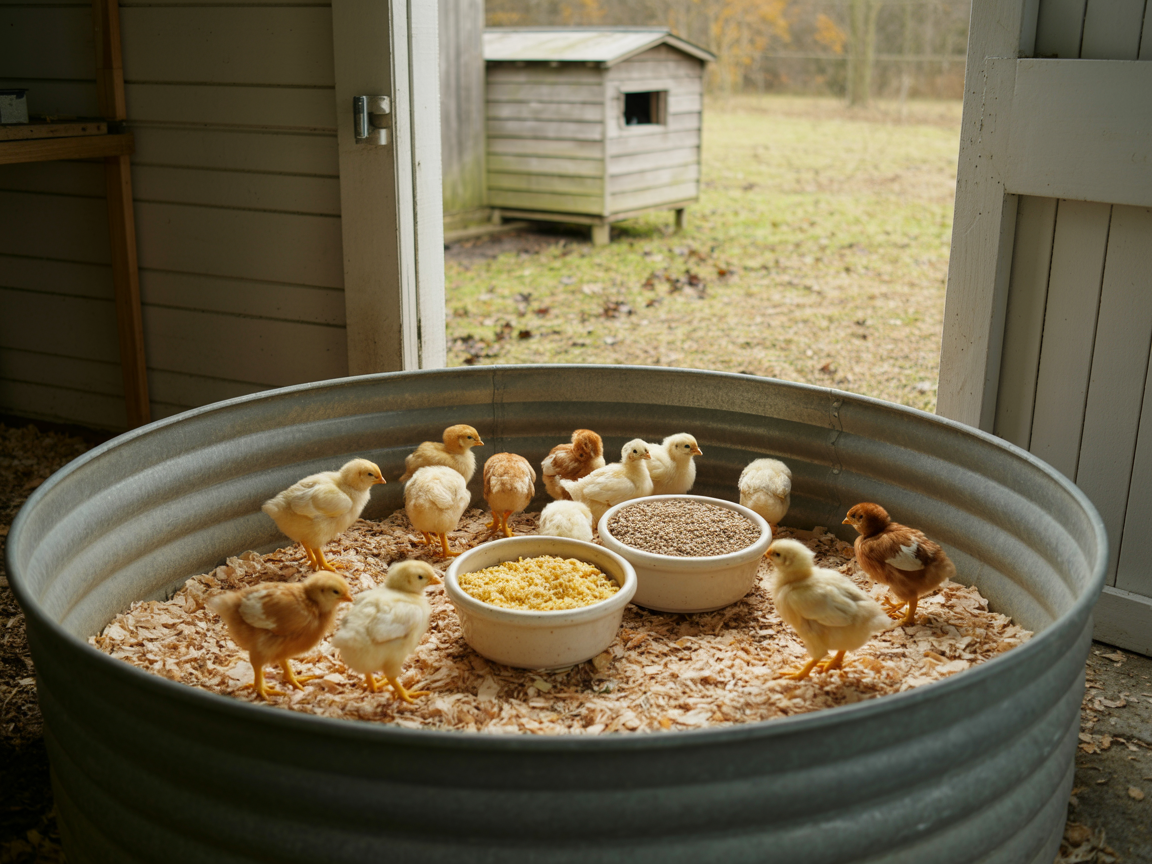
You’re going to give your chicks treats early. I understand. It’s genuinely fun to watch them sprint across the brooder for a piece of something new, and I’m not going to pretend that impulse doesn’t exist because it does, every single time. But keep treat volume under 10% of daily intake. That ceiling isn’t arbitrary. Starter crumble is doing nutritional work that treats aren’t, and diluting it matters more than people think at this stage.
More importantly: anything that isn’t starter crumble requires chick-sized grit. Chick grit is a different product from adult grit, finer, sized for a digestive system that’s still small. Check the label for “chick” or “starter” grit specifically. Adult granite grit is too coarse and can cause problems (I learned this the cheap way, fortunately, but still). Fibrous or whole foods that aren’t ground into crumble need grit to process properly in the crop. Without it, impaction is a real risk. Starter crumble alone doesn’t require supplemental grit. The moment you introduce anything else, it does.

$7.99 In Stock
Paid link · price checked October 6, 2026 09:15
Read next: Check any food in my “Can chickens eat…?” finder
| Amprolium (in medicated starter) | Antibiotics | |
|---|---|---|
| Target organism | Eimeria protozoa (coccidiosis) | Bacteria |
| Mechanism | Mimics thiamine (B1) so coccidia absorb it instead of the real thing, slowing reproduction | Kills or inhibits bacterial growth |
| Effect on gut bacteria | None | Alters bacterial populations |
| Antibiotic resistance risk | Zero | Yes |
| Withdrawal period for meat birds | None | Required for many drugs |
| Concentration in starter | 0.0125% | N/A |
Bottom line: Amprolium is not an antibiotic — it is a thiamine mimic that slows a protozoan, not a drug that touches bacteria at all.
Moving to Grower Feed: Eight Weeks, Not When the Bag Runs Out
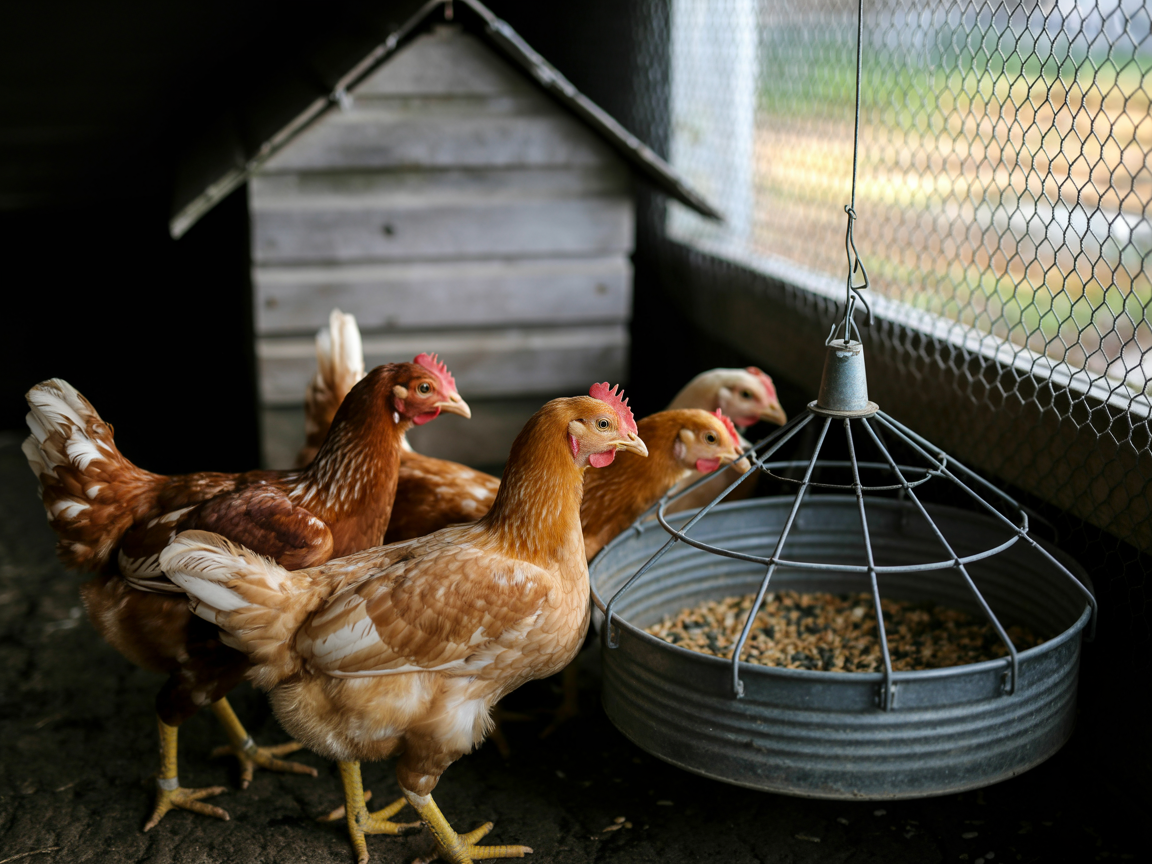
Switch from starter to grower at eight weeks. Not when the bag is empty. Not when it feels like a good time. Eight weeks.
Grower feed drops to 16 to 18% crude protein, which is appropriate for pullets that have cleared that initial rapid-growth phase and are working toward sexual maturity. It also has lower calcium than layer feed, which keeps it safe from eight weeks until they’re close to laying. The layer feed switch happens at the first egg, not on a calendar date.
Running starter all the way to first egg because the bag’s still half full is one of those small decisions that doesn’t feel like a mistake until you’re troubleshooting something at 20 weeks and you can’t figure out why. The protein and calcium needs change at eight weeks. The feed should change with them. Buy a bag of grower when your chicks are six weeks old so you’re not scrambling, and make the switch cleanly.
Tanner’s Two-Question Decision Tree Before You Open the Bag
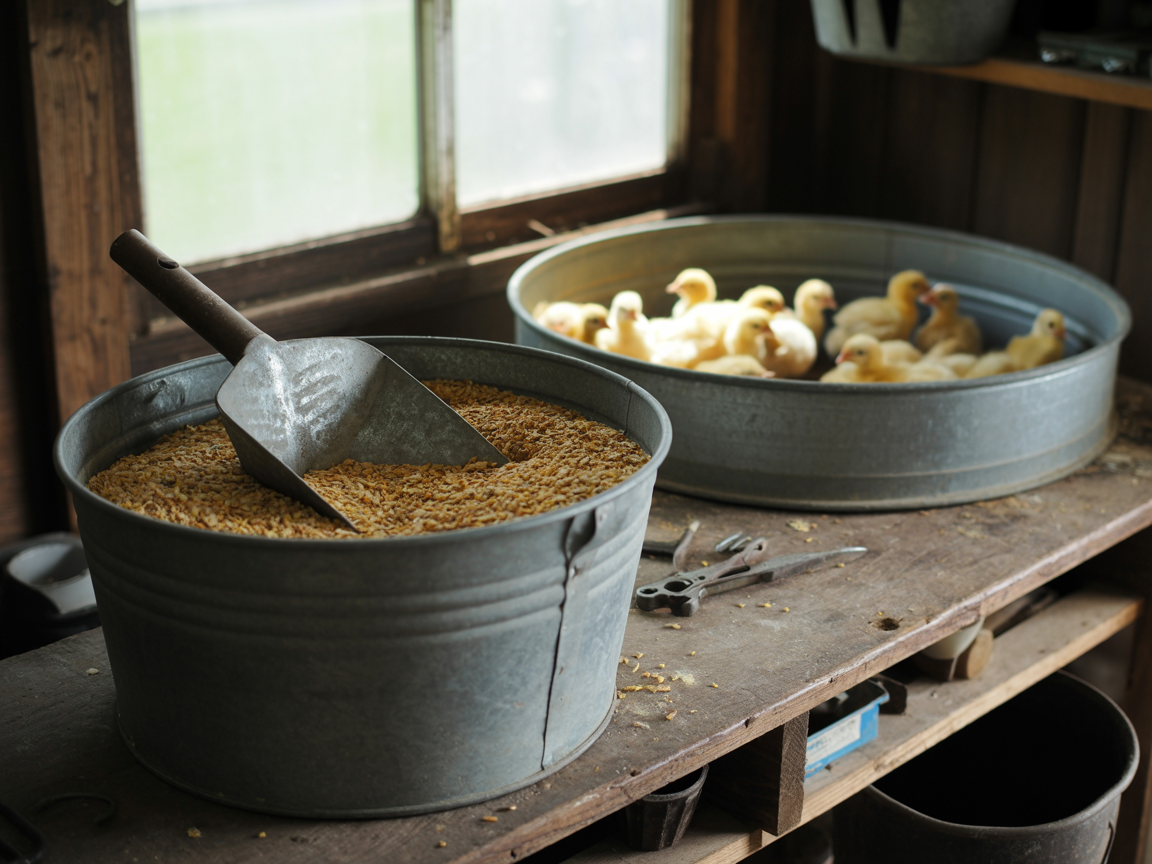
This is the whole thing condensed. Two questions. You can find the answers in five minutes.
Question one: were your chicks vaccinated for coccidiosis? Check your invoice, your hatchery’s website, or call them. If yes, use non-medicated starter, full stop. Vaccinated for cocci plus medicated starter undermines the vaccine. Don’t do it.
Question two, if the answer to question one is no or unknown: what are your brooder conditions actually like? Unvaccinated chicks in a clean, dry, properly managed brooder can do fine on non-medicated starter. Unvaccinated chicks in a damp, crowded or hard-to-keep-dry brooder, medicated starter is the safer choice. If your chicks came with no paperwork from a feed store bin, assume unvaccinated and make the call based on your setup.
Then follow the feed timeline and don’t second-guess it: starter from hatch to eight weeks, grower from eight to around 18 weeks, layer at first egg. That’s it. The difficulty in this whole debate comes from framing it as a values question, natural versus chemical, cautious versus careless. It’s not that. It’s two variables and a decision. Once you have the facts, it’s not hard.