A Barred Rock and a Cuckoo Marans can pass for the same bird from across the run. They’re both black and white with a single red comb, and they carry the same barring gene. So how do you tell them apart? Start with the bars and the legs. Then look in the nest box. Turns out that’s where these two really split. A Barred Rock lays a brown egg. A good Cuckoo Marans lays one so dark that breeders grade it on a color chart.
I rewrote this page from 22 sources, and you’ll find all of them at the bottom. Breed facts come from The Livestock Conservancy and from Marans clubs on three continents. Egg counts come from five hatcheries’ own breed pages. For the genetics, I leaned on Jacquie Jacob of the University of Kentucky and a 2017 study in PLOS Genetics. When two sources give different numbers, I’ll tell you whose number is whose.
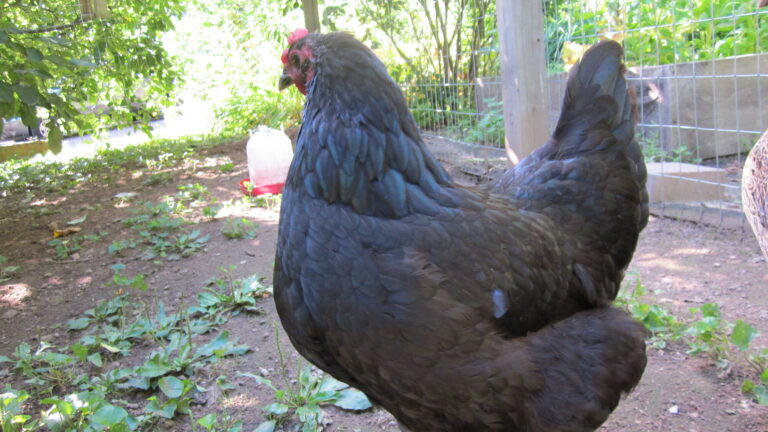
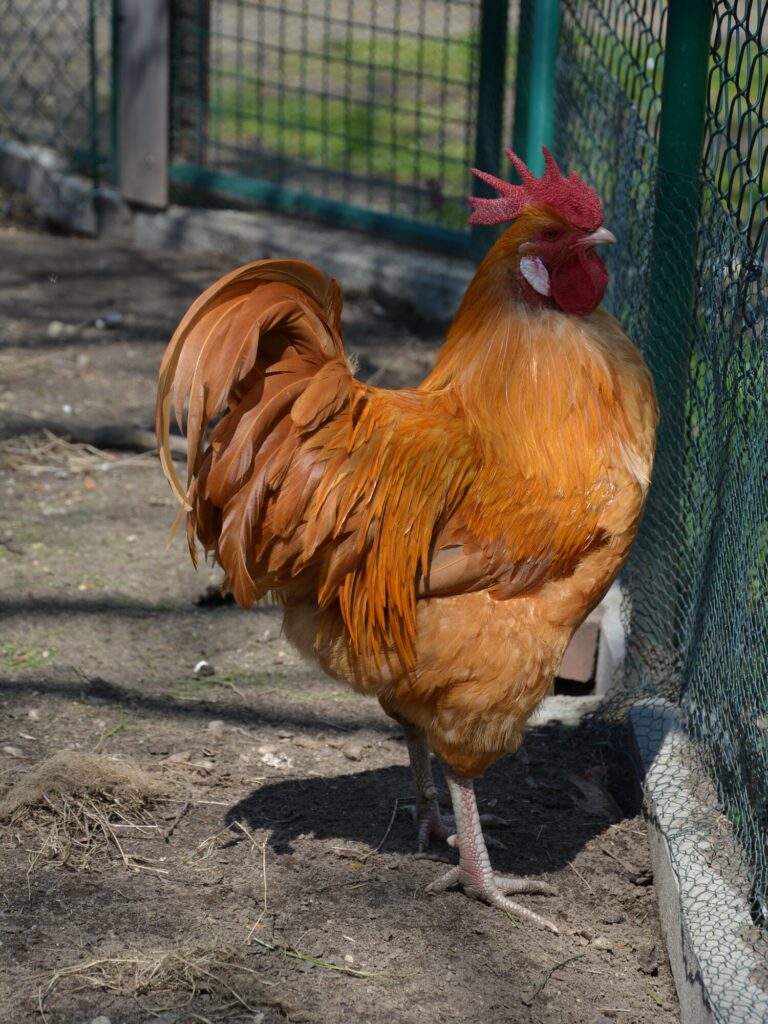
A word on the photos. The hen at the top is a Barred Rock, named as one by the photographer. I couldn’t find a free photo of a Cuckoo Marans that passed our photo checks, so the Marans further down is a copper blue one. Her owner named her breed. Every other bird and egg here is a stand-in, and I’ll tell you what each one shows as we go.
The short version.
- Same gene, rougher finish. A Barred Rock is bred for sharp, even bars. An Australian Marans club says cuckoo feathers usually show “a coarse, irregular zigzag” instead.
- Marans is the breed. Cuckoo is one of its colors, and the Marans Chicken Club USA lists it as a non-standard variety.
- Legs are the quick tell. Barred Rocks have yellow legs. McMurray Hatchery says its Cuckoo Marans have “clean, pinkish white legs”, and French lines have feathered ones.
- The egg is the real difference. Cackle Hatchery rates its production Cuckoo Marans at shades 3 to 6 on the Marans egg chart. Its French line lays shades 5 to 8.
- You’ll get more eggs from the Rock. Hatcheries put Barred Rocks at 200 to 225 eggs a year and Cuckoo Marans at 180 eggs or more.
Both Birds Carry the Same Barring Gene

Barring comes from one gene on the Z chromosome, Jacquie Jacob explains on the Poultry Extension site. It “produces a white bar on an otherwise black feather.” The Livestock Conservancy puts it a little differently. It says the gene doesn’t add dark bars to a light feather. It “prevents pigment on colored plumage,” which leaves light bars on a dark one. Either way, you get black and white stripes across every feather.
Cuckoo is that same gene. The French Marans Club Australia says cuckoo plumage comes from “the addition of the barring gene (B)”. What changes is how the bars were bred. For a Barred Rock, the Conservancy wants “sharply-defined, regular, parallel bars”. A Cuckoo Marans isn’t held to that. The Australian club says it’s normal to get “a coarse, irregular zigzag”, and it says crisp Rock-style barring isn’t even wanted. McMurray describes its Cuckoo Marans as having “irregular dark and light slate colored bars.”
A 2017 study in PLOS Genetics traced sex-linked barring to a gene called CDKN2A. It named the Barred Plymouth Rock as a classic case of “sharp white and pigmented stripes”. That study didn’t test Marans, so I can’t tell you which version of the gene a Cuckoo Marans carries. What you can see is the finish. Crisp, even bars point to a Rock, and blurry, broken ones point to a Marans.
Honestly, that’s a hint and not proof.
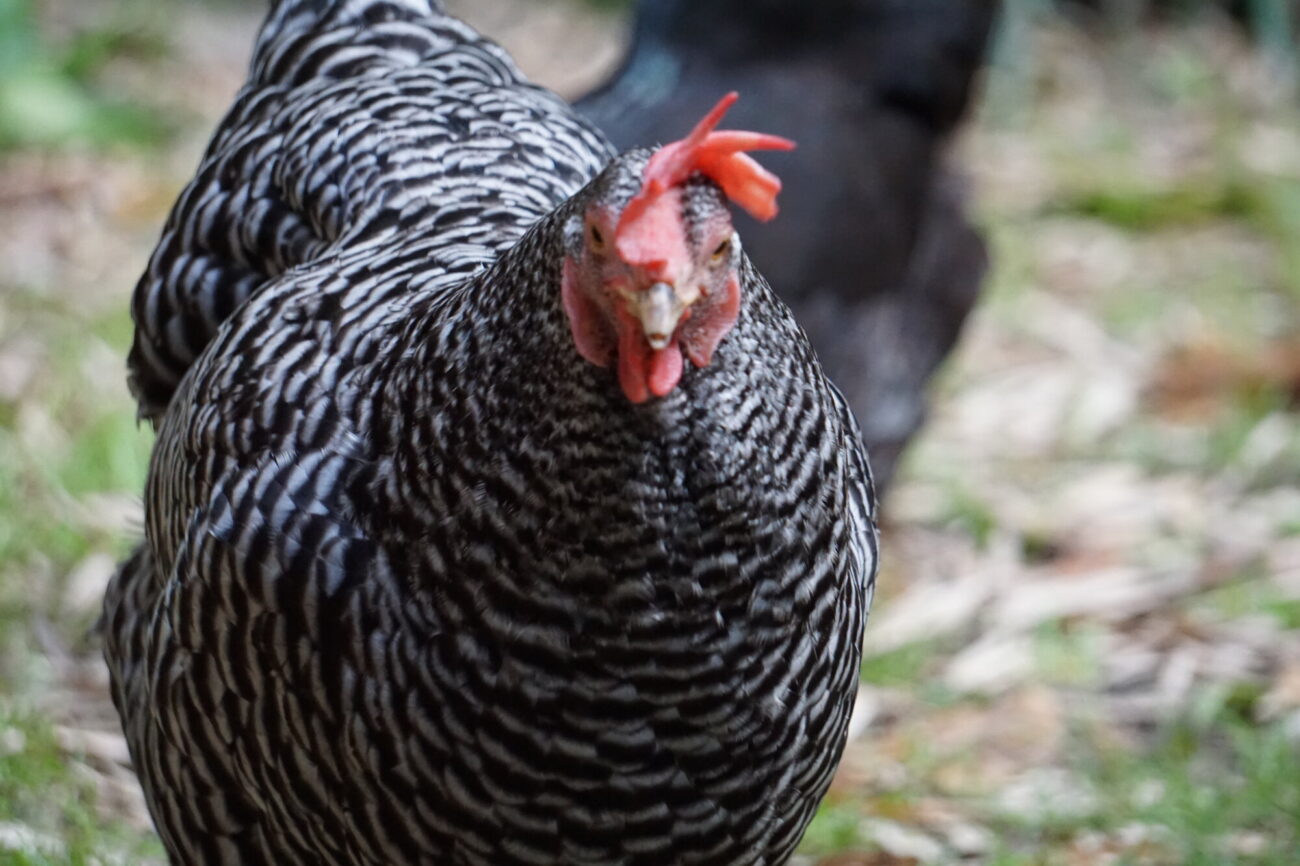
In both breeds, a rooster looks lighter than a hen. He carries two copies of the gene and she carries one, the Conservancy says. The French standard on the Marans Club UK’s site says the same of its silver cuckoo cock. His plumage is “much lighter than that of the hen.” The hen in this photo shows what the Rock standard is after. Her bars run straight across her breast and neck in even bands.
Marans Is the Breed, and Cuckoo Is One of Its Colors

Marans is a town on France’s Atlantic coast, near La Rochelle, and the breed is named for it. McMurray dates the breed to the mid 1800s. The Marans Chicken Club USA says the modern bird first showed up at French poultry shows in 1914. A French Marans club formed in 1929 and wrote the first standard in 1931. Cuckoo Marans had made it into the British standards by the mid 1930s, according to Tim Daniels at Poultrykeeper.
Cuckoo is one color of that breed. You’ll find a silver cuckoo and a golden cuckoo in the French standard, as the UK club prints it. In the US it’s a different story. The Marans Chicken Club USA lists cuckoo as a “non-standard variety”. Cackle says “not every Marans color variety has APA recognition”, and it lists its own production Cuckoo Marans with an APA status of “No.” The Barred Rock has been in the American Poultry Association’s standard since 1874, the Conservancy says. If you want to show your birds, the Rock is the easier pick.
Then there are the legs. French Marans have “sparsely feathered legs”, Cackle explains, and British breeders bred them clean. That’s still the main split between English and French Marans. Plenty of American Cuckoo Marans are the clean-legged kind. The US club says English-type imports led to “many clean-legged flocks in this country, especially in the cuckoo variety”. Its standard still asks for lightly feathered shanks, though.
Koala, the pullet in the photo, isn’t a cuckoo. Her owner in Normandy calls her a French copper blue Marans. I picked her because she’s a real Marans with her breed on record. She shows the build you’d see under a cuckoo coat, too. Don’t use her as a leg guide, though. Her legs look clean and a bit yellow in this light, and the next section explains why that matters.
How to Tell Them Apart in the Run

Look down first. A Barred Rock has yellow legs and yellow skin, going by the Conservancy and McMurray. McMurray adds that “the brightness will vary”, so don’t expect every Rock to have bright yellow legs. A Cuckoo Marans should have pale legs. McMurray calls them “pinkish white”. The US Marans club goes further, and yellow on the shanks or toes gets a Marans disqualified at a show. So a barred hen with yellow legs is most likely a Rock.
Skin is a weaker clue. The US club’s standard calls for white skin on a Marans, but McMurray’s chart lists yellow skin for its Cuckoo Marans. I’d go by the legs instead.
Leg feathers can settle it, but only one way. A Barred Rock has clean legs. A Cuckoo Marans from a French line will have some feathering down the outside of each shank. A clean-legged Marans won’t, though, so bare legs alone don’t prove you’ve got a Rock.
The comb won’t help you. Both breeds wear a single comb. The old version of this page said Marans have a pea comb, and none of my sources back that up.
Size won’t help much either, since they’re pretty much the same size. The Conservancy puts Barred Rock hens at 7.5 pounds and roosters at 9.5 pounds. Cackle lists its Cuckoo Marans hens at 7 pounds and roosters at 9 pounds. And McMurray’s run smaller, with females at 6 pounds and males at 7 pounds. The US Marans club’s standard sits in between (hens of 6.5 pounds and cocks of 8 pounds).
Neither hen in this photo is a Rock or a Marans, as far as anyone recorded. I picked it for the legs. You can see how plainly yellow legs show up next to darker ones when you’re watching hens walk away from you across the run.
The Egg Is the Real Difference

Here’s where these two birds stop being twins.
A Barred Rock lays a brown egg. Illinois Extension says Plymouth Rock shells “vary from a very light to a dark brown, depending on the strain and the stage of production.” McMurray calls its Barred Rock eggs medium in size. Cackle calls its eggs large, and Meyer Hatchery says large to extra large.
A Marans is bred for the egg. The US club tells breeders to keep Marans “that can lay a 4 or better on the MCCUSA egg shade card”. The French standard, in the UK club’s English copy, asks for a “deep dark red-brown coloured shell.” It wants a big egg too (about 65 grams from a pullet and 70 to 80 grams from an adult hen). Hatcheries print their own numbers. Cackle puts its production Cuckoo Marans at shades 3 to 6 on the Marans chart and its French Cuckoo Marans at shades 5 to 8. Valley Hatchery gives shades three to six for its Cuckoo Marans.
So the shade number is the one to ask about before you buy. The thing is, a hatchery Cuckoo Marans can lay an egg not much darker than a good brown layer’s. Even Cackle says its production line is “darker than many common brown egg layers, though not always as dark as some French Marans lines.” One buyer’s review on McMurray’s own Cuckoo Marans page is titled “Don’t expect chocolate eggs”.
Even a good Marans won’t lay the same shade all year. Brown shell color is mostly a pigment called protoporphyrin IX. A 2015 review found that “most of it is concentrated in the outermost layer of the calcareous shell and in the cuticle.” Hendrix Genetics, a laying-hen breeding company, says “the pigment is transferred to the egg four hours before it is laid”. When stress holds an egg in the hen longer, an extra layer of calcium can give it “a white-grey exterior.”
Age matters too. A 2018 study of 120 Rhode Island Red hens found their brown shells got lighter from 26 weeks to 60 weeks of age. Their color crept back a little at 70 weeks. Those were Reds, not Marans, but Cackle says Marans shell color “can also shift during a hen’s laying cycle”. So don’t panic if a hen’s eggs get lighter as she ages. If you’re curious how Reds stack up on egg count, our page on Rhode Island Red egg production covers it.
The two eggs in the photo came from a barn nest in the same Normandy flock as Koala, and nobody recorded which hens laid them. They show how far two shells in one nest can drift apart. Whatever shade you get, collect it often. Our page on how long chicken eggs can stay in the coop explains why.
The Chicks and the Sex-Link Cross

Barred Rock chicks hatch dark with a light spot on the head. Jacob says males hatch with “a large white spot”, and the spot is “much smaller and narrower in females.” Sorting chicks by that spot is “about 80% accurate”, so expect a surprise rooster now and then.
Because the barring gene rides on a sex chromosome, breeders can use it to sort chicks at hatch. Jacob explains the cross. A non-barred rooster goes over a barred hen. The daughters hatch non-barred like their father. The sons come out barred like their mother, with a white spot on the head. It only works that way round. “Crossing a barred male with a non-barred female will not work”, Jacob writes. Rhode Island Red and New Hampshire roosters are common picks for the father’s side.
A Cuckoo Marans hen can play the barred mother. Poultrykeeper says “Cuckoo Marans hens can be mated with an unbarred cock to produce sex-linked hybrid offspring.” If you buy sexed Marans chicks instead, read the guarantee first. Cackle offers “a 75% sexing accuracy guarantee on French Marans”, so plan your coop space for a cockerel or two.
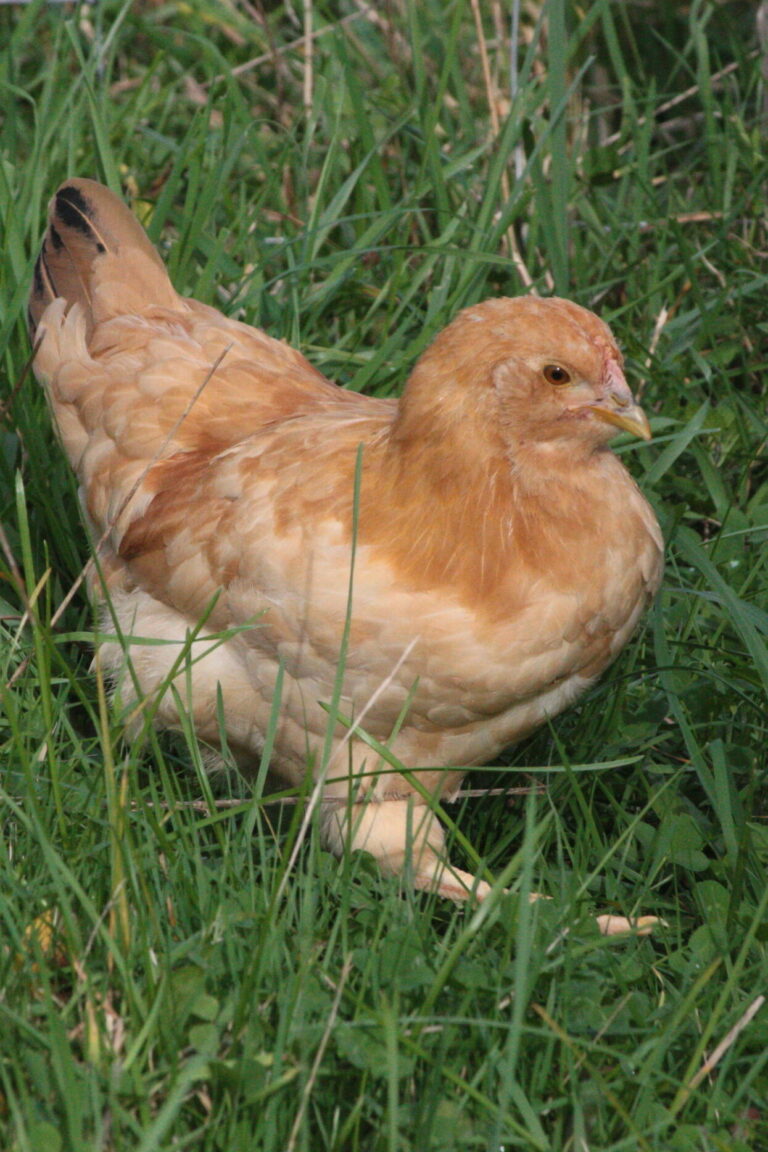
The chicks in this photo are pale, not barred, and their breed wasn’t recorded. I couldn’t find a free photo of barred chicks that passed our checks, so they’re here with their mother to show how small a day-old chick is next to a hen.
Which One Belongs in Your Coop?

If you want the most eggs, pick the Barred Rock. Cackle puts its production Barred Rocks at 200 to 220 eggs a year. McMurray’s average is 225 eggs a year, and Meyer says 4 to 6 eggs a week. The Conservancy says about 200 eggs a year. For Cuckoo Marans, Cackle and Stromberg’s both say 180 eggs or more a year. Valley says upwards of 180 eggs, and Poultrykeeper gives 160 to 210 eggs a year. McMurray’s question pages give 220 to 280 eggs a year for both breeds, word for word, so I’d lean on the other numbers.
Want a hen that hatches her own chicks? That depends on the line more than the breed. Cackle marks its Barred Rocks as setters, and the Conservancy says Rock hens “are usually good sitters and mothers.” McMurray says its Barred Rocks are “not considered setters.” On the Marans side, Cackle lists its production Cuckoo Marans as variable and its French Cuckoo Marans as setters. McMurray says its Cuckoo Marans “are considered non-setters.”
For a family flock, the Conservancy calls Rocks “a good family breed as they are good with children.” Cackle lists its production Cuckoo Marans as active (its word) and its French line as docile. Both breeds handle winter well, and McMurray rates them excellent for cold. Cackle reminds Rock owners to watch that single comb for frostbite in hard cold, and a Marans comb is single too. If you get a feather-legged Marans, keep the run dry. Cackle warns that mud and wet bedding collect in leg feathers.
Plus, neither one makes you wait long for eggs. McMurray lists both breeds at 20 weeks to maturity, and Meyer says its Barred Rocks start laying at 16 to 20 weeks.
So here’s how I’d choose.
Pick Barred Rocks if you want more eggs from a bird that’s easy to find. Pick Cuckoo Marans if the dark egg is the point. Cackle says they’re “less common than many standard brown egg breeds” in the US, so you may have to hunt a bit. If the dark egg is what you’re after, it’s worth it. Before you order, ask the seller what shade their hens lay. A Marans that lays a shade 3 egg isn’t the bird you wanted if you were hoping for a shade 6.
Still torn? Our Chicken Breed Finder sorts breeds by what you want from your flock. And if a seller calls a bird a Plymouth Rock and you’re not sure it’s the same thing, our Barred Rock vs Plymouth Rock page clears that up.
The two hens in this last photo aren’t Rocks or Marans, as far as anyone recorded. They’re here because they’re a fair picture of a backyard flock poking around a garden in the evening.
Sources
- Livestock Conservancy: Plymouth Rock Chicken.
- University of Illinois Extension: History of Breeds.
- Jacquie Jacob, University of Kentucky, on the Poultry Extension site: Sexing Day-Old Chicks.
- Schwochow Thalmann and colleagues, PLOS Genetics (2017): The Evolution of Sex-Linked Barring Alleles in Chickens.
- Samiullah and colleagues, Poultry Science (2015): Eggshell Color in Brown-Egg Laying Hens, a Review.
- Bi and colleagues, Poultry Science (2018): Brown Eggshell Fading With Layer Ageing (the FAO AGRIS record).
- Hendrix Genetics: Eggshell Color Eggsplained.
- The Marans Club (UK): French Standard.
- Marans Chicken Club USA: General Description.
- Marans Chicken Club USA: Cuckoo.
- Marans Chicken Club USA: home page (its breeder goals).
- French Marans Club Australia: Notes on Breeding.
- Tim Daniels, Poultrykeeper: Marans Chickens.
- Cackle Hatchery: Cuckoo Marans.
- Cackle Hatchery: French Cuckoo Marans.
- Cackle Hatchery: English Marans or French Marans Chicken?
- Cackle Hatchery: Barred Rock.
- McMurray Hatchery: Cuckoo Marans (with its questions and reviews).
- McMurray Hatchery: Barred Plymouth Rocks.
- Meyer Hatchery: Barred Plymouth Rock.
- Stromberg’s: Cuckoo Maran Chicks, Female.
- Valley Hatchery: Cuckoo Marans Chicks.
Sources checked October 28, 2026. The weights here are each source’s own, and I didn’t round them.
Related read: How to Raise Chickens for Eggs — Instant PDF download. Secure checkout by Stripe