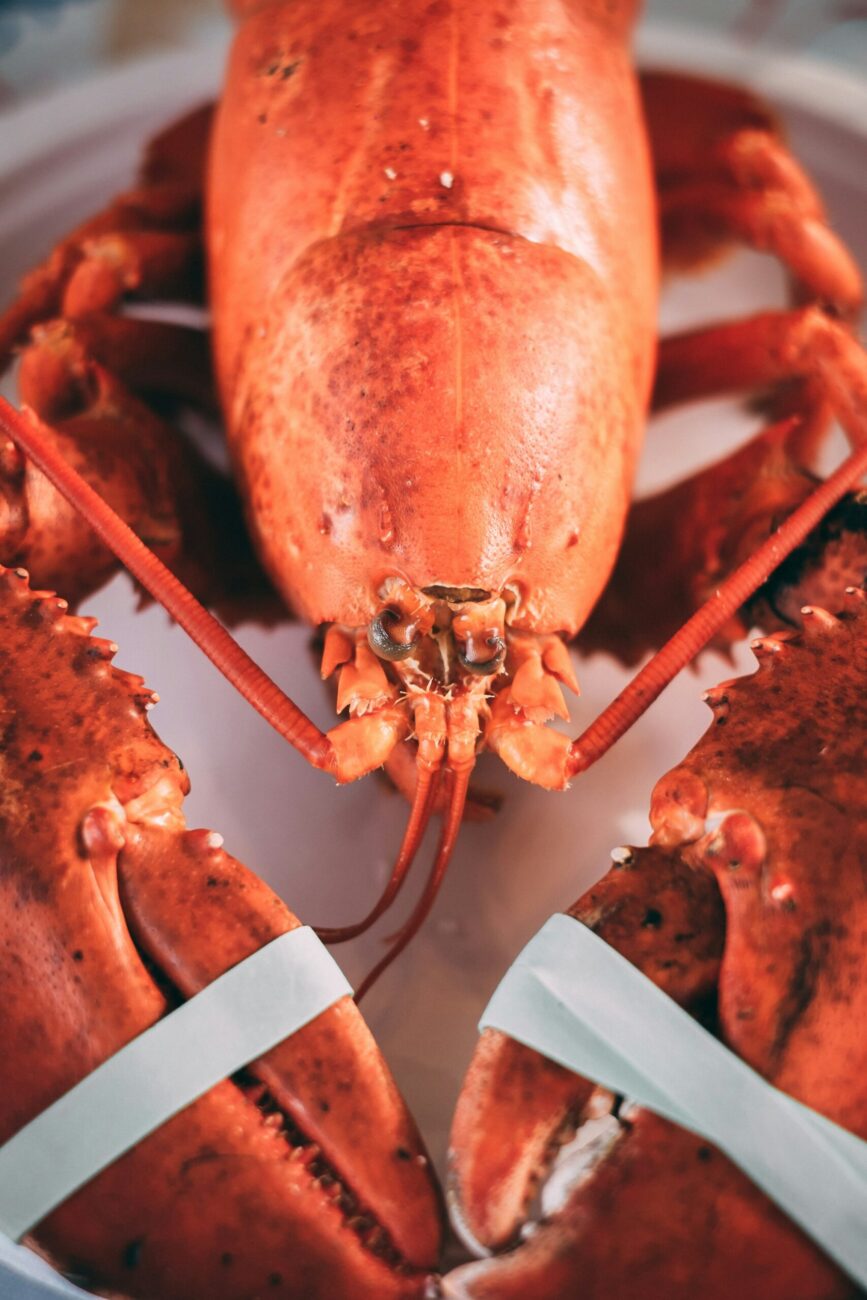
Yes, chickens can eat lobster shells. Researchers in Nova Scotia have fed laying hens dried lobster shell for 40 weeks, and the hens kept laying and held their weight. Where I’d slow down is what rides along with the shell from a dinner plate. The soft green tomalley is the big one. Salt from the pot is the second.
This page used to tell a story about a named backyard flock and its “Lobster Saturday”. That flock wasn’t real. It also said a sharp shell could scratch a hen’s airways and make her sneeze, and that one shell was the right amount to start with. I found nothing that backs either claim. So I rewrote the page from the feeding trials and the food-safety rules.
I worked from 23 sources, all listed at the bottom. Two Canadian trials published in Poultry Science and two reports in Canadian Poultry Magazine supply the feeding results. For the tomalley, I went to the food-safety agencies on both sides of the border. Salt numbers come from USDA FoodData Central and two extension guides. When a number is my own math, I’ll say so.
The short version.
- Lobster shell is real poultry feed. Hens in a 40-week Canadian trial ate it with no harm to laying or body weight.
- Dried lobster shell is about 17.4% calcium. Oyster shell has more than twice that, so it isn’t a swap.
- Throw the green tomalley in the trash. It can carry shellfish toxins that cooking doesn’t destroy.
- Lobster cooked in salted water brings salt with it. Rinse the shells, and keep the meat to a few bits.
- Put out only what the flock cleans up in 5 to 10 minutes, then pick up the rest.
- Chicks and pullets skip it.
What a Lobster Shell Is Made Of

A lobster shell isn’t a lump of chalk. A 2017 review of lobster by-products by Trung Nguyen and his co-authors at Flinders University puts chitin at 16% to 23% of the shell. Chitin is the same stuff found in insect shells, the magazine notes. Their review adds that the carapace, the big shell over the body, is about 25% protein.
Then there’s calcium. Canadian Poultry Magazine, writing about a lobster shell trial at Dalhousie University, says “Repurposed dried lobster shell contains approximately 17.4 per cent calcium”. Same article, same shell: it’s “also a source of chitin and astaxanthin”.
Astaxanthin is the red. The magazine calls it “what causes the reddish pigment in lobster”, and the Nguyen review says lobster by-products hold double the astaxanthin of shrimp by-products. Keep that pigment in mind, because it turns up again in the yolks.
There’s a lot of this stuff around. By-products make up 50% to 70% of a lobster at a processing plant, per the review. And in 2021 the magazine put the output of dried lobster shell at about 335 tonnes a year. That’s why poultry researchers went looking for a use for it.
What Happened When Hens Were Fed Lobster

Three trials matter here, all from poultry researchers in Nova Scotia.
First came lobster meal. Michelle Daniel, a graduate student at the Nova Scotia Agricultural College, ran a 32-week trial with laying hens on crab and lobster meal. Canadian Poultry Magazine reported it in 2008. Her meal came from a New Brunswick plant that packs “shell byproducts and leftover meat remnants” as feed. She found no difference in eggshell quality between those hens and the control hens.
Next, a full laying cycle. M. A. Langille and co-authors put 432 White Leghorns on six diets from 35 to 67 weeks of age. Lobster meal or crab meal made up 2.5% or 5% of the feed, or the two were blended. Their 2012 paper in Poultry Science found no effect on laying or on body weight. Feed efficiency held, and so did egg quality. They also broke wing bones at 55 and 67 weeks, and the meal didn’t change the bones either.
Last, the shell itself. A 40-week trial put Lohmann Lite LSL white hens and Lohmann Brown-Lite hens on lobster shell from 27 weeks of age. Large pieces or ground lobster shell replaced part of the usual oyster shell and limestone. Canadian Poultry Magazine reported it in 2021, quoting Janice MacIsaac of the Atlantic Poultry Research Institute: “The hens consumed it with no problem”. Laying and body weight didn’t suffer, she said, and every diet left the hens “in a positive calcium balance”.
So, as a feed, the shell holds up. Now the honest part. Those trials used a dried, processed product from a seafood plant, weighed into a balanced ration. The shell product is proprietary, and in 2021 the processors were still working on getting it approved as a feed ingredient. Nobody in those trials was tossing hens the leftovers from a lobster boil.
Amounts matter too. A hen eats 100 to 150 grams of feed a day, per Alabama Cooperative Extension. At 5% of that, the lobster meal hens got roughly 5 to 7.5 grams a day (my math).
Can a Hen Digest Chitin?

Partly, yes. Chickens make an enzyme for it. In a 2017 paper in Scientific Reports, Eri Tabata and co-authors at Kogakuin University showed that a chicken’s acidic chitinase is made mostly in the glandular stomach. That’s the first stomach, ahead of the gizzard. They found the enzyme has “a robust chitinolytic activity at pH 2.0”, the acid level of a stomach, and it held up against the gut’s protein-cutting enzymes.
In the lab, the chicken enzyme “degraded shells of mealworm larvae in the presence of digestive proteases”. Their summary is plain: it “can function as a digestive enzyme that breaks down chitin-containing organisms in chicken GIT”, the gastrointestinal tract.
Two other papers fit with that. A 2002 study by M. Suzuki and co-authors found the chitinase message in the cells of a chicken’s glandular stomach, and in chick embryos from day 7 of incubation. And a 2018 paper from the Tabata group compared stomachs across species. Cattle and dogs made much less of the enzyme’s message than chickens did, and the authors group chickens with the omnivores. A chicken is built to eat bugs.
Here’s where I’d keep my feet on the ground. A mealworm shell in a lab dish isn’t a lobster claw in a hen. I found no study that measured how much of a lobster shell’s chitin a hen actually breaks down. So treat the shell as a mineral snack with some protein, not as a meal.
Redder Yolks and a Little More Omega-3

Remember the astaxanthin. In Langille’s trial, a color meter read the yolks of the 5% groups as redder than the control yolks by the end of the first 28-day period, and darker by the end of the second. Daniel saw it too. Canadian Poultry Magazine said the astaxanthin “imparts a reddish tinge to the egg yolks”.
The fats moved as well. DHA, one of the omega-3 fats, came to 0.17 g per 100 g of yolk in the control eggs. With 5% lobster meal it was 0.32 g, close to double. Crab meal went higher, to 0.46 g.
Other shellfish meals do the same. In a 2001 trial in Honduras, shrimp meal raised yolk pigmentation as the amount in the diet went up. In Mexico, hens on 6% red crab meal for 3 weeks laid eggs with 246 mg of DHA per 100 g of egg, against 56 mg for the control. In broilers, a 2011 Canadian study fed lobster meal at up to 10% for 35 days. Their abdominal fat came out redder, with more EPA and DHA.
Don’t expect that from your own eggs, though. Those hens got shellfish meal in every bite for weeks. A handful of shells after a lobster dinner is a different dose, and I wouldn’t count on any change in the yolks (my judgment, not a test). If omega-3 eggs are the goal, our page on flax seeds for chickens covers that route.
Throw Out the Tomalley

This is the part I’d want every keeper to read. Crack a lobster’s body and you’ll find a soft green paste. That’s the tomalley. Health Canada calls it “the soft, green substance found in the body cavity of lobster”, and says “It functions as the liver and pancreas and naturally filters out contaminants from the environment”. That includes the toxins behind paralytic shellfish poisoning, or PSP.
PSP toxins come from microscopic algae in coastal water. Health Canada says only “a very small number of lobsters” may carry enough to matter, and there have been no confirmed cases of PSP from tomalley. Even so, its advice is that “Children not eat lobster tomalley”, and adults stop at the tomalley from one cooked lobster a day.
U.S. agencies are firmer. In its seafood hazards guide, the FDA writes “In 2008, FDA advised against the consumption of American lobster tomalley from New England waters due to unusually high levels of PSP toxins”. Natural toxins like these are heat stable, the guide says, so “they cannot be reliably eliminated through cooking or freezing”. The FDA also lists domoic acid, another natural toxin, as found in lobster viscera. Maine’s CDC puts it in one line: “Do not eat lobster tomalley or crab tomalley”. Its fact sheet adds that contaminated seafood usually looks and smells normal.
To be fair about the odds, the FDA says “No illnesses have been reported from consumption of lobster or crab due to PSP as of September 2026”. So the risk is small. But you can’t see it, and you can’t cook it away.
And birds aren’t immune. PSP comes from saxitoxins, the FDA says. A 2021 U.S. Geological Survey study dosed mallard ducks with saxitoxin by mouth and put the median lethal dose at 167 micrograms per kilogram of body weight. I found no study on chickens and tomalley, and I wouldn’t volunteer my birds for one. If Health Canada keeps it away from children, it stays out of the run. Scrape the body cavity clean and put the green stuff in the trash, not the compost the hens scratch through.
Mind the Salt From the Pot
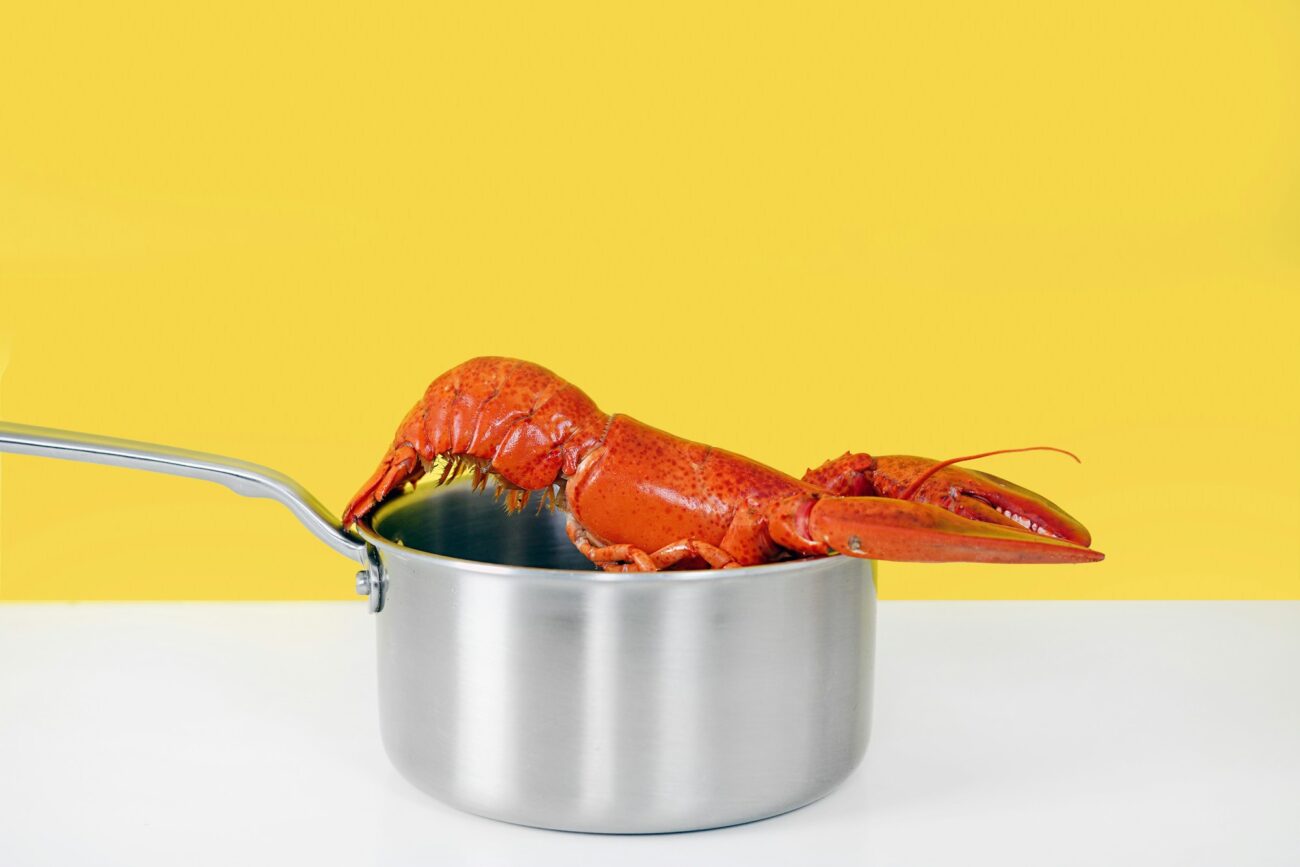
Lobster cooking water is often salted. A New York Sea Grant recipe sheet starts with “Fill a large kettle 3/4 full of salted water”. Lobster meat is salty on its own, too. USDA FoodData Central lists cooked northern lobster at 486 mg of sodium per 100 g, from three samples that ran 425 to 526 mg.
Hens need some salt, but not much. The University of Maine’s extension says chicken feed carries “about 0.15% sodium”, and “Most chickens need between 0.12% to 0.2% sodium in the diet”. On 100 to 150 grams of feed, that’s 150 to 225 mg of sodium a day already in the feeder (my math). Twenty grams of cooked lobster meat would add about 97 mg more. That’s 43% to 65% of what her feed already gives her, in one snack (my math).
Too much salt is a real poisoning in poultry, not a figure of speech. The Merck Veterinary Manual recommends 0.5% salt in a chicken ration and says “amounts > 2% are usually considered dangerous”. It warns that poisoning can happen “when salty protein concentrates (eg, fish meal) are added to rations already fortified with salt”. Signs include labored breathing and lethargy, and “Watery droppings and wet litter are also observed”. Merck also says birds under 21 days old are more at risk, because their kidneys aren’t fully developed yet.
None of that means one lobster dinner will poison a laying flock. It means the shell is the treat and the meat is a garnish. Colorado State’s extension asks that table scraps not be salty, and I’d hold lobster to that. Rinse the shells under the tap, and skip anything that sat in drawn butter. For more on salty people food, see our page on hummus and chickens.
Lobster Shell Is No Stand-In for Oyster Shell
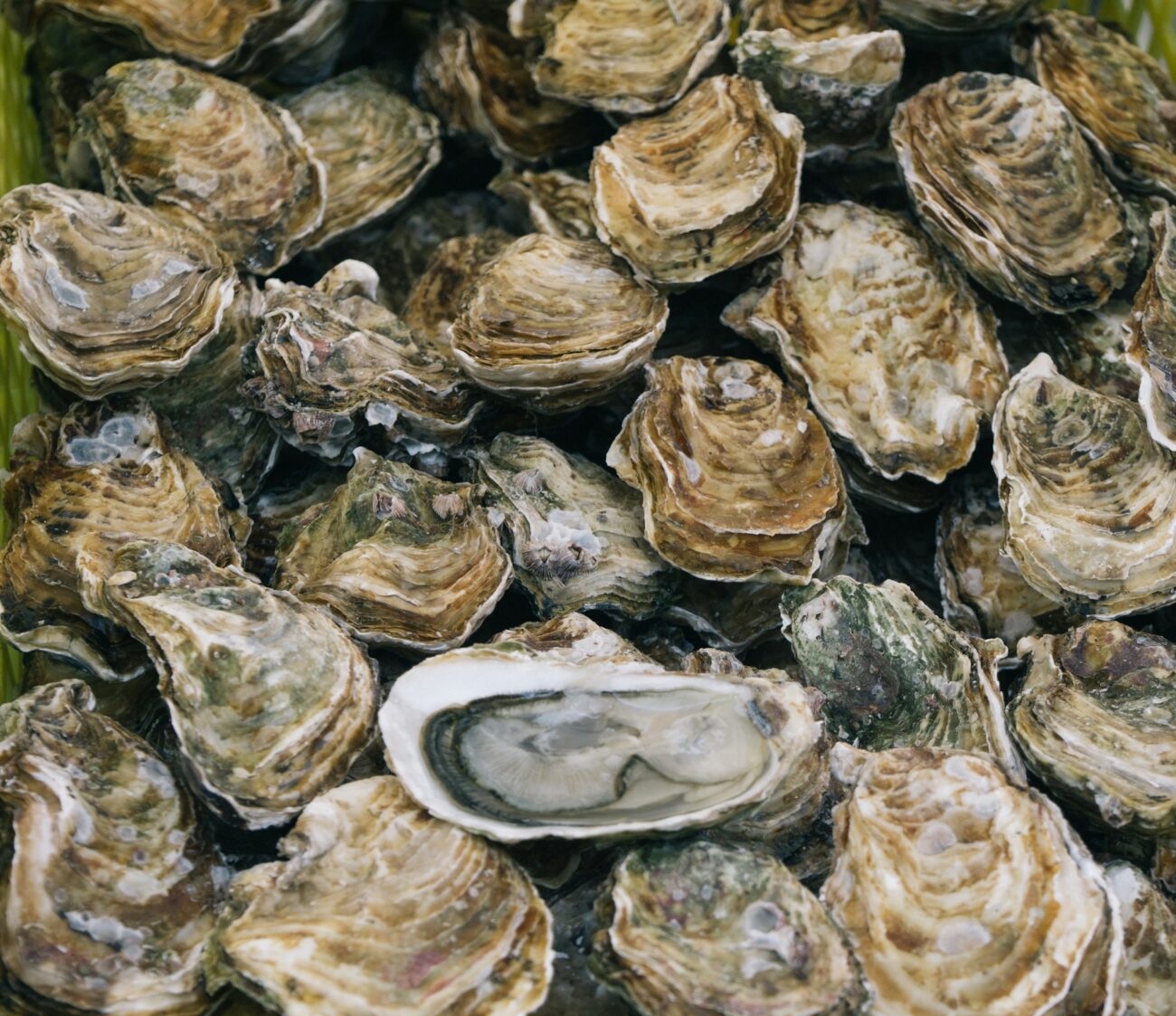
It’s tempting to think lobster shell can replace the bag of oyster shell from the feed store. It can’t, at least not at home. Alabama’s extension says oyster shell is “around 95 percent” calcium carbonate. Calcium carbonate is 40% calcium by weight, which is plain chemistry. So oyster shell works out to about 38% calcium (my math), against about 17.4% for dried lobster shell. That’s less than half.
Daniel saw the same thing in 2008. Crab and lobster meal were “relatively low in calcium” but “high in protein”, the magazine wrote, so she thought they’d be more useful as a protein source. In the 2021 shell trial, the lobster shell went into a ration planned around it, with limestone to make up the rest. That’s a nutritionist’s job, not something to eyeball over the kitchen trash.
A laying hen needs a lot of calcium. Jacquie Jacob’s guide for small flocks says laying mashes “typically contain 2.5% to 3.5% calcium”, and suggests ground oyster shell free-choice for hens that need more. Alabama says that on a good complete layer feed, oyster shell is “probably unnecessary”, but it does no harm. Either way, the oyster shell stays in its own dish, and the lobster shell is a treat on top.
It isn’t grit, either. Colorado State’s guide lists grit and a calcium source like oyster shell as two separate things a flock should have.
How to Serve Lobster Shells, and Who Should Skip Them
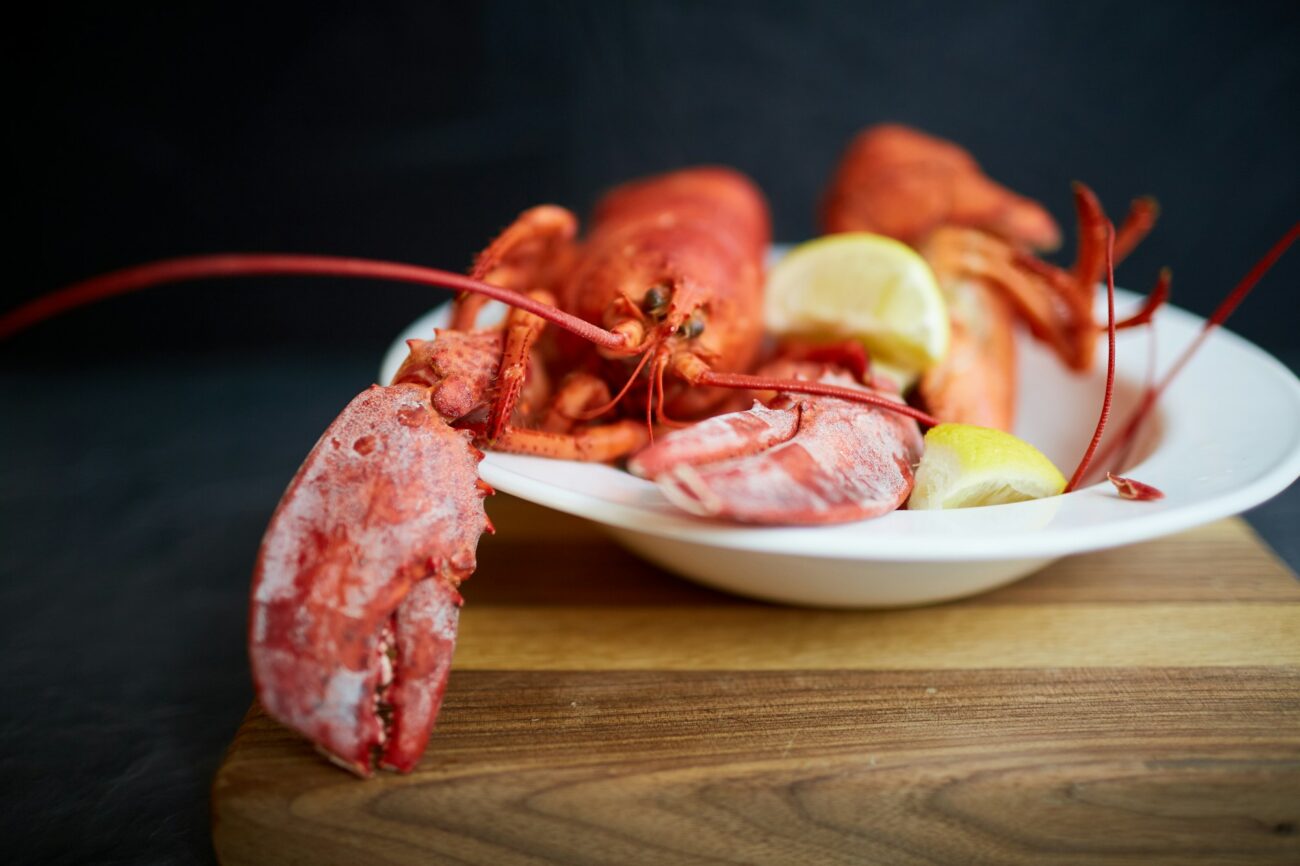
If you want to share the shells, this is how I’d do it.
- Clean out the body. Scrape out all the green tomalley and put it in the trash.
- Rinse. Run the shells under the tap to wash off the pot water.
- Dry and crush. Alabama’s extension lists eggshells sun-dried for 1 or 2 days, or oven-dried at 350°F for 10 minutes, as a calcium source. I’d treat lobster shell the same way and break it into small pieces (my call, not a tested method).
- Keep it small. Colorado State says treats “should make up no more than 10% of their daily diet”. For a hen eating 100 to 150 grams of feed, that’s 10 to 15 grams of all treats in a day (my math). Lobster shell counts toward it.
- Put it out briefly. Colorado State’s rule is “Do not feed more than can be consumed in 5 – 10 minutes to not attract nuisance animals”. Then pick up what’s left.
- Never leave it to rot. Jacob warns: “Make sure that the scraps are not allowed to rot, or botulism might result”.
Now, who skips it. Chicks and pullets do. Jacob says growing chickens need only 1.2% calcium, and “If you feed high-calcium diets to growing chickens, kidney damage can result”. Add Merck’s warning that birds under 21 days are more sensitive to salt, and lobster shell is a food for laying hens only.
Watch your birds the day after. If a hen turns lethargic or starts breathing hard after a seafood night, call an avian vet. We’re not vets, and that’s the right call for anything that looks like poisoning.
To check another food fast, try our Can Chickens Eat It? checker. And for the foods that never go in the run, see what not to feed chickens.
Sources
- M. A. Langille and co-authors: Evaluating by-products of the Atlantic shellfish industry as alternative feed ingredients for laying hens (Poultry Science 91(9), 2012).
- B. M. Rathgeber and co-authors: Color and fatty acid profile of abdominal fat pads from broiler chickens fed lobster meal (Poultry Science 90(6), 2011).
- Lilian Schaer, Canadian Poultry Magazine: Nutrition Research: Lobster shells and poultry rations (June 17, 2021).
- Dan Woolley, Canadian Poultry Magazine: Research: Shellfish Byproducts Explored (January 9, 2008).
- Trung T. Nguyen and co-authors: Lobster processing by-products as valuable bioresource of marine functional ingredients… (Bioresources and Bioprocessing, 2017).
- Eri Tabata and co-authors: Gastric and intestinal proteases resistance of chicken acidic chitinase nominates chitin-containing organisms for alternative whole edible diets for poultry (Scientific Reports, 2017).
- Eri Tabata and co-authors: Chitin digestibility is dependent on feeding behaviors, which determine acidic chitinase mRNA levels in mammalian and poultry stomachs (Scientific Reports, 2018).
- M. Suzuki and co-authors: Cellular expression of gut chitinase mRNA in the gastrointestinal tract of mice and chickens (Journal of Histochemistry and Cytochemistry 50(8), 2002).
- A. G. Gernat: The effect of using different levels of shrimp meal in laying hen diets (Poultry Science 80(5), 2001).
- S. Carrillo-Domínguez and co-authors: Cholesterol and n-3 and n-6 fatty acid content in eggs from laying hens fed with red crab meal (Pleuroncodes planipes) (Poultry Science 84(1), 2005).
- Health Canada: Health Canada is Reminding Canadians to Limit Consumption of Lobster Tomalley (June 3, 2014, archived).
- U.S. Food and Drug Administration: Fish and Fishery Products Hazards and Controls Guidance, Chapter 6: Natural Toxins (August 2019).
- U.S. Food and Drug Administration: How to Report Seafood-Related Toxin and Scombrotoxin Fish Poisoning Illnesses.
- Maine Center for Disease Control and Prevention: Shellfish Poisoning Fact Sheet (April 2026).
- R. J. Dusek and co-authors, U.S. Geological Survey: Acute oral toxicity and tissue residues of saxitoxin in the mallard (Anas platyrhynchos) (Harmful Algae 109, 2021).
- USDA FoodData Central: Crustaceans, lobster, northern, cooked, moist heat (SR Legacy, FDC ID 174209; raw, FDC ID 174208).
- New York Sea Grant, Coastlines: How to boil lobster.
- Anne Lichtenwalner, University of Maine Cooperative Extension: Salt is an Important Nutrient for Poultry.
- Carmen Jerry, Merck Veterinary Manual: Poisonings in Poultry (2024).
- Larry J. Thompson, Merck Veterinary Manual: Salt Toxicosis in Animals (2022, updated 2024).
- Wilmer Pacheco and co-authors, Alabama Cooperative Extension: Feeding the Laying Hen.
- Colorado State University Extension: Raising Poultry the Organic Way: Disease Control and Feeding.
- Jacquie Jacob, Poultry Extension: Feeding Chickens for Egg Production in Small and Backyard Flocks.
Related read: How to Raise Chickens for Eggs — Instant PDF download. Secure checkout by Stripe