No source I read calls aloe vera poison for chickens. Researchers have given aloe to chickens in several trials, and none of them reported harm at the doses they used. But here’s the catch: none of them gives you a treat amount for a backyard hen. And the leaf has a bitter yellow sap in it that you’ll want to keep away from your flock.
I rewrote this page from 11 sources, and you’ll find them all at the bottom. Five are studies on chickens: three on broilers, one on laying hens and one on hens eating moldy feed. There’s also a review of aloe in broiler diets. For the plant itself I used the NIH’s page on aloe, the U.S. National Toxicology Program’s rat studies, the ASPCA’s plant list and a short review in the Indian Journal of Dermatology. Colorado State University Extension covers how big a treat should be.
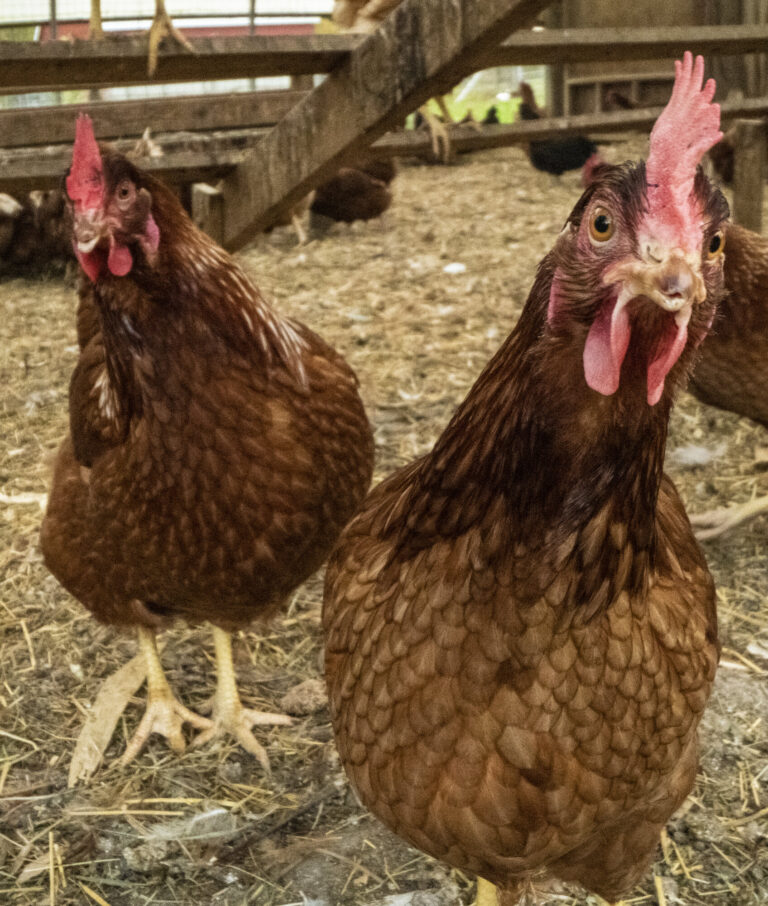
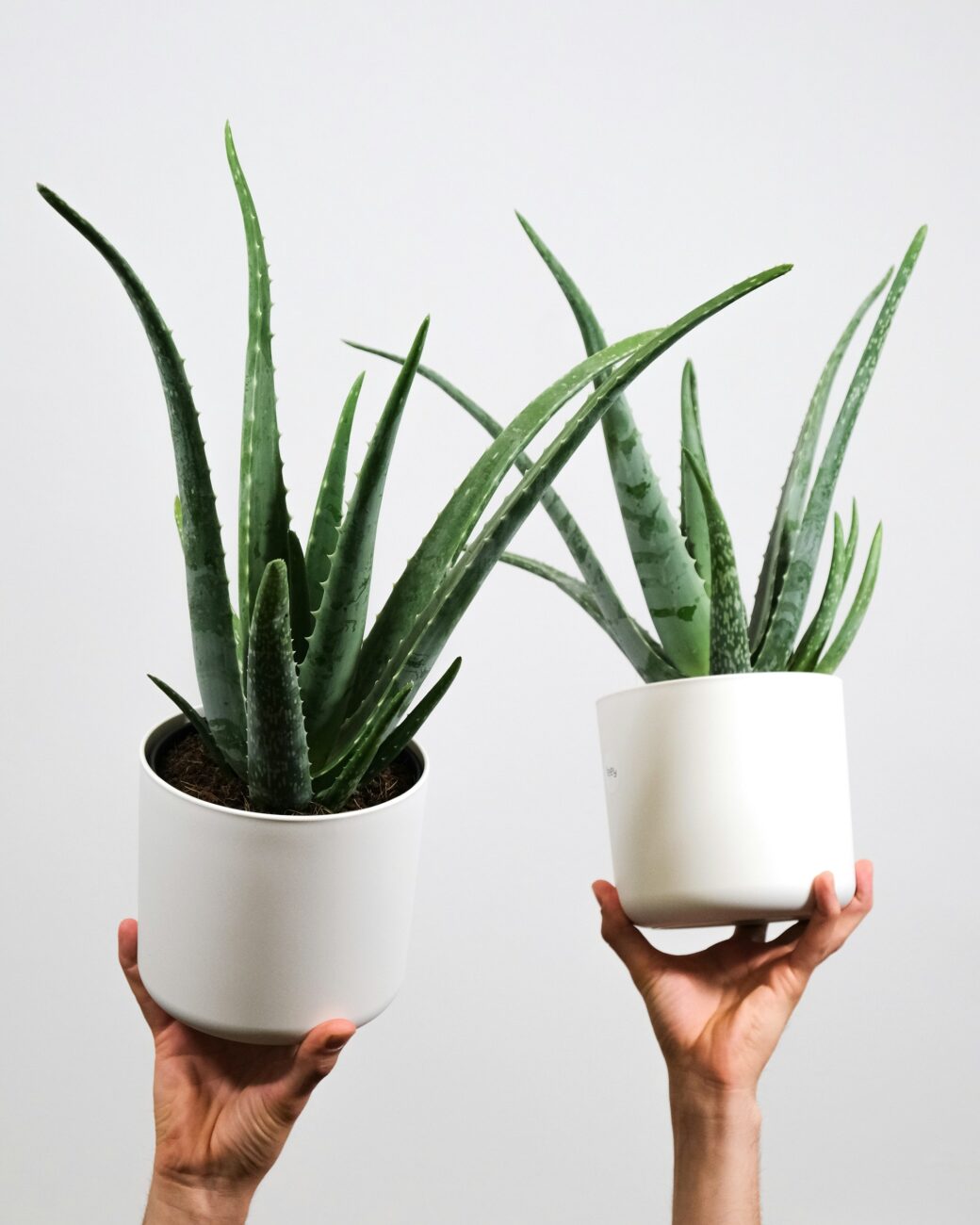
A word on the photos. That leaf in a hand comes from a U.S. Fish and Wildlife Service refuge in Florida. You’ll also see a chicken house on a Pennsylvania farm the USDA visited in 2011, and it isn’t one of the trial barns.
The short version.
- No source I read calls aloe vera toxic to chickens. You’ll see it on the ASPCA’s list as toxic to dogs and cats (and horses), but chickens aren’t on that list either way.
- Trial birds got the clear gel with the latex taken out, mixed into their water at 0.5 to 1.5 percent. Most were meat chicks, fed for 5 or 6 weeks.
- One laying hen trial on normal feed mixed fresh leaves into the feed at 1 to 3 percent for 20 weeks. Its authors saw no ill effects.
- That yellow latex is a strong laxative. In 2002 the FDA had it taken out of drugstore laxatives, and a whole-leaf extract with the latex left in raised the rate of large intestine tumors in rats.
- No source gives a safe treat amount for a backyard hen, so I won’t make one up for you.
- If you try it anyway, give only clear gel, keep it small, and count it inside Colorado State’s 10 percent cap for all treats.
- Aloe isn’t medicine for a sick bird. If one of your hens looks sick, call a vet who sees poultry.
Gel and Latex

An aloe leaf isn’t one thing. Surjushe and two colleagues wrote a short review of the plant, and they describe three layers. On the inside there’s a clear gel that’s 99 percent water. Next comes a layer of latex, which they call “the bitter yellow sap”. It holds compounds called anthraquinones. On the outside sits the rind, the tough green skin you’d peel off.
NIH’s National Center for Complementary and Integrative Health (NCCIH) splits aloe products the same way. Some are made from the gel, from the inner leaf. Some are made from the latex, and some from the whole crushed leaf, which has both in it.
For your flock, that split is the whole story. Surjushe’s review says the anthraquinones in the latex are “a potent laxative”. So when somebody tells you aloe is safe, or not safe, ask which part they mean.
On its plant page for pets, the ASPCA makes that same split. It lists aloe as toxic to dogs and cats (and horses too), and it names saponins and anthraquinones as the problem compounds. Its list of signs is vomiting (not in horses) along with lethargy and diarrhea. Then it adds one line: “The gel is considered edible.”
Chickens aren’t on the ASPCA’s list, and I didn’t find any poultry source that says aloe poisons birds. But I also didn’t find anybody who tested a hen pecking at a whole leaf with the latex still in it.
Broiler Trials

Most of the chicken research you’ll find is on broilers, the fast-growing meat chicks. Two of those trials tell you how the aloe was made, and both took the latex out first.
Shokraneh and colleagues ran a 2016 trial in Iran with 240 day-old Ross 308 chicks, raised for 6 weeks. Some got plain water. Others got aloe gel in their water at 0.5, 0.75 or 1 percent. One more group got an antibiotic growth promoter in its feed. To make the gel, the team cut the leaves by hand, and their paper says “Latex of the leaf was removed” before the gel went into a beaker. They poured a liter of hot boiled water over 100 grams of that gel to make a stock for the drinking water.
Here’s what they found, compared with the chicks on plain water:
- Aloe groups weighed more.
- Feed went further at 0.5 and 0.75 percent, but the antibiotic group still did best on that.
- Coliform bacteria in the gut went down, and the good Lactobacilli went up at 0.75 and 1 percent.
- At 1 percent, the chicks made more antibodies in an immune test.
Their conclusion was careful. In their words, the results showed “a possibility” of using 1 percent gel in broiler water in place of antibiotic growth promoters.
A 2021 trial by a team at Kafrelsheikh University in Egypt used that same gel method on 120 Cobb 500 chicks for 35 days, at 1 and 1.5 percent in the water. Chicks on 1.5 percent grew best and used their feed best. Blood tests for kidney and liver showed no real difference from the control birds. And fewer chicks died in both aloe groups than in the group on plain water.
Akhtar and colleagues tried water and alcohol extracts of aloe against coccidiosis in broilers in 2012. I only read their abstract. Their water extract gave 60 percent protection, and the alcohol one gave 45 percent. Birds on aloe also had milder gut damage and fewer coccidia eggs in their droppings. In the end, the authors concluded aloe could be used against coccidiosis in commercial broilers. That’s a lab result, though, not a treatment plan. If you think your flock has coccidiosis, get a vet on it.
Darabighane and Nahashon went further in a 2014 review. It calls aloe “an excellent alternative for antibiotic growth promoters and anticoccidial drugs” in broilers. Yet the same review says aloe has been fed in five forms, from gel and powder to two kinds of extract and a purified sugar from the gel, and “more studies are required to determine the best form”.
So most of this is meat chicks, over 5 or 6 weeks, getting a measured amount of gel in their water. That’s a long way from a laying hen in your backyard run eating aloe for years.
Laying Hens

I found just one trial that fed aloe to laying hens on ordinary feed. Yadav and colleagues ran it at a university poultry farm in Hisar in India. They published it in 2024. Their 225 hens were 22 weeks old, split into five groups of 45. Three groups got fresh aloe leaves mixed into their feed at 1, 2 or 3 percent, from 22 to 42 weeks of age. One control group got plain feed, and the other got feed with an antibiotic growth promoter.
Here’s what they reported:
- Body weight didn’t change in any group.
- Aloe hens laid more than the plain-feed hens, going by egg production per hen per day.
- Hens on 1 percent used less feed per dozen eggs than the plain-feed group, and so did the antibiotic group.
- Over the 20 weeks, 3 hens died in the plain-feed group and 1 or 2 in each of the others.
Adding aloe to the ration did “not have any ill effects on the health and liveability of layers”, the authors wrote, and they recommended 1 percent. Keep a couple of things in mind, though. It’s one trial with 45 hens a group, and a handful of deaths either way doesn’t prove much. Their paper says fresh leaves, and it doesn’t say whether the latex was taken out.
One other laying hen study I read asked a different question. Seifi and colleagues fed 72 White Leghorn hens feed laced with aflatoxin, a poison made by mold, and added aloe powder to some of it. Egg production and shell thickness came out a bit better with aloe, but not by enough to count statistically. Liver damage was milder. My take: if your feed is moldy, your fix is a new bag from the feed store, not aloe.
The Latex

No chicken study I read tested the latex on its own. So for the yellow sap, I went by what it does in people and in lab rats.
According to NCCIH, aloe latex taken by mouth can cause stomach pain and cramps. Diarrhea too. In 2002 the FDA made makers take aloe latex out of over-the-counter laxatives “because of a lack of safety data”. On top of that, the International Agency for Research on Cancer lists whole-leaf aloe extract as a possible carcinogen in humans. That’s the non-decolorized kind, which hasn’t been treated to strip out the anthraquinones.
By far the biggest animal study here is from the U.S. National Toxicology Program. For two years, rats drank water with a whole-leaf extract that still had its anthraquinones, at up to 1.5 percent. Its report found “clear evidence of carcinogenic activity” in those rats, with more tumors of the large intestine. Mice on up to 3 percent didn’t show it. In a shorter 14-day test, rats on the gel extract grew just like the controls, and food moved through their guts at the normal speed.
On the flip side, NCCIH says research suggests aloe gel taken by mouth for up to 42 days is safe in people. Those are people and rats, not chickens. Still, every source points you the same way: the gel is the mild part, and the latex is the part with the warnings.
Your Flock

Here’s what I’d do with all that. These are my calls, not any study’s.
If you keep a potted aloe, keep it out of the run and away from where your hens free-range. Nobody tested a hen eating a whole plant, the ASPCA says aloe makes dogs and cats sick, and that latex sits right under the skin. Got a dog or cat too? That’s two reasons to keep your pot up high.
If you want to give your flock a taste, here’s how I’d do it:
- Use the clear gel only. Cut the green skin away and leave any yellow sap behind. If yellow got on a piece, I’d toss it.
- Keep it small. No source gives a safe amount for a backyard hen. Colorado State says all treats together should stay under 10 percent of what a hen eats in a day, and aloe would be one of them.
- Only put out what your birds clean up in 5 to 10 minutes. Colorado State says leftovers draw nuisance animals, and in your backyard I’d read that as rats or a raccoon.
- Watch the droppings the next day. Diarrhea is the sign NCCIH lists for the latex in people and the ASPCA lists for aloe in pets, so runny droppings would tell me to stop.
I wouldn’t copy the trials at home, either. They made a measured gel stock and gave it to meat chicks for a few weeks. Nobody has checked what that does to a laying hen over a few winters.
And aloe isn’t medicine. If a bird of yours looks sick, call a vet who sees poultry.
Wondering about other foods? Try our can chickens eat it checker, and see our list of what you shouldn’t feed chickens. Bitter melon is another plant with a bitter side, and our page on whether chickens can eat bitter melon walks you through it. Flax is a treat with real trials behind it, so see can chickens eat flax seeds. For the feed that should make up most of your hens’ diet, there’s our feeding guide for Rhode Island Reds.
Sources
- Shokraneh and colleagues (2016), Veterinary World 9:1197 (aloe gel in broiler drinking water).
- Amber and colleagues (2021), Frontiers in Veterinary Science (gel at 1 and 1.5 percent).
- Akhtar and colleagues (2012), Veterinary Parasitology 186:170 (coccidiosis, the abstract on PubMed).
- Darabighane and Nahashon (2014), Annals of Animal Science 14:491 (a review of aloe in broiler diets).
- Yadav and colleagues (2024), Agricultural Science Digest (fresh aloe in layer feed).
- Seifi and colleagues (2022), Veterinary Research Forum (aloe powder and aflatoxin in laying hens).
- NCCIH: Aloe Vera: Usefulness and Safety (updated February 2025).
- National Toxicology Program, Technical Report 577 (the whole-leaf extract in rats and mice).
- ASPCA Animal Poison Control: Aloe.
- Surjushe and colleagues (2008), Indian Journal of Dermatology (aloe vera, a short review).
- Colorado State University Extension: Raising Poultry the Organic Way (feeding and treats).
Sources checked October 26, 2026. We aren’t vets. If a hen looks sick, call a vet who sees poultry.
Related read: How to Raise Chickens for Eggs — Instant PDF download. Secure checkout by Stripe