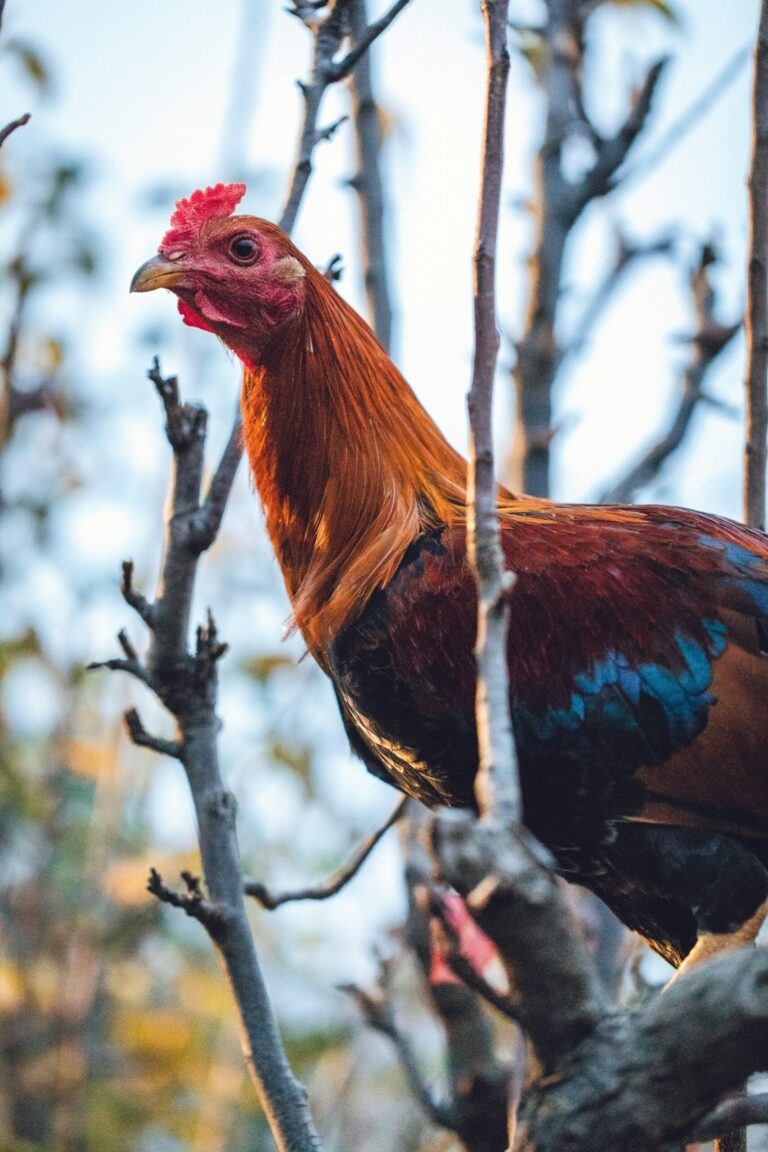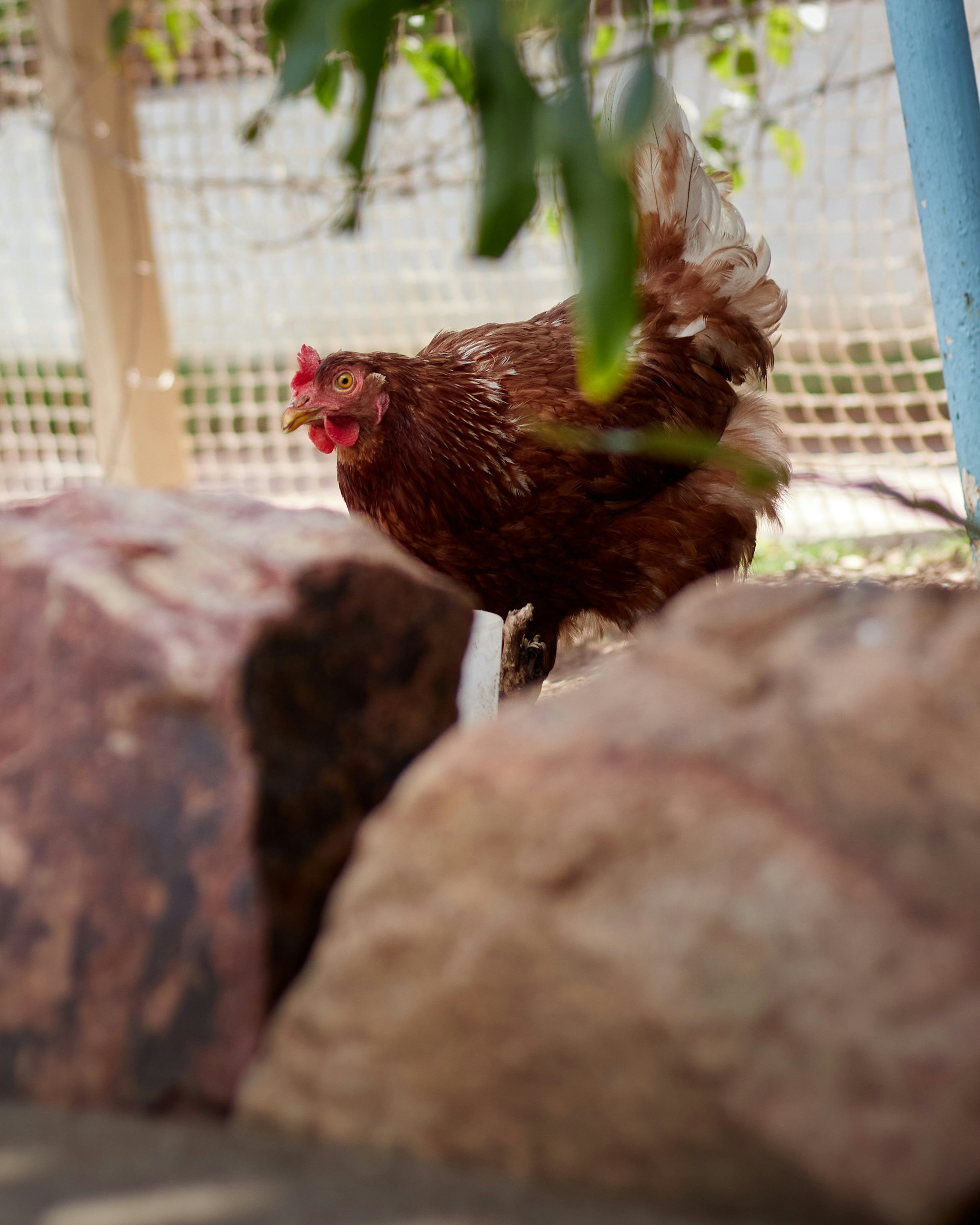
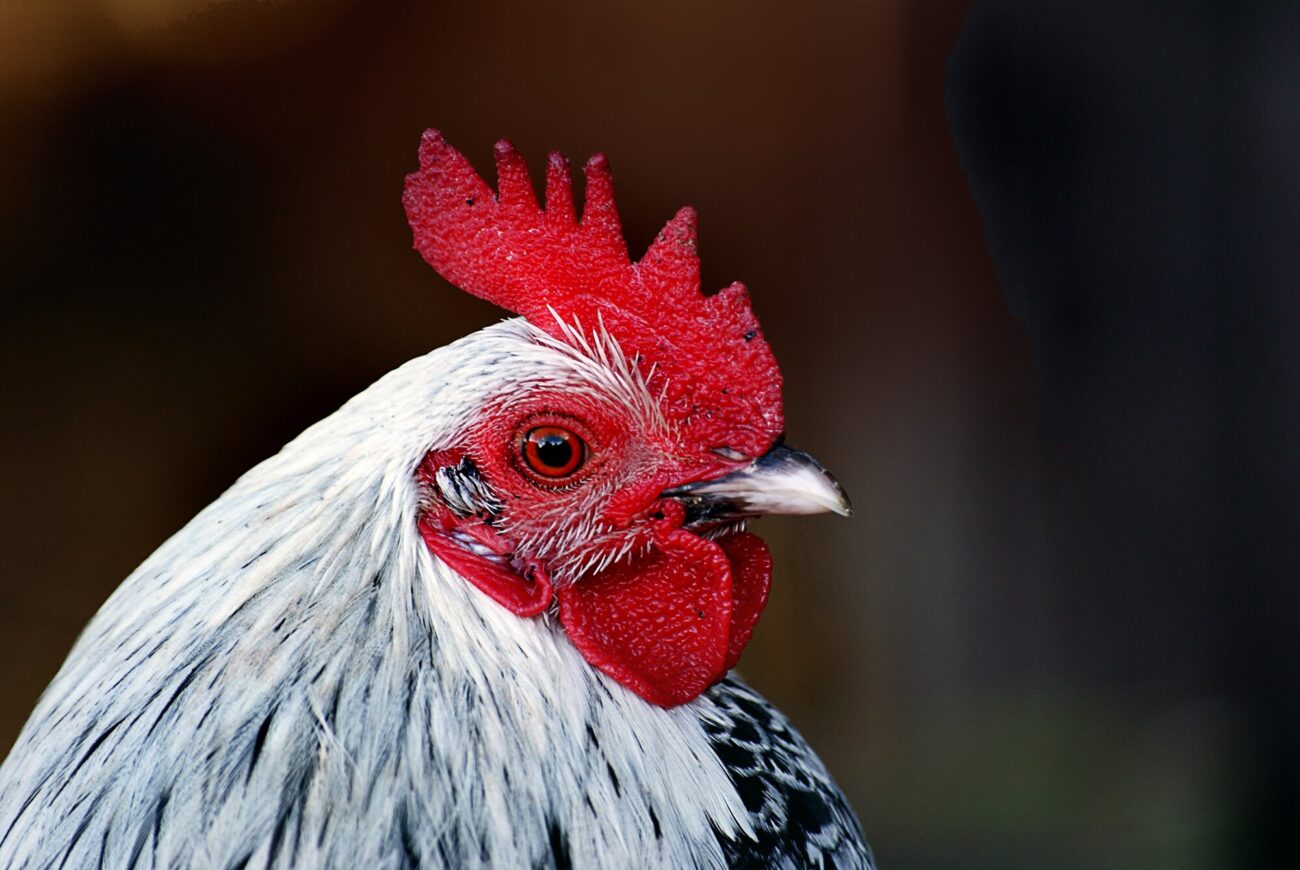
A hen with her back feathers pulled out looks like a boredom case. Sometimes she is. But boredom is one name on a long list, and a toy won’t fix most of the others. A bird that is bleeding right now needs the steps in the last section before anything else. Otherwise, rule out the basics, then add enrichment.
Rule Out the Other Causes Before You Blame Boredom

Feather pecking has a long cause list. A feed short on protein is on it. So are crowded feeders and flocks that combine birds of different ages that weren’t raised together. Heat counts, and so do too many hours of light. Roosters can leave bare patches that look like pecking. Overmating often causes them near the tail and at the neck. With more than 1 rooster to every 8 hens, you may need fewer roosters. Check those spots first.
So before you spend a dollar on toys, check the basics. Is the feed you’re giving a complete one for their age? Treats and scratch grains dilute the diet, and feather picking is common when protein runs short. Is there room at the feeder for everyone to eat at once? When the dominant birds guard the feed and water, the underweight ones end up as frequent targets.
If every one of those checks out and the pecking goes on, look at space next.
Count Your Square Feet First

Too little space can lead to pecking and cannibalism on its own, so count your square feet before you buy anything for the run. Some guidelines call for a minimum of 3 to 4 square feet per laying hen in the coop and 10 square feet each outdoors. A smaller run can work, but you’ll have to manage it harder. It goes bare fast and turns muddy in wet weather, so it needs well-drained ground.
Coop figures start as low as 2 square feet a bird. Where birds have no outdoor access at all, the figure is 8 to 10. What counts is enough room for birds to express their natural behaviors. Our chicken coop size calculator adds it up for your flock, and our chicken pen ideas show run layouts.
Give Them Something to Scratch Through and Peck At
| Scratch grain | Fresh greens | |
|---|---|---|
| The limit | Afternoon only, after the complete feed | Pull out whatever they leave |
| How much | What they can finish in 15 minutes | Only what they will eat |
| Why | The complete feed stays the main meal | Spoiled greens can cause botulism |
In the wild, jungle fowl spend about 61 percent of their time foraging, and a hen on complete feed still wants to scratch and peck. If you give her nothing to work through, that pecking can turn toward her flock mates. Give that pecking somewhere else to go. Straw or other litter to scratch in works. So do leafy greens. So does a handful of small grains tossed into the litter. A mash feed instead of pellets may help too, because the birds sift through it and take longer to eat.
Two limits apply to grain and greens. Grain goes out in the afternoon, after the birds have eaten their complete feed, and only as much as they’ll finish in 15 minutes. Pull out any greens they don’t finish, because greens left to spoil can cause botulism.
Grass clippings are on the foraging list, but a bird that eats a lot of grass can end up with a bound-up crop, because grass is poorly digestible. Keep clippings to a modest handful. Feel the crop first thing in the morning, before she’s had a chance to eat. If it’s still full and hard, that may mean a problem, and your vet is who to call.
Something hung up gives a beak a target that isn’t a flock mate’s feathers. You can hang four to eight lengths of white polypropylene twine in the run. Birds should peck at it, and it may head off aggressive pecking at other birds. A hanging veggie treat ball and a chicken swing are two more things to try. Swap what you hang every so often, because enrichment that changes holds a flock’s attention longer.
One catch: string can bind up a crop when a bird eats a lot of it. If a length starts getting eaten instead of pecked, take it down.
Put In a Perch So the Bottom Hen Has a Way Out
| Helps | Hurts | |
|---|---|---|
| Lowest bar | About 3 feet off the floor | A low bar that floor hens can reach |
| Between bars | Short drops, with open floor to land on | Big drops, which make misjudged landings and keel injuries more likely |
A perch gives a hen low in the pecking order a way out. During the day she can use it to get away from the dominant hens, which cuts down on head and neck injuries from aggressive pecking. A bird perched high enough is also out of reach of hens on the floor, which matters for vent pecking. Put the lowest perch about 3 feet off the floor, which cuts the chance of floor hens pecking whoever’s sitting on it. Some coop designs set roosting poles lower, at 2 feet, and 1 foot for silkies. The lower the bar, the better the floor hens’ chance at the sitter.
Don’t stack the bars too far apart. When the drop between perches is large, birds are more likely to misjudge their landings and hurt their keels. Heavy modern hens are awkward fliers, and keel injuries are often more common in birds that have perches. Keep the drops short. Leave open floor for them to land on when they jump down. Start perches while the birds are young, because birds raised without early access have trouble using them as adults.
Where mites aren’t a worry, wood is a good choice, since more layers use square perches than round ones. Our chicken roost ideas have the bar space and spacing numbers.
A Dust Bath Is Good for Them, but It Won’t Stop Pecking Alone

Dust bathing is how a hen cleans parasites and other irritants off her skin and feathers, and it keeps preening oil from building up. Hens with no dust bath go through the motions anyway, and in studies they’ll work to get at dusting material. So give your flock a patch of bare dirt to roll around in.
Don’t count on it alone to stop pecking. Access to a dust bath doesn’t prevent feather pecking on its own. It’s for her comfort and her feathers.
If the Pecking Has Already Started
| The birds | The setup | |
|---|---|---|
| Do this | Separate the severe peckers and take out the injured birds | Add forage and more feeder and water space, plus perches and nest boxes |
| Keep in mind | Blood draws pecks, so one injured hen can start it | Keep the nest boxes dark |
Chickens are drawn to blood, so one injured hen can start an outbreak. The behavior spreads because birds copy each other.
It’s easier to prevent than to stop once it’s loose in your flock.
Separate the birds doing the severe pecking, especially when it’s aimed at an injury or a vent. Take out the injured birds too, and look after them away from the flock. Add what’s above too: forage-type enrichment and more feeder and water space. Add perches as well, and more nest boxes if you have laying hens. Keep the nest boxes dark. A hen’s cloaca shows when she lays and draws pecks, and some outbreaks start right there.
Start with the feed and the square footage. Then add the scratch material and the twine, put in a perch, and watch the feathers. If your run is tight, fix the space before you hang anything in it.
Sources: Small and backyard poultry, feather pecking and cannibalism; normal behaviors of chickens; space allowances; perches; Ask Extension, chicken feathers; University of Maryland Extension, common crop issues; Oregon State University Extension, backyard chicken coop design.
Related read: How to Raise Chickens for Eggs — Instant PDF download. Secure checkout by Stripe