
The Speckled Sussex is an old English dual-purpose hen with a mahogany coat dotted in black and white. She’s calm, she’s nosy, she lays a fair number of light brown eggs, and she takes a cold winter better than most birds you’ll find at the feed store in spring.
She also has a weak spot, and nobody puts it on the chick bin label. Heat. If your summers run hot and humid, you need a plan for that before you bring any home.
I’ve kept a backyard flock for eight years, twelve hens and one rooster with a bad attitude, and I’ve lost birds to a raccoon and to a heat wave. So I read breed write-ups the way I’d read a used truck listing. What follows is what the Livestock Conservancy, the American breed standard and three of the big hatcheries say about this bird, where they disagree, and what I’d want to know before picking one out. I’ll tell you which part is theirs and which part is mine.
What a Speckled Sussex Looks Like, and Why She Changes Every Fall
Wikipedia’s write-up of the breed describes the speckled color as a rich, dark mahogany, with each feather carrying a black dot and a white tip. Up close that’s exactly it. From across the yard it reads as brown with a scatter of white freckles.
Here’s the part that surprises people. The hatcheries say the speckles grow with age. Cackle Hatchery puts it plainly: with each yearly molt, more speckles usually appear, so an older hen often looks brighter than she did as a pullet. My Pet Chicken hedges it a little and says many of them get more speckled molt after molt. Either way, the bird you buy at a few months old isn’t the bird you’ll have at three.
That matters right now, by the way. It’s the end of October, and if your run looks like somebody had a pillow fight in it, that’s the molt. A Sussex coming out of it is the best she’ll look all year.
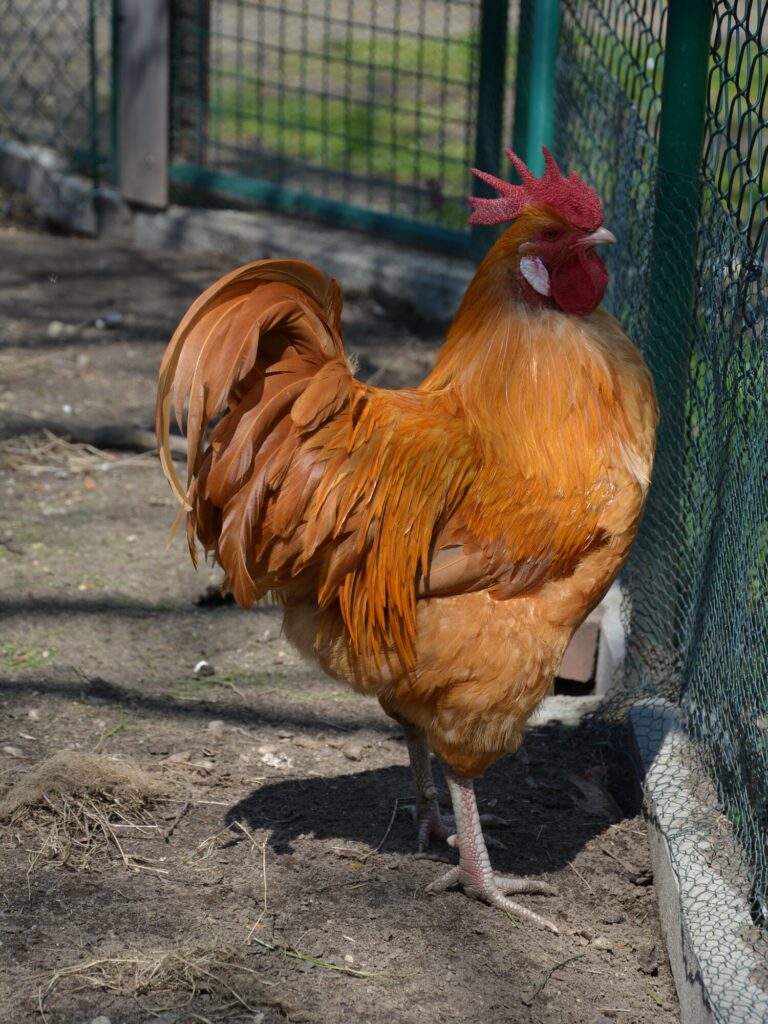
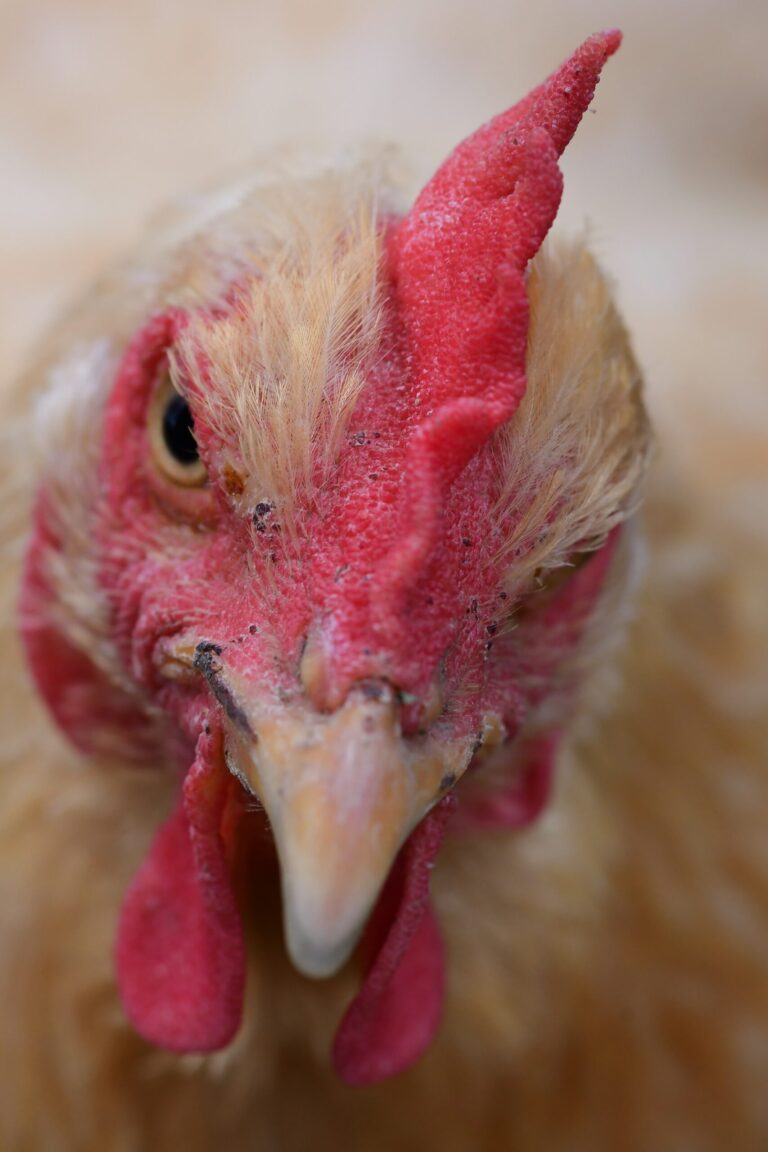
The rest of her is plain farm chicken. The Livestock Conservancy lists a rich red single comb with five points. McMurray Hatchery lists clean, white legs and white skin. The American Poultry Association accepted the Speckled variety into its Standard of Perfection in 1914, alongside the Red, and added the Light in 1929. In Britain the Poultry Club recognizes eight colors, so if you see a Coronation or a Buff Sussex, that’s the same breed in a different coat.
How Big They Get
Sussex is a heavy breed. Cackle and McMurray agree with the Livestock Conservancy on the weights: about 9 pounds for a rooster and 7 pounds for a hen. Cackle adds 7 1/2 pounds for a young cockerel and 6 pounds for a pullet.
Seven pounds of hen changes a few things in the coop. She needs a sturdy roost bar she can wrap her feet around, not a dowel. She needs a pop door she doesn’t have to squeeze through. And if you’re building nest boxes, build them for the big girls, because a box that fits a Leghorn fine gets crowded fast.
McMurray lists 20 weeks to maturity. That’s a ballpark, not a promise. Heavy breeds often start a little later than the light, flighty layers, and a pullet that hits laying age in short November days may just wait for spring. We’ve got a whole post on when pullets start laying if you’re counting the weeks.
The Egg Count Depends on Who You Ask

This is where the breed write-ups stop agreeing with each other, and honestly it’s the most useful thing I found.
The Livestock Conservancy says 200 to 250 large eggs a year and calls the hens “fair-to-good layers.” Cackle’s breed page says 200 to 240 a year, and then its FAQ quotes its own heritage article at around 240, and the paragraph above that says around 250. McMurray says 151 to 220. Wikipedia says some 180 to 200 tinted eggs a year, and up to 250 from layer strains.
So which is it? All of them, kinda. A hatchery strain bred for laying will beat a show-line bird bred to look right on the judging table. And every number assumes a young hen in her first or second year, with good feed and plenty of daylight. None of them is what a five-year-old hen lays in a dark coop in January.
Here’s how I’d plan it. Count on something like 3 to 4 eggs a week from a young Sussex in spring and summer. Fewer in winter. If you need more than that out of every bird, she’s the wrong pick, and that’s fine. The Livestock Conservancy also says they lay best if they don’t get fat, which lines up with what I see in my birds: the hens that live on scratch and kitchen scraps lay worse than the ones on real layer feed.
The eggs are light brown, or tinted, or tan, depending on whose word you use. Wikipedia puts them at about 60 grams. If you’re after a basket with mixed colors, see our rundown of which breeds lay which egg colors.
Temperament: Curious, and Usually Right Under Your Boots

Every source I read lands in the same spot. The Livestock Conservancy calls the breed calm and curious and says they like people. It also says they’re confident but not aggressive toward other breeds. McMurray says calm and gentle.
In plain words, she’s the hen who walks over to see what you’re doing. Turn over a board in the run and she’s there before you’ve set it down. Kids like that. I like it less when I’m carrying two full waterers.
One thing to think through, and this part is my opinion. A calm bird that won’t fight back can end up low in the pecking order next to pushy breeds. If your flock already has a bully, watch the first two weeks after you put new pullets out, and give them a second feeder so nobody gets run off the food.
Winter Is Where They Earn Their Keep

The Livestock Conservancy says they handle winter well. McMurray rates their cold tolerance “better.” Seven pounds of bird in a full coat of feathers holds heat, and that’s the whole reason heavy breeds were the farm chickens in cold country.
The comb is the catch. A single comb is a thin blade of skin sticking up into the wind, and it’s the part that gets frostbite. Pea and rose combs are smaller and tighter to the head, and keepers in cold places tend to see less frostbite on them, though it’s not a guarantee either way.
Here’s my hot take, and I’ll stand on it. Most coop plans online have never held a chicken through a real winter. They seal the coop up tight to keep it warm, and that traps all the moisture from the birds’ breath and droppings. Damp air plus cold is what bites combs. A drafty roost is bad, sure. A coop with no vents up high is worse. Keep the bedding dry, open the vents above the roost line, and leave the heat lamp at the store. Our winter coop checklist has the rest.
Heat Is the Weak Spot

The Livestock Conservancy says it in four words: they dislike heat. That same thick coat that makes them good in January works against them in August.
I’m going to drop the dry tone here, because I’ve buried birds after a heat wave and it’s not a thing I joke about. A hot hen pants with her beak open and holds her wings away from her body. If you see that, she needs shade and cool water now, not after supper. Give a heavy breed real shade, the kind that covers the whole run by afternoon, and more than one waterer so a bossy hen can’t guard it. If your summers run past the mid-90s for weeks at a time, a Sussex can still work. She just needs you to plan for it.
Foraging and Camouflage, With a Hawk Overhead

Cackle calls them alert and good at foraging. The Livestock Conservancy says they do fine in confinement but need room to roam, and that they do better if they can free-range part of the week. Give confined birds cover and things to explore, it says, so they don’t get bored. Bored heavy hens get fat, and we already covered what that does to the egg count.
That speckled coat is good camouflage in fall leaves. Look at a Sussex scratching in brown leaf litter and she nearly disappears, white dots and all. Against a hawk overhead, that’s a real edge over a white bird on green grass. It does nothing against a raccoon at night. Raccoons are what actually cost me birds. Camouflage is a bonus. A locked coop with hardware cloth is the plan. Here’s our list of predator-proof coop ideas.
Broody Hens and Good Mothers

The Livestock Conservancy says the hens can go broody and make good mothers. Cackle says the same, and adds the obvious cost: a broody hen stops laying for a while.
Whether that’s good news depends on what you want. If you’d like a hen to hatch a clutch so you don’t have to run a brooder in the garage, a broody Sussex is a gift. If you want eggs every day, she’s going to sit in the nest box flattened out and growling at you for three weeks, and she’ll take up a box the other hens want. Neither one is wrong. Just know it’s coming.
Who Should Get a Speckled Sussex
I’d point a beginner with a cold winter, a family and a yard with some room straight at this breed. She’s calm, she’s friendly, she lays a respectable number of eggs, and she’s hard to kill with cold. She’s also pretty, and she gets prettier every year, which isn’t nothing when you’re looking at the same birds every morning.
I’d steer you elsewhere if your summers are long and brutal and you can’t shade the run, or if the egg count is the only number you care about. If you’re stuck choosing between her and another big, gentle brown bird, our Buff Orpington vs Speckled Sussex comparison puts the two side by side.
Whatever you pick, buy from a hatchery or breeder that tells you which line they keep. A Sussex bred for eggs and one bred for the show table are the same breed on paper and two different birds in your coop.