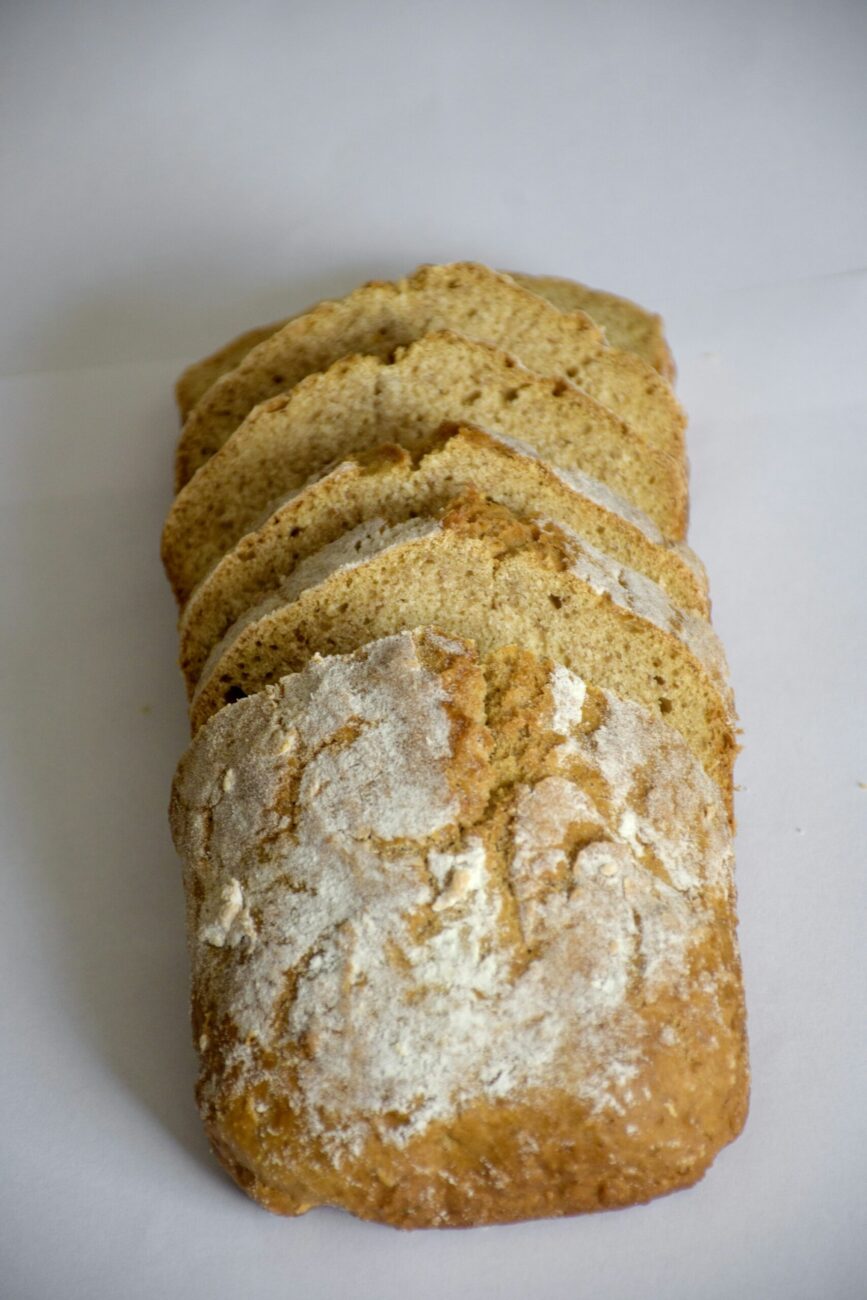
Yes, your hens can eat honey wheat bread. Keep it plain and fresh, and tear it into small pieces. It’s a treat, though, and a small one. If bread is the only treat you give a hen that day, her share is about half a slice at the most. A stricter rule makes it closer to a quarter.
Mold changes the answer. If you spot even a little on a slice, the whole slice goes in the trash, not the run.
Bread Fills a Hen Up Without Feeding Her Much

Plain bread in small amounts is fine as an occasional treat. It’s one of the kitchen scraps your flock can help you use up, along with leafy greens and vegetable peelings, as long as it isn’t salty or moldy.
The thing is, bread doesn’t bring much with it. A complete feed for laying hens is made to cover pretty much everything they need. Bread fills a hen up, and it’s short on the things her feed is there for.
Store-bought honey wheat runs roughly 8 to 12 percent protein. Your layer feed should be 16 percent protein or more. Calcium is the bigger gap. Those loaves carry under 0.6 percent calcium, and a layer diet should run 3 to 4 percent. An eggshell is around 96 percent calcium carbonate.
Hens will fill up on treats if you let them. Then they don’t eat enough of their complete feed, and egg production can suffer. So bread stays on the side, and you keep the feeder full.
What’s Really in a Loaf Labeled Honey Wheat

The name makes it sound like a health loaf. Turn the bag over. The ingredients are listed by weight, the biggest first. Some lists close with a line marking the last few as small amounts, such as 2 percent or less. Those last few can come in any order.
On most store brands, enriched flour comes first and whole wheat flour shows up further down, though a few start with whole wheat flour instead, and the honey can sit third or well down the list. Check the order. On some loaves, brown sugar or high-fructose corn syrup comes ahead of the honey.
A typical slice of store honey wheat weighs 26 to 34 grams (about an ounce) and holds about 2 grams of sugar. So the honey isn’t the worry in a hen’s bite of bread. If you were thinking of giving your hens honey on its own, our page on whether chickens can eat honey goes through that.
Salt is the part to watch. These loaves run about 0.35 to 0.53 percent sodium. Most chickens need just 0.12 to 0.2 percent sodium in their diet. So bread is saltier than they need, one more reason to keep your hens’ share small.
How Much of a Slice Is One Hen’s Share?

Keep all of a hen’s treats to 10 percent of her daily diet at the most. A laying hen goes through 100 to 150 grams of feed daily. That’s roughly a quarter pound. So her treats for the whole day come to 10 to 15 grams, and that’s every treat you give her, added together.
Take a 28-gram slice of honey wheat. Ten to 15 grams is a little over a third of it, up to about half.
A stricter rule keeps treats to about 5 percent of the diet. That’s 5 to 7.5 grams a day, roughly a fifth to a quarter of the same slice. If your hens haven’t had bread before, start there.
For a flock, you multiply. Six hens can share 60 to 90 grams of treats a day under the 10 percent rule. That’s about two to three of those slices. Under the 5 percent rule it’s 30 to 45 grams (about a slice to a slice and a half). Those amounts cover every treat they get that day, so on a bread day, skip the other treats.
Chicks don’t get bread at all. Keep them on chick starter, then the feed made for their age, until they’re grown.
If It’s Moldy, It Goes in the Trash

Moldy bread never goes to your chickens. Not even a corner. Moldy food can carry toxins, and a hen that eats them can get sick. See a little mold on a slice? Throw the whole slice away. Don’t cut the fuzzy spot off and hand over the rest.
The toxins molds make in grain are tough, too. Once they’ve formed, they’re chemically stable, and they stay in the grain even after it’s made into feed.
Skip stale bread as well, and anything close to spoiling. If you want the heels for your hens, hand them out while the loaf is still fresh. Don’t stash them in a bag for later.
But if a hen did get a moldy piece, call a vet who treats poultry.
Keep It Plain: No Buttered Toast or Garlic Bread

Honey wheat toast with butter and a drizzle of honey on top is a different snack from a plain slice. Leave off the butter and cheese, and the sugar. Garlic and onion in particular can be a worry for birds, so keep those off for sure.
Flavored breads are out for the same reason: cinnamon raisin, garlic bread, buttery rolls, cheesy bread. Pastries as well. They’re made with things your chickens don’t need, so keep them out of the scrap bucket.
A sandwich crust is fine only if nothing was spread on it. For the rest of the foods to keep away from your birds, see what not to feed chickens.
Tear It Small and Pick Up What’s Left

Tear the bread into small pieces. Then scatter them over the run instead of dropping one pile, so more than one hen gets a turn.
Put down only what they’ll clean up in 5 to 10 minutes. Leftovers draw nuisance animals, a raccoon or rats in a lot of yards. Pick up anything your hens leave before it gets soggy.
Keep the waterer full, too. Chickens can get into real trouble with salt when their water runs short, so they should have fresh water in front of them all day.
If a hen gets into more bread than she should, watch her for the next 24 hours for loose droppings or a poor appetite, along with belly discomfort or lethargy. Call a vet who treats poultry if it hasn’t cleared up in 24 hours, or if she stops eating or seems weak. Same if the bread was heavily seasoned.
To work out your own flock’s daily treat limit, try our Can Chickens Eat It? food checker. The 10 percent rule covers greens as well as bread, and our page on whether chickens can eat too much greens goes through that side of it.
Sources
- Chewy Editors, reviewed by Ivan Alfonso, DVM, Chewy: Can Chickens Eat Bread? Safety Tips and Serving Size (updated July 3, 2026).
- Colorado State University Extension: Raising Poultry the Organic Way – Disease Control and Feeding.
- Wilmer Pacheco, Joseph Gulizia and Kevin Downs, Alabama Cooperative Extension System, ANR-2913: Feeding the Laying Hen, in its Backyard and Small Poultry Flock Management Series (August 2022).
- University of Maine Cooperative Extension: Salt Is an Important Nutrient for Poultry.
- Larry J. Thompson, Merck Veterinary Manual: Salt Toxicosis in Animals (September 2024).
- Dulmelis Sandu, Merck Veterinary Manual: Mycotoxicoses in Poultry (September 2024).
- Electronic Code of Federal Regulations: 21 CFR 101.4, Food; designation of ingredients.
- USDA FoodData Central: Honey wheat bread, branded food labels (FDC IDs 2092990, 2488028, 2626457, 2093817, 2286206, 2101574 and 1905326).
Sources checked November 12, 2026.
Related read: How to Raise Chickens for Eggs — Instant PDF download. Secure checkout by Stripe